What Is Nissan e-POWER and Why Is It Different?
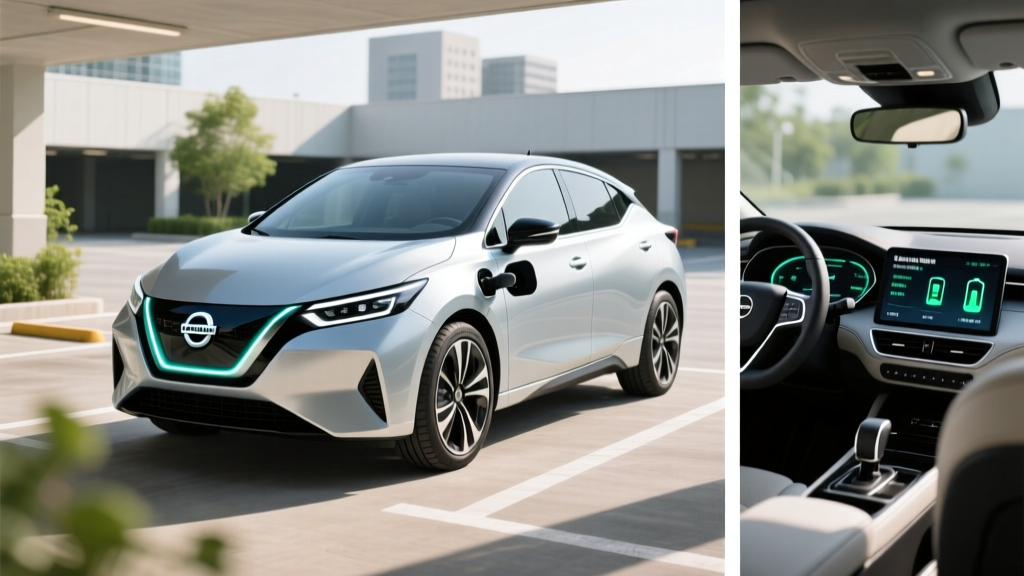
If you've searched for a hybrid Nissan e-POWER vehicle, you've likely noticed something unusual: Nissan's system doesn't work like a Toyota Prius or Honda Accord Hybrid. Instead of blending engine and electric motor to drive the wheels, e-POWER uses a gasoline engine exclusively as a generator. The wheels are driven 100% by an electric motor at all times. This is what engineers call a series hybrid — and it creates a driving experience closer to a battery-electric vehicle (BEV) without any plug-in charging required.
As of the 2026 model year, Nissan offers e-POWER in select global markets on models like the X-Trail, Qashqai, and Note. In the United States, Nissan's lineup has leaned toward conventional hybrids and full EVs (like the Ariya and Leaf), but the e-POWER technology remains a significant part of Nissan's global electrification strategy and may expand to future US-market vehicles. Here's everything you need to understand about how it works, what it delivers, and whether it's the right powertrain for you.
HEV vs PHEV vs e-POWER: Clearing Up the Hybrid Confusion
Before diving into e-POWER specifics, it's essential to distinguish the three major hybrid architectures — because e-POWER occupies a unique middle ground.
| Feature | Conventional Hybrid (HEV) | Plug-In Hybrid (PHEV) | Nissan e-POWER (Series HEV) |
|---|---|---|---|
| Engine drives wheels? | Yes (parallel or blended) | Yes (parallel or blended) | No — engine is generator only |
| Electric motor drives wheels? | Yes (assists or solo at low speed) | Yes (primary in EV mode) | Yes — 100% of the time |
| Plug-in charging? | No | Yes | No |
| Electric-only range | ~1-2 mi at low speed | 20-50 mi typical | N/A (engine runs as needed) |
| Battery size | 1-2 kWh | 10-25 kWh | ~1.5-2.1 kWh (buffer) |
| Fuel source | Gasoline only | Gasoline + grid electricity | Gasoline only |
| Federal tax credit (§30D)? | No | Up to $7,500 if eligible | No |
Nissan e-POWER is classified as a conventional hybrid (HEV) under US EPA and IRS definitions. It does not plug in, it has no meaningful electric-only range, and it does not qualify for the federal §30D new clean vehicle tax credit. You fuel it with gasoline like any other hybrid — the electric-drive experience comes from the powertrain architecture, not from grid energy.
How Nissan e-POWER Actually Works
The e-POWER system has three main components:
- Gasoline engine (generator): A turbocharged 1.5-liter three-cylinder VC-Turbo engine (in the X-Trail e-POWER) that generates electricity. It never mechanically connects to the wheels. Because it only generates power, Nissan can run it at its most efficient RPM range most of the time, using a variable compression ratio (8:1 to 14:1) to optimize for load conditions.
- Electric drive motor: Produces up to 150 kW (approximately 201 horsepower) and 330 Nm (243 lb-ft) of torque in the dual-motor X-Trail e-POWER 4WD configuration. This motor provides instant torque delivery and regenerative braking, just like a BEV.
- Small lithium-ion buffer battery: Approximately 1.5-2.1 kWh usable capacity. This battery stores energy from regenerative braking and the generator engine, then delivers it to the drive motor on demand. It's small by design — enough to smooth power delivery and capture regen energy, but not large enough for plug-in charging or extended EV-only driving.
The result: you press the accelerator and get immediate electric-motor torque with no transmission lag, no gear hunting, and no engine RPM tied to vehicle speed. The engine may start and stop based on battery state of charge and power demand, but you feel only the electric motor's output.
EPA MPG and Real-World Fuel Economy
Fuel economy figures vary by model and market. The Nissan X-Trail e-POWER (the most globally available e-POWER vehicle, sold in Europe, Japan, and Australia) achieves strong efficiency numbers under WLTP testing. Translated to EPA-equivalent estimates for US readers:
| Model | City MPG | Highway MPG | Combined MPG | Real-World Expectation |
|---|---|---|---|---|
| X-Trail e-POWER (AWD, est.) | 38-40 | 34-36 | 36-38 | 33-37 combined (mixed driving) |
| Qashqai e-POWER (FWD, est.) | 42-44 | 37-39 | 40-42 | 37-41 combined |
| Note e-POWER (Japan, FWD) | ~48 (JC08 converted) | ~42 | ~45 | 38-43 combined |
Real-world note: Series hybrids like e-POWER tend to perform best in city and stop-and-go driving, where regenerative braking recaptures energy frequently and the engine can operate at its most efficient steady-state RPM. On sustained highway runs above 70 mph, efficiency drops somewhat because aerodynamic drag dominates and the engine must run more continuously to keep up with demand. Expect highway MPG to fall 2-4 MPG below the EPA city figure — the opposite of a conventional gas car.
Compared to the EPA-rated Toyota RAV4 Hybrid (39/35/37 city/highway/combined), the X-Trail e-POWER is competitive, with a slight edge in city driving thanks to its always-electric drivetrain and aggressive regen capability.
Powertrain Specs and Performance
| Specification | X-Trail e-POWER (AWD, 2026 Global) |
|---|---|
| Drive motor output (front) | 150 kW (201 hp) / 330 Nm (243 lb-ft) |
| Drive motor output (rear, AWD) | 100 kW (134 hp) / 195 Nm (144 lb-ft) |
| Combined system output | ~210 hp (net, AWD) |
| Generator engine | 1.5L VC-Turbo 3-cylinder (156 hp generator output) |
| Battery type / capacity | Lithium-ion / ~2.1 kWh |
| 0-62 mph (0-100 km/h) | ~7.0 seconds (AWD) |
| Transmission | None (single-speed reduction gear) |
| Drivetrain | e-4ORCE AWD (dual motor) |
| Towing capacity | ~2,000 lbs (braked, market-dependent) |
The e-POWER system's defining performance trait is instant torque delivery. Unlike parallel hybrids that must coordinate engine RPM, transmission gear, and motor assist, the e-POWER's drive motor responds immediately. The dual-motor e-4ORCE AWD system also provides torque vectoring between axles, improving traction and cornering stability without a mechanical driveshaft connecting front and rear.
Pricing and Tax Credit Eligibility
As of 2026, Nissan e-POWER models are primarily sold outside the United States. Pricing in key markets:
- X-Trail e-POWER (Europe): Starting approximately €42,000-€48,000 (~$46,000-$52,500 USD equivalent), varying by trim and market.
- Qashqai e-POWER (UK/Europe): Starting approximately £33,000-£38,000 (~$42,000-$48,000 USD equivalent).
- Note e-POWER (Japan): Starting approximately ¥2.2-¥2.8 million (~$15,000-$19,000 USD equivalent).
Tax Credit Status
Nissan e-POWER vehicles do not qualify for the US federal §30D New Clean Vehicle Credit. Under current IRS rules, the §30D credit requires a vehicle to have a battery capacity of at least 7 kWh and be capable of plug-in charging from an external source. Since e-POWER is a non-plug-in series hybrid with a ~2 kWh buffer battery, it does not meet these criteria. Similarly, e-POWER does not qualify for most state-level PHEV/EV incentives that require plug-in capability.
If Nissan introduces e-POWER models to the US market, pricing would likely land in the $35,000-$45,000 range depending on the vehicle class, positioning it against competitors like the Toyota RAV4 Hybrid ($32,000-$40,000) and Honda CR-V Hybrid ($35,000-$41,000).
Battery Reliability, Warranty, and Replacement Cost
Hybrid battery longevity is consistently the top concern for hybrid buyers, and e-POWER's architecture actually offers some advantages here.
Why e-POWER batteries may last longer: The ~2 kWh buffer battery in e-POWER vehicles is small, but it operates within a tightly managed state-of-charge (SoC) window — typically between 30% and 70%. The engine-generator tops it up when it drops below the lower threshold, and regen charging stops when it approaches the upper threshold. This shallow cycling dramatically reduces degradation compared to a BEV battery that regularly cycles from 10% to 90%.
Warranty coverage: In markets where e-POWER is sold, Nissan provides a hybrid battery warranty of 8 years / 100,000 miles (or regional equivalent), which covers capacity loss below a defined threshold (typically 60-70% of original capacity). This aligns with industry-standard hybrid battery warranties from Toyota and Honda.
Replacement cost: Because the e-POWER battery is small (~2 kWh), replacement costs are significantly lower than a full EV battery. Based on Nissan's hybrid battery pricing in Japan and Europe, a replacement e-POWER battery pack would cost approximately $1,500-$2,500 (parts), plus $300-$600 in labor. This is a fraction of the $5,000-$15,000+ cost for larger PHEV or BEV battery replacements.
Reliability track record: Nissan has sold over 1 million e-POWER vehicles globally since the Note e-POWER launched in Japan in 2016. Reported hybrid battery failures have been rare, consistent with the broader industry trend where modern lithium-ion hybrid batteries outlast their warranty periods by significant margins. The NHTSA complaint database shows no systemic e-POWER battery issues.
Who Should Choose a Nissan e-POWER Hybrid?
Pros
- EV-like instant torque and smooth acceleration with no plug-in required
- Strong city MPG (38-44+ depending on model) with regenerative braking
- No range anxiety — refuel at any gas station in minutes
- Lower battery replacement cost vs PHEV/BEV ($1,500-$2,500)
- Quiet operation — engine often off at low speeds and stops
- No home charging installation needed
- e-4ORCE AWD provides responsive dual-motor traction
Cons
- Not available in the US market as of 2026
- No federal or state tax credit eligibility (non-plug-in)
- Highway MPG drops vs city (aerodynamic load, continuous engine operation)
- Engine drone under heavy acceleration (generator must ramp up)
- Cannot drive on electric-only power for meaningful distances
- Slightly heavier than equivalent conventional ICE models
- Limited model availability globally vs Toyota/Honda hybrid lineups
Choose Nissan e-POWER If:
- You want an EV-like driving feel (instant torque, regen braking, quiet low-speed operation) but can't install a home charger or rely on public charging infrastructure.
- Your driving is predominantly city and suburban, where regenerative braking maximizes efficiency.
- You live in a market where e-POWER models are sold (Europe, Japan, Australia) and want a crossover/SUV with hybrid efficiency.
- You plan to keep the vehicle 8+ years and value a low-cost battery replacement if ever needed.
Consider a Full BEV Instead If:
- You have reliable home Level 2 charging and want to eliminate gasoline entirely.
- You qualify for the $7,500 federal tax credit (via point-of-sale transfer), which can make a BEV like the Tesla Model Y or Hyundai Ioniq 5 cheaper than a hybrid after incentives.
- Your daily commute is under 40 miles round-trip, well within modern BEV range.
Consider a PHEV Instead If:
- You want 25-40 miles of electric-only commuting with a gas engine for longer trips.
- You can charge at home and want to qualify for partial or full §30D tax credits.
Frequently Asked Questions
How many MPG does the Nissan e-POWER hybrid get?
The X-Trail e-POWER (AWD) achieves an estimated 36-38 MPG combined under EPA-equivalent testing, with city MPG reaching 38-40 and highway MPG around 34-36. The smaller Qashqai e-POWER (FWD) can reach 40-42 MPG combined. Real-world results vary with driving style, temperature, and terrain — expect 33-41 MPG combined in typical mixed use.
Does Nissan e-POWER need to be plugged in?
No. Nissan e-POWER is a conventional (non-plug-in) series hybrid. The small buffer battery is charged exclusively by the onboard gasoline generator engine and regenerative braking. You refuel it at a gas station like any standard hybrid.
How far can e-POWER go on electric only?
E-POWER cannot drive meaningful distances on electric power alone. The ~2 kWh buffer battery can propel the vehicle for roughly 1-3 miles at very low speeds (under 25 mph) before the generator engine starts. This is not a plug-in hybrid — there is no usable electric-only range for commuting.
Is the Nissan e-POWER system reliable?
Yes. Nissan has sold over 1 million e-POWER vehicles since 2016 with no widespread battery or powertrain failure reports. The system's small battery operates in a shallow charge window (30-70% SoC), which minimizes degradation. The hybrid battery is warranted for 8 years / 100,000 miles, and replacement costs approximately $1,500-$2,500 if ever needed out of warranty.
Does the Nissan e-POWER hybrid qualify for a tax credit?
No. Under IRS §30D rules, the New Clean Vehicle Credit requires plug-in capability and a minimum 7 kWh battery. E-POWER is a non-plug-in hybrid with a ~2 kWh battery, making it ineligible for the federal credit and most state EV/PHEV incentives.
How is e-POWER different from Toyota's hybrid system?
Toyota's Hybrid Synergy Drive is a parallel hybrid — the gasoline engine and electric motor can both drive the wheels, and a power-split device (planetary gearset) blends their output. Nissan e-POWER is a series hybrid — only the electric motor drives the wheels, and the engine solely generates electricity. This gives e-POWER a smoother, more EV-like feel but sacrifices some highway efficiency compared to Toyota's system, which can run the engine directly at optimal highway RPM.
Will Nissan bring e-POWER to the United States?
As of early 2026, Nissan has not announced US-market e-POWER models. The US lineup currently relies on the Ariya (BEV), Leaf (BEV), and conventional gasoline models. Nissan has indicated it is evaluating e-POWER for North America, but any introduction would depend on emissions regulations, market demand, and competitive positioning against established Toyota and Honda hybrid offerings. Any US launch would be announced through Nissan's official channels.
What is the battery replacement cost for e-POWER?
Approximately $1,500-$2,500 for parts, plus $300-$600 for labor, totaling roughly $1,800-$3,100 out of warranty. This is significantly less than PHEV or BEV battery replacements because the e-POWER buffer battery is only ~2 kWh. Under warranty (8 years/100,000 miles), replacement is covered if capacity drops below the defined threshold.