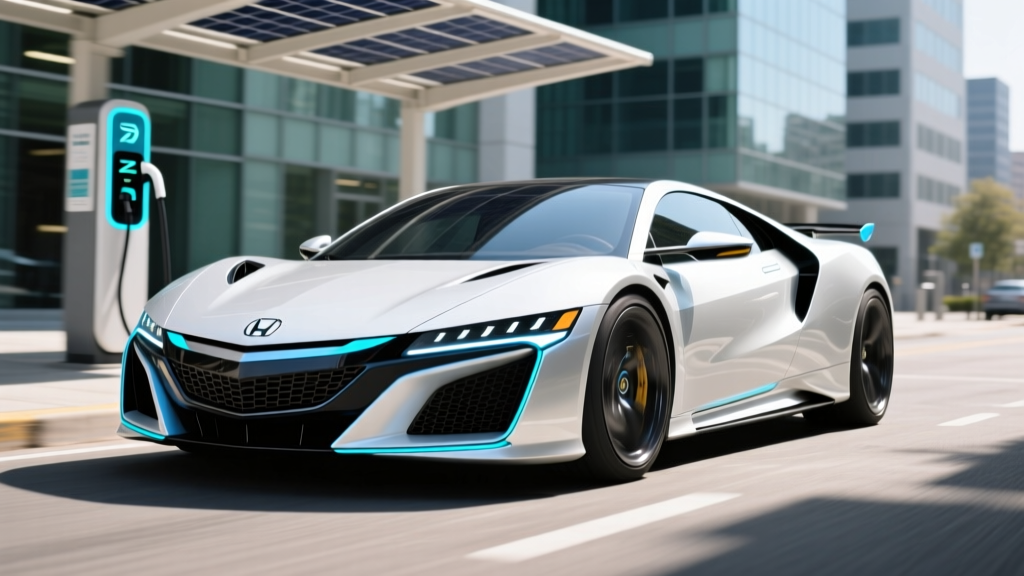
Honda discontinued the second-generation NSX hybrid supercar after the 2022 model year, closing a chapter on one of the most technically ambitious electrified performance cars ever built. Since then, search interest in a new Honda NSX hybrid has only grown — fueled by concept sightings, executive hints, and Honda's broader commitment to electrified performance vehicles. As of early 2026, Honda has not officially confirmed a third-generation NSX for production. What follows is a comprehensive analysis of what we know, what's rumored, and how the NSX's hybrid technology stacks up against the current performance-hybrid and EV landscape.
Second-Generation NSX: The Hybrid Supercar Benchmark
Before speculating about a successor, it's worth grounding expectations in what the outgoing NSX actually delivered. The 2016–2022 NSX used a twin-turbo 3.5L V6 paired with three electric motors — two up front for independent torque vectoring and one integrated with the engine. Total system output was 573 hp and 476 lb-ft of torque, channeled through a 9-speed dual-clutch transmission and SH-AWD (Super Handling All-Wheel Drive).
| Specification | Value |
|---|---|
| Powertrain | 3.5L Twin-Turbo V6 + 3 electric motors |
| Combined Output | 600 hp / 492 lb-ft (Type S) |
| Transmission | 9-speed DCT |
| Drivetrain | SH-AWD |
| Hybrid Battery | 1.2 kWh (lithium-ion, not plug-in) |
| 0–60 mph | 2.9 seconds (Type S) |
| Top Speed | 191 mph |
| EPA Combined MPG | 21 MPG |
| Electric-Only Range | ~1 mile (silent EV launch mode only) |
| Curb Weight | 3,902 lbs |
| Final MSRP (Type S) | $171,495 |
The NSX was a conventional hybrid (HEV), not a plug-in hybrid (PHEV). It could not be plugged in to charge. Its small 1.2 kWh battery pack served as a performance buffer — storing regenerative braking energy and feeding the front motors for instant torque and torque-vectoring precision. This distinction matters because some buyers confuse the NSX's hybrid system with plug-in hybrids like the Toyota Prius Prime or plug-in performance cars like the now-discontinued BMW i8.
Is a New Honda NSX Hybrid Confirmed for 2026 or Beyond?
As of this writing, Honda has not officially announced a production third-generation NSX. However, several signals suggest Honda is exploring a successor:
- Honda e:Concept and electrified performance direction: Honda has signaled that its future performance models will incorporate electrification, potentially using its new e:Architecture platform.
- Acura Precision EV Concept: Unveiled at Monterey Car Week, this concept hinted at an electric performance future for Honda's luxury division, which sold the NSX in the U.S. under the Acura badge.
- Executive statements: Honda executives have acknowledged the NSX's role as a technology halo car and have not ruled out a successor, though no timeline has been given.
- Honda's F1 hybrid expertise: Honda's power-unit engineering in Formula 1 — where 1.6L turbo V6 hybrid systems produce over 1,000 hp — provides a deep well of hybrid performance technology that could trickle into a road car.
Bottom line: A new Honda NSX hybrid remains unconfirmed and speculative. If it arrives, the earliest realistic production window is 2027–2028. Any "leaked specs" circulating on forums should be treated as rumor until Honda issues an official press release.
HEV vs PHEV vs EV: Which Powertrain Would a New NSX Use?
If Honda green-lights a new NSX, the powertrain choice will define the car's character. Here's how the three electrified options compare for a performance application:
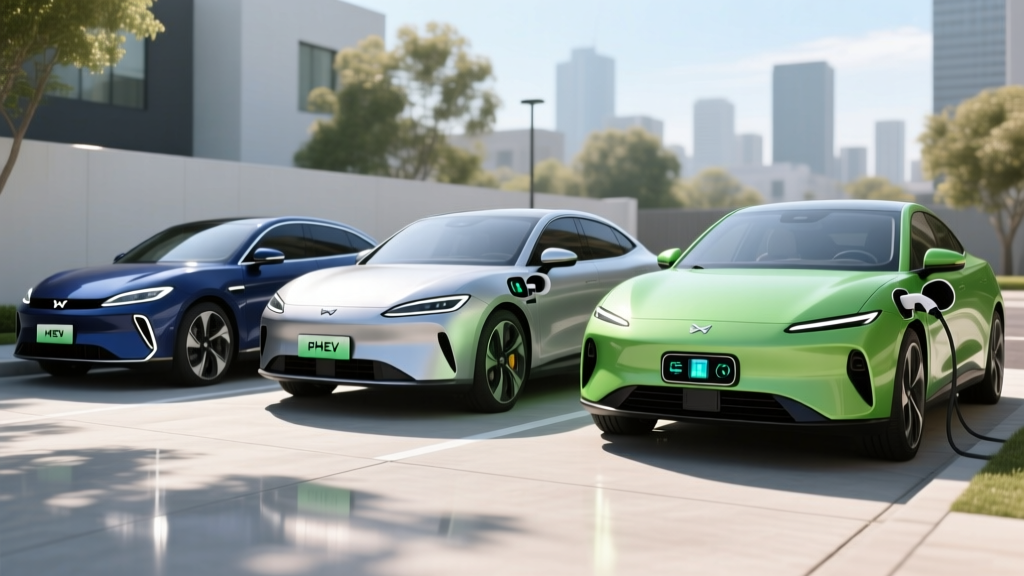
| Factor | Conventional Hybrid (HEV) | Plug-In Hybrid (PHEV) | Battery Electric (BEV) |
|---|---|---|---|
| Plug-in Charging | No — self-charging via regen | Yes — Level 2 or DC fast | Yes — Level 2 or DC fast |
| Electric-Only Range | Minimal (~1 mi launch assist) | 20–40 mi (typical PHEV) | 250–400+ mi (full EV) |
| Battery Size | 1–2 kWh | 12–25 kWh | 80–120 kWh |
| Weight Penalty | Low (~100–200 lbs over ICE) | Moderate (~400–600 lbs) | High (~800–1,500 lbs) |
| Performance Character | Torque fill, instant AWD | EV mode daily, ICE for track | Maximum instant torque, heaviest |
| Refueling/Recharging | Gas station only | Gas + plug-in | Plug-in only |
| Real-World Example | 2022 NSX, McLaren Artura (PHEV) | Ferrari 296 GTB, Corvette E-Ray | Taycan, Rimac Nevera |
The outgoing NSX proved that a conventional hybrid (HEV) can deliver supercar performance without the weight penalty of a large battery. The competing Ferrari 296 GTB went the PHEV route — using a 7.45 kWh battery for 15 miles of electric-only range alongside a twin-turbo V6 producing a combined 819 hp. The McLaren Artura also chose PHEV with a 7.4 kWh pack. If Honda wants to keep the NSX relatively light and track-capable, a next-gen HEV system with more powerful electric motors (potentially using Honda's F1-derived motor-generator technology) makes sense. A full EV NSX would be heavier but could deliver staggering straight-line performance.
Expected MPG and Efficiency: What the Numbers Might Look Like
Because a new NSX is not confirmed, no EPA fuel-economy data exists. However, we can project based on the outgoing model and current performance-hybrid benchmarks:
| Vehicle | City MPG | Highway MPG | Combined MPG | Powertrain |
|---|---|---|---|---|
| 2022 Acura NSX Type S | 21 | 22 | 21 | HEV (V6 + 3 motors) |
| 2024 Ferrari 296 GTB | 14 | 18 | 15 | PHEV (V6 + 1 motor) |
| 2024 McLaren Artura | 15 | 21 | 17 | PHEV (V6 + 1 motor) |
| 2024 Corvette E-Ray | 16 | 24 | 19 | HEV (V8 + 1 motor, AWD) |
The outgoing NSX's 21 MPG combined was remarkably efficient for a 573 hp supercar — credit to its relatively small-displacement V6 and the efficiency of Honda's hybrid system. A successor with a more powerful hybrid setup (650+ hp) might dip to 18–20 MPG combined, still impressive for the performance envelope. If Honda opts for a PHEV layout, expect 25–35 miles of electric-only range and an EPA combined figure around 20–22 MPG when running on gasoline — similar to the Artura.
Real-world MPG note: Hybrid supercars are rarely driven gently. Expect real-world fuel economy to be 10–20% below EPA estimates during spirited driving, though daily commuting in EV mode (if PHEV) could yield zero gasoline consumption on short trips.
Battery Technology, Reliability, and Warranty Considerations
Hybrid battery longevity is a top concern for any hybrid buyer — and especially relevant for a high-performance application where thermal stress is greater.
Honda Hybrid Battery Warranty (Current Models): Honda covers its hybrid battery packs for 8 years / 100,000 miles (10 years / 150,000 miles in CARB states including California, New York, Massachusetts, and others). This applies to the Accord Hybrid, CR-V Hybrid, and would be expected to carry over to any future NSX.
The outgoing NSX's 1.2 kWh lithium-ion pack was engineered with aggressive thermal management — liquid cooling and conservative state-of-charge windows (the battery never fully charges or fully depletes) to maximize longevity. Real-world NSX owners have reported minimal degradation even after 50,000+ miles of hard use, consistent with Honda's reputation for hybrid reliability across the Civic, Accord, and CR-V hybrid lineups.
Battery replacement cost: Honda does not publish NSX-specific battery replacement pricing, but based on the outgoing model's small pack size, a replacement would likely cost $3,000–$5,000 out of warranty — significantly less than a full EV battery replacement ($10,000–$20,000+). For comparison, a Toyota Prius hybrid battery replacement runs $2,000–$4,000.
Pricing, Tax Credits, and Ownership Economics
The outgoing NSX started at $157,500 and climbed to $171,495 for the Type S. A third-generation NSX, with more advanced hybrid technology and likely higher performance, would almost certainly start above $170,000 and could push past $200,000 for a range-topping variant.
Federal tax credit eligibility: Under current IRS §30D Clean Vehicle Credit rules, the NSX would face multiple hurdles:
- MSRP cap: The §30D credit caps eligibility at $80,000 for SUVs, vans, and pickups, and $55,000 for sedans and all other vehicles. A supercar priced at $170,000+ would not qualify.
- Income cap: Even if the price qualified, buyer adjusted gross income is capped at $150,000 (single) / $300,000 (joint).
- Battery sourcing: Critical-mineral and battery-component sourcing requirements further restrict eligibility.
Bottom line: No version of a future NSX hybrid would qualify for the federal §30D tax credit due to its MSRP exceeding the $55,000 cap for non-SUVs. State-level incentives (such as California's CVRP) also typically exclude vehicles above $60,000–$75,000 MSRP. This is a car you buy for performance and engineering, not for incentives.
Who Should Wait for a New NSX — And Who Should Look Elsewhere?
Wait for a new Honda NSX hybrid if:
- You value hybrid performance engineering over pure electric
- You want a daily-drivable supercar with AWD and sub-3-second 0–60
- You're a Honda/Acura loyalist who appreciated the outgoing NSX's approachability
- You're willing to spend $170,000–$200,000+ and wait until 2027–2028
Look at alternatives now if:
- You want a plug-in hybrid supercar today — consider the Ferrari 296 GTB ($330,000+) or McLaren Artura ($250,000+)
- You want electric performance now — the Porsche Taycan Turbo GT, Lucid Air Sapphire, or Tesla Model S Plaid deliver 1,000+ hp with instant torque
- Your budget is under $100,000 — the Corvette E-Ray (655 hp, HEV AWD, ~$105,000) is the closest spiritual successor at a lower price
- You want confirmed availability — the NSX remains speculative
Pros (Projected)
- Honda's proven hybrid reliability and engineering depth
- SH-AWD torque vectoring — class-leading handling precision
- Lighter than a full EV supercar, better track stamina
- Daily-drivable ride quality (outgoing NSX was praised for this)
- Strong F1 technology trickle-down potential
Cons (Projected)
- Unconfirmed — may never reach production
- Expected $170,000+ MSRP, no tax credit eligibility
- Likely 2027–2028 at earliest if announced
- Small hybrid battery limits electric-only utility
- Depreciation risk on low-volume supercars
Frequently Asked Questions
Is Honda making a new NSX hybrid?
Honda has not officially confirmed a third-generation NSX as of early 2026. Industry rumors and concept signals suggest Honda is exploring a successor, but no production timeline or specs have been released. Any new NSX would likely arrive in the 2027–2028 timeframe at the earliest.
How many MPG did the outgoing Honda NSX hybrid get?
The 2022 Acura NSX Type S was EPA-rated at 21 MPG combined (21 city / 22 highway). As a conventional hybrid (HEV), it did not plug in. Real-world MPG varied widely — gentle driving could yield 23–24 MPG, while track use dropped it to single digits.
Would a new NSX be a plug-in hybrid (PHEV) or conventional hybrid (HEV)?
This is unconfirmed. Competitors like the Ferrari 296 GTB and McLaren Artura use PHEV layouts with 15–25 miles of electric-only range. Honda could follow suit or stick with a more advanced HEV system. A PHEV would add weight but enable electric-only commuting; an HEV would keep weight lower for track use.
Would a new Honda NSX qualify for any tax credit?
No. The IRS §30D federal EV/PHEV tax credit caps eligible vehicles at $55,000 MSRP for non-SUVs. A $170,000+ supercar would not qualify regardless of its powertrain. State incentives similarly exclude vehicles at this price point.
How reliable are Honda hybrid systems?
Honda's hybrid systems are among the most reliable in the industry. The company has been building hybrids since the 1999 Insight, and current models (Accord Hybrid, CR-V Hybrid) show excellent long-term battery durability. Hybrid batteries are covered by an 8-year/100,000-mile warranty (10 years/150,000 miles in CARB states).
What would a new NSX hybrid cost?
Based on the outgoing model's pricing trajectory and inflation, a third-generation NSX would likely start above $170,000, with a range-topping variant (similar to the Type S) potentially exceeding $200,000. For context, the original 2017 NSX started at $156,000.
Should I buy a used NSX instead of waiting?
Used second-generation NSX prices have been appreciating, particularly for the Type S (limited to 350 units globally). Clean examples trade between $150,000 and $250,000+. If you want an NSX now and value the car's engineering legacy, a used example may actually hold value better than many new supercars — but you'll pay a collector premium.