Quick Verdict: The Highlander Hybrid's Value Proposition
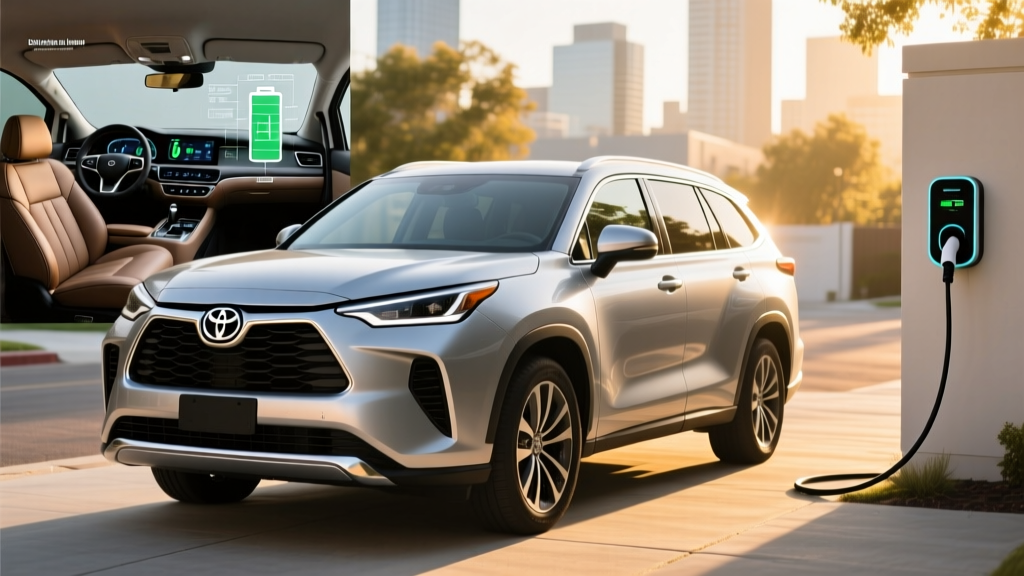
The Toyota Highlander Hybrid occupies a narrow but compelling lane: a three-row family hauler that delivers midsize-sedan fuel economy without requiring a plug, a lifestyle change, or a charging infrastructure gamble. For 2026, the Highlander Hybrid carries over the proven 2.5-liter four-cylinder hybrid powertrain introduced with the current generation, now paired with Toyota's fifth-generation hybrid system refinements. If you're researching the MSRP Toyota Highlander Hybrid pricing across trims, evaluating real-world MPG, or weighing this HEV against a plug-in alternative, this guide gives you the exact numbers you need.
2026 Toyota Highlander Hybrid MSRP by Trim
Toyota structures the Highlander Hybrid across four core trims, all equipped with the same hybrid powertrain and standard all-wheel drive (AWD). Below is the manufacturer's suggested retail price before destination charges, dealer adjustments, or any applicable incentives.
| Trim | MSRP | Key Additions Over Base |
|---|---|---|
| LE | $42,320 | 8-inch touchscreen, Toyota Safety Sense 3.0, tri-zone climate, 18-inch wheels |
| XLE | $46,370 | SofTex seats, power liftgate, 20-inch wheels, wireless charging, 2nd-row sunshades |
| Limited | $50,975 | Leather, 12.3-inch touchscreen, panoramic roof, heated/ventilated front seats |
| Platinum | $54,820 | Head-up display, 360° camera, panoramic view monitor, premium audio |
Destination charge: Approximately $1,395 (adds to all trims). The XSE trim available on the gas Highlander is not offered on the Hybrid for 2026.
Fuel Economy: EPA Ratings and Real-World MPG
The Highlander Hybrid's headline number is its fuel efficiency — remarkable for a 4,600-pound, three-row SUV. Here are the official EPA figures as published on fueleconomy.gov:
| Metric | City | Highway | Combined |
|---|---|---|---|
| EPA Rating | 35 MPG | 35 MPG | 36 MPG |
| Real-World Expectation | 36–40 MPG | 30–33 MPG | 33–37 MPG |
Powertrain Specs: Engine, Motors, and Total Output
Toyota pairs a naturally aspirated 2.5-liter inline-four with front and rear electric motors through an electronically controlled continuously variable transmission (eCVT). Electronic on-demand AWD is standard — the rear axle is driven entirely by an independent electric motor with no mechanical driveshaft.
| Specification | Value |
|---|---|
| Engine | 2.5L DOHC 4-cylinder (Atkinson cycle) |
| Combined Net Horsepower | 243 hp |
| Front Motor Output | 134 hp / 199 lb-ft |
| Rear Motor Output | 40 hp / 89 lb-ft |
| Transmission | eCVT (planetary gearset) |
| Drivetrain | Electronic on-demand AWD (standard) |
| 0–60 mph | ~7.6 seconds |
| Towing Capacity | 3,500 lbs |
The 243 hp combined output delivers adequate but not brisk acceleration. The eCVT provides seamless power delivery without gear hunting, though the engine drones audibly under hard acceleration — a characteristic of the Atkinson-cycle design prioritizing efficiency over peak power. For comparison, the turbocharged gas Highlander produces 265 hp but returns only 24 MPG combined.
Hybrid Battery: Size, Warranty, and Replacement Cost
The Highlander Hybrid uses a sealed nickel-metal hydride (NiMH) traction battery pack mounted beneath the second-row seats. Unlike plug-in hybrids, this battery is relatively small — approximately 1.6 kWh of total capacity — because its job is to buffer regenerative energy and assist acceleration, not to drive the vehicle on electric-only power for meaningful distances.
Battery Longevity and Replacement Cost
Toyota's hybrid battery track record is among the best in the industry. Data from fleet operators and long-term owners shows the NiMH packs in Toyota hybrids routinely lasting 150,000–200,000+ miles with gradual capacity loss rather than sudden failure. The Highlander Hybrid's battery management system keeps the pack within a conservative state-of-charge window (roughly 40–80%), minimizing degradation.
If replacement is needed out of warranty, expect to pay $3,000–$4,500 for a new OEM battery pack including labor at a Toyota dealer. Refurbished/remanufactured packs from third-party suppliers run $1,500–$2,500 installed. Individual module replacement (only the degraded cells) can reduce cost to $500–$1,200 at a hybrid-specialist shop.
Does the Highlander Hybrid Qualify for a Federal Tax Credit?
No. The Toyota Highlander Hybrid is a conventional HEV and does not qualify for the federal IRS §30D Clean Vehicle Credit. That credit applies exclusively to battery electric vehicles (BEVs) and plug-in hybrid electric vehicles (PHEVs) with a battery capacity of at least 7 kWh that meet North American assembly, critical mineral sourcing, and MSRP/income cap requirements.
Because the Highlander Hybrid cannot be plugged in and has a battery well under the 7 kWh threshold, it is ineligible regardless of buyer income or where it was assembled. Some states offer modest hybrid-specific rebates (typically $250–$1,000), but these vary by jurisdiction — check your state energy office or department of environmental quality for current programs.
Highlander Hybrid vs. PHEV vs. Full EV: Which Fits You?
The three-row family SUV segment now offers choices across the electrification spectrum. Here's how the Highlander Hybrid compares to a representative PHEV and BEV alternative:
| Attribute | Toyota Highlander Hybrid (HEV) | Kia Sorento PHEV | Kia EV9 (BEV) |
|---|---|---|---|
| Starting MSRP | $42,320 | $51,990 | $54,900 |
| EPA Combined | 36 MPG | 79 MPGe / 34 MPG (gas) | 89 MPGe |
| Electric-Only Range | N/A (not a PHEV) | 32 miles | 270–304 miles |
| Plug-In Required? | No | Recommended | Yes |
| Federal Tax Credit | $0 | Up to $7,500* | Up to $7,500* |
| Third Row | Yes (3 rows) | Yes (tight) | Yes (usable) |
| Home Charging Needed | No | Level 2 recommended | Level 2 essential |
* §30D credit eligibility depends on MSRP caps ($80,000 SUV), buyer AGI limits ($300K joint / $150K single), North American assembly, and critical mineral/battery component sourcing. Verify current-year rules at IRS.gov before purchasing.
Choose the Highlander Hybrid if: You want three rows, standard AWD, no plug-in logistics, proven reliability, and ~36 MPG in a package starting under $43K. You drive a mix of city and highway and don't have reliable home charging access for a PHEV or BEV.
Choose a PHEV (e.g., Sorento PHEV) if: Most daily trips are under 30 miles, you have Level 2 home charging, and you want to run primarily on electricity on weekdays while keeping gas flexibility for road trips — plus you qualify for the $7,500 credit, which narrows the price gap.
Choose a full BEV (e.g., EV9) if: You have reliable home charging, your road trips are under 250 miles (or you're willing to DC fast-charge on longer trips), and you want the lowest per-mile fuel cost and zero tailpipe emissions. The tax credit brings effective pricing close to the Highlander Hybrid's upper trims.
Pros and Cons at a Glance
- 36 MPG combined in a 3-row SUV — best in class
- No plug-in required; zero lifestyle change from a gas car
- Standard electronic AWD across all trims
- 10-year/150,000-mile hybrid battery warranty
- Strong Toyota reliability and resale value
- 3,500-lb towing capacity
- No federal tax credit eligibility (HEV, not PHEV)
- 243 hp feels modest for the vehicle's weight
- Third row is tight for adults on long trips
- Engine drone under hard acceleration (eCVT trait)
- Starting MSRP ~$8K above the gas-only Highlander LE
- No Apple CarPlay/Android Auto wireless on base LE trim
Frequently Asked Questions
How many MPG does the Toyota Highlander Hybrid actually get?
The EPA rates it at 35 city / 35 highway / 36 combined. In real-world driving, expect 36–40 MPG in city and suburban conditions (regenerative braking excels at low speeds), 30–33 MPG at sustained highway speeds above 70 mph, and a combined average of 33–37 MPG depending on your driving mix and climate. Cold weather and heavy cargo loads push consumption toward the lower end.
Is the Highlander Hybrid a plug-in hybrid?
No. The Highlander Hybrid is a conventional hybrid (HEV). It generates all its own electricity through regenerative braking and the gasoline engine. There is no charging port and no electric-only driving mode of any meaningful distance. Toyota does not sell a PHEV Highlander in the US as of the 2026 model year.
Is the Toyota Highlander Hybrid reliable?
Toyota's hybrid powertrains have a two-decade reliability track record dating to the original Prius. The Highlander Hybrid's 2.5L engine and eCVT have fewer wear components than a conventional turbocharged powertrain — no turbo, no multi-speed transmission clutches, no starter motor, no alternator. The hybrid battery is warrantied for 10 years/150,000 miles and commonly outlasts that period. Toyota consistently earns top marks from Consumer Reports and J.D. Power for hybrid dependability.
What does it cost to replace the hybrid battery?
Out of warranty, a new OEM replacement battery runs approximately $3,000–$4,500 installed at a Toyota dealer. Refurbished packs cost $1,500–$2,500, and individual cell-module replacement at a hybrid specialist can be as low as $500–$1,200. Most owners never need a replacement within the vehicle's typical ownership period.
Does the Highlander Hybrid qualify for any tax credit?
It does not qualify for the federal IRS §30D Clean Vehicle Credit, which requires a plug-in vehicle with at least 7 kWh of battery capacity. Some states offer small hybrid rebates ($250–$1,000), but these are jurisdiction-specific and change frequently. Check your state's energy or environmental agency for current programs.
How does the Highlander Hybrid compare to the Grand Highlander Hybrid?
The Grand Highlander Hybrid is larger, offers a genuinely usable third row for adults, and is available with the Hybrid MAX powertrain (362 hp). It starts at a higher MSRP (approximately $47,000 for the Hybrid LE) and returns slightly lower fuel economy at 34–36 MPG combined depending on trim. If third-row comfort is a priority, the Grand Highlander is the better fit; if compact exterior dimensions and slightly better MPG matter more, the standard Highlander Hybrid wins.