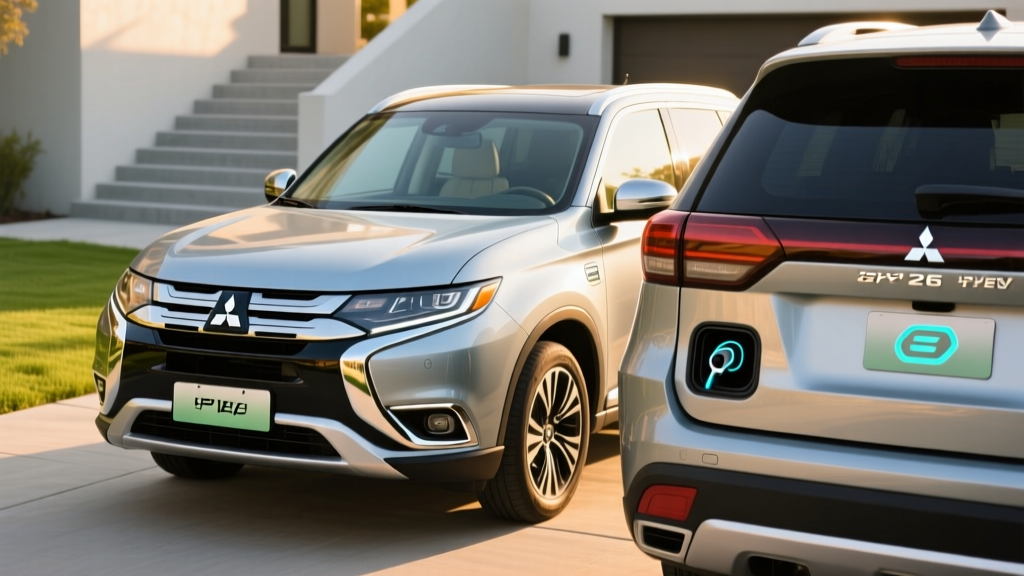
The Mitsubishi Outlander PHEV: A Plug-In Hybrid That Bridges Two Worlds
If you're researching the Mitsubishi Outlander PHEV hybrid, you're likely weighing a specific question: can a plug-in hybrid SUV handle daily electric commuting while eliminating range anxiety on longer road trips? The 2026 Outlander PHEV answers with a 20.5 kWh battery, an EPA-estimated 38 miles of electric-only range, and a combined 248 horsepower from its twin-motor all-wheel-drive powertrain. It's one of the few mainstream PHEVs that supports DC fast charging — a genuine differentiator in this segment.
This guide breaks down everything a prospective buyer needs: real-world efficiency versus EPA stickers, home and public charging logistics, federal tax credit eligibility under current IRS §30D rules, and the battery warranty details that should anchor any hybrid purchase decision.
| Specification | Value |
|---|---|
| EPA Electric-Only Range | 38 miles |
| Total Combined Range (EV + Gas) | ~400 miles |
| Battery Capacity (Gross / Usable) | 20.5 kWh / ~17.5 kWh |
| Battery Chemistry | Lithium-ion (NMC) |
| Combined MPGe (Electric + Gas) | 64 MPGe |
| Gas-Only Combined MPG | 26 MPG combined (25 city / 27 hwy) |
| Combined System Horsepower | 248 HP |
| Engine | 2.4L 4-cylinder Atkinson-cycle |
| Drivetrain | Standard S-AWC (twin-motor AWD) |
| Level 2 Charging (240V) | ~6.5 hours (full charge) |
| DC Fast Charging (CHAdeMO) | ~38 minutes (0–80%) |
| 0–60 mph | ~7.1 seconds |
| Starting MSRP (ES trim) | $41,640 |
| Battery Warranty | 10 years / 100,000 miles |
HEV vs. PHEV: Why the Outlander PHEV Is Not a Conventional Hybrid
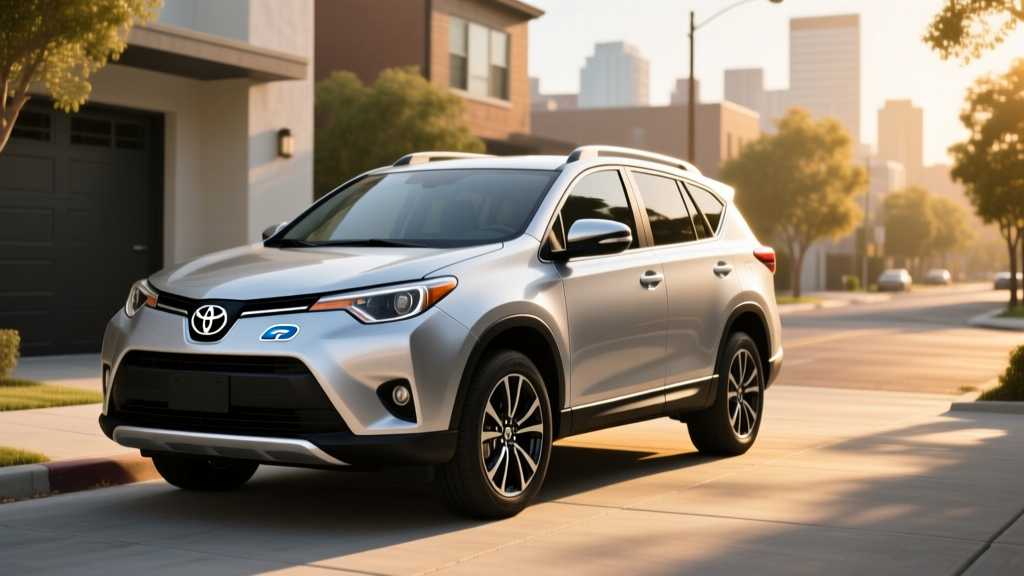
Before going further, it's critical to distinguish what you're actually buying. A conventional hybrid (HEV) like the Toyota RAV4 Hybrid uses a small battery recharged exclusively through regenerative braking and the gas engine. You never plug it in. A plug-in hybrid (PHEV) like the Outlander PHEV carries a much larger battery — here, 20.5 kWh — that you charge from a wall outlet, Level 2 home charger, or DC fast charger. That larger battery enables genuine electric-only driving for daily commutes before the gas engine ever starts.
| Feature | Conventional Hybrid (HEV) | Plug-In Hybrid (PHEV) |
|---|---|---|
| Battery Size | 1–2 kWh | 12–25 kWh |
| Electric-Only Range | 0.5–2 miles (low speed) | 20–50 miles (full-speed driving) |
| Plug-In Charging | No — self-charging only | Yes — Level 1, Level 2, and/or DC |
| Primary Fuel | Gasoline always | Electricity first, gasoline backup |
| Federal Tax Credit | Not eligible (§30D) | Potentially eligible (up to $3,750–$7,500) |
| Upfront Cost Premium | +$1,000–$3,000 vs. gas | +$5,000–$12,000 vs. gas |
The Outlander PHEV falls squarely in the plug-in category. If you see references to a non-plug-in "Outlander Hybrid," those are either outdated (Mitsubishi discontinued the conventional hybrid variant in most markets) or refer to the standard gas-only Outlander. The 2026 lineup in the U.S. is the PHEV.
Real-World MPG and Electric Range: What to Actually Expect
The EPA rates the 2026 Outlander PHEV at 64 MPGe when operating in combined electric-gas mode and 26 MPG combined once the battery is depleted and you're driving on gasoline alone. Those are the official figures from fueleconomy.gov. But real-world numbers depend heavily on how you charge and where you drive.
| Driving Scenario | EPA Estimate | Real-World Expectation |
|---|---|---|
| Electric-Only Range | 38 miles | 32–36 mi (highway); 36–40 mi (city/low-speed) |
| Gas-Only City MPG | 25 MPG | 24–27 MPG (regen helps in stop-and-go) |
| Gas-Only Highway MPG | 27 MPG | 24–26 MPG (aerodynamic drag at 70+ mph) |
| Combined (EV + Gas) | 64 MPGe | 50–64 MPGe (depends on charging frequency) |
| Cold Weather (below 30°F) | — | ~25–30 mi EV range; ~22–24 MPG gas |
Key insight: If your daily commute is under 35 miles round-trip and you charge nightly at home, you may burn gasoline only a handful of times per year. Owners who rarely charge will see closer to 24–26 MPG — still respectable for a 4,600-lb AWD SUV, but not transformative. The PHEV value proposition collapses without regular charging access.
Cold weather deserves special attention. Below freezing, lithium-ion batteries lose efficiency and the cabin heater draws significant energy. Expect electric-only range to drop 15–25% in winter conditions. The Outlander PHEV's gasoline engine can provide cabin heat without draining the battery — a real advantage over pure EVs in cold climates.
Charging the Outlander PHEV: Home, Public, and DC Fast Charging
One of the Outlander PHEV's strongest selling points is DC fast-charge capability via the CHAdeMO connector — a rarity among plug-in hybrids. Most PHEVs (Toyota RAV4 Prime, Hyundai Tucson PHEV) accept only Level 2 AC charging. The Outlander can replenish its battery at DC fast-charging stations in roughly 38 minutes to 80% state of charge.
| Charging Level | Power / Voltage | Time to Full Charge | Miles of Range Added per Hour |
|---|---|---|---|
| Level 1 (Standard Outlet) | 1.4 kW / 120V | ~14–16 hours | ~2–3 mi/hr |
| Level 2 (Home/Public AC) | 3.6 kW / 240V | ~6.5 hours | ~6 mi/hr |
| DC Fast Charge (CHAdeMO) | ~22 kW peak | ~38 min (0–80%) | N/A (session-based) |
Practical charging advice: A standard 120V outlet (Level 1) will fully recharge the 20.5 kWh battery overnight — roughly 14 to 16 hours from empty. For most daily commuters who deplete only 15–25 miles of range, Level 1 is actually sufficient: plug in when you get home, and the 8–10 hours parked will recover enough for the next day. A Level 2 home charger ($500–$1,200 installed) cuts full-charge time to about 6.5 hours and is ideal if you want faster turnaround or drive longer electric commutes.
The CHAdeMO DC fast-charging connector is functional but increasingly orphaned in the U.S. market. Most new public DC stations use CCS1 or Tesla's NACS. Check PlugShare before relying on DC fast charging during road trips — CHAdeMO stations still exist but are less common than CCS.
Powertrain and Performance: 248 HP Twin-Motor AWD
The Outlander PHEV's powertrain pairs a 2.4-liter Atkinson-cycle four-cylinder engine with two electric motors — one on each axle — delivering standard all-wheel drive Mitsubishi calls S-AWC (Super All-Wheel Control). Combined system output is 248 horsepower and 332 lb-ft of torque, putting the 0–60 mph time at approximately 7.1 seconds.
The twin-motor setup means the Outlander PHEV can operate in several modes:
- EV Mode: Pure electric driving using battery power, up to highway speeds (though range depletes faster above 65 mph)
- Series Hybrid Mode: The gas engine generates electricity to power the motors while the battery assists — used under heavy acceleration or when battery charge is low
- Parallel Hybrid Mode: The engine directly drives the front wheels at higher cruising speeds where it's more efficient than electric drive
The transition between modes is seamless and largely imperceptible from the driver's seat. Regenerative braking is adjustable via paddle shifters behind the steering wheel, with the strongest setting providing near one-pedal driving in city traffic — though it won't bring the vehicle to a complete stop like some full EVs.
Pricing, Trims, and Federal Tax Credit Eligibility
The 2026 Mitsubishi Outlander PHEV starts at $41,640 for the ES trim and ranges up to approximately $50,000 for the fully loaded SEL Platinum Edition. Here's the trim breakdown:
| Trim Level | Starting MSRP | Key Features |
|---|---|---|
| ES | $41,640 | S-AWC AWD, 8" touchscreen, heated front seats, adaptive cruise |
| SE | $44,040 | Navigation, power liftgate, synthetic leather, 360° camera |
| SEL | $46,640 | Genuine leather, panoramic sunroof, Bose audio, head-up display |
| SEL Platinum Edition | ~$49,940 | Unique styling, premium interior, all SEL features |
Federal Tax Credit (§30D) — Current 2026 Rules:
- Credit amount: Up to $3,750 (partial credit — dependent on critical-mineral and battery-component sourcing compliance)
- MSRP cap: Vehicle must be under $80,000 (SUVs) — Outlander PHEV qualifies on all trims
- Buyer income cap: Modified AGI ≤ $150,000 (single) / $300,000 (joint filing)
- Battery sourcing: Must meet critical-mineral and battery-component requirements per IRS §30D guidelines — verify current-year compliance at purchase
- Point-of-sale transfer: Eligible buyers can apply the credit as a down-payment reduction at the dealer
Important caveat: The full $7,500 credit requires meeting both critical-mineral ($3,750) and battery-component ($3,750) sourcing thresholds. Japanese-assembled PHEVs like the Outlander have faced challenges meeting the battery-component requirement under current rules, which may limit the credit to $3,750 or less. Always confirm eligibility with your dealer and a tax professional before relying on the credit in your purchase budget. Rules change, and your individual tax situation determines whether you can actually use a non-refundable credit.
Battery Warranty, Reliability, and Replacement Costs
Mitsubishi PHEV Battery Warranty: 10 years / 100,000 miles (whichever comes first). The warranty covers battery capacity loss below approximately 70% of original capacity, as well as defects in the battery management system and power electronics.
Mitsubishi's 10-year/100,000-mile battery warranty is among the longest in the PHEV segment — matching Hyundai and Kia's coverage and exceeding Toyota's 8-year/100,000-mile warranty on the RAV4 Prime. For a buyer concerned about long-term hybrid battery longevity, this is a meaningful safety net.
On reliability, Mitsubishi as a brand has posted mixed results in recent J.D. Power and Consumer Reports surveys, typically ranking in the middle-to-lower tier. However, the Outlander PHEV's powertrain is a mature technology — Mitsubishi has been building PHEV Outlanders since 2013 globally, and the current generation's twin-motor system is well-proven. The Atkinson-cycle 2.4L engine is naturally aspirated and relatively simple, reducing potential failure points compared to turbocharged alternatives.
If the battery does need replacement out of warranty, expect a cost between $8,000 and $12,000 for the pack plus labor. That's a significant figure, but it's worth noting that PHEV batteries experience less degradation stress than full EV batteries because they operate in a narrower state-of-charge window (the system reserves buffer capacity at both the top and bottom). Real-world data from earlier Outlander PHEV generations suggests most packs retain 80%+ capacity after 100,000 miles of mixed use.
Outlander PHEV vs. Full EV vs. Gas SUV: Which Is Right for You?
The Outlander PHEV occupies a specific niche. It makes sense for a particular buyer profile and less sense for others. Here's a decision framework:
Choose the Outlander PHEV if:
- Your daily commute is 25–38 miles round-trip and you can charge at home
- You take 3+ road trips per year exceeding 200 miles and don't want to plan around DC chargers
- You need three-row seating (the Outlander PHEV offers a small third row, rare in this class)
- You live in a cold climate where EV range loss is a genuine concern
- You want AWD as standard equipment without the EV price premium
Choose a full EV (like the Hyundai Ioniq 5 or Tesla Model Y) if:
- You have reliable home charging and your daily driving rarely exceeds 100 miles
- You want the lowest per-mile "fuel" cost and minimal maintenance
- You qualify for the full $7,500 federal EV tax credit
- You want access to the expanding DC fast-charging network (NACS/CCS) without CHAdeMO limitations
Choose a conventional hybrid (like the Toyota RAV4 Hybrid) if:
- You cannot charge at home (apartment, no garage, street parking)
- You want hybrid efficiency without any behavior change — just drive and refuel normally
- Your budget is tighter (HEVs typically cost $5,000–$8,000 less than comparable PHEVs)
Pros
- 38 miles EV range covers most daily commutes
- DC fast charging (CHAdeMO) — rare for PHEVs
- Standard AWD with twin-motor S-AWC
- 10-year/100,000-mile battery warranty
- Three-row seating in a compact PHEV SUV
- No range anxiety — 400+ miles total range
Cons
- CHAdeMO connector losing ground to CCS/NACS
- Third row is cramped — best for small children only
- Gas-only MPG (26 combined) is unremarkable
- Federal tax credit likely limited to $3,750 or less
- Level 2 charge rate (3.6 kW) is slow compared to rivals
- Mitsubishi brand reliability rankings are middling
Frequently Asked Questions
How many MPG does the Mitsubishi Outlander PHEV get?
The EPA rates the 2026 Outlander PHEV at 64 MPGe combined when using both electric and gasoline power, and 26 MPG combined (25 city / 27 highway) when running on gasoline alone after the battery is depleted. Real-world gas-only figures cluster around 24–27 MPG depending on driving style and conditions.
How far can the Outlander PHEV go on electric only?
The EPA-estimated electric-only range is 38 miles. In real-world driving, expect 32–36 miles at highway speeds and up to 40 miles in city driving where regenerative braking recovers energy. Cold weather (below 30°F) can reduce EV range to approximately 25–30 miles.
Does the Mitsubishi Outlander PHEV qualify for a tax credit?
It may qualify for a partial federal tax credit of up to $3,750 under IRS §30D rules, depending on current-year battery sourcing compliance. The full $7,500 requires meeting both critical-mineral and battery-component thresholds. Buyer income caps ($150K single / $300K joint) and the $80,000 MSRP limit for SUVs also apply. Verify eligibility at irs.gov and consult a tax professional.
Is the Outlander PHEV battery reliable and what does replacement cost?
Mitsubishi covers the PHEV battery for 10 years / 100,000 miles against capacity loss below ~70% and manufacturing defects. The twin-motor PHEV system has been in production globally since 2013 and is well-proven. Out-of-warranty battery replacement costs approximately $8,000–$12,000, though most packs retain strong capacity well past 100,000 miles given the system's conservative state-of-charge buffering.
Can I charge the Outlander PHEV at home with a regular outlet?
Yes. A standard 120V household outlet (Level 1) will fully charge the 20.5 kWh battery in about 14–16 hours. For daily commuters who use 15–25 miles of EV range per day, an overnight Level 1 session (8–10 hours) is often sufficient to recover the next day's electric range. A dedicated 240V Level 2 charger reduces full-charge time to approximately 6.5 hours.
How does the Outlander PHEV compare to the Toyota RAV4 Prime?
The RAV4 Prime offers 42 miles of EPA electric range (vs. 38), faster Level 2 charging, a more powerful 302 HP combined output, and stronger brand reliability ratings. However, the RAV4 Prime lacks DC fast charging, has no third row, and often carries significant dealer markups due to high demand. The Outlander PHEV's DC fast-charge capability and third-row seating are genuine advantages for the right buyer.
The 2026 Mitsubishi Outlander PHEV hybrid occupies a pragmatic middle ground: enough electric range to eliminate most daily gasoline use, enough gas-powered flexibility to make cross-country road trips effortless, and a battery warranty that should ease long-term ownership concerns. If you can charge at home and your routine fits within 35 electric miles, the Outlander PHEV effectively functions as an EV on weekdays and a road-trip SUV on weekends — without requiring you to commit to either identity exclusively.