Quick Verdict: The Outlander PHEV's Efficiency Story
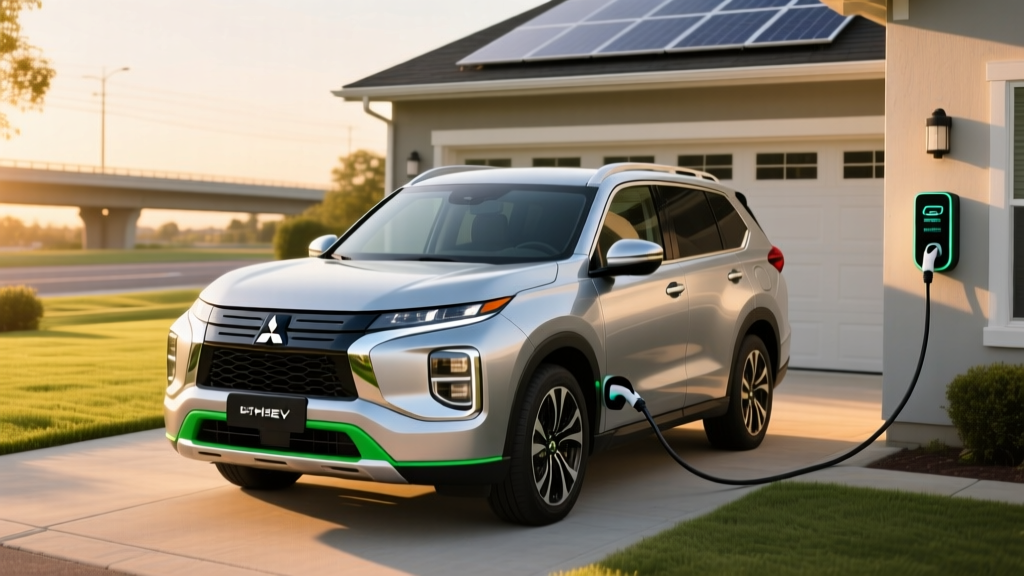
The Mitsubishi Outlander PHEV occupies a specific niche in the electrified SUV market: a three-row, seven-seat plug-in hybrid with standard all-wheel drive and genuine DC fast-charging capability. For buyers researching Mitsubishi Outlander PHEV gas mileage, the headline numbers are strong — 64 MPGe combined when factoring in electric driving, and 26 MPG combined once the battery depletes. But those EPA stickers only tell part of the story. This guide breaks down the real-world efficiency, electric-only range, charging behavior, and ownership economics you need to decide whether this PHEV fits your driving pattern.
| Spec | Value |
|---|---|
| EPA Combined (charge-depleting) | 64 MPGe |
| EPA Combined (charge-sustaining / gas only) | 26 MPG |
| EPA City / Highway (gas) | 25 / 27 MPG |
| Electric-Only Range | 38 miles |
| Total Combined Range | ~420 miles |
| Battery Capacity (gross / usable) | 20.0 kWh / ~17.5 kWh |
| Battery Chemistry | Lithium-ion (NMC) |
| Combined System Horsepower | 248 hp / 332 lb-ft torque |
| Engine | 2.4L 4-cylinder Atkinson-cycle (126 hp) |
| Front Motor | 85 kW (114 hp) |
| Rear Motor | 100 kW (134 hp) |
| Max DC Fast Charge Rate | 22 kW (CHAdeMO) |
| Level 2 Charge Time (0–100%) | ~6.5 hours at 3.3 kW |
| DC Fast Charge (0–80%) | ~38 minutes |
| Drivetrain | Standard AWD (twin-motor) |
| Seating | 7 (3 rows) |
| Base MSRP (ES trim) | $41,640 |
| Battery / Powertrain Warranty | 10 yr / 100,000 mi |
HEV vs. PHEV: Understanding What You're Buying
Before diving deeper into Outlander PHEV gas mileage, it's critical to understand the difference between a conventional hybrid (HEV) and a plug-in hybrid (PHEV), because Mitsubishi sells only the PHEV version of the Outlander in the U.S.
| Feature | Conventional Hybrid (HEV) | Plug-In Hybrid (PHEV) |
|---|---|---|
| Plug-in charging | No — charges via regenerative braking and engine | Yes — plug in to access electric-only range |
| Battery size | Small (1–2 kWh) | Larger (15–25 kWh typical) |
| Electric-only driving | Very limited (1–2 miles at low speed) | Substantial (25–50 miles) |
| Gas engine | Primary power source, assisted by electric motor | Backup / range extender after battery depletes |
| Federal tax credit | None (as of 2026) | Up to $3,904 for Outlander PHEV (§30D) |
| Outlander availability | Not sold in U.S. | Only PHEV variant sold in U.S. |
The Outlander PHEV is not a conventional hybrid you can simply fill with gas and forget about. To extract maximum value from its powertrain, you need access to a plug — ideally a Level 2 home charger. If you never plug it in, you're carrying 500+ pounds of battery and motor hardware you're not using, and the gas-only fuel economy drops to 26 MPG combined, which is unremarkable for a compact SUV.
Mitsubishi Outlander PHEV Gas Mileage: EPA vs. Real World
The EPA rates the Outlander PHEV at 64 MPGe combined (accounting for both electric and gasoline energy use) and 26 MPG combined in charge-sustaining mode — meaning after the battery is depleted and the vehicle operates purely as a hybrid.
| Driving Scenario | EPA Rating | Real-World Expectation |
|---|---|---|
| Combined (with electric + gas) | 64 MPGe | 55–70 MPGe depending on plug-in frequency |
| City (gas only, battery depleted) | 25 MPG | 27–30 MPG (regen favors stop-and-go) |
| Highway (gas only, battery depleted) | 27 MPG | 24–26 MPG (aero drag, less regen benefit) |
| Combined (gas only) | 26 MPG | 25–28 MPG |
| Electric-only consumption | 74 kWh/100 mi (MPGe basis) | Varies with climate and terrain |
A few real-world dynamics affect these numbers significantly:
- City driving favors the PHEV. Regenerative braking recovers energy at every stop, and the electric motors handle low-speed propulsion efficiently. Expect to beat the 25 MPG city gas rating in stop-and-go traffic once the battery is depleted.
- Highway driving is the weak spot. At 70+ mph, the Outlander's boxy SUV aerodynamics and 4,800-pound curb weight work against it. Highway gas-only mileage typically falls to 24–26 MPG — lower than the EPA sticker suggests.
- Cold weather cuts electric range by 20–30%. The 38-mile electric-only EPA rating can drop to 25–30 miles in freezing temperatures, as the battery's usable capacity shrinks and cabin heating draws significant energy.
- Plugging in daily is the key variable. If your commute is under 38 miles round-trip and you charge nightly, you may use almost zero gasoline for months. Owners who rarely plug in will see overall fuel economy closer to 26 MPG.
Electric-Only Range and Total Driving Range
The Outlander PHEV delivers an EPA-rated 38 miles of electric-only range on a full charge. That's enough to cover the average American's one-way commute (roughly 16 miles, per Census Bureau data) with margin to spare — meaning many owners can complete daily driving without burning a drop of gasoline.
EPA electric-only range: 38 miles
Real-world expectation (moderate climate, mixed driving): 32–38 miles
Real-world expectation (highway-heavy or freezing weather): 25–30 miles
Total range (electric + 14.8-gallon tank): ~420 miles
The 20.0 kWh gross battery (approximately 17.5 kWh usable) uses NMC (nickel manganese cobalt) lithium-ion chemistry. Mitsubishi reserves a buffer at the top and bottom of the pack to protect long-term health — you'll never see the full 20.0 kWh accessible on the dashboard.
For comparison, the Toyota RAV4 Prime offers 42 miles of electric range from a larger 18.1 kWh usable pack, while the Hyundai Tucson PHEV manages 33 miles. The Outlander's 38-mile figure is competitive, especially given its three-row seating advantage.
Charging: Levels, Speeds, and the CHAdeMO Question
The Outlander PHEV uses a somewhat unusual charging setup that prospective buyers need to understand before purchase.
| Charging Level | Power (kW) | Time (0–100%) | Connector |
|---|---|---|---|
| Level 1 (120V household) | ~1.4 kW | ~14–16 hours | J1772 |
| Level 2 (240V home/public) | 3.3 kW | ~6.5 hours | J1772 |
| DC Fast Charge | 22 kW peak | ~38 min (0–80%) | CHAdeMO |
Level 2 charging is the practical daily method. A standard 240V home outlet or Level 2 station replenishes the battery in roughly 6.5 hours — ideal for overnight charging. Note that the Outlander PHEV's onboard charger is limited to 3.3 kW, so even a 7.2 kW or 11.5 kW home charger won't speed things up. The vehicle can only accept 3.3 kW maximum.
DC fast charging is where the Outlander stands out from many PHEV competitors — most plug-in hybrids don't offer DC fast charging at all. However, Mitsubishi uses the CHAdeMO connector, which is being phased out across North America in favor of CCS and NACS (Tesla's standard). As of 2026, CHAdeMO stations are increasingly rare at new installations. You'll find them at older Electrify America and EVgo stations, but new infrastructure overwhelmingly deploys CCS1 and NACS connectors. This is a genuine long-term concern for Outlander PHEV owners who rely on public DC fast charging.
The 22 kW DC fast-charge rate is also modest by modern standards — it's roughly one-tenth the speed of a contemporary BEV like the Hyundai Ioniq 5. Think of it as a convenient top-up on road trips rather than a rapid pit stop.
Powertrain Performance: How the Twin-Motor AWD System Works
The Outlander PHEV's powertrain is genuinely sophisticated. Unlike many PHEVs that pair a single electric motor with a gas engine driving the same axle, Mitsubishi uses a twin-motor layout with no mechanical connection between the front and rear axles.
- Front axle: 85 kW (114 hp) electric motor + 2.4L Atkinson-cycle 4-cylinder engine (126 hp)
- Rear axle: 100 kW (134 hp) electric motor, independently driven
- Combined system output: 248 hp and 332 lb-ft of torque
The gas engine primarily acts as a generator in series-hybrid mode, producing electricity for the motors. At higher highway speeds (roughly above 40 mph under steady load), a clutch engages to let the engine directly drive the front wheels for better efficiency. This is Mitsubishi's interpretation of a series-parallel hybrid architecture.
Acceleration is respectable: 0–60 mph in approximately 7.5 seconds. The electric motors deliver instant torque from a stop, making the Outlander PHEV feel quicker in city driving than the 0–60 number suggests. The S-AWC (Super All-Wheel Control) system manages torque distribution between front and rear motors, providing confident traction in rain and snow.
Pricing, Trims, and Tax Credit Eligibility
The 2026 Outlander PHEV lineup spans four trims, all with standard AWD and seven-passenger seating:
| Trim | MSRP | Key Features |
|---|---|---|
| ES | $41,640 | 8-inch display, heated front seats, basic ADAS |
| SE | $44,540 | Synthetic leather, power liftgate, 360° camera |
| SEL | $47,140 | Nappa leather, panoramic sunroof, Bose audio |
| GT-Premium | $50,440 | Semi-aniline leather, heated steering wheel, head-up display |
Federal Tax Credit: §30D Eligibility
The Outlander PHEV qualifies for a partial federal tax credit under IRS §30D rules. As of 2026, the credit amount depends on battery sourcing and critical-mineral requirements:
- Credit amount: Up to $3,904 (partial credit — battery component requirement met, critical-minerals requirement varies by model year sourcing)
- MSRP cap: SUVs/vans must be under $80,000 — all Outlander PHEV trims qualify
- Buyer income cap: AGI ≤ $150,000 (single) / $300,000 (joint) / $225,000 (head of household)
- Point-of-sale transfer: Available — you can apply the credit as a down-payment reduction at the dealer
- Battery capacity requirement: ≥ 7 kWh — Outlander's 20.0 kWh pack easily qualifies
Important: Tax credit amounts and sourcing rules shift as supply chains evolve. Always verify current eligibility on fueleconomy.gov before purchase, and consult a tax professional for your specific situation. State-level incentives may also apply — check your state energy office for local rebates.
Reliability, Battery Warranty, and Long-Term Costs
Mitsubishi backs the Outlander PHEV's high-voltage battery and electric powertrain components with one of the strongest warranties in the segment:
High-voltage battery: 10 years / 100,000 miles (capacity retention warranty — covers degradation below ~70% of original capacity)
Powertrain (engine, motors, inverter): 10 years / 100,000 miles
Basic vehicle: 5 years / 60,000 miles
Roadside assistance: 5 years / unlimited miles
Mitsubishi's PHEV system has been in production since 2013 (globally), giving it one of the longest real-world track records of any plug-in hybrid. The battery pack has proven durable in fleet data, with typical degradation of 8–12% over the first 100,000 miles — meaning most owners will retain roughly 30–34 miles of electric range at the 10-year mark.
Battery replacement cost: If the pack does need replacement outside warranty coverage, expect a dealer-installed replacement to cost between $6,000 and $9,000 including labor. However, out-of-warranty failures remain rare based on available service data.
General reliability: Mitsubishi as a brand scores mid-pack in J.D. Power and Consumer Reports reliability surveys. The PHEV powertrain itself has fewer reported issues than the conventional Outlander's CVT transmission. The twin-motor AWD system eliminates the mechanical driveshaft, transfer case, and rear differential found in conventional AWD systems — fewer moving parts translates to fewer failure points over time.
Pros
- 38 miles electric-only range covers most daily commutes
- Standard AWD with twin-motor system — excellent in snow
- Only PHEV with standard 3-row / 7-seat configuration in its class
- DC fast charging (rare for PHEVs)
- 10-year / 100,000-mile battery warranty
- Competitive pricing for a plug-in hybrid SUV
- Partial federal tax credit eligibility
Cons
- CHAdeMO DC connector is being phased out in North America
- 26 MPG gas-only is mediocre for a PHEV (RAV4 Prime: 38 MPG)
- 3.3 kW Level 2 charging is slow compared to BEV standards
- Highway fuel economy falls below EPA estimate
- Third-row seat is tight — best for small children only
- Cargo space reduced vs. gas Outlander due to battery placement
- Mitsubishi dealer network is smaller than Toyota/Honda
Outlander PHEV vs. Full EV vs. Gas: Which Fits Your Life?
Decision Framework
Choose the Outlander PHEV if:
- You can charge at home (Level 2) and your daily driving is under 35–40 miles
- You need 3-row seating but don't want to go full electric
- You take road trips where charging infrastructure is uncertain
- You live in a region with harsh winters and want AWD with electric traction
- You want to reduce fuel costs without range-anxiety risk
Choose a full EV (BEV) instead if:
- You have reliable home charging and your daily driving rarely exceeds 200 miles
- You want to eliminate oil changes, spark plugs, and transmission service entirely
- You want the lowest per-mile energy cost (electricity is cheaper than gasoline in most states)
- You qualify for the full $7,500 federal tax credit on a BEV
Choose a gas-only or conventional hybrid SUV if:
- You cannot charge at home (apartment, street parking, no garage)
- You want the simplest ownership experience with no plug-in routine
- Your budget is under $35,000 and you need a compact SUV
- You drive predominantly highway miles where PHEV electric-range advantages disappear
Frequently Asked Questions
How many MPG does the Mitsubishi Outlander PHEV get?
The EPA rates the Outlander PHEV at 64 MPGe combined (electric + gas) and 26 MPG combined in gas-only mode. Real-world gas-only mileage typically ranges from 25–28 MPG depending on driving style, with city driving favoring the higher end thanks to regenerative braking.
How far can the Outlander PHEV go on electric only?
The EPA rates it at 38 miles of electric-only range. In real-world driving, expect 32–38 miles in moderate weather and 25–30 miles in freezing temperatures or highway-heavy driving. The total range (electric + full gas tank) is approximately 420 miles.
Does the Outlander PHEV qualify for a tax credit?
Yes — it qualifies for a partial federal tax credit under IRS §30D, currently up to $3,904 depending on battery sourcing requirements. All trims fall under the $80,000 SUV MSRP cap. Buyer income limits apply ($150K single / $300K joint). The credit can be transferred to the dealer at point of sale as a down-payment reduction. Always verify current eligibility at fueleconomy.gov.
Is the Outlander PHEV reliable, and what does a battery replacement cost?
The PHEV powertrain has a strong reliability record since Mitsubishi introduced the system globally in 2013. The battery is warranted for 10 years / 100,000 miles. Typical degradation is 8–12% over 100,000 miles. Out-of-warranty battery replacement runs $6,000–$9,000 if needed, though premature failures are uncommon.
Can I charge the Outlander PHEV at a Tesla Supercharger?
Not directly. The Outlander PHEV uses a J1772 connector for Level 1/2 charging and CHAdeMO for DC fast charging. Tesla Superchargers use the NACS connector. For Level 2, a J1772-to-NACS adapter may work at some Tesla Wall Connectors, but DC fast charging at Superchargers is not possible. As CHAdeMO infrastructure declines, this is a legitimate long-term concern for road-trip charging.
Do I have to plug in the Outlander PHEV?
You don't have to — the vehicle will operate as a conventional hybrid if you never plug it in. But you'll sacrifice the 38-mile electric range and the 64 MPGe combined rating, settling for 26 MPG gas-only. To get the efficiency and cost benefits you paid a premium for, daily Level 2 charging is strongly recommended.
How does the Outlander PHEV compare to the RAV4 Prime?
The Toyota RAV4 Prime offers 42 miles of electric range (vs. 38), significantly better gas-only fuel economy at 38 MPG combined (vs. 26), and faster Level 2 charging at 6.6 kW. However, the RAV4 Prime has only two rows of seating, is often subject to dealer markups due to high demand, and starts at a higher MSRP. The Outlander PHEV wins on seating capacity, standard DC fast charging, and availability.