Quick Verdict: A Pioneering PHEV SUV That Still Makes Sense Used
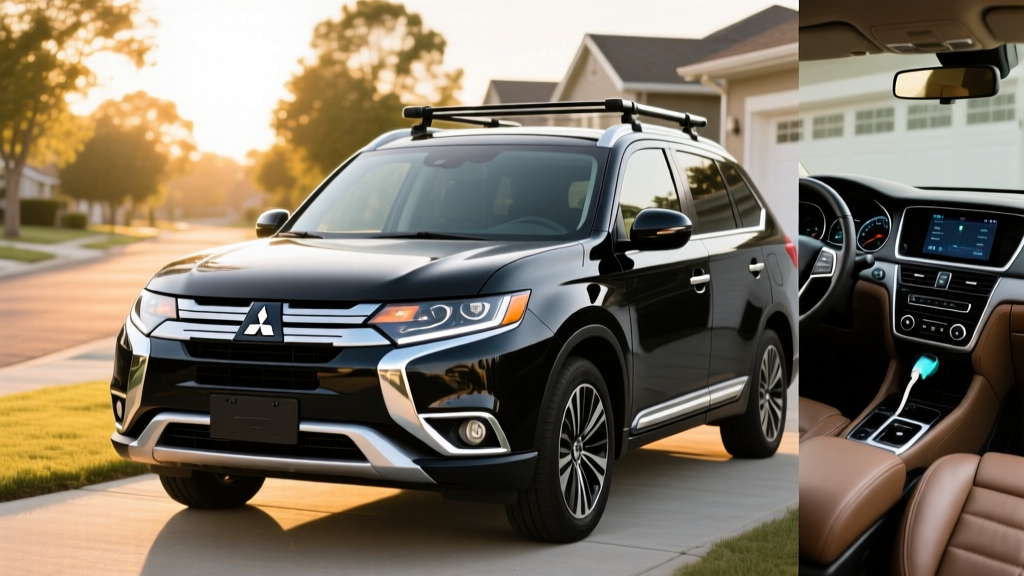
The 2018 Mitsubishi Outlander PHEV holds a unique place in electrified vehicle history. When it arrived in the U.S. market, it was the first plug-in hybrid SUV widely available to American buyers — and it remains one of the most affordable entry points into PHEV ownership on the used market today. With 22 miles of EPA-rated electric-only range, standard all-wheel drive, and a usable 12.0 kWh battery pack, it bridges the gap between a conventional hybrid and a full battery-electric vehicle for drivers who want electric commuting without range anxiety.
But as a used purchase in 2026, the 2018 Outlander PHEV requires careful evaluation. Battery degradation, outdated DC fast-charging speeds, and the discontinuation of federal tax credits for new purchases all factor into the decision. This guide breaks down every spec you need, real-world efficiency data, and whether this older PHEV still earns a spot in your driveway.
HEV vs. PHEV: Where the Outlander Fits
Conventional Hybrid (HEV) vs. Plug-In Hybrid (PHEV)
| Feature | Conventional Hybrid (HEV) | Plug-In Hybrid (PHEV) |
|---|---|---|
| Plug-in charging? | No — charges via engine & regen | Yes — plug in to access full electric range |
| Electric-only range | 0–2 miles at low speed | 20–40+ miles (model dependent) |
| Battery size | 1–2 kWh | 8–25+ kWh |
| Gas engine role | Primary propulsion + battery charging | Kicks in after battery depletes; can also assist |
| Example | Toyota RAV4 Hybrid | 2018 Mitsubishi Outlander PHEV |
The 2018 Outlander PHEV is a plug-in hybrid, meaning it has a substantially larger battery than a conventional hybrid and must be plugged in to realize its electric-only range. If you never plug it in, it operates as a heavy, somewhat inefficient hybrid — defeating the purpose. This distinction matters: conventional hybrids like the Toyota RAV4 Hybrid never need a plug and deliver consistent MPG regardless of charging behavior. The Outlander PHEV rewards plug-in behavior with near-silent, zero-tailpipe-emission commuting.
Range, MPG, and Efficiency — The Numbers That Matter
According to EPA data on fueleconomy.gov, the 2018 Mitsubishi Outlander PHEV delivers the following efficiency figures:
| Metric | EPA Rating |
|---|---|
| Electric-only range | 22 miles |
| Combined MPGe (electric + gas) | 74 MPGe |
| Gas-only combined MPG | 25 MPG |
| Gas-only city MPG | 25 MPG |
| Gas-only highway MPG | 26 MPG |
| Total combined range (electric + gas) | ~310 miles |
| Energy consumption (EV mode) | 44 kWh/100 mi |
The 25 MPG combined figure on gasoline alone is respectable for a 4,200-pound AWD SUV but falls short of competitors like the Toyota RAV4 Hybrid (32 MPG combined). This is the trade-off: the Outlander PHEV's larger battery and dual-motor AWD system add weight that hurts its gas-only efficiency. If your commute exceeds 22 miles and you can't charge at work, you'll spend most miles in gas mode at a penalty versus a lighter conventional hybrid.
Battery, Charging, and Powertrain Specs
| Specification | 2018 Outlander PHEV |
|---|---|
| Battery capacity (gross / usable) | 12.0 kWh gross / ~10.0 kWh usable |
| Battery chemistry | Lithium-ion (NMC) |
| Gas engine | 2.0L inline-4, 117 hp |
| Front electric motor | 80 hp (60 kW) |
| Rear electric motor | 80 hp (60 kW) |
| Combined system output | 197 hp |
| Drivetrain | AWD (twin-motor, no mechanical link to rear) |
| Level 1 charging (120V) | ~8 hours (0–100%) |
| Level 2 charging (240V, 3.3 kW) | ~3.5 hours (0–100%) |
| DC fast charging (CHAdeMO) | ~25 min (0–80%), peak ~22 kW |
| 0–60 mph | ~9.5 seconds |
| Cargo volume (behind 2nd row) | 30.4 cu ft |
Charging Realities in 2026
The 2018 Outlander PHEV uses the CHAdeMO DC fast-charging standard — the same connector used by the Nissan Leaf of that era. This is a critical consideration in 2026, as the U.S. public charging infrastructure has overwhelmingly standardized on CCS1 and, increasingly, Tesla's NACS connector. CHAdeMO stations are becoming scarce at public charging networks like Electrify America and EVgo. Most owners will rely on Level 2 home charging, which at 3.3 kW fully replenishes the 12 kWh battery in about 3.5 hours — practical for overnight or daytime top-ups.
The onboard charger maxes out at 3.3 kW on Level 2, meaning even if you plug into a 7.2 kW or 11.5 kW home charger, the Outlander will only draw 3.3 kW. This isn't a dealbreaker for a 12 kWh battery, but it's a limitation worth noting if you upgrade to a future PHEV or BEV with a faster onboard charger.
The DC fast-charging capability — roughly 22 kW peak via CHAdeMO — is slow by 2026 standards. Modern PHEVs like the Toyota RAV4 Prime don't even offer DC fast charging (relying on larger onboard AC chargers instead), while the Outlander's CHAdeMO port was a forward-thinking feature in 2018 that has aged poorly due to infrastructure shifts.
Reliability, Battery Degradation, and Warranty
• PHEV Battery: 10 years / 100,000 miles (capacity retention above ~70%)
• Powertrain: 10 years / 100,000 miles
• Basic vehicle: 5 years / 60,000 miles
Note: For a 2018 model in 2026, the 10-year battery warranty may still apply if under 100,000 miles — verify with a Mitsubishi dealer using the VIN.
Mitsubishi's PHEV powertrain has proven reasonably reliable, though it doesn't carry the bulletproof reputation of Toyota's hybrid systems. The most common owner complaints for the 2018 Outlander PHEV center on:
- Battery capacity loss: After 6–8 years, owners typically report 10–20% degradation, reducing electric range from 22 miles to roughly 17–20 miles. This is within normal NMC lithium-ion aging curves but noticeable on a battery this small.
- CHAdeMO charging port issues: Some owners report intermittent connection failures at public DC stations, often related to connector wear rather than vehicle-side faults.
- CVT/drive mode quirks: The Outlander PHEV doesn't use a traditional transmission — it operates primarily in series-hybrid mode (engine generates electricity, motors drive wheels) below ~40 mph, with a direct clutch coupling the engine to the front axle at highway speeds. Some drivers notice a drone under hard acceleration.
Battery Replacement Cost
If the traction battery falls below the warranty threshold (typically ~70% state of health), Mitsubishi will repair or replace it under warranty. Out of warranty, a full battery replacement for the 2018 Outlander PHEV runs approximately $6,000–$9,000 including parts and labor at a dealership. Independent EV shops may offer refurbished pack options for $4,000–$5,500, though availability varies. Before purchasing a used 2018 model, request a battery state-of-health (SoH) readout from a Mitsubishi dealer — this single data point is the most important factor in assessing remaining value.
Pricing and Tax Credit Eligibility in 2026
The 2018 Mitsubishi Outlander PHEV originally started at approximately $34,595 MSRP (SEL trim) and $40,295 (GT trim), before destination charges. As a used vehicle in 2026, expect pricing in the range of:
- SEL trim (used): $14,000–$19,000 depending on mileage and condition
- GT trim (used): $16,000–$22,000 depending on mileage and condition
Federal Tax Credit Status
The new-vehicle §30D federal tax credit is not available for the 2018 Outlander PHEV — this credit applies only to new vehicle purchases, and the Outlander PHEV's credit eligibility was exhausted years ago under the previous manufacturer cap system. However, the used clean vehicle credit (IRS §25E) may apply if you purchase from a dealer:
- Credit amount: Up to $4,000 or 30% of the sale price (whichever is less)
- Price cap: Vehicle sale price must be $25,000 or less
- Income limits: AGI ≤ $75,000 (single) / $112,500 (head of household) / $150,000 (joint)
- Vehicle age: Must be at least 2 model years old (2018 qualifies in 2026)
- Battery requirement: Must have a battery capacity of at least 7 kWh (the Outlander PHEV's 12 kWh qualifies)
- Dealer requirement: Must purchase from a licensed dealer, not private party
At typical used prices of $14,000–$19,000, the Outlander PHEV falls well under the $25,000 sale-price cap, making it eligible for the full 30% credit — potentially $4,200–$5,700 in savings, capped at $4,000. This makes the effective purchase price as low as $10,000–$15,000 for income-eligible buyers. Always verify current rules at IRS.gov's used clean vehicle credit page and consult a tax professional before relying on credit eligibility.
Who Should Buy the 2018 Outlander PHEV — And Who Shouldn't
Choose the 2018 Outlander PHEV If:
- Your daily commute is under 20 miles round-trip and you can charge at home
- You need AWD for snow/rain but don't want a full EV in a cold climate
- You want the lowest-cost entry into plug-in hybrid ownership (especially with the used-EV credit)
- You occasionally take longer road trips and want gas-engine backup
- You value Mitsubishi's generous 10-year/100,000-mile powertrain warranty (if still active)
Look Elsewhere If:
- Your commute exceeds 25 miles and you can't charge mid-day — you'll burn gas at just 25 MPG
- You rely on public DC fast charging — CHAdeMO infrastructure is declining
- You want cutting-edge tech, driver-assist features, or a premium interior
- You want a longer electric range (consider a used Chevrolet Volt with 53 miles, or a newer RAV4 Prime with 42 miles)
- You prioritize fuel efficiency in gas-only mode — the RAV4 Hybrid gets 32 MPG combined without ever needing a plug
Pros
- Standard AWD via twin electric motors — excellent traction
- Affordable used pricing, especially with §25E credit
- 22-mile electric range covers most short commutes
- CHAdeMO DC fast charging (rare for PHEVs)
- Spacious cargo area (30.4 cu ft)
- Long 10-year/100k-mile original battery warranty
Cons
- Only 25 MPG on gas — worse than many conventional hybrids
- CHAdeMO standard is declining in the U.S.
- 3.3 kW onboard charger limits Level 2 speed
- Dated interior technology and infotainment
- Modest 197 hp — not a quick SUV
- Battery degradation reduces already-short electric range
Hybrid vs. PHEV vs. Full EV: Which Powertrain Fits You?
The 2018 Outlander PHEV sits in the middle of the electrification spectrum. Here's how to decide which category suits your lifestyle:
| Factor | Conventional Hybrid (HEV) | Plug-In Hybrid (PHEV) | Full EV (BEV) |
|---|---|---|---|
| Home charging needed? | No | Yes (to realize value) | Yes (essential) |
| Daily electric driving | Near zero | 20–42 miles typical | 200–350+ miles |
| Long road trips | Seamless (gas) | Seamless (gas kicks in) | Requires DC fast-charge planning |
| Maintenance cost | Low (less than gas) | Moderate (engine + battery) | Lowest (no engine) |
| Best for | No plug access, long commutes | Short commute + home plug + occasional road trips | Home charging + mostly under 250 mi/day |
| Example (used ~$15k) | Toyota RAV4 Hybrid | 2018 Outlander PHEV | Used Nissan Leaf / Chevy Bolt |
If you have reliable home charging (even a standard 120V outlet works for the Outlander's small battery overnight) and your commute is under 20 miles, the PHEV gives you the best of both worlds: electric daily driving with zero range anxiety on road trips. If you can't charge at all, a conventional hybrid like the RAV4 Hybrid will save you more fuel without requiring any behavioral change.
Frequently Asked Questions
How many MPG does the 2018 Mitsubishi Outlander PHEV get?
The EPA rates the 2018 Outlander PHEV at 25 MPG combined (25 city / 26 highway) when operating on gasoline after the battery is depleted. In electric mode, it achieves 74 MPGe combined. Real-world gas-only MPG varies: city driving with frequent stops can yield 22–24 MPG, while steady highway cruising at 65–70 mph may reach 27–28 MPG. Owners who charge daily and commute under 22 miles may use almost no gasoline for weeks.
How far can the 2018 Outlander PHEV go on electric only?
The EPA rates it at 22 miles of electric-only range. Real-world range depends heavily on conditions: expect 18–22 miles in mild weather with gentle driving, and 14–18 miles in cold weather or at highway speeds. The 12.0 kWh gross battery (~10.0 kWh usable) is small by 2026 standards, but sufficient for short commutes, school runs, and errands.
Is the 2018 Outlander PHEV reliable, and what does a battery replacement cost?
The PHEV powertrain has average-to-good reliability. Mitsubishi's original 10-year/100,000-mile battery warranty is among the best in the industry, and some 2018 models may still carry coverage in 2026. Out-of-warranty battery replacement costs approximately $6,000–$9,000 at a dealer, or $4,000–$5,500 through independent shops with refurbished packs. Common issues include modest battery degradation (10–20% over 6–8 years) and CHAdeMO connector wear. Always get a battery SoH check before buying.
Does the 2018 Outlander PHEV qualify for any tax credit?
Not the new-vehicle §30D credit — that applies only to new purchases. However, the used clean vehicle credit (§25E) may provide up to $4,000 (30% of sale price, capped at $4,000) if you buy from a dealer, the sale price is under $25,000, and your income falls below IRS thresholds ($75k single / $150k joint). At typical used prices of $14,000–$19,000, this credit significantly reduces effective cost. Verify current eligibility at IRS.gov.
Can I charge the 2018 Outlander PHEV at home on a regular outlet?
Yes. Level 1 charging on a standard 120V household outlet takes approximately 8 hours for a full charge — practical for overnight replenishment. For faster charging, a 240V Level 2 station reduces that to ~3.5 hours, though the Outlander's onboard charger is limited to 3.3 kW. Most owners find Level 1 sufficient given the small 12 kWh battery.
Should I buy the 2018 Outlander PHEV or a newer PHEV?
If budget is the primary concern, the 2018 Outlander PHEV at $14,000–$19,000 (potentially $10,000–$15,000 after the used-EV credit) is among the cheapest PHEV SUVs available. Newer PHEVs like the Toyota RAV4 Prime (42 miles electric, 38 MPG gas) or Hyundai Tucson PHEV (33 miles electric, 35 MPG gas) offer substantially better efficiency and range but cost $25,000–$40,000+ used. If you can stretch the budget, the RAV4 Prime is the superior vehicle in nearly every metric. If you need the lowest upfront cost and your commute is short, the Outlander PHEV is a pragmatic choice.