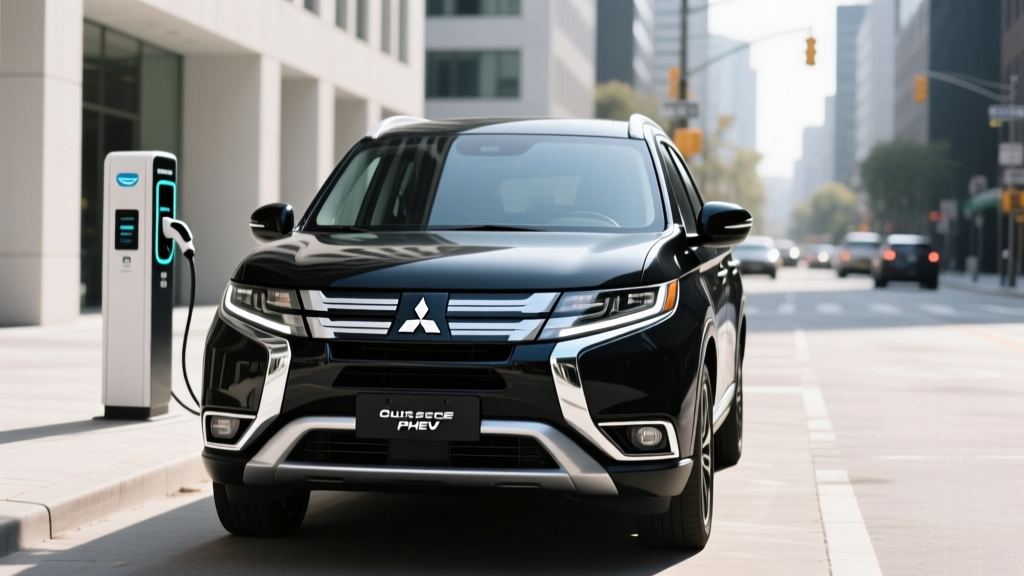
If you're researching the Mitsubishi Outlander hybrid, you're likely looking at one of the few mainstream plug-in hybrid SUVs that pairs three-row seating with genuine electric-only commuting range. For 2026, the Outlander PHEV continues as Mitsubishi's flagship electrified vehicle in the U.S., offering a 2.4-liter gasoline engine paired with dual electric motors and an all-wheel-drive system that doesn't require a mechanical driveshaft. This guide covers everything you need to know — from EPA efficiency figures and real-world range to battery longevity, tax credit eligibility, and whether a PHEV is the right fit for your driving habits.
HEV vs PHEV: What the Outlander Actually Is
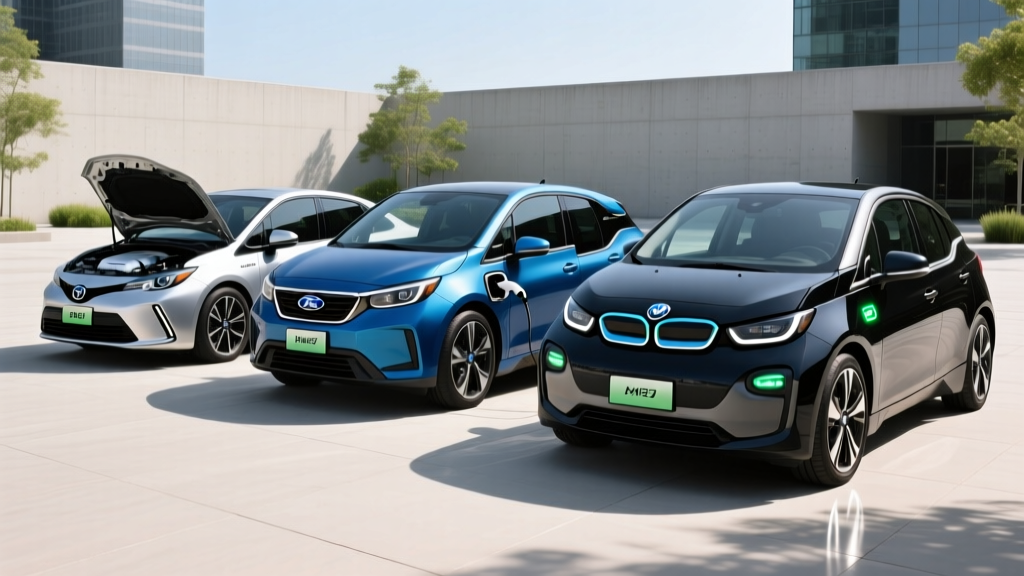
Before diving into specs, it's critical to understand what you're buying. Mitsubishi sells the Outlander in two electrified forms globally, but in the U.S. market, the Outlander PHEV (plug-in hybrid) is the electrified option. There is no conventional HEV (self-charging hybrid) version of the current-generation Outlander sold in the United States.
HEV vs PHEV — Key Differences
| Feature | HEV (Conventional Hybrid) | PHEV (Plug-in Hybrid) |
|---|---|---|
| Plugs in? | No | Yes — Level 1 or Level 2 |
| Electric-only range | ~1 mile or less | 20–40+ miles typical |
| Battery size | 1–2 kWh | 13–20 kWh usable |
| Runs on gas when battery depletes? | Yes (always) | Yes — seamless transition |
| Federal tax credit? | No | Potentially — see §30D rules |
The Outlander PHEV functions as a pure EV for short commutes and a conventional hybrid once the battery depletes. You never need to plug it in to drive it — but you lose the biggest benefit if you don't.
Powertrain, Horsepower, and Drivetrain Specs
The 2026 Outlander PHEV uses Mitsubishi's twin-motor S-AWC (Super All-Wheel Control) system. Here's the exact hardware breakdown:
| Specification | Detail |
|---|---|
| Gasoline Engine | 2.4L 4-cylinder Atkinson-cycle (126 hp / 146 lb-ft) |
| Front Electric Motor | 85 kW (114 hp) |
| Rear Electric Motor | 100 kW (134 hp) |
| Combined System Output | 248 hp / 332 lb-ft torque |
| Drivetrain | S-AWC (twin-motor AWD, no mechanical rear driveshaft) |
| Transmission | Single-speed reduction gear (no conventional transmission) |
| Battery (gross / usable) | 20.0 kWh gross / ~17.5 kWh usable |
| Battery Chemistry | Lithium-ion (NMC) |
| 0–60 mph | ~7.0 seconds (estimated) |
| Towing Capacity | 1,500 lbs |
| Drive Modes | EV, Series Hybrid, Parallel Hybrid (auto-managed) |
The three drive modes operate transparently. In EV mode, the Outlander runs purely on battery power using both electric motors. In Series Hybrid mode, the gas engine acts as a generator to charge the battery while the motors drive the wheels. In Parallel Hybrid mode (triggered at higher speeds or under heavy load), the engine mechanically drives the front wheels alongside the electric motors. Most drivers never need to think about which mode is active — the system manages it automatically.
Fuel Economy: EPA MPG, MPGe, and Real-World Numbers
Plug-in hybrids report efficiency in two ways: MPGe (miles-per-gallon-equivalent, measuring electric + gas combined efficiency when the battery is charged) and charge-sustaining MPG (gas-only efficiency once the battery is depleted). Both matter, depending on how you drive.
| Mode | City | Highway | Combined |
|---|---|---|---|
| Electric + Gas (MPGe) | — | — | 64 MPGe |
| Charge-Sustaining (gas only, MPG) | 26 MPG | 26 MPG | 26 MPG |
Source: EPA Fuel Economy — verify current-year figures as EPA data updates.
Real-World MPG vs EPA: What Owners Actually See
If you charge daily and commute under 35 miles: You'll use almost no gasoline. Many owners report going weeks between fill-ups, effectively seeing 80–100+ MPG equivalent in practice because most miles are electric.
If you never plug in (road trips, apartment living without charging): Expect the EPA's 26 MPG combined figure — possibly 24–25 MPG in heavy highway driving or cold weather. This is competitive with conventional midsize gas SUVs but not exceptional. The PHEV's weight penalty (the battery adds mass) means charge-sustaining MPG is similar to a Honda CR-V AWD or Toyota RAV4 AWD gas model.
In cold weather (below 30°F): Electric-only range drops 20–30%, and the engine fires up more frequently for cabin heat. Expect ~25–28 miles of EV range in winter vs. the rated 38 miles in moderate temperatures.
Electric-Only Range, Charging Times, and Battery Details
The headline number for the 2026 Outlander PHEV is its EPA-rated 38 miles of electric-only range. That's enough to cover the average American's daily round-trip commute (roughly 30–35 miles, per FHWA data) entirely on electricity — meaning many owners use zero gasoline on weekdays.
Total combined range (electric + full gas tank) is approximately 420 miles, eliminating range anxiety entirely for road trips.
| Charging Level | Power | Time (0–100%) | Connector |
|---|---|---|---|
| Level 1 (120V household outlet) | 1.4 kW | ~14 hours | J1772 |
| Level 2 (240V home/public) | 3.3 kW (onboard charger limit) | ~6.5 hours | J1772 |
| DC Fast Charge (CHAdeMO) | ~22 kW peak | ~38 min (0–80%) | CHAdeMO |
Charging Limitations to Know Before You Buy
- The onboard AC charger is capped at 3.3 kW. Even on a 48-amp Level 2 home charger capable of delivering 11.5 kW, the Outlander will only accept 3.3 kW. A full charge still takes ~6.5 hours — adequate overnight but slower than competitors like the Toyota RAV4 Prime (which accepts 6.6 kW).
- DC fast charging uses the CHAdeMO connector, which is being phased out across North America in favor of CCS1 and NACS (Tesla's standard). CHAdeMO stations are increasingly rare on networks like Electrify America and EVgo. This limits the Outlander's usefulness for en-route fast charging on road trips.
- DC fast charge power is modest at ~22 kW peak — this is not a vehicle you'll rapid-charge in 15 minutes. It's designed for opportunistic top-ups, not highway corridor charging.
Pricing, Trims, and Federal Tax Credit Eligibility
The 2026 Mitsubishi Outlander PHEV is available in ES, SE, and SEL trims. Pricing (MSRP, before destination) starts around $41,000 for the ES and climbs to approximately $48,000+ for the SEL with premium packages. Destination charges add roughly $1,350.
Does the Outlander PHEV Qualify for the Federal §30D Tax Credit?
PHEV eligibility under IRS §30D rules depends on several factors that change periodically. Key requirements include:
- MSRP cap: SUVs/vans must be under $80,000 — the Outlander PHEV clears this easily.
- Buyer income cap: Modified AGI must not exceed $150,000 (single) / $300,000 (joint).
- Battery component sourcing: A percentage of battery components must be manufactured or assembled in North America, and critical minerals must meet sourcing thresholds. These percentages increase annually, and eligibility can change mid-year.
- Credit amount for PHEVs: The credit is calculated based on battery capacity. PHEVs with smaller batteries may qualify for a partial credit (e.g., $3,750) rather than the full $7,500, depending on which sourcing requirements are met.
- Point-of-sale transfer: As of 2024+, eligible buyers can transfer the credit to the dealer at purchase, reducing the upfront price rather than waiting for a tax refund.
Bottom line: Check the fueleconomy.gov tax credit lookup for the specific model year and trim before purchasing. Credit eligibility is not guaranteed and varies by production batch and sourcing compliance. Consult a tax professional for your specific situation.
Battery Longevity, Warranty, and Replacement Cost
Battery durability is consistently the top concern among hybrid and PHEV buyers. Here's what Mitsubishi provides:
Outlander PHEV Battery Warranty
| Hybrid Battery Warranty | 10 years / 100,000 miles (whichever comes first) |
| Capacity Retention Threshold | Coverage triggers if battery falls below ~70% of original capacity |
| Powertrain Warranty | 10 years / 100,000 miles |
| Bumper-to-Bumper | 5 years / 60,000 miles |
Real-world degradation data: PHEV batteries are smaller and cycle more frequently than full EV batteries, but Mitsubishi's NMC pack is conservatively sized with a buffer (20 kWh gross vs. ~17.5 kWh usable) to reduce stress. Owner reports from previous-generation Outlander PHEVs (2018–2023) show typical degradation of 8–15% over 5 years / 60,000–80,000 miles — meaning electric-only range might drop from 38 miles to roughly 32–35 miles over that period. This is normal and within warranty tolerance.
Replacement cost if out of warranty: A full PHEV traction battery replacement is estimated at $6,000–$9,000 (parts and labor) at a Mitsubishi dealer. Individual module replacement may be possible at lower cost. For context, most PHEV batteries outlast the vehicle's practical ownership life — Consumer Reports and IIHS data show very few hybrid battery failures within the first 150,000 miles.
Who Should Buy the Outlander PHEV — and Who Shouldn't
Decision Framework: Is This the Right Electrified Vehicle for You?
Choose the Outlander PHEV if:
- You can charge at home (Level 1 or Level 2) and your daily commute is under 35 miles round-trip
- You need three-row seating but don't want a full-size SUV
- You take road trips where EV charging infrastructure is sparse or unreliable
- You want AWD capability for snow/rain without the fuel cost of a conventional AWD SUV
- You want to reduce gasoline consumption without committing to a full EV
Choose a full EV (like the Hyundai Ioniq 5 or Tesla Model Y) if:
- You have reliable home charging and your daily driving is under 250 miles
- You want zero gasoline maintenance (no oil changes, no engine)
- You want faster DC charging (200+ kW) and access to the expanding NACS/Supercharger network
- You want the lowest per-mile fuel cost (electricity is typically 3–5¢/mile vs. 12–18¢/mile for gas)
Choose a conventional gas or HEV hybrid (like the Toyota Highlander Hybrid) if:
- You cannot charge at home or at work (apartment, street parking)
- Your daily driving consistently exceeds 50+ miles, making the PHEV's electric range irrelevant
- You want lower upfront cost without worrying about plugging in
Pros
- 38 miles EV range covers most daily commutes
- Standard AWD with twin electric motors — excellent traction
- Three-row seating (rare in PHEV class)
- 10-year/100,000-mile battery and powertrain warranty
- Smooth, quiet EV-mode driving around town
- No range anxiety — gas engine for long trips
Cons
- 3.3 kW onboard charger is slow for Level 2
- CHAdeMO DC connector — declining infrastructure support
- 26 MPG charge-sustaining is average, not class-leading
- Third row is cramped — best for children only
- ~420-mile total range is modest for the segment
- Towing limited to 1,500 lbs
Frequently Asked Questions
How many MPG does the Mitsubishi Outlander PHEV get?
The EPA rates the Outlander PHEV at 64 MPGe when operating with a charged battery (combining electric and gas driving). Once the battery is depleted, it operates as a conventional hybrid rated at 26 MPG combined (26 city / 26 highway). Real-world results vary significantly: owners who charge daily and commute short distances often use almost no gasoline, while those who never plug in will see 24–26 MPG.
How far can the Outlander PHEV go on electric only?
The EPA-rated electric-only range is 38 miles. In real-world conditions — moderate temperatures, mixed city/suburban driving — expect 33–38 miles. In cold weather (below freezing), expect 25–30 miles. Highway-speed electric driving at 70+ mph will also reduce range below the EPA figure.
Does the Outlander PHEV qualify for the federal tax credit?
Potentially, but eligibility under IRS §30D rules depends on current battery sourcing requirements, your income, and the vehicle's MSRP. The Outlander PHEV is under the $80,000 SUV MSRP cap. Check fueleconomy.gov for the most current credit status, as eligibility can change based on where battery components and critical minerals are sourced. Consult a tax professional before relying on the credit.
Is the Outlander PHEV reliable?
Mitsubishi's PHEV powertrain has been in production since 2013 (longer in global markets), and the system is well-proven. The 10-year/100,000-mile battery warranty is among the best in the industry. Previous-generation models show modest battery degradation (~10–15% over 5–7 years). Mitsubishi's overall brand reliability ratings from Consumer Reports tend to be mid-pack — not class-leading like Toyota, but acceptable. The electric motors and power electronics have very few failure points.
What does a replacement battery cost?
Out of warranty, a full traction battery replacement is estimated at $6,000–$9,000 at a dealership. However, PHEV battery failures within the first 150,000 miles are rare. The 10-year warranty covers most ownership periods, and the capacity threshold (~70%) is generous enough that normal degradation won't trigger a claim.
Can I charge the Outlander PHEV at a Tesla Supercharger?
Not directly. The Outlander PHEV uses a J1772 connector for AC charging and CHAdeMO for DC fast charging. Tesla's NACS connector is not compatible without an adapter, and as of 2026, no widely available CHAdeMO-to-NACS adapter exists for DC charging. You can use a J1772-to-NACS adapter for Level 2 AC charging at some Tesla destination chargers, but not at Superchargers.
Hybrid vs PHEV vs EV — which should I choose?
If you can charge at home and commute under 35 miles, the Outlander PHEV gives you the best of both worlds: electric daily driving with gas-engine backup. A conventional hybrid (HEV) is better if you can't charge at all. A full EV (BEV) is ideal if you want the lowest operating cost, zero engine maintenance, and have reliable charging access — but requires more planning for road trips over 250 miles.
Always verify current pricing, tax credit eligibility, and EPA figures on fueleconomy.gov and the IRS website before purchasing. Specifications reflect the 2026 model year and are subject to change.