Quick Verdict: The 2018 Outlander PHEV in 2026
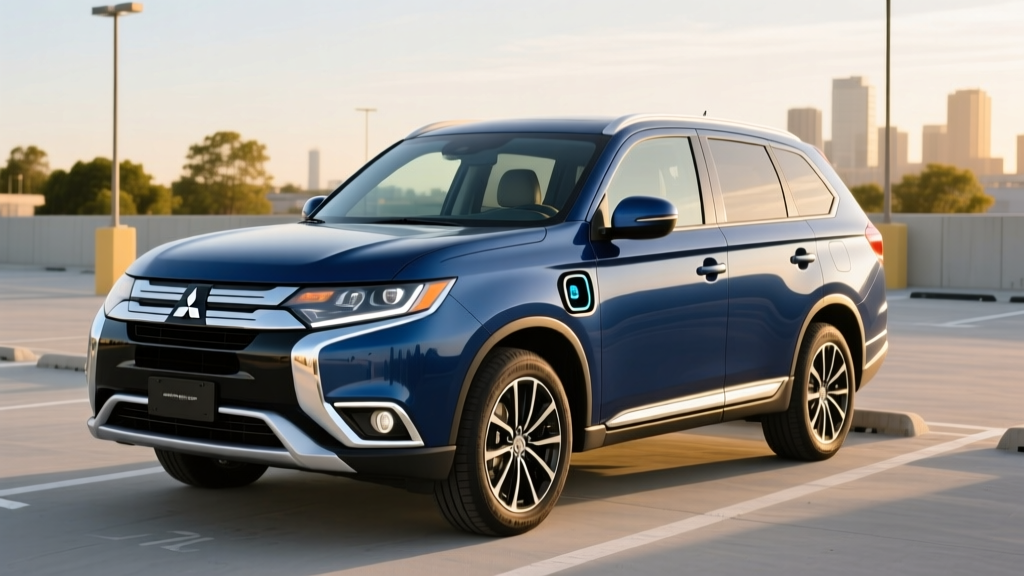
The 2018 Mitsubishi Outlander PHEV holds a unique place in the plug-in hybrid market. As one of the first mainstream PHEV SUVs sold in the United States, it proved that a family-sized crossover could run on electricity for short commutes and fall back on gasoline for road trips. In 2026, this model is exclusively available on the used market, where it presents a compelling value proposition for buyers who need all-wheel drive, reasonable cargo space, and the ability to plug in — without committing to a full battery-electric vehicle.
With an EPA-rated 22 miles of electric-only range and 25 MPG combined once the battery depletes, the 2018 Outlander PHEV is best suited for drivers with short commutes (under 20 miles each way) and access to home or workplace Level 2 charging. Its 12.0 kWh battery pack is modest by today's standards, but the vehicle's overall simplicity, standard AWD, and competitive used pricing make it worth serious consideration.
| Specification | Value |
|---|---|
| EPA Electric-Only Range | 22 miles |
| Total Combined Range | ~310 miles |
| EPA Combined MPG (gas, charge-depleted) | 25 MPG |
| EPA MPGe (gas + electric combined) | 74 MPGe |
| Battery Capacity (usable) | 12.0 kWh |
| Battery Chemistry | NMC (nickel-manganese-cobalt) |
| Combined System Horsepower | 197 hp |
| Engine | 2.0L inline-4 (119 hp) + twin electric motors |
| Drivetrain | Standard AWD (front 60 kW + rear 60 kW motors) |
| Level 1 Charging (120V) | ~8 hours (full charge) |
| Level 2 Charging (240V, 3.3 kW) | ~3.5 hours |
| CHAdeMO DC Fast Charge | Yes — 80% in ~25 min |
| 0–60 mph | ~9.7 seconds |
| Cargo Volume (behind 2nd row) | 30.4 cu ft |
| Battery Warranty (original) | 10 years / 100,000 miles |
| Original MSRP (base GT) | ~$34,595 |
| Typical Used Price (2026) | $14,000 – $19,500 |
Electric-Only Range and Fuel Economy: The Real Numbers
The 2018 Outlander PHEV's headline figure is its 22-mile EPA-rated electric-only range. This is the distance the vehicle can travel on battery power alone at moderate speeds before the 2.0-liter gasoline engine engages. For context, the average American one-way commute is roughly 16 miles, according to U.S. Census data, meaning many drivers could cover their daily round trip without burning a drop of fuel — provided they charge at home overnight.
Real-World Range Expectations: The EPA's 22-mile electric figure assumes moderate temperatures and mixed driving. In real-world conditions, expect:
- Ideal conditions (spring/fall, city speeds): 20–24 miles
- Highway driving (65–70 mph): 16–18 miles (electric range drops significantly at high speed)
- Cold weather (below 32°F): 14–17 miles (cabin heating draws from the battery)
Once the battery is depleted, the Outlander PHEV operates as a conventional series-parallel hybrid, with the gasoline engine and motors working together. The EPA rates it at 25 MPG combined (24 city / 26 highway) in charge-sustaining mode. This is where understanding the difference between a conventional hybrid (HEV) and a plug-in hybrid (PHEV) becomes essential.
| Mode | City | Highway | Combined |
|---|---|---|---|
| Electric-Only (EV mode) | 74 MPGe (22-mile range) | ||
| Gasoline (charge-depleted, hybrid mode) | 24 MPG | 26 MPG | 25 MPG |
For comparison, the conventional gas-only 2018 Outlander (non-PHEV, 4-cylinder AWD) achieves about 25 MPG combined as well — meaning the PHEV's primary advantage is its ability to eliminate gasoline use entirely on short trips when charged regularly. If you rarely plug in, the PHEV's extra weight from the battery pack slightly offsets its hybrid-mode efficiency.
HEV vs. PHEV: What the Outlander PHEV Actually Is
A common source of confusion among used-car shoppers is the distinction between a conventional hybrid (HEV) and a plug-in hybrid (PHEV). The 2018 Outlander PHEV is firmly a plug-in hybrid. Here is how the two categories differ:
| Feature | Conventional Hybrid (HEV) | Plug-In Hybrid (PHEV) |
|---|---|---|
| Plug-in charging required? | No — charges via regenerative braking and engine | Yes — must plug in to access full electric range |
| Electric-only range | 0–2 miles (low-speed assist only) | 20–40+ miles (model dependent) |
| Battery size | 1–2 kWh | 8–25+ kWh |
| Can eliminate gas on short trips? | No | Yes, if charged |
| Federal tax credit (new)? | No | Yes — up to $7,500 (when eligible and purchased new) |
The Outlander PHEV's 12.0 kWh battery is substantially larger than what you would find in a Toyota Prius (roughly 1.3 kWh for the HEV) or even the Prius Prime PHEV (8.8 kWh for the 2018 model year). That larger battery is what enables the 22-mile electric range. However, it also means the vehicle must be plugged in regularly to realize its efficiency advantage. If you cannot charge at home or work, a conventional HEV like the Toyota Highlander Hybrid may deliver more consistent real-world savings without lifestyle adjustments.
Powertrain, Charging, and the CHAdeMO Advantage
The 2018 Outlander PHEV uses a series-parallel hybrid system with a 2.0-liter inline-4 engine producing 119 horsepower and 137 lb-ft of torque, paired with two electric motors — one on each axle. The front motor delivers 60 kW (80 hp) and the rear motor also produces 60 kW (80 hp). Combined system output is rated at 197 horsepower. This twin-motor layout provides standard all-wheel drive without a mechanical driveshaft connecting the front and rear axles, which is an elegant engineering solution that also improves interior packaging.
Charging Options
One of the 2018 Outlander PHEV's standout features — and a rarity in the PHEV segment — is its CHAdeMO DC fast-charging capability. Most PHEVs from this era (and many today) only support Level 1 or Level 2 AC charging. The CHAdeMO port allows the Outlander PHEV to accept DC fast charging at public stations, reaching approximately 80% state of charge in about 25 minutes.
| Charging Level | Power | 0–100% Time | Notes |
|---|---|---|---|
| Level 1 (120V household outlet) | ~1.4 kW | ~8 hours | Convenient for overnight top-ups; included cord |
| Level 2 (240V home/public station) | 3.3 kW | ~3.5 hours | Recommended for daily use; J1772 connector |
| DC Fast Charge (CHAdeMO) | ~22 kW peak | ~25 min to 80% | Rare for PHEVs; CHAdeMO stations increasingly scarce |
Important caveat: The CHAdeMO DC fast-charging standard has been largely superseded by CCS and NACS in the U.S. market. As of 2026, Electrify America and most major networks have shifted to CCS1/NACS connectors. CHAdeMO stations still exist but are declining in number. Used Outlander PHEV buyers should check PlugShare for CHAdeMO availability in their area before counting on public DC fast charging. For most owners, Level 2 home charging is the practical daily solution, and a full overnight charge is easily achievable with the 12.0 kWh battery.
Battery Health, Warranty, and Replacement Costs
For any used PHEV buyer, the traction battery is the single biggest financial risk. The 2018 Outlander PHEV's 12.0 kWh NMC (nickel-manganese-cobalt) lithium-ion battery was originally covered by Mitsubishi's 10-year / 100,000-mile warranty for capacity retention. Mitsubishi defines a warranty claim as the battery dropping below approximately 70% of its original capacity — which would reduce electric range from 22 miles to roughly 15 miles or less.
Battery Warranty Details:
- Original coverage: 10 years / 100,000 miles (from date of first retail sale)
- Capacity threshold: ~70% of original capacity
- Transferability: The powertrain/battery warranty transfers to subsequent owners for the remainder of the original term
- 2026 status: A 2018 model's 10-year warranty window closes in 2028 — meaning most examples still carry some factory battery coverage as of 2026, provided they are under 100,000 miles
Real-world battery degradation data for the Outlander PHEV is encouraging. Owner reports and fleet data from European markets (where the Outlander PHEV has been sold since 2013) suggest typical capacity loss of 10–15% over the first 5–7 years under normal use. That translates to a loss of roughly 2–3 miles of electric range by 2026 for a well-maintained example. Vehicles subjected to frequent DC fast charging, extreme heat, or consistently being stored at 100% state of charge may show higher degradation.
Battery Replacement Cost
If the battery does fail outside of warranty, replacement is the major cost concern. As of 2026, a replacement traction battery pack for the Outlander PHEV runs between $5,000 and $8,000 including parts and labor at a Mitsubishi dealer. Third-party hybrid battery refurbishment shops may offer rebuilt packs for $3,500–$5,500. Given that the average used 2018 Outlander PHEV sells for $14,000–$19,500, a battery replacement represents a significant percentage of the vehicle's value — making pre-purchase battery health verification essential.
Pre-purchase tip: Ask the seller or dealer to perform a battery capacity test. Mitsubishi dealers can pull a State of Health (SoH) report from the vehicle's battery management system. Some owners use the OBDLink diagnostic tool with third-party apps to read SoH data independently. A healthy 2018 pack should show 85%+ capacity retention.
Tax Credits and Used Pricing in 2026
When new, the 2018 Outlander PHEV qualified for a $5,836 federal tax credit under IRS §30D, based on its battery capacity. That credit was available only to the original purchaser and is no longer available for used buyers in 2026. Federal tax credits for new vehicle purchases do not transfer to subsequent owners.
However, used EV and PHEV buyers may be eligible for the Used Clean Vehicle Credit (IRS §25E), which provides up to $4,000 (or 30% of the sale price, whichever is less) on qualifying pre-owned plug-in vehicles purchased from a dealer. Key requirements for the used-vehicle credit in 2026 include:
- Sale price must be $25,000 or less (the Outlander PHEV typically qualifies)
- Buyer income caps: $75,000 single / $112,500 head of household / $150,000 joint (modified AGI)
- Vehicle must be at least 2 model years old (a 2018 model qualifies)
- Must purchase from a licensed dealer — private-party sales do not qualify
- The credit can be applied as a point-of-sale reduction at participating dealers
Always verify current eligibility on IRS.gov or consult a tax professional, as rules and qualifying vehicle lists are subject to change.
Typical Used Pricing (2026)
Based on market listings and auction data, a used 2018 Mitsubishi Outlander PHEV typically sells for:
- $14,000 – $16,000: Higher-mileage examples (80,000+ miles), base GT trim, minor cosmetic wear
- $16,000 – $19,500: Lower-mileage examples (40,000–70,000 miles), SEL Touring trim, clean history
At these prices, the Outlander PHEV undercuts newer PHEV competitors like the Toyota RAV4 Prime (used examples starting around $28,000+) and the Hyundai Tucson PHEV (used from ~$22,000). The trade-off is older technology, shorter electric range, and the CHAdeMO connector limitation.
Reliability and Ownership Costs
Mitsubishi's reputation for reliability is mixed but generally acceptable for the Outlander PHEV. The vehicle's powertrain is relatively simple — the 2.0L engine is a proven, low-stress design, and the electric motors have few wearing components. The most commonly reported issues among owners include:
- 12V auxiliary battery drain: If the vehicle sits unplugged for extended periods, the 12V battery can deplete, preventing the vehicle from starting even with a charged traction battery
- Brake feel: The transition between regenerative braking and friction braking can feel abrupt, particularly at low speeds
- Infotainment: The 2018 system is dated by 2026 standards — no wireless CarPlay, and the touchscreen is slow by modern benchmarks
- CHGdeMO port weather seal: Some owners report moisture ingress around the DC fast-charge port cover in wet climates
According to data from NHTSA, the 2018 Outlander PHEV has a relatively low recall count, with no major battery-related safety recalls. The IIHS rated the conventional 2018 Outlander as a Top Safety Pick, though the PHEV variant was not separately crash-tested by the institute.
Annual maintenance costs are lower than the gas-only Outlander due to regenerative braking reducing pad wear and less engine runtime. Expect $400–$600 per year for routine service (oil changes, tire rotation, cabin filter) at an independent shop. Insurance costs are moderate — typically $1,200–$1,600 annually depending on region and driver profile.
Pros
- Standard AWD via twin electric motors — no mechanical linkage
- CHAdeMO DC fast charging (rare for PHEVs)
- 22-mile electric range covers most daily commutes
- Remaining factory battery warranty on many examples (through 2028)
- Affordable used pricing vs. newer PHEVs
- Eligible for up to $4,000 used clean vehicle credit (§25E)
Cons
- Only 22 miles of electric range — short by 2026 standards
- CHAdeMO connector is increasingly unsupported at public DC stations
- Slow Level 2 charging (3.3 kW max) compared to newer PHEVs
- Dated infotainment and interior materials
- Modest 197 hp — not a quick vehicle (0–60 in ~9.7 sec)
- No third-row seat (unlike the gas Outlander)
Who Should Buy the 2018 Outlander PHEV — And Who Shouldn't
Choose the 2018 Outlander PHEV if:
- Your daily round-trip commute is under 22 miles and you can charge at home
- You need AWD for snow or rain but don't want a full EV
- Your budget is under $20,000 and you want a PHEV SUV
- You take occasional road trips where charging infrastructure may be sparse
- You can verify battery health before purchase and the remaining warranty provides peace of mind
Consider a full EV instead if:
- Your commute is longer than 22 miles each way (the electric range won't cover it)
- You have reliable home charging and access to DC fast chargers for road trips
- You want lower long-term maintenance costs and zero oil changes
- A used Chevrolet Bolt EUV, Nissan Leaf, or Tesla Model 3 fits your budget
Consider a conventional hybrid (HEV) instead if:
- You cannot charge at home or at work
- You want a simpler ownership experience with no plug-in routine
- A Toyota Highlander Hybrid or RAV4 Hybrid suits your space needs
Frequently Asked Questions
How many MPG does the 2018 Mitsubishi Outlander PHEV get?
Once the battery is depleted, the Outlander PHEV operates as a hybrid and achieves an EPA-rated 25 MPG combined (24 city / 26 highway). When factoring in electric driving, the combined rating is 74 MPGe. Real-world fuel economy in hybrid mode tends to be close to EPA estimates, with some owners reporting 26–28 MPG in city-heavy driving thanks to regenerative braking.
How far can the 2018 Outlander PHEV go on electric power alone?
The EPA rates it for 22 miles of electric-only range. In real-world conditions, expect 20–24 miles in mild weather at moderate speeds, 16–18 miles at highway speed, and as low as 14–17 miles in cold weather when cabin heating draws from the battery. Total combined range (electric + gasoline) is approximately 310 miles.
Does the 2018 Outlander PHEV qualify for any tax credit in 2026?
The original $5,836 federal tax credit (available when new) does not transfer to used buyers. However, under the IRS §25E Used Clean Vehicle Credit, qualifying buyers may receive up to $4,000 (or 30% of the sale price, whichever is less) when purchasing from a dealer, subject to income limits ($75K single / $150K joint) and a $25,000 maximum sale price. Verify eligibility at IRS.gov.
Is the 2018 Outlander PHEV reliable, and what does a battery replacement cost?
The Outlander PHEV has an average-to-good reliability record. The 2.0L engine and twin-motor drivetrain are proven designs. The traction battery carries a 10-year/100,000-mile warranty (still active for many 2018 examples through 2028). If replacement is needed out of warranty, expect to pay $5,000–$8,000 at a dealer or $3,500–$5,500 at a third-party hybrid specialist.
Can I DC fast charge the 2018 Outlander PHEV?
Yes — it is one of the few PHEVs with a CHAdeMO DC fast-charge port, capable of reaching ~80% in about 25 minutes. However, CHAdeMO infrastructure is declining in the U.S. as networks shift to CCS and NACS. Check PlugShare for CHAdeMO availability in your area before relying on this feature.
Should I buy a used 2018 Outlander PHEV or a newer PHEV?
The 2018 model trades newer features and longer electric range for significantly lower cost. A used Toyota RAV4 Prime offers 42 miles of range and modern tech but costs $28,000+ used. If budget is the priority and 22 miles covers your commute, the 2018 Outlander PHEV is strong value. If range and modern infotainment matter more, stretch the budget for a 2021+ RAV4 Prime or Tucson PHEV.