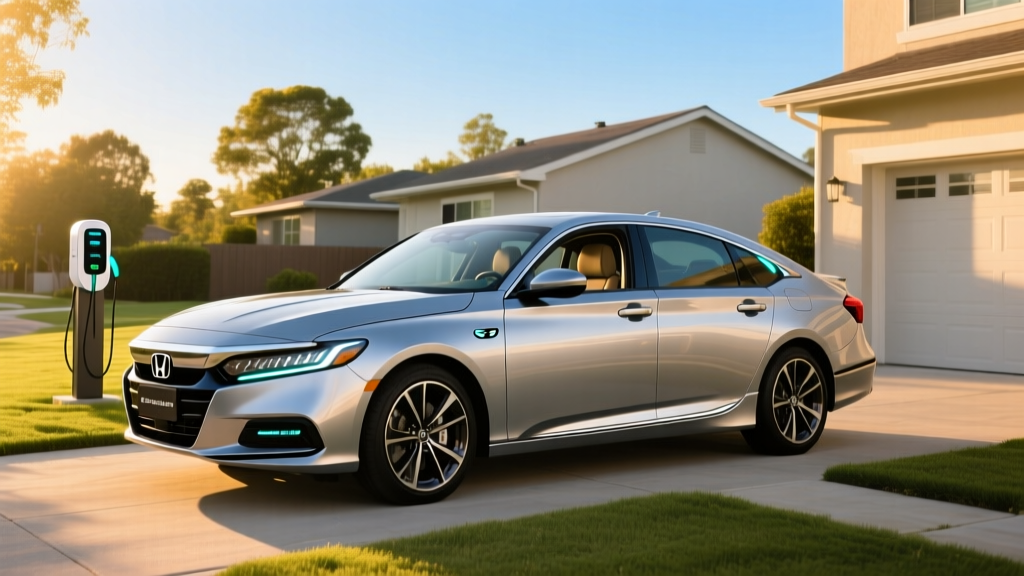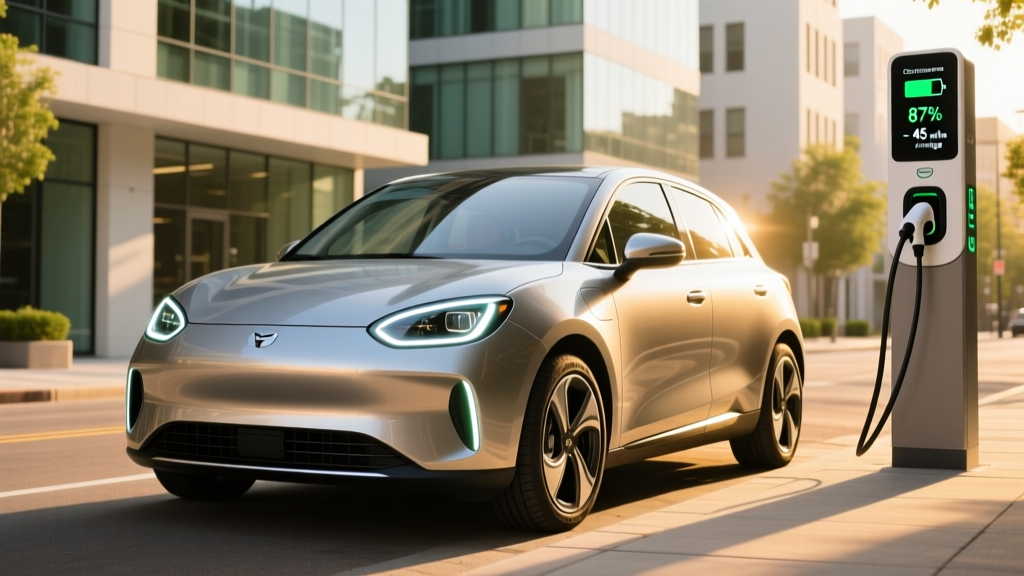
Compact electrified vehicles are carving out a unique niche in 2026: the mini plug-in hybrid. These subcompact PHEVs promise the best of both worlds — short electric-only commutes for daily errands and a gas engine for weekend road trips — all wrapped in a footprint small enough for tight city parking. But do they actually deliver on that promise, or are you better off with a conventional hybrid or a full battery-electric vehicle (BEV)?
This guide dissects the mini PHEV segment from a data-driven perspective: real EPA numbers, battery sizing, charging logistics, tax-credit eligibility, and a clear decision framework so you know exactly which powertrain fits your life.
What Exactly Is a Mini Plug-In Hybrid?
A mini plug-in hybrid is a subcompact vehicle (think city-car or B-segment hatchback dimensions) equipped with a PHEV powertrain. Unlike a conventional hybrid (HEV) that charges its small battery solely through regenerative braking and the engine, a PHEV carries a larger battery pack — typically 10–20 kWh — that you plug in to recharge. That larger pack enables a meaningful electric-only driving range before the gasoline engine kicks in.
HEV vs. PHEV — The Critical Differences
| Feature | Conventional Hybrid (HEV) | Plug-In Hybrid (PHEV) |
|---|---|---|
| Plug-in charging | No — self-charging via regen + engine | Yes — Level 1/Level 2 plug-in required for EV range |
| Battery size | 0.5–2 kWh | 10–20 kWh (typical mini PHEV) |
| Electric-only range | Less than 1 mile (assist only) | 20–45 miles EPA |
| Federal tax credit | Generally none under §30D | Up to $7,500 (subject to sourcing/income/MSRP rules) |
| Best for | Drivers who can't plug in at home | Drivers with home/work charging and short commutes |
The "mini" distinction matters because these vehicles prioritize urban maneuverability and efficiency over cargo volume and towing. Expect overall lengths under 165 inches, curb weights between 3,200–3,800 lbs, and cargo space in the 15–20 cubic-foot range behind the rear seats.
Fuel Economy and Electric-Only Range: The Real Numbers
When evaluating any mini plug-in hybrid, you need two separate efficiency figures: MPGe (miles-per-gallon-equivalent when running on battery electricity) and MPG (miles-per-gallon when the gas engine is active after the battery depletes).
| Metric | City | Highway | Combined |
|---|---|---|---|
| Electric-only (MPGe) | 115–130 | 95–110 | 105–120 |
| Gas-only after depletion (MPG) | 42–50 | 38–44 | 40–47 |
| Electric-only range | 25–42 miles (EPA est.) | ||
One advantage mini PHEVs hold over larger plug-in hybrids is that their lighter weight and smaller frontal area let them squeeze more miles from each kWh and each gallon. In city driving especially — where regenerative braking recaptures energy at every stoplight — real-world MPG often exceeds the EPA combined figure by 3–5 MPG when the gas engine is running.
Battery, Charging, and Powertrain Specs
The battery in a mini plug-in hybrid typically ranges from 10 to 18 kWh (usable capacity), using NMC (nickel manganese cobalt) lithium-ion chemistry. This is substantially smaller than a full EV's 60–100 kWh pack, which keeps weight and cost down but also means charging is straightforward.
| Specification | Typical Range (2025–2026 Models) |
|---|---|
| Battery capacity (usable) | 10–18 kWh, NMC chemistry |
| Level 1 charging (120V) | 5–8 hours (0–100%) |
| Level 2 charging (240V) | 2–3.5 hours (0–100%) |
| DC fast charging | Rarely available; some models offer 50 kW CCS (~30 min to 80%) |
| Combined system horsepower | 130–200 HP (engine + electric motor) |
| Gas engine | 1.0L–1.5L turbo 3-cylinder or 4-cylinder |
| Electric motor output | 60–110 HP |
| 0–60 mph | 7.0–9.5 seconds |
A note on DC fast charging: Most mini PHEVs do not support DC fast charging. The battery is small enough that a Level 2 home charger replenishes it fully in roughly two hours, making DCFC infrastructure largely unnecessary for daily use. If a model does offer DCFC, peak rates tend to cap around 50 kW — modest by BEV standards, but adequate given the small pack.
Powertrain architecture varies. Some mini PHEVs use a series-parallel setup (the engine can drive the wheels directly or act as a generator), while others use a power-split device. In either case, the electric motor handles low-speed city driving on battery power, and the engine engages seamlessly for highway merging or once the battery depletes below its threshold.
Pricing, Tax Credits, and Total Cost of Ownership
Mini plug-in hybrids in the 2025–2026 model years typically start between $30,000 and $38,000 MSRP before incentives. That's roughly $5,000–$8,000 more than a comparable conventional hybrid, but $5,000–$10,000 less than a full BEV in the same size class.
§30D Federal PHEV Tax Credit — 2026 Eligibility Checklist
Under current IRS §30D rules, a PHEV may qualify for up to $7,500, but eligibility depends on several conditions:
- Battery capacity: Must be at least 7 kWh (most mini PHEVs exceed this)
- MSRP cap: Vans/SUVs/trucks ≤ $80,000; sedans/cars ≤ $55,000 (mini PHEVs generally qualify)
- Buyer income cap: Modified AGI ≤ $150,000 (single) / $300,000 (joint)
- Critical minerals & battery component sourcing: Must meet phased-in percentages for North American content — this eliminates some models
- Point-of-sale transfer: You can transfer the credit to the dealer at purchase for an immediate price reduction
- Final assembly: Must be in North America
Important: Rules change frequently and vary by model year and trim. Always verify your specific vehicle's eligibility on fueleconomy.gov and consult a tax professional before relying on the credit.
| Cost Factor | Mini PHEV | Mini HEV | Mini BEV |
|---|---|---|---|
| Purchase price (after credit) | $27,000–$33,000 | $24,000–$28,000 | $28,000–$35,000 |
| Fuel/electricity (5 yr, 12K mi/yr) | $3,500–$5,500 | $5,500–$7,000 | $2,500–$4,000 |
| Maintenance (5 yr) | $2,000–$3,000 | $2,200–$3,200 | $1,200–$1,800 |
| Insurance (5 yr avg.) | $7,500–$9,500 | $6,500–$8,500 | $7,500–$10,000 |
| Estimated 5-yr total | $40,000–$51,000 | $38,200–$46,700 | $39,200–$50,800 |
The PHEV's sweet spot: if your daily commute falls within its electric-only range and you charge at home, your fuel costs approach those of a full BEV. But unlike a BEV, you never face range anxiety on long road trips — you simply fill up at any gas station.
Battery Longevity, Warranty, and Replacement Cost
Hybrid/PHEV Battery Warranty — What's Covered
Federal law mandates that hybrid and PHEV batteries carry a minimum warranty of 8 years / 100,000 miles (10 years / 150,000 miles in CARB states including California, New York, Massachusetts, and others). Most manufacturers warrant the battery against capacity loss below 60–70% of original capacity during the warranty period.
PHEV batteries experience less stress than full EV batteries because they operate within a narrower state-of-charge window — the vehicle's software maintains a buffer at the top and bottom to prevent degradation. Real-world data from IIHS and long-term owner surveys suggest PHEV batteries commonly retain 85–92% capacity after 8 years of typical use.
Replacement cost if out of warranty: A mini PHEV battery pack (10–18 kWh) typically costs $4,000–$7,500 for parts, plus $500–$1,200 in labor. This is significantly less than a full EV battery replacement ($12,000–$22,000+) because the pack is smaller. Individual module replacement may be possible, reducing cost further.
For context, the conventional hybrid battery in a comparable HEV is even smaller (1–2 kWh) and cheaper to replace ($2,000–$4,000), but it also provides no electric-only driving range.
Mini PHEV vs. Full EV vs. Conventional Hybrid: Which Fits You?
Choose a Mini Plug-In Hybrid If:
- Your daily commute is under 35 miles round-trip and you can charge at home or work
- You take road trips of 200+ miles several times a year and don't want to plan around charging stations
- You live in an apartment or area where DC fast-charging infrastructure is sparse
- You want EV-like daily driving costs without committing to a full BEV
Choose a Full EV (BEV) If:
- You have reliable home Level 2 charging and rarely drive more than 200 miles in a single day
- You want the lowest possible maintenance cost (no oil changes, no engine)
- You want to eliminate tailpipe emissions entirely for daily driving
Choose a Conventional Hybrid (HEV) If:
- You cannot plug in at home or work (street parking, no garage)
- You want the lowest upfront purchase price in an electrified vehicle
- You drive high annual miles (18,000+) mostly on highways where PHEV EV range offers minimal benefit
Pros and Cons at a Glance
✓ Pros
- 25–42 miles of zero-emission electric driving covers most urban commutes
- Combined gas MPG of 40–47 after battery depletion beats most gas-only cars
- No range anxiety — fill up at any gas station for longer trips
- Eligible for up to $7,500 federal tax credit (model-dependent)
- Level 2 home charging fully replenishes in ~2–3 hours (no expensive DCFC needed)
- Smaller battery means lower eventual replacement cost vs. full EV
✗ Cons
- Higher purchase price than a conventional hybrid ($5K–$8K premium)
- You must plug in regularly to realize the EV range benefit — otherwise it's just a heavy hybrid
- Cargo space reduced vs. gas-only counterparts due to battery placement
- Most models lack DC fast charging — public charging is slow (Level 2 only)
- Two powertrains to maintain (engine + electric motor) long-term
- Tax credit eligibility varies by model, sourcing rules, and buyer income
Frequently Asked Questions
How many MPG does a mini plug-in hybrid get?
Once the battery is depleted, a mini PHEV typically achieves 40–47 MPG combined (EPA), with city figures often reaching 42–50 MPG thanks to regenerative braking. While operating on battery electricity alone, efficiency is rated at 105–120 MPGe combined. Real-world city driving frequently exceeds EPA MPG estimates by 3–5 MPG in hybrid mode.
How far can a mini PHEV go on electric only?
Current 2025–2026 mini plug-in hybrids offer 25–42 miles of EPA-rated electric-only range, depending on battery size (10–18 kWh). Real-world range drops to approximately 20–32 miles in cold weather or sustained highway driving. For most urban commuters driving under 30 miles round-trip, this covers the entire daily commute on electricity alone.
Does a mini plug-in hybrid qualify for a tax credit?
Potentially yes. Under IRS §30D, qualifying PHEVs with at least 7 kWh of battery capacity and North American final assembly can receive up to $7,500, subject to buyer income caps ($150K single / $300K joint), MSRP limits ($55,000 for cars), and critical-mineral/battery-component sourcing requirements. Eligibility changes by model and model year — always check fueleconomy.gov for the current list.
Is a mini PHEV reliable, and what does battery replacement cost?
PHEV powertrains have proven reliable in long-term data, with the battery warrantied for 8 years / 100,000 miles federally (10 years / 150,000 miles in CARB states). Out-of-warranty battery replacement for a mini PHEV's 10–18 kWh pack runs approximately $4,000–$7,500 plus labor. The gasoline engine follows standard maintenance schedules (oil changes, spark plugs), while the electric motor requires virtually no maintenance.
Do I need to install a special charger at home for a mini PHEV?
A standard 120V household outlet (Level 1) will fully charge a mini PHEV in 5–8 hours — adequate if you plug in overnight. A 240V Level 2 home charger ($300–$600 for equipment, $500–$2,000 for electrician installation) cuts that to 2–3.5 hours and is recommended for convenience. Because the battery is small, you do not need to upgrade your home electrical panel in most cases — a standard 240V/20A circuit is sufficient.
Hybrid vs. PHEV vs. EV — which is best for city driving?
If you can charge at home and your daily driving stays under 35 miles, a mini PHEV offers the best balance: electric-only commuting at ~3¢–5¢ per mile, plus gas flexibility for longer trips. If you never want to visit a gas station and have reliable charging, a mini BEV delivers the lowest running costs. If you can't charge at home at all, a conventional HEV is the practical choice — it requires no plug-in infrastructure and still delivers strong city MPG.