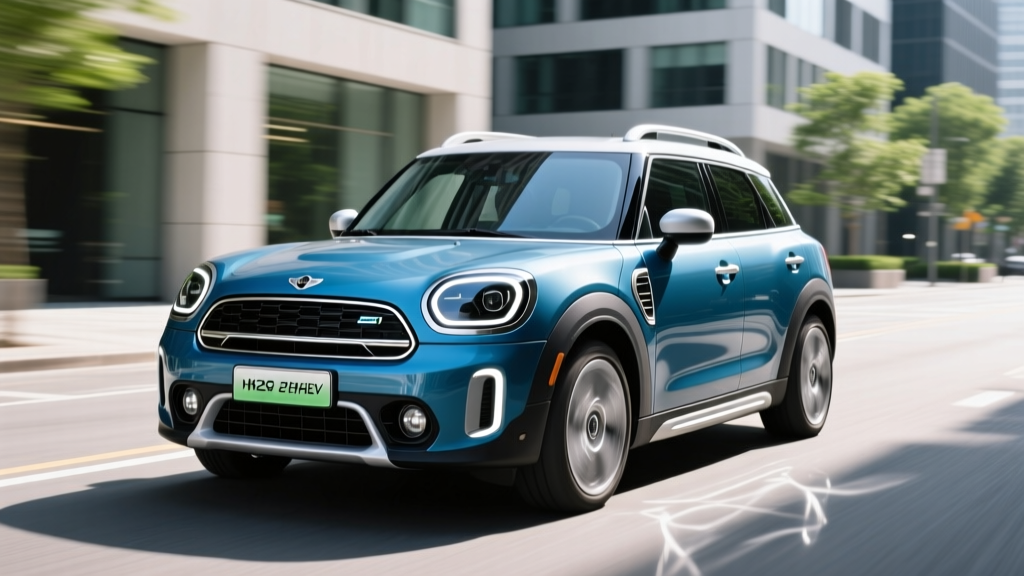
If you want Mini's signature go-kart feel in a practical crossover that doesn't require full EV commitment, the 2026 Mini Countryman plug-in hybrid lineup narrows the field quickly. The current-generation Countryman is sold exclusively as the Countryman SE ALL4 plug-in hybrid (PHEV) in the United States — Mini has not offered a conventional (non-plug) hybrid or a gas-only Countryman for the 2025–2026 model years. That makes understanding exactly what this PHEV delivers — electric range, fuel economy, charging logistics, and total cost — essential before you walk into a dealer.
This guide breaks down the 2026 Mini Countryman hybrid cars with the exact numbers that matter: EPA mileage, battery capacity, real-world range expectations, powertrain output, pricing, and whether you'll qualify for federal incentives.
HEV vs PHEV: What Mini Actually Sells
A quick terminology check, because this trips up many shoppers:
Conventional Hybrid (HEV)
A small battery recharges through regenerative braking and the engine. You never plug in. Examples: Toyota RAV4 Hybrid, Honda CR-V Hybrid. Typical electric-only driving is under 1 mile at low speed.
Plug-in Hybrid (PHEV)
A larger battery you charge by plugging in. Delivers 20–40 miles of electric-only driving before the gas engine takes over. Examples: 2026 Mini Countryman SE ALL4, Toyota RAV4 Prime, Hyundai Tucson PHEV.
Mini's U.S. Countryman lineup is PHEV-only for 2026. There is no HEV variant. If you want a conventional hybrid crossover from a premium brand, you'll need to look at competitors like the Lexus NX 350h or the Volvo XC60 Recharge's non-plug sibling (which Volvo has also phased out). The Countryman SE ALL4 is the electrified choice — and it requires access to a plug to deliver its advertised efficiency.
2026 Mini Countryman SE ALL4: Full Spec Sheet
| Powertrain | 1.5L turbocharged 3-cylinder + electric motor (ALL4 AWD) |
| Combined System Output | 326 hp / 354 lb-ft torque |
| 0–60 mph | 5.4 seconds |
| Battery (Gross / Usable) | 16.3 kWh gross / ~14.2 kWh usable (NMC chemistry) |
| EPA Electric-Only Range | 30 miles |
| EPA MPGe (Electric Mode) | 73 MPGe combined |
| EPA MPG (Gas-Only, Charge-Sustaining) | 27 city / 31 highway / 29 combined |
| Total Combined Range | ~380 miles (electric + 12.1-gal fuel tank) |
| AC Charging (Level 2) | 7.4 kW onboard charger, 0–100% in ~2.5 hours |
| DC Fast Charging | Not available |
| Cargo Volume | 16.7 cu ft (rear seats up) / 50.8 cu ft (folded) |
| Base MSRP (Signature trim) | $46,300 (excl. destination) |
| Powertrain Warranty | 4 years / 50,000 miles |
| Hybrid Battery Warranty | 8 years / 80,000 miles (capacity retention ≥70%) |
Source: fueleconomy.gov and Mini USA specifications.
Electric-Only Range and Real-World MPG
The EPA rates the 2026 Countryman SE ALL4 at 30 miles of electric-only range. In real-world driving, expect that number to shift based on conditions:
- Ideal conditions (mild weather, city speeds under 45 mph): 28–33 miles — the PHEV system is most efficient at lower speeds with frequent regen opportunities.
- Highway driving (65–75 mph): 22–26 miles. Aerodynamic drag and sustained speed drain the 14.2 kWh usable battery faster.
- Cold weather (below 35°F): 18–24 miles. Battery chemistry loses efficiency in cold temperatures, and cabin heating draws heavily from the pack. The Countryman PHEV uses a resistive heater rather than a heat pump, which compounds winter range loss.
Once the battery depletes, the 1.5L three-cylinder engine takes over, and the car operates as a conventional hybrid. EPA gas-only fuel economy is 29 MPG combined (27 city / 31 highway). This is respectable for a 4,000-pound AWD crossover but noticeably lower than a dedicated hybrid like the Toyota RAV4 Hybrid (39 MPG combined). The difference comes down to weight — the Countryman carries both a turbocharged engine and a battery/motor system — and tuning priorities toward performance over maximum efficiency.
| Driving Scenario | Electric Range | Gas-Only MPG | Notes |
|---|---|---|---|
| City, mild weather | 28–33 mi | 27 MPG | Best regen, lowest HVAC load |
| Highway (70 mph) | 22–26 mi | 31 MPG | Engine at efficient cruise RPM |
| Mixed daily commute | 24–28 mi | 29 MPG | Typical owner experience |
| Cold weather (sub-35°F) | 18–24 mi | 25–27 MPG | No heat pump; resistive heating penalty |
Charging: What You Need at Home
The Countryman SE ALL4 uses a J1772 connector for Level 2 AC charging and does not support DC fast charging. This is a deliberate trade-off — the 16.3 kWh battery is small enough that DC fast-charging hardware would add cost and weight without meaningful benefit for daily top-ups.
Here's what charging looks like in practice:
- Level 1 (120V household outlet): ~1.4 kW, approximately 10–11 hours from empty to full. Adequate if you plug in overnight and drive under 30 miles daily.
- Level 2 (240V, 32A home charger): 7.4 kW peak, 0–100% in approximately 2.5 hours. This is the recommended setup — a full charge during dinner and evening means a full battery every morning.
A Level 2 home charger installation typically costs $500–$1,500 for the charger unit plus $800–$2,500 for electrician labor, depending on panel capacity and run length. For a PHEV with a small battery, you don't need a 48A charger — a 32A unit (like the ChargePoint Home Flex or Emporia Vue) matches the Countryman's 7.4 kW onboard charger perfectly and saves money on hardware and electrical work. Consult a licensed electrician to confirm your panel has headroom.
Performance and Driving Dynamics
Mini didn't sacrifice the brand's handling DNA for electrification. The Countryman SE ALL4 pairs a 1.5L turbocharged three-cylinder engine (161 hp) with a rear-axle electric motor (177 hp) for a combined 326 horsepower and all-wheel drive. The result is a 5.4-second 0–60 mph time — quick enough to merge confidently and entertaining on back roads.
The ALL4 system sends engine power to the front wheels and electric power to the rear, with seamless torque blending. In EV-only mode, the Countryman is rear-wheel drive, which gives it a slightly different character than the gas-only AWD behavior. The steering remains characteristically Mini — direct, weighted, and communicative — and the suspension tuning leans firm, which some buyers love and others find harsh on rough pavement.
One PHEV-specific note: the regenerative braking system offers adjustable levels but does not provide true one-pedal driving at all speeds. You'll still use the brake pedal for complete stops, unlike some competitors (e.g., the RAV4 Prime, which comes closer to one-pedal behavior in its strongest regen mode).
Pricing, Trims, and Tax Credit Eligibility
The 2026 Mini Countryman SE ALL4 is available in several trim levels:
- Signature: $46,300
- Signature Plus: $49,300
- Iconic: $52,800
- John Cooper Works (JCW) ALL4 PHEV: $56,900 (sport-tuned suspension, 360 hp, aggressive styling)
All prices exclude the $995 destination charge. Options like panoramic roof, premium packages, and driver-assistance packages can push an Iconic trim past $58,000.
Federal Tax Credit (§30D): Does It Qualify?
The 2026 Mini Countryman SE ALL4 may qualify for up to $3,750 under the IRS §30D clean vehicle credit — not the full $7,500. Here's why: the credit is split into two $3,750 halves based on battery component manufacturing and critical mineral sourcing requirements. As a BMW Group product assembled in Europe (Leipzig, Germany), the Countryman PHEV typically meets the critical minerals requirement but not the battery component manufacturing requirement under current IRS §30D rules.
- ✅ MSRP cap: SUVs must be under $80,000 — the Countryman qualifies at all trims.
- ✅ Buyer income cap: Modified AGI ≤ $150,000 (single) / ≤ $300,000 (joint) — verify your eligibility.
- ✅ Battery capacity: Must be ≥ 7 kWh — the 16.3 kWh pack qualifies.
- ⚠️ Battery component sourcing: Likely does NOT meet North American manufacturing threshold — limits credit to $3,750.
- ✅ Point-of-sale transfer: You can apply the credit as a down-payment reduction at the dealer rather than waiting for tax filing.
Important: Tax credit eligibility depends on your individual tax situation, the specific VIN's battery sourcing documentation, and rules that may change. Consult a tax professional and check the fueleconomy.gov tax credit database for the exact VIN you're considering.
Reliability, Battery Longevity, and Warranty
The Countryman PHEV uses an NMC (nickel manganese cobalt) lithium-ion battery. NMC chemistry offers high energy density in a compact package — important for fitting 16.3 kWh into a subcompact crossover — but historically degrades slightly faster than LFP (lithium iron phosphate) chemistry over thousands of cycles. For a PHEV battery that cycles daily (full drain and recharge), real-world data from BMW Group PHEVs suggests 10–15% degradation over 8–10 years, which keeps you well within the 70% warranty threshold.
Outside the battery, the Countryman shares BMW Group's UKL2 platform and powertrain components with the BMW X1 xDrive28i. BMW's reliability track record in recent J.D. Power and Consumer Reports surveys has been mid-pack — not class-leading like Toyota, but improved significantly from the early 2010s. The turbocharged 1.5L three-cylinder engine has been in production since 2014 and is generally well-proven.
Battery replacement cost: If the high-voltage battery requires replacement out of warranty, expect a cost in the $8,000–$12,000 range (parts and labor) based on BMW Group PHEV battery pricing. Individual module replacement (if only some cells degrade) can reduce this to $2,000–$4,000. For most owners who sell or trade within 8 years, this is a non-issue.
Mini Countryman PHEV vs. the Competition
The Countryman SE ALL4 occupies a specific niche: a premium subcompact PHEV crossover with sporty handling. Here's how it compares to the alternatives buyers cross-shop:
| Vehicle | EV Range | Gas MPG | Combined HP | Starting MSRP |
|---|---|---|---|---|
| Mini Countryman SE ALL4 | 30 mi | 29 MPG | 326 hp | $46,300 |
| Toyota RAV4 Prime | 42 mi | 38 MPG | 302 hp | $44,500 |
| Hyundai Tucson PHEV | 33 mi | 35 MPG | 261 hp | $39,500 |
| Volvo XC40 Recharge PHEV | 32 mi | 28 MPG | 262 hp | $47,000 |
Pros
- Best-in-class handling and steering feel
- 326 hp provides genuine sport-crossover acceleration
- Premium interior with Mini's round OLED display
- Compact footprint with usable cargo space (16.7 cu ft)
- Potential $3,750 federal tax credit at point of sale
Cons
- Gas-only MPG (29) trails RAV4 Prime (38) and Tucson PHEV (35)
- No DC fast charging capability
- No heat pump — cold-weather EV range drops significantly
- Firm ride may not suit all buyers
- Higher starting price than mainstream PHEV competitors
Who Should Buy the Countryman PHEV — and Who Shouldn't
Choose the Mini Countryman SE ALL4 PHEV if:
- Your daily commute is under 25 miles round-trip and you can charge at home
- You want premium-badge styling and Mini's distinctive driving character
- You take occasional road trips where a full EV's charging logistics feel limiting
- You value acceleration (5.4s 0–60) over maximum fuel economy
Choose a full EV (like the electric Mini Countryman SE) if:
- You have reliable home charging and your trips rarely exceed 200 miles
- You want to eliminate gasoline entirely and minimize maintenance
- You qualify for the full $7,500 federal credit on eligible EVs
Choose a conventional hybrid (like the RAV4 Hybrid) if:
- You cannot charge at home (apartment, street parking, no garage outlet)
- You want maximum MPG without any plug-in behavior
- Your budget is under $40,000 and you prioritize efficiency over performance
Frequently Asked Questions
How many MPG does the 2026 Mini Countryman Hybrid get?
The EPA rates the Countryman SE ALL4 PHEV at 29 MPG combined (27 city / 31 highway) when running on gasoline after the battery is depleted. In electric-only mode, it achieves 73 MPGe combined. Real-world gas MPG averages 27–31 depending on driving mix, with highway driving delivering the best results.
How far can the Countryman PHEV go on electric only?
The EPA rates it at 30 miles electric-only. In real-world mixed driving, expect 24–28 miles. Highway driving at 70+ mph reduces this to 22–26 miles, and cold weather (below 35°F) can drop it to 18–24 miles due to battery chemistry limitations and resistive cabin heating.
Does the Mini Countryman PHEV qualify for a federal tax credit?
Under current 2026 IRS §30D rules, the Countryman SE ALL4 likely qualifies for up to $3,750 (half of the maximum $7,500) due to battery component sourcing requirements. Eligibility also depends on your income (≤$150K single / ≤$300K joint), the vehicle's MSRP (must be under $80K for SUVs), and the specific VIN's battery documentation. The credit can be transferred at the point of sale. Always verify with a tax professional and check fueleconomy.gov for the latest VIN-specific data.
Is the Mini Countryman PHEV reliable, and what does battery replacement cost?
The Countryman shares proven BMW Group powertrain components, and the 1.5L turbo three-cylinder has been in production since 2014. BMW Group's recent reliability ratings are mid-pack among premium brands. The high-voltage battery is warrantied for 8 years / 80,000 miles (70% capacity retention). Out-of-warranty replacement is estimated at $8,000–$12,000 for a full pack, or $2,000–$4,000 for individual module replacement. Based on BMW PHEV degradation data, most batteries retain 85–90% capacity at the 8-year mark.
Do I need to plug in the Mini Countryman Hybrid?
Yes — the Countryman SE ALL4 is a plug-in hybrid (PHEV), not a conventional hybrid. If you never plug it in, it operates as a heavy gas-only hybrid getting 29 MPG combined. To realize the efficiency and cost benefits (73 MPGe, 30 miles of electric commuting), you need access to a 120V or 240V outlet for regular charging. If you cannot plug in, a conventional hybrid like the Toyota RAV4 Hybrid is a better fit.