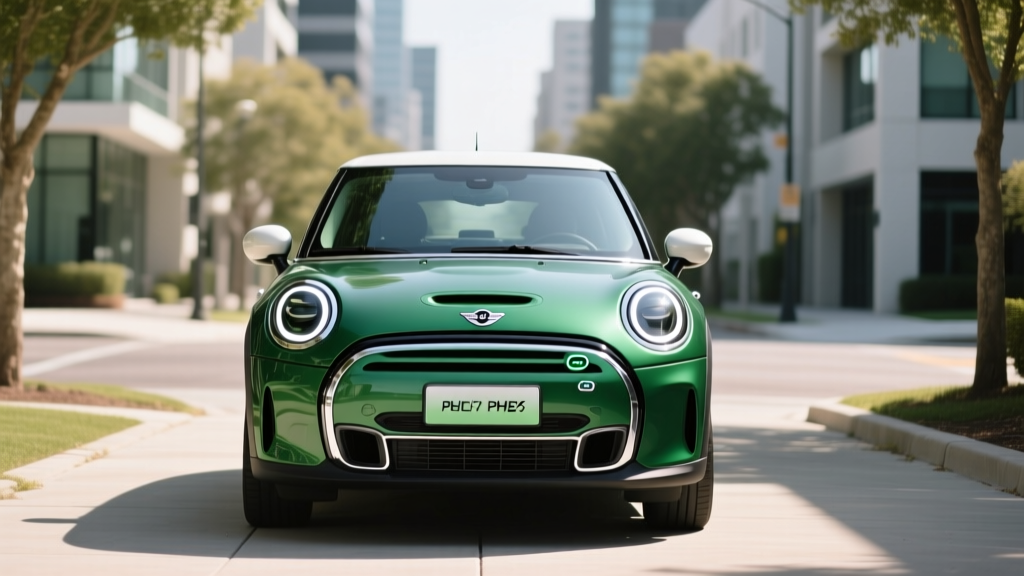
If you've been searching whether Mini Cooper makes a hybrid, the answer requires some nuance in 2026. Mini's electrification strategy has shifted significantly over the past few years, and the brand now offers a fully electric Cooper and a plug-in hybrid (PHEV) version of its larger Countryman crossover. What you won't find is a conventional hybrid (HEV) — the kind that never plugs in and simply sips less gas. Mini has leapfrogged that technology entirely.
Here's exactly what Mini offers to buyers who want electrification without going all-in on a battery-electric vehicle, plus the data you need to decide if one fits your driving life.
Mini's Electrified Lineup in 2026: What's Actually Available
Mini currently sells two electrified models in the U.S. market:
- Mini Cooper SE (EV) — the iconic two-door hatchback, now fully electric on the J01 platform.
- Mini Countryman SE ALL4 (PHEV) — the larger four-door crossover with a plug-in hybrid powertrain.
Mini previously offered the Countryman Cooper S E ALL4 as a PHEV in earlier generations. The current U06-generation Countryman (redesigned for the 2025 model year and carried into 2026) continues this PHEV tradition with a substantially upgraded battery and electric-only range. There is no conventional hybrid (HEV) in Mini's 2026 U.S. lineup — no Prius-style self-charging system here.
A conventional hybrid (HEV) uses a small battery and electric motor to assist the gas engine. It recharges through regenerative braking and the engine — you never plug it in. Think Toyota Prius.
A plug-in hybrid (PHEV) has a much larger battery that you charge via a plug. It can drive on electric power alone for a meaningful distance (typically 20–50 miles) before the gas engine kicks in. Think of it as a short-range EV that carries a gas engine as backup.
2026 Mini Countryman SE ALL4 PHEV: Full Specs
This is the model that most directly answers "does Mini Cooper make a hybrid" — it's a plug-in hybrid with real electric-only capability and a gas engine for longer trips.
| Spec | Value |
|---|---|
| Powertrain | 1.5L turbo 3-cylinder + electric motor (ALL4 AWD) |
| Combined Horsepower | ~326 hp (system net) |
| Battery (usable) | ~14.2 kWh (lithium-ion) |
| EPA Electric-Only Range | ~30 miles (estimated) |
| Total Combined Range | ~400+ miles (electric + gas) |
| EPA MPG (gas mode, combined) | ~27–29 MPG combined (est.) |
| MPGe (electric + gas combined) | ~70–80 MPGe (est.) |
| AC Charging (Level 2) | Up to 7.4 kW (~2 hours from 0–100%) |
| DC Fast Charging | Not available |
| 0–60 mph | ~5.4 seconds |
| Base MSRP | ~$41,000–$43,000 (Signature trim) |
| Battery Warranty | 8 years / 100,000 miles |
Note: Some 2026 PHEV figures are based on the current-generation Countryman SE ALL4 platform specs. Confirm final EPA certifications at fueleconomy.gov before purchase.
How Far Can the Mini PHEV Go on Electric Only?
The 2026 Countryman SE ALL4's estimated 30 miles of electric-only range is the headline number, and for many owners, it's transformative. According to EPA data, the average American drives roughly 37 miles per day. If you can charge at home overnight — even on a standard 120V Level 1 outlet, which will replenish the ~14.2 kWh battery in about 12–14 hours — you'll complete most daily commutes without burning a drop of gasoline.
EPA electric-only estimates assume moderate temperatures and mixed driving. In practice:
- Summer, city driving: You may match or slightly exceed the EPA estimate thanks to regenerative braking at low speeds.
- Highway driving at 70+ mph: Expect roughly 20–25 miles of electric range before the engine engages.
- Cold weather (below 35°F): Battery efficiency drops and cabin heating draws energy — plan on 18–22 miles of real electric range.
Once the battery is depleted, the Countryman operates as a conventional hybrid, blending the 1.5L turbo engine and electric motor. Here's where the MPG picture matters.
How Many MPG Does the Mini Countryman PHEV Get?
| Mode | City | Highway | Combined |
|---|---|---|---|
| Charge-sustaining (gas hybrid mode) | ~27 MPG | ~30 MPG | ~28 MPG |
| Blended (MPGe, full battery start) | ~70–80 MPGe (EPA combined, varies by trip length) | ||
Real-world MPG in charge-sustaining mode depends heavily on your driving mix. City driving with frequent stops lets the regenerative braking system recover energy, often pushing real-world numbers slightly above the EPA city estimate. Highway driving at sustained speeds is where the Countryman's boxy crossover aerodynamics work against it — expect numbers near or slightly below the EPA highway figure.
The MPGe number (miles per gallon equivalent) can be misleading. It's only meaningful if you start each trip with a full battery charge. A 15-mile round-trip commute with a charged battery might return an effective 100+ MPGe because you never use gas. A 200-mile road trip, where only the first 30 miles are electric, will average closer to the gas-mode MPG.
Charging the Countryman PHEV: What You Need to Know
Unlike full EVs, the Countryman PHEV does not support DC fast charging. This is standard for plug-in hybrids — the battery is small enough that Level 2 AC charging is adequate.
| Level | Power | 0–100% Time | Notes |
|---|---|---|---|
| Level 1 (120V household) | ~1.4 kW | ~12–14 hours | Adequate for overnight top-up |
| Level 2 (240V home/public) | Up to 7.4 kW | ~2 hours | Recommended for daily use |
| DC Fast Charge | N/A | N/A | Not supported |
A Level 2 home charger (240V, 32-amp circuit) is the sweet spot for PHEV ownership. Installation typically costs $500–$1,500 depending on your electrical panel's proximity to the charging location, according to industry estimates. With a Level 2 setup, you'll wake up to a full battery every morning — which is the entire point of owning a PHEV.
Pricing, Tax Credits, and Incentives
The 2026 Mini Countryman SE ALL4 PHEV starts around $41,000–$43,000 depending on trim and options. The fully electric Mini Cooper SE starts around $31,000–$33,000.
Under current IRS §30D rules, the Mini Countryman PHEV may qualify for a partial or full federal tax credit of up to $7,500, but eligibility depends on several factors:
- Battery sourcing: Critical minerals and battery components must meet phased-in domestic-content thresholds that tighten annually.
- MSRP cap: SUVs/crossovers must have an MSRP at or below $80,000 (the Countryman qualifies).
- Buyer income cap: AGI must not exceed $150,000 (single), $225,000 (head of household), or $300,000 (joint).
- Point-of-sale transfer: As of 2024+, you can transfer the credit to the dealer for an immediate price reduction at purchase.
The all-electric Mini Cooper SE is subject to the same rules but may have different battery-sourcing compliance. Always verify current eligibility on the IRS clean vehicle credit page or with a tax professional before purchasing.
Many states and utilities offer additional rebates for PHEVs and EVs. California's CVRP, Colorado's state credit, and various utility off-peak charging rebates can stack on top of federal incentives. Check your state energy office for current programs.
Reliability and Battery Longevity
Mini (owned by BMW Group) provides an 8-year/100,000-mile warranty on the high-voltage PHEV battery, which is the federal mandate minimum for emissions-related components. BMW Group's hybrid battery technology has been in production since the i3 and i8 era (2014+), and real-world degradation data from those platforms has been generally positive.
Warranty: 8 years / 100,000 miles — covers defects and capacity loss below a specified threshold (typically 70% of original capacity).
Replacement cost: If out of warranty, a PHEV battery replacement for the Countryman is estimated at $5,000–$8,000 including labor, based on comparable BMW Group PHEV platforms. This is significantly less than a full EV battery replacement because the PHEV pack is much smaller (~14 kWh vs. 50–100+ kWh).
Real-world degradation: PHEV batteries experience more charge cycles than EV batteries because the usable window is smaller. However, BMW's thermal management system and conservative buffer (the car never uses 100% or drops to 0% of the physical cells) helps preserve longevity. Most owners report minimal noticeable degradation within the warranty period.
Mini's overall brand reliability has historically been middling in J.D. Power and Consumer Reports rankings, though the current-generation Countryman has shown improvement. The PHEV powertrain adds complexity (two power sources, high-voltage systems) but BMW Group's extensive hybrid experience mitigates this concern somewhat.
Mini PHEV vs. Full EV vs. Gas: Which Should You Choose?
| Factor | Countryman PHEV | Cooper SE (EV) | Gas-Only Crossover |
|---|---|---|---|
| Home charging access | Strongly recommended | Essential | Not needed |
| Daily commute under 30 mi | ✅ Nearly gas-free | ✅ Zero gas | Gas only |
| Frequent road trips (200+ mi) | ✅ No range anxiety | ⚠️ Requires DC charging stops | ✅ Gas stations everywhere |
| Upfront cost | ~$41K–$43K | ~$31K–$33K | ~$33K–$38K |
| Maintenance cost | Moderate (engine + EV) | Lowest (no engine) | Moderate |
| Federal tax credit | Up to $7,500 (verify) | Up to $7,500 (verify) | None |
Choose the Countryman PHEV if: You need a crossover with AWD, can charge at home, want electric commuting for ~30 miles, but also take regular road trips where charging infrastructure is sparse or unreliable.
Choose the Cooper SE (EV) if: You want the lowest running costs, have reliable home charging, mostly drive under 150 miles per day, and want a nimble city hatchback.
Choose a gas crossover if: You have no home charging access, live in an apartment without charging options, or drive in extreme cold climates where EV range loss is a significant concern.
Pros and Cons: 2026 Mini Countryman PHEV
- ~30 miles electric-only range covers most daily commutes
- 326 hp system output makes it genuinely quick (5.4s to 60)
- ALL4 AWD standard — confident in rain and light snow
- No range anxiety on road trips — gas engine is your backup
- Potential $7,500 federal tax credit reduces effective price
- 8-year/100,000-mile battery warranty
- No DC fast charging — road-trip electric top-ups aren't practical
- ~28 MPG in gas mode is unremarkable for a compact crossover
- Premium fuel recommended for the turbo engine
- PHEV complexity means two systems to maintain long-term
- Higher starting price than the EV Cooper SE
- Mini's brand reliability ratings trail Toyota/Honda/Hyundai
Frequently Asked Questions
Does Mini Cooper make a regular hybrid that doesn't need to be plugged in?
No. Mini does not offer a conventional hybrid (HEV) in the 2026 U.S. lineup. The brand's electrified options are the fully electric Cooper SE and the plug-in hybrid Countryman SE ALL4. If you want a self-charging hybrid that never needs a plug, you'll need to look at competitors like the Toyota RAV4 Hybrid or Honda CR-V Hybrid.
How many MPG does the Mini Countryman PHEV get on gas alone?
In charge-sustaining mode (after the battery is depleted), the Countryman PHEV returns an estimated 27–29 MPG combined. City driving may yield slightly better real-world results thanks to regenerative braking, while sustained highway speeds will push it toward the lower end of that range.
How far can the Mini Countryman PHEV go on electric only?
The EPA-estimated electric-only range is approximately 30 miles. Real-world results vary: expect 20–25 miles at highway speeds and as little as 18–22 miles in freezing temperatures. City driving in moderate weather may let you match or slightly exceed the EPA estimate.
Is the Mini Countryman PHEV reliable?
Mini's overall reliability ratings are average to slightly below average among mainstream brands. However, BMW Group's PHEV powertrain technology has been in production for over a decade, and the high-voltage battery is warranted for 8 years/100,000 miles. Long-term reliability data on the current-generation U06 Countryman is still accumulating.
What does it cost to replace the PHEV battery?
Out-of-warranty replacement is estimated at $5,000–$8,000 including labor, based on comparable BMW Group PHEV platforms. The 14.2 kWh battery is far smaller (and cheaper to replace) than a full EV battery. Most owners will never need a replacement within the vehicle's typical ownership period.
Does the Mini Countryman PHEV qualify for the federal tax credit?
It may qualify for up to $7,500 under IRS §30D rules, depending on battery-sourcing compliance, your income, and the vehicle's MSRP. The Countryman's MSRP is well under the $80,000 SUV cap. Verify current eligibility on the IRS clean vehicle credit page and consult a tax professional, as sourcing requirements tighten annually.
Can I charge the Mini PHEV at a Tesla Supercharger?
No. The Mini Countryman PHEV does not support DC fast charging at all, so Supercharger compatibility is irrelevant. For Level 2 AC charging at home or public stations, the Countryman uses the standard J1772 connector, which is compatible with virtually all public Level 2 chargers in the U.S. (including ChargePoint, EVgo Level 2, and Tesla Wall Connectors with the J1772 adapter).