The 2026 Mercedes SUV Hybrid Lineup at a Glance
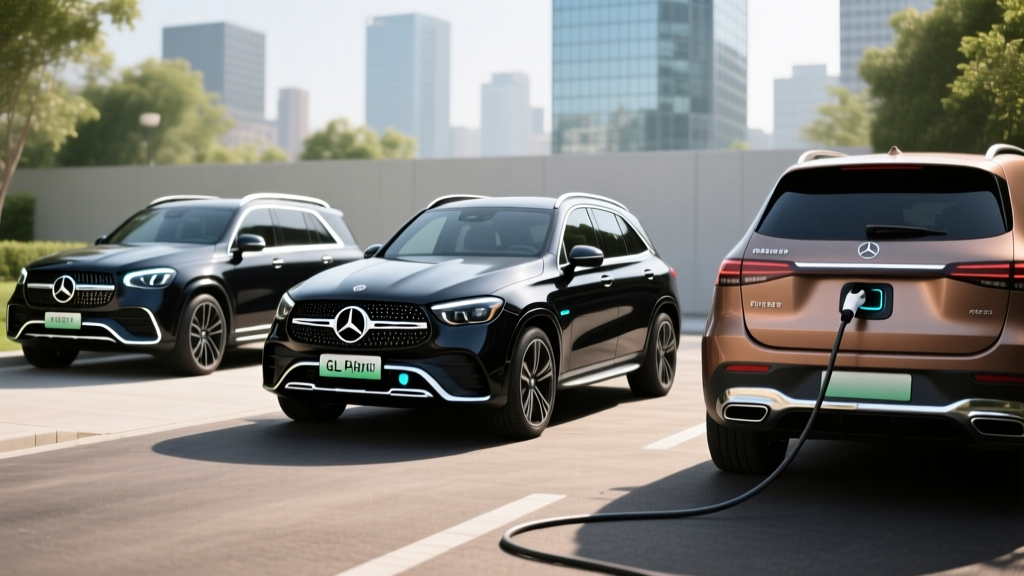
If you're searching for a Mercedes SUV hybrid, you're looking at plug-in hybrid electric vehicles (PHEVs) — not conventional hybrids. Mercedes-Benz phased out mild-hybrid-only SUVs in the U.S. market and now funnels its electrification strategy through two PHEV nameplates: the compact GLC 350e 4MATIC and the midsize GLE 350e / GLE 450e 4MATIC. Both pair a turbocharged gasoline engine with a rear-axle electric motor and a lithium-ion battery large enough to deliver meaningful electric-only driving before the engine ever fires.
That distinction matters. A conventional hybrid (HEV) like the Toyota RAV4 Hybrid uses a small battery you never plug in and cannot drive on electric power alone at highway speeds. A PHEV bridges the gap: plug it in overnight for 30–50 miles of zero-tailpipe-emission commuting, then rely on the gas engine for road trips without range anxiety.
HEV vs. PHEV — What's the Difference?
| Feature | Conventional Hybrid (HEV) | Plug-in Hybrid (PHEV) |
|---|---|---|
| Plug-in charging | No — charges via regen & engine | Yes — Level 1/Level 2 AC |
| Electric-only range | 0–1 mi at low speed | 30–50+ mi at highway speed |
| Battery size | 1–2 kWh | 18–31 kWh |
| Federal tax credit | None | Up to $3,750–$7,500 (§30D) |
| Ideal driver | No home charging access | Can charge at home or work |
2026 GLC 350e 4MATIC: Compact PHEV Specs
The GLC 350e is Mercedes' entry-point PHEV SUV. It replaces the outgoing GLC 300e and uses a 2.0-liter turbocharged inline-four paired with a permanently excited synchronous electric motor integrated into the 9G-TRONIC automatic transmission.
| Spec | Value |
|---|---|
| Powertrain | 2.0L turbo I4 + electric motor |
| Combined output | 313 hp / 406 lb-ft torque |
| Battery (usable) | 25.4 kWh (NMC chemistry) |
| EPA electric-only range | 47 miles |
| EPA combined range (gas + electric) | ~440 miles |
| EPA MPGe (electric + gas) | 77 MPGe combined |
| EPA MPG (gas-only, charge-depleted) | 28 city / 30 hwy / 29 combined |
| AC charging (Level 2, 240V) | 7.4 kW onboard — 0–100% in ~3.5 hrs |
| DC fast charging | Not available |
| 0–60 mph | 6.5 seconds |
| Base MSRP | $59,750 (incl. destination) |
| Federal §30D tax credit | $3,750 (current IRS guidance) |
Real-World Range Check
The EPA rates the GLC 350e at 47 electric-only miles. In mixed suburban/highway driving at 65–70 mph with climate control on, expect 38–43 miles before the engine engages. In cold weather (below 35°F), plan on 30–35 miles of electric range due to cabin heating demand and reduced battery efficiency. Once the battery depletes, the turbo four returns a real-world 27–29 MPG combined — close to the EPA sticker because the engine is already warm and operating in its efficient range.
2026 GLE 350e & GLE 450e 4MATIC: Midsize PHEV Specs
Step up to the three-row-capable GLE and you get two PHEV flavors. The GLE 350e mirrors the GLC's 2.0L turbo + electric motor formula but in a heavier, larger chassis. The GLE 450e swaps in the silky 3.0L turbocharged inline-six for more passing power and a smoother gas-engine experience on long trips.
| Spec | GLE 350e 4MATIC | GLE 450e 4MATIC |
|---|---|---|
| Engine | 2.0L turbo I4 | 3.0L turbo I6 (mild-hybrid assist) |
| Combined output | 302 hp / 369 lb-ft | 375 hp / 479 lb-ft |
| Battery (usable) | 23.3 kWh | 23.3 kWh |
| EPA electric-only range | 45 miles | 48 miles |
| EPA combined range | ~460 miles | ~470 miles |
| EPA MPGe | 65 MPGe combined | 69 MPGe combined |
| EPA MPG (gas-only) | 24 city / 27 hwy / 25 combined | 25 city / 28 hwy / 26 combined |
| AC charging (Level 2) | 7.4 kW — ~3.25 hrs | 7.4 kW — ~3.25 hrs |
| DC fast charging | Not available | Not available |
| 0–60 mph | 7.0 sec | 5.5 sec |
| Base MSRP | $72,500 | $80,200 |
| Federal §30D tax credit | $3,750 | $3,750 |
Neither GLE PHEV supports DC fast charging. That's a deliberate Mercedes engineering choice: keeping the onboard charger at 7.4 kW AC limits weight, complexity, and cost. For a PHEV with a 23 kWh battery, DC fast charging would add marginal time savings — a full Level 2 charge already completes in roughly three hours, easily covering overnight top-ups.
MPG Deep Dive: EPA Sticker vs. Real-World
PHEV fuel economy is a moving target because it depends entirely on how often you charge. If you plug in every night and your commute is under 40 miles, you might burn zero gasoline for weeks. If you never plug in, you're driving a heavy luxury SUV on its gas engine alone.
| Model | EPA Combined MPG/MPGe | Real-World Gas MPG (no plug-in) | Annual Fuel Cost* |
|---|---|---|---|
| GLC 350e PHEV (charged daily) | 77 MPGe | 28–29 MPG | $900–$1,400 |
| GLC 300 (gas-only baseline) | 26 MPG combined | 24–27 MPG | $2,200–$2,500 |
| GLE 450e PHEV (charged daily) | 69 MPGe | 25–27 MPG | $1,100–$1,700 |
| GLE 350 (gas-only baseline) | 22 MPG combined | 20–23 MPG | $2,600–$3,000 |
*Annual fuel cost estimates based on 15,000 miles/year, $3.50/gal gasoline, and $0.14/kWh electricity. Your actual costs depend on local fuel/electricity prices and driving habits. Source: fueleconomy.gov methodology.
Real-world insight: Mercedes PHEVs tend to slightly exceed their EPA gas-only MPG ratings in city driving thanks to aggressive regenerative braking that recaptures energy during stop-and-go traffic. On sustained 75+ mph highway runs, expect 1–2 MPG below the sticker. Cold weather (below freezing) reduces electric range by 20–30% and gas MPG by roughly 5–10% due to denser air, winter fuel blends, and cabin heating load.
Charging at Home: What You Need
Every 2026 Mercedes PHEV SUV ships with a J1772-compatible Level 1 charging cord (120V) that adds roughly 4–5 miles of range per hour — adequate for overnight top-ups if your daily electric commute is under 30 miles. For faster replenishment, a Level 2 home charger (240V, 32–40 amp circuit) will fully recharge the GLC 350e's 25.4 kWh battery in about 3.5 hours and the GLE's 23.3 kWh pack in roughly 3.25 hours.
Mercedes recommends the Mercedes-Benz Home Wallbox ($649) or any UL-listed J1772 Level 2 unit from ChargePoint, Emporia, or Enel X. Installation costs for a 240V/40A circuit typically run $500–$1,800 depending on panel proximity and whether your electrical panel needs an upgrade. Always hire a licensed electrician and pull a permit.
Battery Warranty & Replacement Cost
Mercedes-Benz covers the high-voltage PHEV battery for 6 years / 62,000 miles (whichever comes first) against defects and capacity loss below 70% of original capacity. This is shorter than the 8-year/100,000-mile warranty offered by most competitors (BMW, Volvo, Hyundai). Out-of-warranty PHEV battery replacement currently runs $12,000–$18,000 including labor at a Mercedes dealer, though prices are expected to decline as battery costs fall. Third-party hybrid battery repair shops can sometimes refurbish individual cell modules for $3,000–$6,000. Mercedes PHEV batteries use NMC (nickel manganese cobalt) chemistry, which offers high energy density but degrades slightly faster than LFP under frequent deep-cycle use. Best practice: charge to 80–90% daily and avoid leaving the battery at 100% for extended periods.
Federal Tax Credit: What You Actually Qualify For
Under IRS §30D rules effective for 2026, PHEVs must meet battery capacity (≥7 kWh), MSRP, buyer income, and critical-mineral/battery-component sourcing requirements to qualify for the federal plug-in vehicle credit. Here's where the Mercedes PHEVs stand:
- Credit amount: $3,750 for both the GLC 350e and GLE PHEVs. The credit is $3,750 (half of the maximum $7,500) because Mercedes' battery components do not yet fully meet the critical-minerals and domestic-sourcing thresholds that unlock the second $3,750 half.
- MSRP cap: SUVs must be ≤$80,000 MSRP. The GLC 350e ($59,750 base) and GLE 350e ($72,500) qualify. The GLE 450e ($80,200 base) may exceed the cap depending on exact destination charges — confirm with your dealer before purchase.
- Buyer income cap: AGI must be ≤$150,000 (single), ≤$225,000 (head of household), or ≤$300,000 (married filing jointly).
- Point-of-sale transfer: You can transfer the credit to the dealer at purchase for an immediate price reduction, or claim it on your tax return using IRS Form 8936.
- State incentives: Several states (CA, CO, MA, NY, and others) offer additional PHEV rebates of $1,000–$3,000. Check your state energy office for current programs.
Always verify current eligibility on IRS.gov before purchasing — sourcing requirements tighten annually and can change a vehicle's eligibility mid-year.
Reliability, Ownership Costs, and Long-Term Outlook
Mercedes-Benz PHEVs carry the brand's typical luxury-vehicle maintenance costs: synthetic oil changes ($200–$300), brake fluid flushes, and cabin air filters add up to roughly $1,200–$1,800 per year after the complimentary first-year coverage expires. However, PHEVs save on brakes — regenerative braking significantly extends pad and rotor life, often pushing replacements past 80,000 miles.
Reliability data from owner surveys and J.D. Power studies place Mercedes PHEV powertrains in the average to slightly below-average range for the luxury segment. The primary complaint categories involve infotainment software glitches and 12V auxiliary battery issues, not the high-voltage PHEV system itself. The electric motor and power electronics have proven robust across Mercedes' EQ and PHEV platforms.
Pros
- 38–48 miles of real electric commuting eliminates daily gas use
- No range anxiety — 440+ miles total with gas tank
- Silent, smooth electric driving in city traffic
- Mercedes MBUX tech, luxury interior, strong resale
- $3,750 federal credit + possible state rebates
- Regenerative braking extends brake component life
Cons
- No DC fast charging — public charging is slow (AC only)
- Battery warranty shorter than competitors (6yr vs 8–10yr)
- Heavy curb weight hurts gas-only MPG vs. non-hybrid peers
- Premium fuel required (91+ octane)
- Higher insurance premiums than gas-only GLC/GLE
- Out-of-warranty battery replacement is expensive ($12K–$18K)
Mercedes SUV Hybrid vs. Full EV vs. Gas: Which Is Right for You?
Choose the Mercedes PHEV If:
- You can charge at home (garage or driveway with 240V outlet)
- Your daily commute is under 45 miles round-trip
- You take road trips of 200+ miles regularly and don't want to plan around chargers
- You want luxury, AWD, and towing capacity without full-EV range anxiety
Choose a Full EV (like the EQE SUV or EQS SUV) If:
- You have reliable home and/or workplace Level 2 charging
- Your typical trips are under 250 miles or you're comfortable with DC fast-charging stops
- You want to eliminate oil changes, spark plugs, and emissions testing entirely
- You want access to the full $7,500 federal credit (available on qualifying EVs)
Choose a Gas-Only GLC or GLE If:
- You have no access to home or workplace charging (apartment, street parking)
- Your budget doesn't accommodate the $5,000–$8,000 PHEV premium over the gas model
- You drive fewer than 8,000 miles per year (the fuel savings won't offset the higher purchase price)
Frequently Asked Questions
How many MPG does the Mercedes GLC 350e hybrid get?
The EPA rates the 2026 GLC 350e at 28 city / 30 highway / 29 combined MPG when running on gasoline alone (battery depleted). When factoring in electric-only driving, the combined rating is 77 MPGe. In real-world mixed driving with nightly charging, many owners report using gasoline only on weekend road trips.
How far can the GLE 450e go on electric only?
The EPA rates the GLE 450e at 48 miles of electric-only range. Real-world testing shows 40–44 miles in moderate temperatures with mixed city/highway driving, dropping to 32–37 miles in freezing weather with cabin heat active.
Do Mercedes PHEV SUVs support DC fast charging?
No. The 2026 GLC 350e and GLE PHEVs charge exclusively via AC — Level 1 (120V) or Level 2 (240V) using a J1772 connector. The onboard charger maxes out at 7.4 kW. For a 23–25 kWh battery, a full Level 2 charge takes about 3–3.5 hours, which Mercedes considers sufficient for overnight replenishment.
Is the Mercedes PHEV battery reliable and what does replacement cost?
Mercedes' high-voltage PHEV batteries have proven mechanically reliable, with most degradation complaints limited to 5–10% capacity loss over the first 4–5 years. The warranty covers 6 years / 62,000 miles (capacity must stay above 70%). Out-of-warranty replacement runs $12,000–$18,000 at a dealer. Third-party refurbishment can reduce that to $3,000–$6,000.
Does the Mercedes GLC 350e or GLE PHEV qualify for a tax credit?
Yes — both currently qualify for a $3,750 federal tax credit under IRS §30D (half of the maximum $7,500, limited by battery-component sourcing rules). The GLE 450e's eligibility depends on exact MSRP at point of sale relative to the $80,000 SUV cap. Buyer income caps apply: ≤$300K married filing jointly, ≤$150K single. Verify current eligibility at IRS.gov before purchasing.
Should I buy a Mercedes PHEV or just go full electric?
If you have home charging and your daily driving is under 45 miles, the PHEV lets you commute on electricity while keeping the gas engine as a safety net for long trips. If you rarely drive over 200 miles without returning home, a full EV like the Mercedes EQE 350+ SUV (305 miles EPA range) eliminates gasoline entirely and may qualify for the full $7,500 credit. The PHEV is the pragmatic bridge; the EV is the destination if your lifestyle supports it.
Sources: fueleconomy.gov (EPA range and efficiency data), Mercedes-Benz USA (manufacturer specifications and pricing), IRS.gov (§30D clean vehicle credit rules). All specifications reflect 2026 model-year data available at time of publication. Confirm final pricing, tax-credit eligibility, and specifications with your local Mercedes-Benz dealer.