Quick Verdict: The GLE 450e Bridges Luxury SUV and Electric Commuter
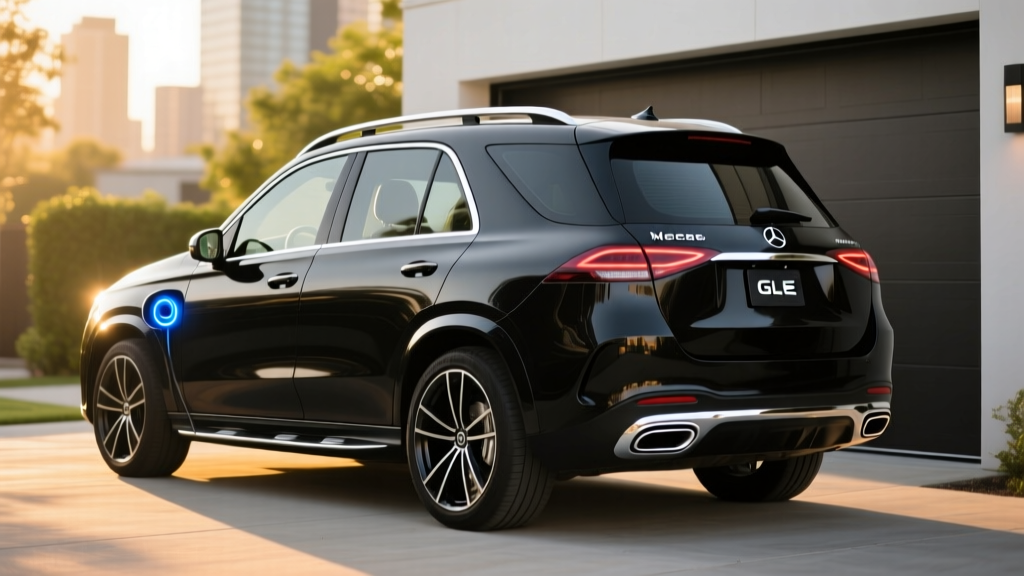
The 2026 Mercedes-Benz GLE 450e 4MATIC plug-in hybrid occupies a specific niche: buyers who want a premium midsize SUV with genuine electric-only commuting range, but who aren't ready to commit to a full battery-electric vehicle. With an EPA-rated 48 miles of electric-only driving, a combined 375 horsepower, and the ability to DC fast charge — a rarity among PHEVs — the GLE 450e is one of the most capable plug-in hybrids in the luxury segment.
But at a starting MSRP around $63,950, and with federal tax credit eligibility hinging on battery sourcing rules that shift annually, the GLE 450e demands careful number-crunching before you sign. This guide breaks down every spec that matters.
GLE 450e Powertrain: Engine, Motor, and Combined Output
The GLE 450e pairs a turbocharged 2.0-liter inline-four gasoline engine with a permanently excited synchronous electric motor integrated into the 9G-TRONIC automatic transmission. Here's how the numbers stack up:
| Specification | Value |
|---|---|
| Gas Engine | 2.0L turbocharged I4 |
| Engine Output | 255 hp / 295 lb-ft torque |
| Electric Motor Output | 134 hp (100 kW) |
| Combined System Output | 375 hp / 480 lb-ft torque |
| Transmission | 9-speed automatic (9G-TRONIC) |
| Drivetrain | 4MATIC all-wheel drive |
| 0–60 mph | 5.6 seconds (manufacturer est.) |
| Battery Chemistry | NMC (nickel-manganese-cobalt) lithium-ion |
| Battery Capacity (gross / usable) | 31.2 kWh / ~23.3 kWh usable |
| Towing Capacity | Up to 7,700 lbs (with trailer hitch) |
The 375 combined horsepower is substantial for a PHEV in this class. The electric motor alone provides enough thrust for confident merging and highway on-ramps at speeds up to roughly 87 mph before the gas engine engages. In practice, most daily driving under 60 mph can be completed entirely on electric power if you start with a full charge.
Electric-Only Range, MPGe, and Fuel Economy Breakdown
For PHEV buyers, the two numbers that matter most are electric-only range and what happens once the battery depletes. The GLE 450e delivers on both fronts.
| Driving Mode | EPA Rating |
|---|---|
| Electric-Only Range | 48 miles |
| Combined MPGe (electric + gas) | 56 MPGe |
| Gas-Only Combined MPG (battery depleted) | 23 MPG combined |
| Gas-Only City MPG | 21 MPG |
| Gas-Only Highway MPG | 26 MPG |
| Total Combined Range (electric + gas) | ~470 miles |
Once the battery is depleted, the GLE 450e operates as a conventional hybrid. The 23 MPG combined figure is reasonable for a 5,400-pound luxury SUV but unremarkable compared to lighter, non-plug-in hybrids like the Toyota Highlander Hybrid (35 MPG combined). The value proposition here is that most owners with home charging and commutes under 40 miles will rarely burn gasoline on weekdays.
Charging the GLE 450e: Level 1, Level 2, and DC Fast Charging
One of the GLE 450e's standout features is DC fast-charging capability — something still uncommon among plug-in hybrids, where most competitors are limited to Level 2 AC charging at best.
| Charging Level | Power | Time (0–100% / 10–80%) | Connector |
|---|---|---|---|
| Level 1 (120V household) | ~1.4 kW | ~17 hours (0–100%) | J1772 |
| Level 2 (240V home/public) | Up to 7.4 kW | ~4.5 hours (0–100%) | J1772 |
| DC Fast Charging | Up to 60 kW | ~30 min (10–80%) | CCS1 |
The 60 kW DC fast-charging peak means you can recover roughly 30 miles of electric range in about 15 minutes at a public CCS charger. While 60 kW is modest compared to full EVs (which often peak at 150–350 kW), it's exceptional for a PHEV and makes the GLE 450e practical for road-trip charging stops if you want to maximize electric driving at your destination.
For daily use, a Level 2 home charger is the clear recommendation. A full overnight charge in roughly 4.5 hours means you wake up to 48 miles of electric range every morning. Level 1 charging is technically possible but impractical as a primary strategy — 17 hours for a full charge means you'd never recover a depleted battery overnight.
HEV vs. PHEV vs. Full EV: Which Powertrain Fits Your Life?
Conventional Hybrid (HEV): No plug required. The battery recharges through regenerative braking and the gas engine. Best for drivers who want better fuel economy without changing habits. Example: Toyota Highlander Hybrid (35 MPG combined, no electric-only range).
Plug-In Hybrid (PHEV) — GLE 450e: Requires regular plug-in charging to unlock the 48-mile electric range. Operates as a hybrid once the battery depletes. Best for drivers with home charging and commutes under 50 miles who also need long-range road-trip capability.
Battery Electric Vehicle (BEV): No gasoline engine. Zero tailpipe emissions. Requires reliable charging access (home or public). Best for drivers with predictable routes, charging access, and willingness to plan around charging on long trips. Example: Mercedes EQE SUV (305-mile EPA range).
The GLE 450e makes the most sense if you can charge at home and regularly drive more than 300 miles in a single day where charging stops would be inconvenient. If you can't charge at home, the PHEV premium over a conventional hybrid is harder to justify — you'll be driving a heavier vehicle at 23 MPG without accessing the electric range you paid extra for.
- You have Level 2 home charging (or can install it)
- Your weekday commute is under 45 miles round-trip
- You take road trips where EV charging infrastructure feels uncertain
- You want luxury SUV refinement with reduced weekday fuel costs
- Your daily driving is predictable and under 250 miles
- You have reliable home and workplace charging
- You want to eliminate gasoline purchases entirely
- You cannot charge at home or work
- You want simpler ownership with no plug-in routine
Pricing, Trims, and Federal Tax Credit Eligibility
The 2026 GLE 450e 4MATIC starts at an MSRP of approximately $63,950 (including destination). Higher trim levels and option packages — particularly the AMG Line exterior, Exclusive trim, and Pinnacle trim with advanced driver-assistance features — can push the price to $75,000 or more.
| Trim | Starting MSRP | Key Additions |
|---|---|---|
| GLE 450e (base) | $63,950 | MBUX, heated seats, power liftgate, 48-mi EV range |
| GLE 450e Exclusive | $67,450 | Burmester audio, ambient lighting, ventilated front seats |
| GLE 450e Pinnacle | $71,250 | MBUX AR navigation, head-up display, rear sunshades |
Federal Tax Credit: §30D Eligibility
Under the IRS §30D Clean Vehicle Credit, the GLE 450e may qualify for a partial or full federal tax credit of up to $7,500, but eligibility depends on several requirements that change periodically:
- MSRP Cap: SUVs must have an MSRP at or below $80,000. Most GLE 450e configurations qualify, but heavily optioned Pinnacle trims may exceed this cap.
- Buyer Income Limits: Modified adjusted gross income must not exceed $150,000 (single), $225,000 (head of household), or $300,000 (joint filers).
- Battery Sourcing Requirements: The credit is split into two halves — $3,750 for critical minerals sourcing and $3,750 for battery component manufacturing. Sourcing requirements tighten annually. Check the latest IRS eligible vehicle list before purchasing.
- Point-of-Sale Transfer: As of 2024, eligible buyers can transfer the credit to the dealer at purchase, reducing the upfront cost rather than waiting for a tax refund.
Important: Battery sourcing rules have tightened significantly through 2025–2026, and some previously eligible PHEVs have lost partial or full credit eligibility. Always verify current GLE 450e status on fueleconomy.gov and consult a tax professional before relying on the credit in your purchase decision.
Battery Warranty, Reliability, and Long-Term Ownership Costs
The 6-year/62,000-mile battery warranty is shorter than the 8-year/100,000-mile or 10-year/150,000-mile warranties offered by some competitors (notably Hyundai, Kia, and Toyota on their hybrid/PHEV batteries). This is worth factoring into long-term ownership plans, particularly if you intend to keep the vehicle beyond the warranty period.
Battery Replacement Cost
If the high-voltage battery requires replacement outside of warranty, expect a cost in the range of $12,000–$18,000 for parts and labor based on current Mercedes-Benz PHEV battery pricing. NMC chemistry batteries — which offer higher energy density than LFP but degrade somewhat faster over thousands of charge cycles — are more expensive to replace than simpler hybrid batteries.
That said, real-world PHEV battery degradation data from similar Mercedes systems suggests capacity loss of roughly 8–12% over the first 5 years / 75,000 miles under normal use. Most owners will see their 48-mile electric range decrease to roughly 42–44 miles over that period — noticeable but not debilitating.
Reliability Considerations
The GLE platform has a mixed reliability record in recent years. According to owner surveys and third-party reliability indexes, common concerns include MBUX infotainment glitches, air suspension issues (on models equipped with AIRMATIC), and electrical gremlins in the first model year of new powertrain configurations. The PHEV system itself — the electric motor and battery integration — has proven relatively robust in Mercedes' EQ Power lineup, which has been in production since 2019.
For peace of mind, purchasing a Mercedes-Benz Certified Pre-Owned (CPO) extended warranty or a third-party extended coverage plan that specifically includes hybrid components is worth considering for owners planning 7+ years of ownership.
Pros, Cons, and the Bottom Line
Pros
- 48-mile electric-only range covers most commutes gas-free
- DC fast charging (60 kW) is rare and valuable for a PHEV
- 375 combined hp provides confident acceleration (5.6s 0–60)
- Luxury interior quality, MBUX tech, and quiet cabin
- 7,700-lb towing capacity exceeds most PHEV competitors
- No range anxiety — gas engine provides 470+ total miles
Cons
- Battery warranty (6 yr/62k mi) is shorter than Asian-brand competitors
- 23 MPG gas-only is mediocre for a hybrid — you're carrying battery weight
- High starting price ($63,950) and options can push past $80k MSRP cap
- Tax credit eligibility uncertain due to evolving sourcing rules
- Real-world electric range drops to 30–35 mi in cold weather
- No third-row seating option (unlike GLS or competitor SUVs)
The GLE 450e 4MATIC plug-in hybrid is a compelling choice for luxury SUV buyers who want electric commuting without fully committing to a BEV. Its DC fast-charging capability and strong combined output set it apart from PHEV rivals like the BMW X5 xDrive50e (which offers similar electric range but no DC fast charging). The trade-offs are real: a shorter battery warranty, mediocre gas-only MPG, and a price that demands careful tax-credit verification.
Frequently Asked Questions
How many MPG does the GLE 450e plug-in hybrid get?
The EPA rates the GLE 450e at 56 MPGe combined when using both electric and gas power. Once the battery is depleted, it returns 23 MPG combined (21 city / 26 highway) as a conventional hybrid. Real-world gas-only MPG on highway road trips tends to land around 24–25 MPG at steady 70 mph speeds.
How far can the GLE 450e drive on electric power alone?
The EPA rates the GLE 450e at 48 miles of electric-only range. Real-world results typically fall between 38 and 44 miles in moderate weather, dropping to 30–35 miles in freezing conditions. City driving with frequent regenerative braking can occasionally push range above the EPA estimate.
Does the GLE 450e qualify for the $7,500 federal tax credit?
It may qualify for up to $7,500 under IRS §30D, but eligibility depends on the buyer's income (must be under $300,000 for joint filers), the vehicle's MSRP (must be under $80,000 for SUVs), and current battery sourcing requirements. Sourcing rules tighten annually — verify the GLE 450e's current status on the IRS eligible vehicle list before purchasing.
Is the GLE 450e hybrid reliable, and what does a battery replacement cost?
The PHEV powertrain has proven generally reliable since Mercedes introduced its EQ Power systems. The main concerns are typical Mercedes electronics and suspension issues rather than hybrid-specific failures. The battery is warrantied for 6 years/62,000 miles. Out-of-warranty battery replacement runs approximately $12,000–$18,000.
Can I charge the GLE 450e at a DC fast charger?
Yes. The GLE 450e supports DC fast charging at up to 60 kW via a CCS1 connector, reaching 10–80% in approximately 30 minutes. This is uncommon among PHEVs and makes the GLE 450e practical for topping up on road trips.
Do I have to plug in the GLE 450e, or does it charge itself?
Unlike a conventional hybrid (HEV) that charges its small battery through regenerative braking alone, the GLE 450e is a plug-in hybrid (PHEV). To access the full 48-mile electric range, you need to plug it in — ideally at a home Level 2 charger. The gas engine and regen braking can recover some charge while driving, but not enough to fill the 31.2 kWh battery meaningfully.
Hybrid vs. PHEV vs. EV — which should I choose?
If you have home charging and a sub-45-mile commute, the GLE 450e PHEV gives you electric weekday driving with gas-engine freedom for long trips. If you can't charge at home, a conventional hybrid (HEV) is simpler. If your routes are predictable and you have reliable charging, a full EV like the EQE SUV eliminates gasoline entirely and offers lower per-mile energy costs.