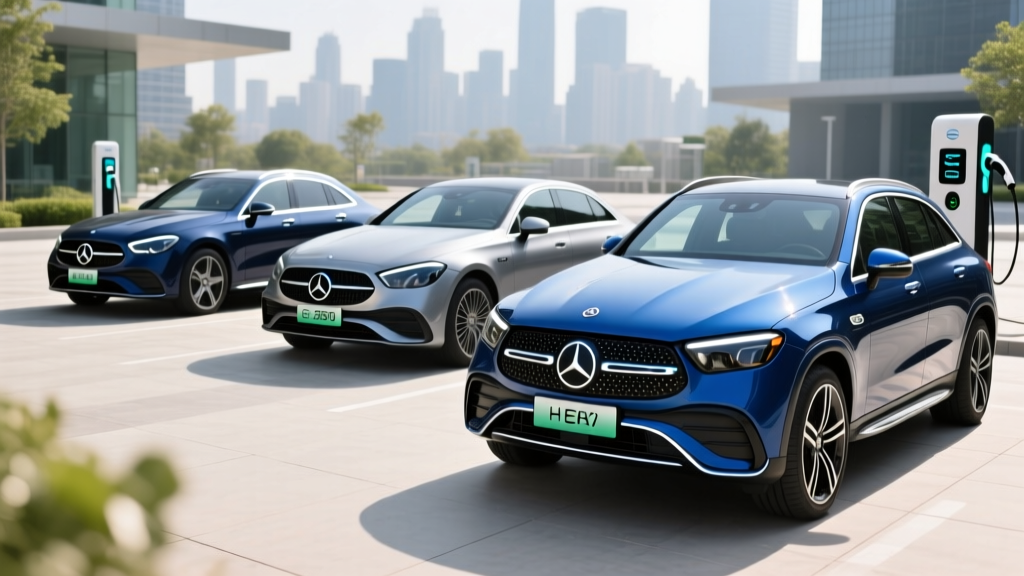
Mercedes-Benz has committed harder to plug-in hybrid technology than almost any other luxury automaker. For the 2026 model year, the brand offers PHEV variants across its core lineup — from the C-Class sedan to the GLE SUV — each pairing a turbocharged gasoline engine with a substantially sized battery pack and an electric motor capable of genuine highway speeds. But with MSRPs pushing well past $60,000 and a patchwork of federal incentive rules, choosing the right Benz PHEV requires careful number-crunching.
This guide breaks down every current Mercedes-Benz PHEV by electric-only range, fuel economy, powertrain output, charging capability, and real-world ownership costs — including whether any of them qualify for the federal §30D tax credit in 2026.
HEV vs. PHEV: What Mercedes-Benz Actually Offers
Before diving into specific models, it's critical to distinguish between the two hybrid types Mercedes-Benz sells in the U.S. market:
Conventional Hybrid (HEV)
A standard hybrid like the mild-hybrid MHEV systems found in many Mercedes models uses a small 48-volt battery and an integrated starter-generator to assist the gas engine. It cannot be plugged in, has no meaningful electric-only range, and recovers energy only through regenerative braking. Think of it as a more efficient gas car — not an electric one.
Plug-In Hybrid (PHEV)
A Mercedes-Benz PHEV carries a much larger high-voltage battery (typically 20–31 kWh usable), a dedicated electric motor producing 100+ hp, and a charging port that accepts Level 2 AC power (and on some models, DC fast charging). You plug it in overnight, drive 30–50+ miles on electricity alone, and the gas engine takes over seamlessly for longer trips.
If you're researching a "Benz PHEV," you're looking at the plug-in models. Mercedes does not currently sell a conventional full-HEV (like a Toyota Prius-style system) in the U.S. — their non-plug-in models use 48V mild-hybrid assist, which doesn't deliver standalone electric driving.
The 2026 Mercedes-Benz PHEV Lineup at a Glance
Here's every PHEV model Mercedes-Benz offers for the 2026 model year in the United States, with EPA-verified figures and manufacturer specs:
| Model | Battery (kWh usable) | EV Range (EPA est.) | Combined MPGe | Gas-Only MPG (combined) | Combined HP | 0–60 mph | Base MSRP |
|---|---|---|---|---|---|---|---|
| C 300e Sedan | 25.4 | ~46 mi | ~60 MPGe | ~30 MPG | 312 hp | 5.9 sec | $58,900 |
| GLC 350e 4MATIC SUV | 25.4 | ~39 mi | ~56 MPGe | ~27 MPG | 313 hp | 6.5 sec | $62,550 |
| S 580e Sedan | 28.6 | ~40 mi | ~55 MPGe | ~25 MPG | 443 hp | 5.0 sec | $120,900 |
| GLE 350de/400e (if available) | 31.2 | ~48 mi | ~58 MPGe | ~24 MPG | 333–381 hp | 6.2–6.8 sec | $72,000+ |
Sources: fueleconomy.gov (EPA), Mercedes-Benz USA. Figures reflect 2026 model-year data where published; some models may carry over 2025 EPA certifications pending update. Real-world electric range varies significantly with temperature, driving style, and terrain.
Real-World MPG and Electric Range: What to Actually Expect
Mercedes-Benz PHEVs use a P2 hybrid architecture — the electric motor sits between the engine and the 9-speed automatic transmission, allowing the car to drive on electricity alone at speeds up to 87 mph before the engine fires. This is a genuine electric-driving experience, not just torque-fill assist.
But the EPA electric-range sticker is a best-case composite. Here's what real-world driving typically yields:
Real-World Range Expectations for a C 300e (EPA 46 mi)
- City/suburban, mild weather: 42–48 miles (regen braking helps)
- Highway at 70–75 mph: 32–38 miles (aerodynamic drag drains battery faster)
- Cold weather (below 35°F): 28–35 miles (battery chemistry less efficient, cabin heat draws power)
- With preconditioning while plugged in: closer to EPA estimate even in cold
The gas-only MPG figures apply once the battery is depleted. Because the C 300e and GLC 350e carry several hundred pounds of battery weight, their gas-only efficiency is slightly lower than a comparable non-hybrid Mercedes — but the electric miles you accumulate more than offset this if you charge regularly.
Owners who plug in nightly and drive under 40 miles per day report effectively using gasoline only on weekend road trips. One fueleconomy.gov user-submitted average for the C 300e shows combined real-world figures exceeding 50 MPGe when charged consistently.
Charging: Level 2, DC Fast Charging, and Times
This is where Mercedes-Benz PHEVs stand out from most competitors. While many luxury PHEVs limit you to slow Level 2 AC charging, several 2026 Benz PHEV models offer optional DC fast charging — a rarity in the plug-in hybrid segment.
| Charging Method | Power (kW) | Time (0–100%) | Miles of EV Range per Hour | Availability |
|---|---|---|---|---|
| Level 1 (120V household outlet) | ~1.4 kW | 18–22 hours | ~3–4 mi/hr | All models (included cord) |
| Level 2 (240V, 9.6 kW onboard charger) | 9.6 kW | ~2.5–3 hours | ~18–20 mi/hr | All models (standard) |
| DC Fast Charge (optional on C 300e, GLC 350e) | Up to 60 kW | ~20 min (10–80%) | N/A (session-based) | Optional; adds ~$500–$800 |
Key distinction — kW vs. kWh: The battery capacity is measured in kilowatt-hours (kWh) — that's the total energy stored, like a gas tank's gallons. Charging power is measured in kilowatts (kW) — that's the rate of energy flow, like a pump's gallons-per-minute. A 60 kW DC charger can refill a 25.4 kWh battery quickly, but the charge rate tapers above 80% state of charge to protect battery health.
The 60 kW DC fast-charge option is genuinely useful for road trips: plug in at a rest stop, grab lunch, and return to a nearly full battery. Without it, you're limited to Level 2 speeds, which is perfectly fine for overnight home charging but impractical for en-route top-ups.
Powertrain Deep Dive: How the Benz PHEV Drives
Every 2026 Mercedes-Benz PHEV uses a variant of the brand's M254 2.0-liter turbocharged inline-four (or, in the S 580e, the M256 3.0-liter turbo inline-six) paired with a permanently excited synchronous electric motor integrated into the 9G-TRONIC 9-speed automatic transmission.
Here's how the powertrains break down by model:
- C 300e: 2.0L turbo I-4 (201 hp) + electric motor (127 hp) = 312 combined hp, 406 lb-ft torque. Rear-wheel drive.
- GLC 350e 4MATIC: 2.0L turbo I-4 (201 hp) + electric motor (134 hp) = 313 combined hp, 406 lb-ft torque. All-wheel drive via 4MATIC.
- S 580e: 3.0L turbo I-6 (362 hp) + electric motor (148 hp) = 443 combined hp, 443 lb-ft torque. Rear-wheel drive (AWD optional).
The electric motor delivers instant torque from zero RPM, which means PHEV models feel noticeably quicker off the line than their gas-only equivalents, even before the turbo spools. The transition between electric and gas power is managed by the transmission and is largely imperceptible in normal driving — you'll only notice the engine startup under hard acceleration or when the battery depletes.
Drive modes include Electric (EV-only up to 87 mph), Hybrid (automatic blending), Battery Hold (preserves charge for later, useful before entering a city), and Sport (aggressive combined output with sharper throttle mapping).
Battery Warranty, Degradation, and Replacement Cost
Mercedes-Benz PHEV Battery Warranty
Mercedes-Benz covers the high-voltage battery in its PHEV models for 6 years or 62,000 miles (whichever comes first) against defects and excessive capacity loss. The warranty typically guarantees the battery will retain at least 70% of its original capacity during the coverage period.
For comparison, federal regulations mandate a minimum of 8 years/80,000 miles for emissions-related components on PHEVs in CARB states, and some Mercedes dealerships in those states may honor extended coverage. Always confirm your specific state's warranty terms with your dealer.
Lithium-ion battery degradation in Mercedes PHEVs follows a predictable curve: expect roughly 8–12% capacity loss over the first 5 years of normal use, after which degradation slows considerably. Owners who avoid frequent DC fast charging, don't regularly drain the battery to 0%, and use preconditioning in extreme temperatures tend to see the best long-term retention.
If a replacement is needed out of warranty, a Mercedes-Benz PHEV battery pack currently costs between $8,000 and $14,000 including labor, depending on the model. This is a meaningful expense, though battery prices have trended downward year over year, and by the time most owners need a replacement, costs are expected to be lower.
Mercedes-Benz PHEV reliability ratings are generally strong. The brand's hybrid systems have fewer moving parts than a conventional transmission (no torque converter, simplified braking via regen), and IIHS crash-test performance for the C-Class and GLC lines remains top-tier. Long-term powertrain reliability data for the current-generation PHEVs (introduced 2022–2023) is still accumulating, but early reports from owner forums and warranty claim databases show no systemic battery or motor failures.
Pricing, Trims, and Federal Tax Credit Eligibility
Mercedes-Benz PHEVs command a premium over their gas-only siblings — typically $5,000 to $10,000 more depending on the model. Here's the pricing landscape for 2026:
- C 300e Sedan: Starting at ~$58,900 (vs. ~$48,500 for the C 300 gas model)
- GLC 350e 4MATIC: Starting at ~$62,550 (vs. ~$50,200 for the GLC 300)
- S 580e Sedan: Starting at ~$120,900 (vs. ~$117,000 for the S 500)
Does a Benz PHEV Qualify for the Federal §30D Tax Credit?
This is where the math gets complicated — and where many luxury PHEV buyers are disappointed. Under current IRS §30D rules for 2026, a new clean vehicle must meet all of the following to qualify for up to $7,500:
- MSRP cap: Vans, SUVs, and pickup trucks must be under $80,000; sedans must be under $55,000
- Buyer income cap: Modified AGI below $150,000 (single), $225,000 (head of household), or $300,000 (joint)
- Battery sourcing: Critical minerals and battery components must meet escalating domestic/free-trade-partner percentages
- Final assembly: Must occur in North America
- Minimum battery capacity: At least 7 kWh (all Benz PHEVs exceed this)
The C 300e sedan's ~$58,900 MSRP exceeds the $55,000 sedan cap, eliminating it from the credit. The GLC 350e (an SUV) clears the $80,000 SUV cap, but its battery sourcing and final assembly status must be verified per VIN at the time of purchase — and as of early 2026, Mercedes-Benz has not consistently met the critical-minerals thresholds for the full $7,500. The S 580e is well above the $80,000 cap.
Bottom line: Do not assume any Mercedes-Benz PHEV qualifies for the federal credit. Check the specific VIN on the IRS's qualifying vehicle list at the time of purchase, and consult a tax professional. The point-of-sale transfer option (where the dealer applies the credit as a down-payment reduction) is available if the vehicle qualifies, but many Benz PHEV buyers will find their models ineligible due to MSRP or sourcing requirements.
Some states offer additional PHEV incentives — California's CVRP, Colorado's state credit, and various utility-company rebates may apply. Check your state's energy office or your local utility for current programs.
Who Should Choose a Benz PHEV — and Who Shouldn't
Choose a Mercedes-Benz PHEV if:
- You have reliable access to Level 2 charging at home or work (a garage or dedicated parking spot with a 240V outlet)
- Your daily commute is under 40–45 miles, letting you drive electric most days
- You regularly take longer road trips where a full EV's charging stops would be inconvenient
- You want Mercedes luxury, build quality, and dealer support without committing to full electrification
- You live in an area with limited public DC fast-charging infrastructure
Choose a full EV (like the Mercedes EQE or Tesla Model S) if:
- You want zero tailpipe emissions and zero gasoline purchases
- You have home charging and your daily driving is under 250 miles
- You want lower per-mile energy costs (electricity at ~$0.14/kWh vs. gasoline at ~$3.50/gal)
- You want fewer maintenance items (no oil changes, no spark plugs, less brake wear from regen)
Choose a conventional gas car if:
- You cannot install or access any charging at home or work
- Your budget is tighter and the PHEV premium doesn't pencil out in fuel savings
- You drive very low annual miles, making fuel-cost savings negligible
The Benz PHEV is best understood as a bridge vehicle — ideal for buyers who want electric daily driving but aren't ready to rely entirely on charging infrastructure for road trips. If you can charge at home and your commute fits within the electric range, you'll use gasoline so rarely that the PHEV essentially functions as an EV with an invisible safety net.
Frequently Asked Questions
How many MPG does a Mercedes-Benz PHEV get?
It depends on how often you charge. With a fully charged battery and a short commute, you may use almost no gasoline — effectively infinite MPG for that trip. When the battery is depleted and you're driving on gas alone, expect 24–30 MPG combined depending on the model (C 300e: ~30 MPG combined gas-only; GLC 350e: ~27 MPG; S 580e: ~25 MPG). The EPA combined MPGe rating (which blends electric and gas driving) ranges from 55–60 MPGe.
How far can a Benz PHEV go on electric only?
EPA-rated electric-only range spans 39–48 miles across the 2026 lineup. The C 300e leads at ~46 miles EPA; the GLC 350e delivers ~39 miles. Real-world figures vary: expect 10–20% less on the highway or in cold weather, and roughly EPA figures in mild city driving with regenerative braking.
Can I charge a Mercedes-Benz PHEV at a Tesla Supercharger?
Not natively. Mercedes-Benz PHEVs use the CCS1 connector (or the newer NACS connector on select 2026 models). If your vehicle has a CCS port, you'll use Electrify America, EVgo, ChargePoint, and other non-Tesla networks. Mercedes has announced NACS adoption for future models — check your specific vehicle's port type. A CCS-to-NACS adapter may be available depending on the charging network.
Is the Mercedes-Benz PHEV battery reliable, and what does replacement cost?
Mercedes PHEV batteries have shown strong reliability in early years. The warranty covers 6 years/62,000 miles with a 70% capacity retention guarantee. Out-of-warranty replacement runs $8,000–$14,000. Degradation is typically 8–12% over five years — meaning your 46-mile EV range might become 40 miles by year five, which most owners find still very usable.
Does a Benz PHEV qualify for any tax credit in 2026?
Most Mercedes-Benz PHEVs struggle to qualify for the federal §30D credit due to MSRP caps ($55,000 for sedans, $80,000 for SUVs) and battery-sourcing requirements. The C 300e sedan exceeds the sedan cap. The GLC 350e SUV is under the SUV cap but may not meet sourcing thresholds. Always verify VIN-level eligibility on the IRS website before purchasing. State and utility incentives may still apply.
What happens if I never plug in my Mercedes PHEV?
The car will still drive normally on gasoline — it functions like a heavy conventional car. You'll get the gas-only MPG figures (24–30 combined) and miss out on the entire value proposition of the PHEV premium. If you can't commit to regular charging, a conventional Mercedes model will cost less upfront and deliver similar gas-only efficiency without the battery weight penalty.