The 2026 Mercedes-Benz Hybrid Lineup at a Glance
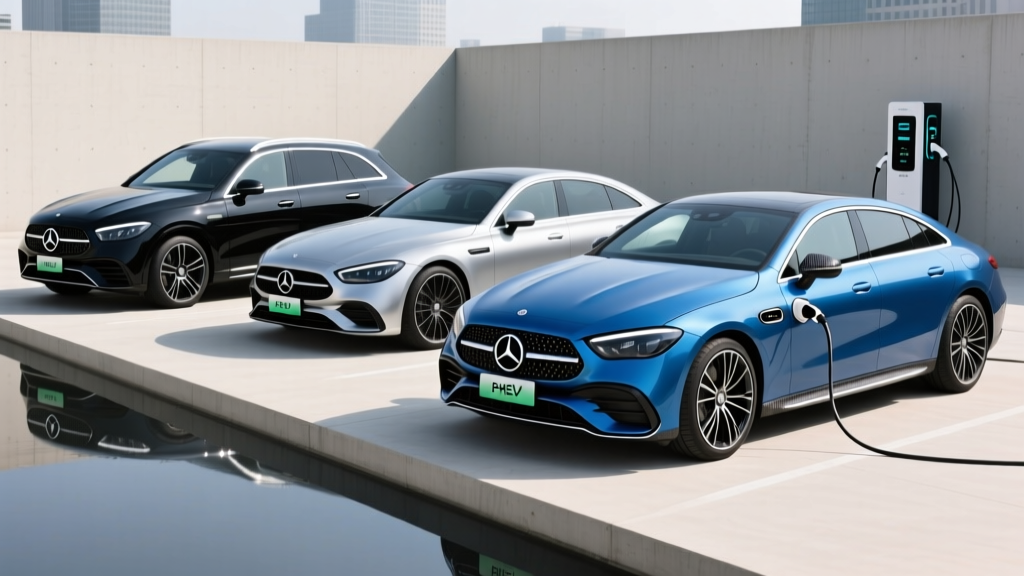
If you're researching a Mercedes-Benz hybrid, you're actually looking at two very different powertrain philosophies under one badge. Mercedes-Benz has spent the last several years consolidating its electrified strategy around plug-in hybrids (PHEVs) for sedans and SUVs, while quietly retiring most conventional hybrid (HEV) options in the U.S. market. For the 2026 model year, the lineup is dominated by PHEVs that pair turbocharged engines with larger battery packs and more powerful electric motors than their predecessors — offering genuine electric-only commuting capability before the gas engine ever fires up.
This guide breaks down every current Mercedes-Benz hybrid and PHEV available in the United States for 2026, with exact EPA figures, battery specifications, real-world expectations, and ownership economics. Whether you're eyeing a C-Class, S-Class, GLE, or GLC, you'll find the numbers you need to decide.
| Model | Type | Battery (kWh) | EV Range (mi) | Combined MPG/MPGe | Combined HP | 0-60 mph | Starting MSRP |
|---|---|---|---|---|---|---|---|
| C 300e (Sedan) | PHEV | 25.4 | ~46 | 73 MPGe / 34 MPG (gas) | 312 | 5.9s | $57,950 |
| S 580e (Sedan) | PHEV | 28.6 | ~48 | 66 MPGe / 28 MPG (gas) | 442 | 5.0s | $120,900 |
| GLE 350de (SUV) | PHEV | 31.2 | ~45 | 64 MPGe / 25 MPG (gas) | 367 | 6.4s | $72,750 |
| GLC 350e (SUV) | PHEV | 25.4 | ~40 | 68 MPGe / 30 MPG (gas) | 313 | 6.2s | $62,900 |
Note: EPA range and MPGe figures reflect 2026 model-year estimates based on manufacturer data and fueleconomy.gov. Real-world results vary with driving style, climate, and terrain.
HEV vs. PHEV: Understanding What Mercedes-Benz Actually Sells
Conventional Hybrid (HEV): Uses a small battery (typically 1-2 kWh) charged solely through regenerative braking and the engine. Never plugs in. Provides modest fuel savings, especially in city driving. Mercedes-Benz has largely discontinued HEV models in the U.S. for 2026.
Plug-in Hybrid (PHEV): Carries a much larger battery (25-31 kWh in current Mercedes models) that charges via a plug — Level 1 (120V), Level 2 (240V), or in some models, DC fast charging. Delivers 40-48 miles of pure electric driving before the gasoline engine engages. This is where Mercedes-Benz has invested its engineering.
The distinction matters enormously for your daily routine. A conventional hybrid is a gas car that sips fuel more efficiently. A Mercedes-Benz PHEV is effectively an electric car for daily commuting that happens to have a gasoline engine for road trips. If your round-trip commute is under 40 miles and you can charge at home, you may go weeks without burning fuel.
Fuel Economy Deep Dive: EPA Numbers and Real-World MPG
Mercedes-Benz PHEVs report two separate efficiency figures, and conflating them is the most common buyer mistake:
- MPGe (miles per gallon equivalent): Measures efficiency when running on electricity. The 2026 C 300e achieves an EPA-estimated 73 MPGe combined.
- MPG (miles per gallon): Measures efficiency when the gasoline engine is active after the battery depletes. The C 300e delivers an EPA-estimated 34 MPG combined in this mode.
| Model | MPGe (Combined) | MPG City (Gas) | MPG Highway (Gas) | MPG Combined (Gas) |
|---|---|---|---|---|
| C 300e | 73 | 38 | 32 | 34 |
| S 580e | 66 | 30 | 27 | 28 |
| GLE 350de | 64 | 27 | 24 | 25 |
| GLC 350e | 68 | 33 | 28 | 30 |
Real-world expectations: PHEV efficiency depends entirely on how often you drive within the electric-only range. If you charge nightly and commute 30 miles round-trip, the C 300e might return an effective 100+ MPG equivalent over a month. If you never plug in and drive it like a conventional hybrid, expect gas-only MPG figures — which, for a heavy luxury sedan or SUV, are respectable but not class-leading. The S 580e at 28 MPG combined on gas is reasonable for a 5,000-lb flagship; the GLE 350de at 25 MPG reflects SUV aerodynamics and weight.
In city driving specifically, PHEVs often exceed their EPA gas-mode estimates because regenerative braking recaptures energy in stop-and-go traffic. Highway driving at 75+ mph will reduce both electric range and gas MPG by roughly 10-15% compared to EPA stickers.
Electric-Only Range: How Far Can a Mercedes-Benz PHEV Go Without Gas?
EPA Electric Range vs. Reality:
The 2026 C 300e carries an EPA-estimated 46 miles of electric-only range. In real-world mixed driving at moderate temperatures, expect 38-44 miles. In cold weather (below 35°F), battery efficiency drops and cabin heating draws significant power — plan on 28-35 miles of electric range. Highway-speed driving (70+ mph) similarly reduces electric range by roughly 15-20%.
Here's what each model delivers on electricity alone:
- C 300e: ~46 miles EPA (25.4 kWh battery)
- S 580e: ~48 miles EPA (28.6 kWh battery)
- GLE 350de: ~45 miles EPA (31.2 kWh battery)
- GLC 350e: ~40 miles EPA (25.4 kWh battery)
These ranges represent a significant generational leap. The previous-generation Mercedes PHEVs offered only 15-25 miles of electric range, which limited their practicality. With 40+ miles, a Mercedes-Benz PHEV can genuinely serve as a weekday EV and a weekend road-trip car — provided you charge at home.
Total combined range (electric + full gas tank) typically exceeds 450 miles across the lineup, eliminating any range anxiety for long trips. The S 580e, with its larger fuel tank, can approach 500+ miles total.
Charging: What You Need to Know Before You Plug In
Every 2026 Mercedes-Benz PHEV supports Level 2 AC charging. Here's the critical detail many buyers overlook: DC fast charging is available on select models — specifically, the GLE 350de offers an optional DC fast-charge capability (up to 60 kW), which can replenish the battery from 10-80% in roughly 30 minutes. The C 300e, S 580e, and GLC 350e are limited to AC charging only.
| Model | Level 1 (120V) | Level 2 (240V) | DC Fast Charge | Level 2 Time (0-100%) |
|---|---|---|---|---|
| C 300e | ~1.4 kW | 7.4 kW | Not available | ~3.5 hours |
| S 580e | ~1.4 kW | 7.4 kW | Not available | ~4.0 hours |
| GLE 350de | ~1.4 kW | 7.4 kW | 60 kW (optional) | ~4.5 hours (AC) |
| GLC 350e | ~1.4 kW | 7.4 kW | Not available | ~3.5 hours |
Home charging reality: A Level 2 home charger (240V, 32-40A circuit) will fully replenish any Mercedes-Benz PHEV overnight. Installation typically costs $500-$2,000 depending on your electrical panel's capacity and the run distance from panel to garage. Level 1 charging (standard 120V outlet) adds roughly 4-5 miles of range per hour — adequate for overnight top-ups if your daily electric driving is under 25 miles, but insufficient to fully recharge a depleted 25+ kWh battery overnight.
Charging connector: All 2026 Mercedes-Benz PHEVs sold in the U.S. use the J1772 connector for AC charging. The GLE 350de's optional DC fast-charge port uses CCS1. Note that Mercedes-Benz has committed to adopting NACS (Tesla's connector) for future EVs, but 2026 PHEVs retain J1772/CCS.
Powertrain Engineering: Where the Horsepower Comes From
Mercedes-Benz pairs its turbocharged four-cylinder and six-cylinder engines with permanently excited synchronous electric motors integrated into the transmission housing. The result is seamless power delivery with no discernible handoff between electric and gas propulsion.
- C 300e: 2.0L turbo I-4 (201 hp) + electric motor (129 hp) = 312 combined hp, 406 lb-ft torque
- S 580e: 3.0L turbo I-6 (362 hp) + electric motor (148 hp) = 442 combined hp, 516 lb-ft torque
- GLE 350de: 2.0L turbo-diesel I-4 (194 hp) + electric motor (134 hp) = 367 combined hp, 516 lb-ft torque (diesel variant)
- GLC 350e: 2.0L turbo I-4 (201 hp) + electric motor (134 hp) = 313 combined hp, 406 lb-ft torque
The S 580e deserves special note: 442 hp in a PHEV sedan that can drive 48 miles on electricity is a remarkable engineering achievement. The electric motor provides instant torque from standstill, making these PHEVs feel quicker than their 0-60 times suggest in around-town driving.
Battery Warranty, Reliability, and Replacement Costs
Mercedes-Benz PHEV Battery Warranty: 6 years or 62,000 miles (whichever comes first) for the high-voltage battery, covering defects and capacity loss below 70% of original capacity. This is shorter than the 8-year/100,000-mile warranty typical of full EVs and some competitors' PHEV batteries. The powertrain (engine, transmission) carries a separate 4-year/50,000-mile warranty.
Reliability: Mercedes-Benz PHEVs carry the complexity of both a full internal-combustion powertrain and an electric drive system. Historically, Mercedes-Benz has scored mid-to-below-average in long-term reliability surveys (J.D. Power, Consumer Reports), and the added PHEV components — onboard charger, power electronics, high-voltage battery, electric motor — introduce additional potential failure points compared to a conventional vehicle.
That said, the high-voltage battery itself is generally one of the more reliable components. Lithium-ion PHEV batteries experience less stress than full-EV batteries because they operate in a narrower state-of-charge window and have smaller total capacity. Most PHEV battery replacements occur outside normal ownership periods.
Battery replacement cost: If the high-voltage battery requires replacement out of warranty, expect $8,000-$15,000 depending on the model, including parts and labor. The S 580e's larger 28.6 kWh pack sits at the upper end of that range. This is a meaningful financial risk to weigh if you plan to own the vehicle beyond the warranty period.
Pricing, Tax Credits, and Total Cost of Ownership
The 2026 Mercedes-Benz PHEV lineup occupies the premium-to-luxury price range. Here's where each model starts, before options and destination charges:
- C 300e: $57,950
- GLC 350e: $62,900
- GLE 350de: $72,750
- S 580e: $120,900
Federal tax credit (§30D): This is where Mercedes-Benz PHEV buyers face a frustrating reality. Under current IRS §30D rules, plug-in hybrids qualify for the federal clean vehicle credit if they meet battery capacity (at least 7 kWh — all Mercedes PHEVs clear this), MSRP caps ($80,000 for SUVs, $55,000 for sedans), buyer income limits ($300,000 joint / $150,000 single), and critical-mineral/battery-component sourcing requirements.
§30D Tax Credit Checklist for Mercedes-Benz PHEVs:
- ✓ Battery capacity ≥ 7 kWh (all models qualify)
- ✓ MSRP under cap: GLC 350e ($62,900 < $80K SUV cap), GLE 350de ($72,750 < $80K SUV cap) — pass
- ✗ MSRP over cap: C 300e ($57,950 > $55K sedan cap), S 580e ($120,900 > $55K sedan cap) — fail
- ⚠ Battery sourcing: Mercedes-Benz sources battery cells from CATL and other suppliers; critical-mineral and component requirements may reduce or eliminate credit even for qualifying MSRP models
- ⚠ Buyer income: Must be under $300K (joint) / $150K (single) modified AGI
- ⚠ Point-of-sale transfer available if all requirements are met
Bottom line on incentives: The GLC 350e and GLE 350de are the most likely candidates for partial or full federal credit, but battery-sourcing rules are the wildcard. The C 300e sedan exceeds the $55,000 sedan MSRP cap and does not qualify regardless of buyer income. Always verify current eligibility on the IRS clean vehicle credit page before purchasing, as sourcing compliance lists update periodically. Some states offer additional PHEV rebates (California, Colorado, New York, among others) that stack with federal incentives — check your state's energy office for current programs.
Mercedes-Benz PHEV vs. Full EV vs. Gas: Which Is Right for You?
Choose a Mercedes-Benz PHEV if:
- Your daily commute is under 45 miles round-trip and you can charge at home
- You regularly take road trips exceeding 200 miles and don't want to plan around charging infrastructure
- You want electric commuting without committing to a full EV
- You value the Mercedes-Benz interior, ride quality, and brand prestige
Choose a full EV (like the Mercedes EQE or EQS) if:
- You have reliable home charging and your trips rarely exceed 250 miles
- You want the lowest per-mile operating cost and minimal maintenance
- You want to avoid oil changes, spark plugs, and engine-related service entirely
Choose a conventional gas vehicle if:
- You cannot charge at home or at work
- You want the lowest upfront purchase price
- You drive primarily long highway routes where hybrid advantages diminish
Mercedes-Benz PHEV Pros:
- 40-48 mi electric range covers most commutes
- Premium interior and ride quality
- No range anxiety on road trips
- Strong combined horsepower
- DC fast charge available on GLE
Mercedes-Benz PHEV Cons:
- Premium pricing across the lineup
- Sedan MSRP exceeds §30D tax credit cap
- Below-average battery warranty (6 yr vs. 8-10 yr)
- Maintenance complexity of dual powertrains
- No conventional HEV option in U.S.
Frequently Asked Questions
How many MPG does a Mercedes-Benz hybrid get?
It depends on the model and whether you're driving on electricity or gas. The 2026 C 300e PHEV achieves 73 MPGe on electricity and 34 MPG combined when running on gasoline alone. The GLC 350e returns 68 MPGe / 30 MPG combined. These are EPA estimates; real-world gas-only MPG may be 10-15% lower on sustained highway driving.
How far can a Mercedes-Benz PHEV go on electric only?
The 2026 lineup offers 40-48 miles of EPA-estimated electric-only range, depending on the model. The S 580e leads at 48 miles; the GLC 350e delivers 40 miles. In cold weather or at highway speeds, expect 28-38 miles of real-world electric range.
Do Mercedes-Benz hybrids need to be plugged in?
Mercedes-Benz PHEVs (C 300e, S 580e, GLE 350de, GLC 350e) achieve their best efficiency when plugged in regularly. However, they do not require plugging in to operate — the gasoline engine and regenerative braking will keep the vehicle running. Without regular charging, you'll experience gas-only MPG figures and miss the primary benefit of the PHEV powertrain.
Is a Mercedes-Benz PHEV reliable?
Mercedes-Benz scores mid-range to below-average in major reliability surveys. PHEVs add complexity (two powertrains, power electronics, high-voltage battery) compared to gas-only or full-EV vehicles. The high-voltage battery is generally reliable, but out-of-warranty replacement costs $8,000-$15,000. The battery warranty is 6 years/62,000 miles — shorter than many competitors.
Does a Mercedes-Benz hybrid qualify for a tax credit?
Under current IRS §30D rules, the GLC 350e and GLE 350de may qualify for up to $7,500 in federal tax credits if the buyer meets income limits and the vehicle's battery sourcing satisfies critical-mineral and component requirements. The C 300e and S 580e sedans exceed the $55,000 MSRP cap for sedans and do not qualify. Always verify eligibility at the point of sale, as sourcing compliance changes periodically.
What is the battery replacement cost for a Mercedes-Benz PHEV?
Out-of-warranty high-voltage battery replacement runs $8,000-$15,000 depending on the model and battery size. The Mercedes-Benz PHEV battery warranty covers 6 years or 62,000 miles against defects and capacity loss below 70%. For context, most PHEV batteries last well beyond their warranty period under normal use.
Can a Mercedes-Benz PHEV DC fast charge?
Only the GLE 350de offers optional DC fast charging at up to 60 kW (CCS1 connector), achieving a 10-80% charge in roughly 30 minutes. The C 300e, S 580e, and GLC 350e are limited to AC Level 2 charging at 7.4 kW, which fully replenishes the battery in 3.5-4.5 hours.
Sources: U.S. EPA Fuel Economy, IRS Clean Vehicle Credits, Mercedes-Benz USA specifications.