The 2026 Mercedes-Benz Hybrid Lineup: Mild Hybrid, HEV, and PHEV Explained
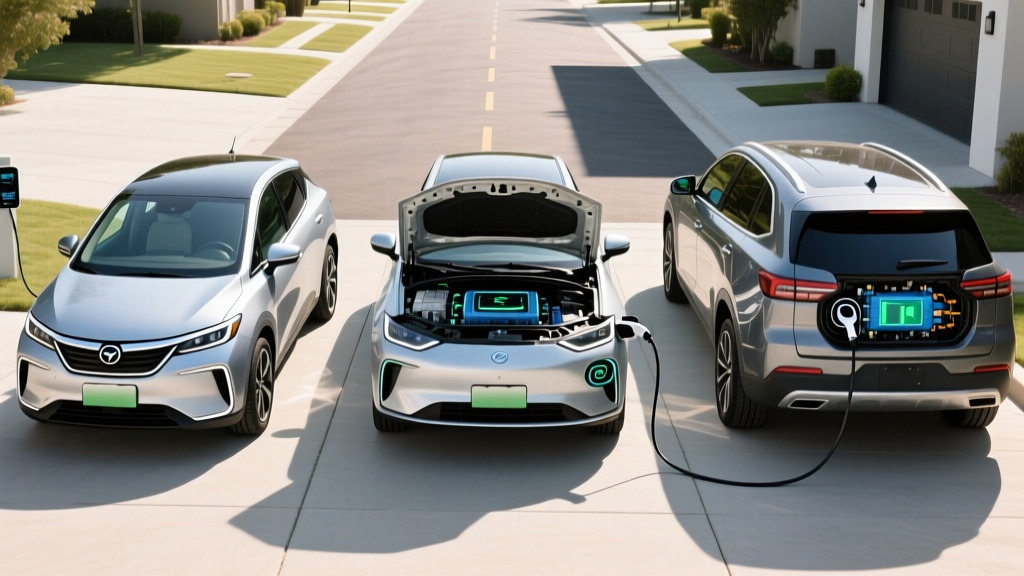
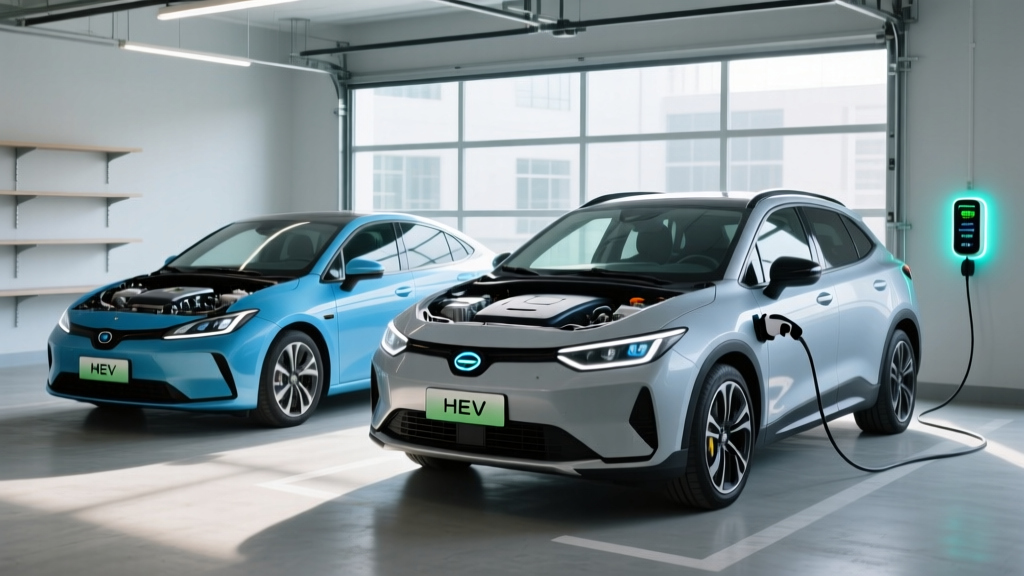
Mercedes-Benz offers one of the broadest electrified portfolios in the luxury segment, but the terminology can trip up even seasoned car shoppers. Before comparing specific models, it is essential to understand the three tiers of electrification in the current Mercedes-Benz hybrid cars lineup:
How Mercedes Electrification Tiers Differ
| Feature | Mild Hybrid (MHEV) | Conventional Hybrid (HEV) | Plug-In Hybrid (PHEV) |
|---|---|---|---|
| Plugs in to charge? | No | No | Yes |
| Electric-only driving | No | Very short (under 1 mi) | Yes (25–50+ mi) |
| Battery size | ~1–2 kWh | ~1–2 kWh | ~20–31 kWh |
| Federal tax credit | No | No | Potentially (see §30D rules) |
| Primary benefit | Smoother stop/start, slight efficiency | Higher MPG without plug-in | EV commute + gas flexibility |
For the 2026 model year, Mercedes-Benz has shifted most of its U.S. lineup toward 48-volt mild-hybrid systems (EQ Boost) on nearly every gasoline engine. True conventional hybrids (HEVs) are rare in the Mercedes stable — the brand has largely leapfrogged to PHEVs for meaningful electrification. The key plug-in hybrid models available in the U.S. include the S 580e, GLE 350e/450e, and the GLC 350e. Mild-hybrid models like the E 350, C 300, and GLB 250 use a 48V integrated starter-generator but are not classified as full hybrids by the EPA.
Mercedes-Benz PHEV Models: Range, MPG, and Powertrain Specs
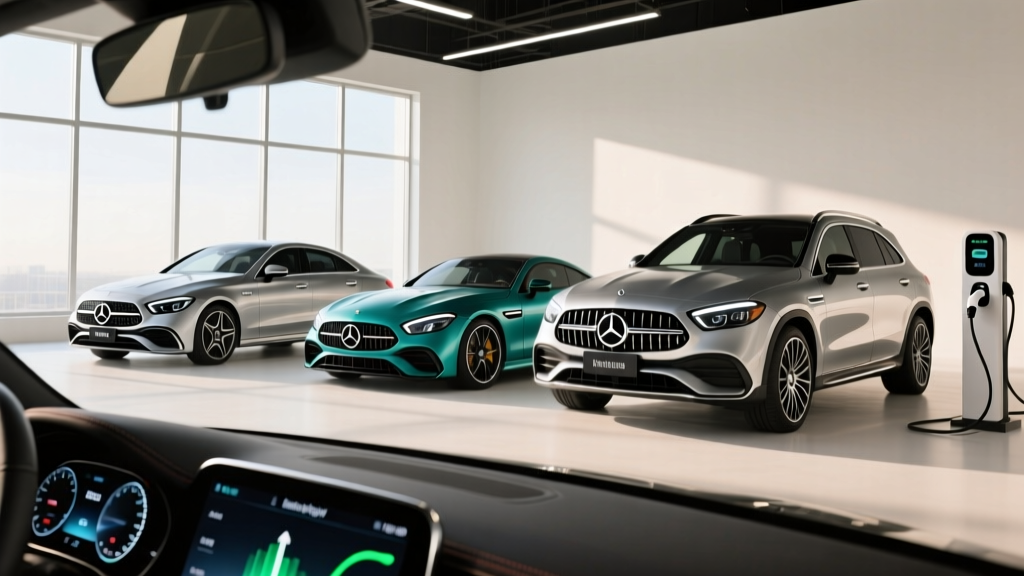
The plug-in hybrid models represent the most compelling option for buyers seeking genuine electric driving from Mercedes. Here is a detailed spec breakdown of the current U.S.-available PHEV lineup:
| Spec | 2026 S 580e Sedan | 2026 GLE 350e SUV | 2026 GLC 350e SUV |
|---|---|---|---|
| Powertrain | 3.0L I6 turbo + electric motor | 2.0L I4 turbo + electric motor | 2.0L I4 turbo + electric motor |
| Combined HP | 442 hp | 302 hp | 313 hp |
| Combined Torque | 413 lb-ft | 406 lb-ft | 406 lb-ft |
| Battery (usable kWh) | ~28.6 kWh (NMC) | ~23.3 kWh (NMC) | ~25.4 kWh (NMC) |
| EPA Electric Range | ~38 mi | ~45 mi | ~39 mi |
| EPA MPGe (elec+gas) | ~56 MPGe | ~56 MPGe | ~63 MPGe |
| EPA MPG (gas only) | ~27 combined | ~24 combined | ~28 combined |
| 0–60 mph | 5.0 sec | 6.9 sec | 6.5 sec |
| Max AC Charge (Level 2) | 7.4 kW | 7.4 kW | 7.4 kW |
| DC Fast Charge | No (optional 60 kW on some markets) | Optional 60 kW DC | Optional 60 kW DC |
| 10–80% AC Charge Time | ~3.0 hrs (7.4 kW) | ~2.5 hrs (7.4 kW) | ~2.8 hrs (7.4 kW) |
| Base MSRP | ~$120,550 | ~$70,750 | ~$62,150 |
Note: Specs reflect 2026 model-year EPA estimates and manufacturer data. Confirm final figures with your dealer as mid-year adjustments occur.
Real-World Electric Range vs. EPA Sticker
Mercedes PHEVs use relatively large batteries for the segment, which helps in real-world conditions. Expect the following from daily driving:
- City / moderate climate: EPA range is achievable or slightly exceeded — regen braking recovers energy in stop-and-go traffic.
- Highway (70+ mph): Electric range drops 20–30%. The GLE 350e's 45-mile EPA rating may yield ~32–36 miles at sustained highway speeds.
- Cold weather (below 35°F): Battery efficiency drops 15–25%. Cabin heating draws from the pack unless preconditioned while plugged in. Expect ~28–33 electric miles from the S 580e in January conditions.
- Preconditioning tip: Use the Mercedes me app to precondition the cabin while still on shore power. This preserves battery energy for driving rather than heating the interior.
Fuel Economy: EPA MPG Breakdown and Real-World Expectations
| Model | EPA City MPG | EPA Highway MPG | EPA Combined MPG | Real-World Combined (owner avg.) |
|---|---|---|---|---|
| S 580e (gas mode) | 24 | 31 | 27 | 25–29 |
| GLE 350e (gas mode) | 22 | 27 | 24 | 22–26 |
| GLC 350e (gas mode) | 25 | 31 | 28 | 26–30 |
| C 300 (MHEV, gas only) | 25 | 35 | 29 | 27–31 |
| E 350 (MHEV, gas only) | 24 | 33 | 27 | 25–29 |
Source: fueleconomy.gov (EPA estimates). Real-world figures reflect aggregated owner reports and independent testing; individual results vary with driving style, terrain, and climate.
When the battery is charged daily, PHEV owners often report dramatically lower gasoline consumption. A GLE 350e driver with a 30-mile round-trip commute who charges nightly may use gasoline only on weekend road trips — achieving effective "MPG" figures well above the EPA gas-only rating. Conversely, if you never plug in, a PHEV's extra battery weight slightly reduces fuel economy compared to a conventional gas model.
Charging a Mercedes-Benz PHEV: Home and Public Options
All U.S.-spec Mercedes PHEVs come standard with a J1772 AC charging port. Here is what charging looks like in practice:
| Level | Power (kW) | Typical Source | Miles of EV Range Added per Hour |
|---|---|---|---|
| Level 1 (120V) | ~1.4 kW | Standard household outlet | ~4–5 mi/hr |
| Level 2 (240V) | Up to 7.4 kW | Home wallbox or public AC station | ~20–24 mi/hr |
| DC Fast (optional) | Up to 60 kW | CCS public DC station | 0–80% in ~30 min |
Key charging insight: The 7.4 kW onboard charger means a full Level 2 charge (10–100%) takes roughly 2.5 to 3 hours depending on battery size. This is adequate for overnight home charging or topping up during a workday. The optional 60 kW DC fast-charge capability (available on the GLE 350e and GLC 350e in the U.S.) is uncommon in the PHEV segment and useful for road-trip top-ups at Electrify America or similar networks — but note that PHEV charge curves taper significantly above 80% SoC, so plan to charge from 10–80% rather than a full fill for the best time efficiency.
Pricing, Trim Levels, and Federal Tax Credit Eligibility
Mercedes-Benz PHEVs occupy the premium end of the hybrid market. Here is the 2026 pricing landscape:
- GLC 350e 4MATIC: Starts at ~$62,150. Available in a single well-equipped trim with optional AMG Line and Driver Assistance packages.
- GLE 350e 4MATIC: Starts at ~$70,750. The GLE 450e (367 hp) starts at ~$79,900 for those wanting more performance.
- S 580e 4MATIC: Starts at ~$120,550. Flagship luxury with the longest electric range in the sedan segment.
Federal Tax Credit (§30D) for Mercedes PHEVs — 2026 Rules
Under IRS §30D, a new plug-in hybrid may qualify for up to $7,500 in federal tax credits, but eligibility depends on several requirements that change periodically. Here is the current checklist:
- Vehicle MSRP cap: SUVs/vans/pickups must be under $80,000 MSRP; sedans under $55,000. This means the GLE 350e may qualify, but the S 580e (sedan over $55K) does not.
- Buyer income cap: Modified AGI must not exceed $300,000 (joint), $225,000 (head of household), or $150,000 (single).
- Battery sourcing: A percentage of critical minerals and battery components must be sourced from the U.S. or free-trade-agreement countries. This threshold increases annually and can disqualify models mid-year.
- Point-of-sale transfer: Buyers can transfer the credit to the dealer at purchase, reducing the purchase price directly — even if they have no tax liability.
- HEV / MHEV models: Conventional hybrids and mild hybrids do not qualify for §30D credits.
Always verify current eligibility on IRS.gov or with a qualified tax professional before purchasing. Credit amounts and sourcing requirements are subject to change.
Battery Warranty, Reliability, and Replacement Costs
Mercedes-Benz PHEV Battery Warranty
Mercedes-Benz covers its high-voltage PHEV batteries with an 8-year / 62,000-mile warranty (whichever comes first), which meets the federal minimum for emission-related components. The warranty covers defects and capacity loss below a specified threshold (typically 70% of original capacity).
The 48V mild-hybrid batteries in MHEV models (C 300, E 350, etc.) are covered under the standard new-vehicle warranty of 4 years / 50,000 miles, as they are not classified as high-voltage traction batteries.
Reliability track record: Mercedes-Benz PHEV powertrains have proven generally reliable, though the added complexity of a dual powertrain (engine + motor + high-voltage battery + power electronics) means more potential failure points than a pure ICE or pure BEV. Common owner-reported concerns include occasional software glitches in the energy management system and, rarely, onboard charger faults. The internal combustion components (turbocharged I4 and I6 engines) carry over from well-established Mercedes engine families.
Battery replacement cost: If the high-voltage battery requires out-of-warranty replacement, expect costs in the range of $12,000 to $18,000 depending on the model, including parts and labor. This is a significant expense, though most PHEV batteries in the Mercedes lineup are engineered for 10–15 years of service life with gradual capacity loss rather than sudden failure. NMC chemistry in these packs degrades approximately 2–3% per year under normal use — meaning after 8 years, most owners will still have 80–85% of original capacity.
Mercedes-Benz Hybrid vs. PHEV vs. Full EV: Which Fits You?
Choose a Mercedes PHEV If:
- You have home Level 2 charging and a daily commute under 40 miles — you can drive electric most days.
- You take regular road trips and don't want to plan around DC fast-charging infrastructure.
- You want a luxury SUV or sedan with the option to drive on electricity without full EV commitment.
- Your household has one vehicle and needs maximum flexibility.
Choose a Full EV (e.g., EQE, EQS) If:
- You have reliable home charging and your daily driving is under 250 miles.
- You want zero tailpipe emissions and minimal maintenance (no oil changes, fewer moving parts).
- You drive in a region with robust DC fast-charging networks for road trips.
- You prioritize the lowest per-mile fuel cost — electricity at $0.14/kWh costs roughly $0.04/mile vs. $0.15/mile for gasoline at $3.50/gal.
Choose a Mild-Hybrid Gas Model (C 300, E 350) If:
- You cannot install home charging (apartment, street parking).
- You want the lowest upfront purchase price in the Mercedes lineup.
- You drive primarily highway miles where hybrid benefits are smallest.
- You prefer simplicity — no plug, no battery management, no charging apps.
Mercedes PHEV Pros
- Genuine 30–45 mile electric range covers most commutes
- Premium interior, MBUX tech, and ride quality
- DC fast-charge option on GLE/GLC is rare for PHEVs
- Seamless gas-electric transition — no range anxiety on road trips
- Strong combined horsepower with smooth electric torque fill
Mercedes PHEV Cons
- MSRP pricing is steep; S 580e exceeds $120K
- S 580e sedan does not qualify for §30D credit (over $55K cap)
- 7.4 kW AC charging is slower than some rivals (BMW offers 7.4–11 kW)
- Added weight from battery reduces gas-only MPG vs. non-hybrid models
- Cargo space slightly reduced vs. gas-only equivalents
- Out-of-warranty battery replacement is expensive ($12K–$18K)
Ownership Costs: 5-Year Total Cost of Ownership
| Cost Factor (5 yr / 75K mi) | GLC 350e PHEV | GLC 300 (Gas MHEV) | EQE 350+ (Full EV) |
|---|---|---|---|
| Purchase price (base MSRP) | $62,150 | $49,550 | $75,050 |
| Estimated federal credit | Up to $7,500* | $0 | Up to $7,500* |
| Fuel / electricity (5 yr) | ~$5,200** | ~$9,800 | ~$4,100 |
| Maintenance (5 yr) | ~$3,800 | ~$4,200 | ~$2,400 |
| Insurance (5 yr avg.) | ~$11,500 | ~$9,800 | ~$12,200 |
| Estimated depreciation | ~$28,000 | ~$22,000 | ~$36,000 |
| Approx. 5-yr total | ~$84,650 | ~$81,350 | ~$87,750 |
*Tax credit eligibility depends on MSRP caps, buyer income, and battery sourcing rules — verify on IRS.gov.
**PHEV fuel cost assumes 70% of driving on electricity at $0.14/kWh and 30% on gasoline at $3.50/gal. Actual costs depend heavily on charging habits.
Frequently Asked Questions
How many MPG does a Mercedes-Benz hybrid get?
It depends on the model and whether you charge. The GLC 350e PHEV achieves 28 MPG combined (city 25 / highway 31) in gas-only mode, and 63 MPGe when using both electric and gas. The GLE 350e gets 24 MPG combined (22 city / 27 highway) gas-only. Mild-hybrid models like the C 300 achieve 29 MPG combined (25 city / 35 highway). PHEV owners who charge daily typically use far less gasoline than these numbers suggest.
How far can a Mercedes PHEV go on electric only?
The 2026 GLE 350e leads the lineup with approximately 45 miles of EPA-rated electric range. The GLC 350e delivers about 39 miles, and the S 580e approximately 38 miles. In real-world conditions, expect 20–30% less range at highway speeds or in cold weather. For most commuters with a sub-40-mile round trip and daily charging, these PHEVs can operate primarily on electricity Monday through Friday.
Do Mercedes-Benz conventional hybrids need to be plugged in?
No. Mercedes-Benz does not currently sell a traditional non-plug-in full hybrid (HEV) in the U.S. market. Their mild-hybrid (MHEV) models like the C 300 and E 350 use a 48V system that recharges through regenerative braking and the engine — they never plug in. Only the PHEV models (S 580e, GLE 350e, GLC 350e) require plugging in to access their electric-only range.
Is a Mercedes PHEV reliable, and what does battery replacement cost?
Mercedes PHEV powertrains are generally reliable, backed by an 8-year / 62,000-mile high-voltage battery warranty. NMC battery degradation runs approximately 2–3% per year under normal conditions. Out-of-warranty battery replacement costs range from $12,000 to $18,000 depending on the model. The added complexity of dual powertrains means slightly higher potential repair costs long-term compared to a pure EV or pure gas car.
Does a Mercedes-Benz hybrid qualify for a tax credit?
Only plug-in hybrid (PHEV) models are potentially eligible for the federal §30D clean vehicle credit of up to $7,500. Eligibility depends on the vehicle's MSRP (sedans must be under $55,000; SUVs under $80,000), the buyer's income, and battery-component and critical-mineral sourcing requirements. As of 2026, the GLE 350e SUV (under $80K MSRP) may qualify for some or all of the credit, while the S 580e sedan (over $55K) does not. Mild-hybrid models do not qualify. Always check current rules at IRS.gov and consult a tax professional.
Can I DC fast-charge a Mercedes PHEV?
DC fast charging is available as an option on the GLE 350e and GLC 350e at up to 60 kW using a CCS connector. This allows a 10–80% charge in approximately 30 minutes at a compatible public station. The S 580e in the U.S. market typically charges via AC only at 7.4 kW. Note that most public DC chargers deliver 150–350 kW — your PHEV will only draw up to its 60 kW maximum, so charging speed is limited by the vehicle, not the station.
Should I buy a Mercedes PHEV or a full EV like the EQE?
If you have home charging, a commute under 40 miles, and take road trips only a few times a year, a full EV like the EQE 350+ (305-mile EPA range) offers lower running costs and less maintenance. If you lack reliable charging access, drive long distances frequently, or need one vehicle to handle every scenario, the PHEV's gas engine eliminates range anxiety while still providing daily electric driving. The PHEV is the pragmatic bridge; the EV is the long-term efficiency play.