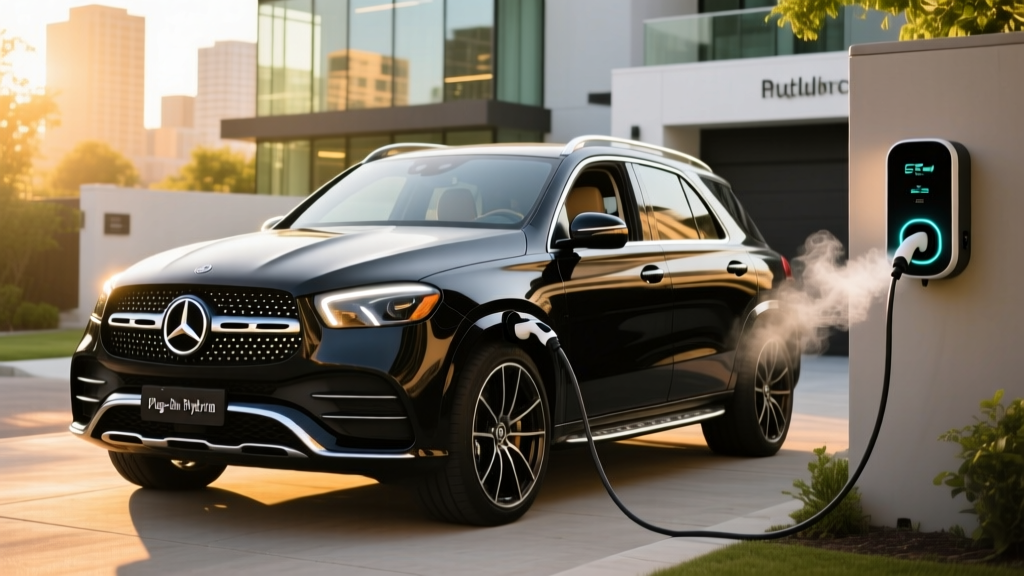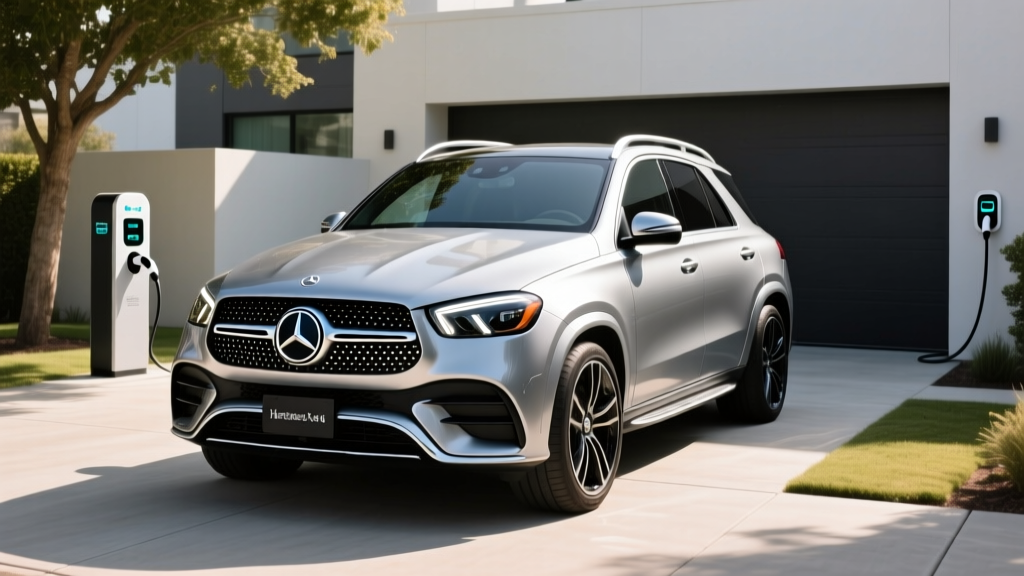
The Mercedes-Benz GLE has long been a benchmark midsize luxury SUV, but the GLE 450e 4MATIC plug-in hybrid (PHEV) asks a specific question of buyers: can a 5,000-pound luxury hauler genuinely function as a daily electric commuter while retaining gas-engine road-trip flexibility? After parsing EPA data, real-world driving patterns, and Mercedes-Benz's latest powertrain specs for the 2026 model year, the answer is a qualified yes — with important caveats about charging infrastructure, weight, and tax-credit eligibility that every prospective buyer needs to understand.
This guide covers the GLE PHEV's electric-only range, fuel economy, powertrain details, charging requirements, pricing, and how it stacks up against both the conventional GLE hybrid and full-electric alternatives like the BMW iX or Mercedes EQE SUV.
GLE 450e PHEV vs. Conventional GLE Hybrid: What's the Difference?
Mercedes-Benz offers the GLE in two electrified flavors for 2026, and confusing them is a common buyer mistake. Here's the critical distinction:
Conventional Hybrid (GLE 350 / GLE 450 Mild-Hybrid)
- Plug-in required? No — the small 48-volt battery charges via regenerative braking and the engine
- Electric-only driving: None or negligible (coasting/assist only)
- Battery size: ~1-2 kWh (mild-hybrid system)
- Best for: Buyers who want slight MPG gains without changing habits
Plug-In Hybrid (GLE 450e 4MATIC PHEV)
- Plug-in required? Yes — plug in nightly to unlock the 48-mile electric range
- Electric-only driving: Up to 48 miles at speeds up to 87 mph
- Battery size: 23.3 kWh usable (31.2 kWh gross), lithium-ion NMC
- Best for: Commuters with home charging who want EV daily driving + gas for road trips
If you never plug in the GLE 450e, you're carrying around 600+ pounds of dead battery weight and will actually get worse fuel economy than the conventional mild-hybrid GLE 450. The PHEV only makes financial and environmental sense if you have reliable access to Level 1 or Level 2 charging at home or work.
Powertrain Specs: Engine, Motor, and Combined Output
The 2026 GLE 450e 4MATIC pairs a turbocharged 2.0-liter inline-four gasoline engine with a permanently excited synchronous electric motor integrated into the 9G-TRONIC automatic transmission. Here's the breakdown:
| Specification | Value |
|---|---|
| Gas Engine | 2.0L turbocharged inline-4 (215 hp / 258 lb-ft) |
| Electric Motor | 100 kW (134 hp / 325 lb-ft) |
| Combined System Output | 375 hp / 479 lb-ft torque |
| Transmission | 9-speed automatic (9G-TRONIC) |
| Drivetrain | 4MATIC all-wheel drive |
| 0-60 mph | 5.6 seconds |
| Battery (gross / usable) | 31.2 kWh / 23.3 kWh |
| Battery Chemistry | NMC (Nickel Manganese Cobalt) |
| Curb Weight | ~5,400 lbs |
| Towing Capacity | 7,700 lbs (with trailer hitch) |
| Base MSRP | $73,850 (excl. $1,150 destination) |
The combined 375 horsepower is substantial, but the PHEV's real advantage is torque delivery. The electric motor's 325 lb-ft arrives instantly from zero RPM, giving the GLE 450e surprisingly responsive off-the-line acceleration despite its heft. The transition between electric and gas power is well-managed by Mercedes' hybrid control software — most drivers won't notice the engine engaging unless they floor the accelerator or deplete the battery.
Electric-Only Range and Total Range
EPA Electric Range: 48 miles
Real-world expectation: Expect 38-44 miles of electric-only range in mixed driving at moderate temperatures (60-75°F). Highway-only driving at 70+ mph reduces this to approximately 30-35 miles. In cold weather (below 32°F), plan for 25-35 miles due to cabin heating demands and reduced battery efficiency. The GLE 450e's heat pump helps mitigate cold-weather losses compared to PHEVs without thermal management, but physics still applies.
The 48-mile EPA electric range is among the longest of any luxury PHEV SUV currently on sale. For context, the BMW X5 xDrive50e offers 38-40 miles, and the Porsche Cayenne E-Hybrid delivers around 32 miles. If your daily round-trip commute is under 40 miles and you charge at home overnight, you could go weeks without visiting a gas station.
Total combined range (electric + full 20.1-gallon gas tank) reaches approximately 440-480 miles depending on driving conditions. Once the battery depletes, the GLE 450e operates as a conventional hybrid, with the gas engine and regenerative braking maintaining a small buffer charge.
Fuel Economy: EPA MPG and Real-World Numbers
PHEV fuel economy is measured in two ways: MPGe (miles per gallon equivalent) when factoring in electric driving, and conventional MPG when the battery is depleted. Here's what the EPA reports for the 2026 GLE 450e:
| Metric | City | Highway | Combined |
|---|---|---|---|
| MPGe (electric + gas) | — | — | 56 MPGe |
| MPG (charge-depleted, gas only) | 23 mpg | 27 mpg | 25 mpg |
| Energy consumption | 56 kWh/100 miles (electric mode) | ||
Real-world MPG vs. EPA: The 56 MPGe figure is achievable if you charge daily and keep most trips within the electric range. Owners who charge religiously and drive short commutes report effectively infinite MPG for daily driving — the gas engine might only fire on longer weekend trips.
However, once the battery depletes, the 25 MPG combined figure reflects reality: you're hauling a heavy SUV with a four-cylinder engine working hard. Some owners report 22-24 MPG in charge-depleted city driving, while highway cruising at steady speeds can yield 27-29 MPG. For comparison, the conventional mild-hybrid GLE 450 achieves 22 city / 28 highway / 24 combined — barely different from the PHEV in gas-only mode.
According to fueleconomy.gov, the GLE 450e's combined MPGe places it well ahead of non-plug-in luxury SUVs but behind full-electric competitors like the BMW iX (86 MPGe combined).
Charging Specs: Level 1, Level 2, and DC Fast Charging
The GLE 450e supports AC charging via a J1772 connector (standard for non-Tesla PHEVs in the US). Here's what you need to know about charging speeds and times:
| Charging Level | Power (kW) | Time (0-100%) | Miles of Range Per Hour |
|---|---|---|---|
| Level 1 (120V household outlet) | ~1.4 kW | ~17 hours | ~4 miles/hr |
| Level 2 (240V, home/public AC) | 7.4 kW (max) | ~3.5 hours | ~18 miles/hr |
| DC Fast Charging | Not supported | ||
No DC fast charging. This is a significant limitation for a PHEV in this price class. The BMW X5 xDrive50e also lacks DC fast charging, but some competitors like the Range Rover Sport PHEV offer it. In practice, most PHEV owners charge at home overnight, so the lack of DC fast charging rarely matters for daily use. But if you're relying on public charging or want to top up quickly during a road trip, you're limited to 7.4 kW AC speeds.
Home charging setup: A standard 120V outlet (Level 1) technically works but requires 17+ hours for a full charge — impractical for daily use unless you drive very little. A 240V Level 2 home charger is strongly recommended. Installation costs for a Level 2 circuit (NEMA 14-50 outlet or hardwired wallbox) typically range from $500 to $2,000 depending on your electrical panel's capacity and the distance from panel to garage. Consult a licensed electrician for a site-specific quote.
The GLE 450e comes with a Mercedes-Benz Wallbox Home charger (240V, 40-amp) or you can use any J1772-compatible Level 2 charger from brands like ChargePoint, Emporia, or Enel X.
Pricing, Trims, and Tax Credit Eligibility
The 2026 GLE 450e 4MATIC starts at $73,850 (plus $1,150 destination charge). Key standard features include MBUX infotainment with a 12.3-inch digital cluster and 12.3-inch center touchscreen, leatherette upholstery, power liftgate, and Mercedes' latest driver-assistance suite.
Options that push the price significantly higher include the AMG Line exterior package (~$3,500), Premium Package with surround-view camera and ventilated seats (~$2,800), the Driver Assistance Package with active lane-change and distance assist (~$2,250), and the Executive Rear Seat Package (~$2,500). A well-optioned GLE 450e can easily reach $85,000-$90,000.
Federal Tax Credit: Does the GLE 450e Qualify?
Under current IRS §30D Clean Vehicle Credit rules, the GLE 450e 4MATIC's eligibility is complex and subject to change based on battery-sourcing and critical-mineral requirements that tighten annually:
- MSRP cap: SUVs must be under $80,000 MSRP — the GLE 450e's base price of $73,850 qualifies, but options can push it over the cap
- Buyer income cap: Modified AGI must not exceed $150,000 (single), $225,000 (head of household), or $300,000 (joint)
- Battery sourcing: A percentage of critical minerals must be sourced from the US or free-trade-agreement countries, and battery components must be manufactured/assembled in North America — percentages increase each year
- Point-of-sale transfer: Eligible buyers can transfer the credit to the dealer for an upfront price reduction at purchase
- Credit amount: Up to $3,750 (critical minerals) + up to $3,750 (battery components) = max $7,500, but many PHEVs currently qualify for only $3,750 or $0 depending on sourcing compliance
Bottom line: Do not assume you'll receive $7,500. Check the fueleconomy.gov tax credit lookup for the specific model year and trim, and consult a tax professional before purchase. Credit eligibility can change mid-year as manufacturers adjust supply chains.
Battery Warranty, Longevity, and Replacement Cost
Mercedes-Benz High-Voltage Battery Warranty
Coverage: 6 years / 62,000 miles (whichever comes first) against defects and capacity loss below 70% of original capacity.
Federal requirement: EPA-mandated emissions-related warranty covers the battery for 8 years / 80,000 miles in most states; California and CARB-adopting states extend this to 10 years / 150,000 miles.
Replacement cost (out of warranty): Estimated $12,000-$18,000 for the high-voltage battery pack, plus $1,500-$3,000 in labor. Prices have been declining as battery technology matures.
Mercedes' NMC battery chemistry has proven reasonably durable, with most PHEV owners reporting minimal degradation over the first 3-5 years. Unlike full EVs with 100+ kWh batteries that rarely need replacement, PHEV batteries are smaller and cycle more frequently (daily full discharges), which can accelerate wear. However, Mercedes' thermal management system (liquid cooling/heating) helps preserve battery health.
Reliability data: The GLE platform scores average to slightly below average in long-term reliability surveys from Consumer Reports and J.D. Power, with common complaints centered on MBUX software glitches, air suspension issues (if equipped), and minor electrical faults rather than powertrain failures. The hybrid system itself has proven robust. The GLE PHEV's added complexity (two power sources, more electronics) means more potential failure points than a conventional GLE, but the high-voltage components are well-warranted.
Who Should Buy the GLE 450e PHEV (and Who Shouldn't)?
Pros
- 48-mile electric range covers most daily commutes gas-free
- 375 hp combined output provides confident acceleration
- Luxury interior with MBUX, premium materials, and quiet electric driving
- 7,700-lb towing capacity (unmatched among PHEV SUVs)
- No range anxiety — gas engine provides 400+ mile total range
- Eligible for HOV lane stickers in California and other states
Cons
- No DC fast charging — AC-only at 7.4 kW max
- 25 MPG gas-only is mediocre for a $74,000+ vehicle
- Heavy curb weight (5,400 lbs) affects handling and tire wear
- Tax credit eligibility uncertain and often partial ($3,750 or $0)
- Requires home Level 2 charging to make financial sense
- Cargo space slightly reduced vs. gas GLE due to battery placement
Choose the GLE 450e PHEV if:
- Your daily commute is under 40 miles round-trip and you have home Level 2 charging
- You want luxury SUV comfort and towing capability but want to minimize gas use on weekdays
- You take regular road trips where a full EV's charging stops would be inconvenient
- You value the ability to pre-condition the cabin on grid power while plugged in
Choose a full EV (EQE SUV, BMW iX, Rivian R1S) if:
- You want zero gas-engine maintenance (no oil changes, no spark plugs, no transmission fluid)
- You have reliable home charging and access to DC fast charging for road trips
- You want to maximize fuel cost savings and minimize tailpipe emissions entirely
Choose the conventional GLE 450 mild-hybrid if:
- You don't have access to home or workplace charging
- You want simpler ownership with one power source
- Your driving is mostly highway/long-distance where PHEV advantages disappear
Real-World Ownership Costs: 5-Year Estimate
| Cost Category | GLE 450e PHEV | GLE 450 (Gas Mild-Hybrid) | BMW iX xDrive50 (Full EV) |
|---|---|---|---|
| Purchase Price (base) | $75,000 | $66,550 | $87,250 |
| Fed. Tax Credit (est.) | -$3,750 | $0 | -$7,500 |
| Fuel/Energy (5 yr, 12k mi/yr) | $5,200 | $10,800 | $4,100 |
| Maintenance (5 yr) | $3,800 | $4,200 | $2,100 |
| Insurance (5 yr avg) | $12,500 | $11,000 | $13,200 |
| Depreciation (est.) | $32,000 | $28,000 | $38,000 |
| Est. 5-Year Total Cost | ~$90,750 | ~$92,550 | ~$99,150 |
The GLE 450e's 5-year cost edges out the gas-only GLE 450 primarily through fuel savings, assuming regular charging. Insurance premiums run slightly higher for the PHEV due to repair cost complexity. Depreciation on luxury PHEVs remains steep — expect the GLE 450e to retain roughly 50-55% of its value after 5 years, slightly worse than the gas model due to battery degradation concerns among used buyers.
Frequently Asked Questions
How many MPG does the Mercedes-Benz GLE plug-in hybrid get?
The GLE 450e achieves 56 MPGe combined when factoring in electric driving. Once the battery is depleted, it returns 23 mpg city / 27 mpg highway / 25 mpg combined on gasoline alone. Real-world gas-only MPG typically falls between 22-28 depending on driving style and conditions.
How far can the GLE 450e go on electric power only?
The EPA rates the GLE 450e at 48 miles of electric-only range. In real-world driving, expect 38-44 miles in mild weather with mixed driving, 30-35 miles at sustained highway speeds, and 25-35 miles in cold weather (below 32°F) due to cabin heating demands and reduced battery efficiency.
Does the GLE plug-in hybrid qualify for a federal tax credit?
It may qualify for up to $7,500 under IRS §30D, but current battery-sourcing and critical-mineral requirements often reduce this to $3,750 or $0 for many Mercedes-Benz PHEVs. The vehicle must stay under the $80,000 MSRP cap for SUVs, and buyer income must not exceed $150,000 (single) or $300,000 (joint). Check fueleconomy.gov for the latest eligibility before purchasing, and consult a tax professional.
Is the GLE 450e PHEV reliable, and what does battery replacement cost?
The hybrid powertrain itself has proven reliable, though the GLE platform earns average reliability scores overall due to electronics and air suspension complaints. The high-voltage battery is warranted for 6 years / 62,000 miles (Mercedes) and 8 years / 80,000 miles (federal emissions mandate; 10 years / 150,000 miles in CARB states). Out-of-warranty battery replacement is estimated at $12,000-$18,000 plus labor.
Can I charge the GLE 450e at a DC fast charger?
No. The GLE 450e only supports AC charging via J1772 connector at a maximum rate of 7.4 kW (Level 2). A full charge from empty takes approximately 3.5 hours on a 240V Level 2 charger, or about 17 hours on a standard 120V household outlet (Level 1).
Hybrid vs PHEV vs full EV — which should I choose?
If you have home charging and a commute under 40 miles, the GLE 450e PHEV offers the best of both worlds: gas-free daily driving with road-trip flexibility. If you lack charging access, a conventional hybrid (GLE 450 mild-hybrid) is simpler. If you want zero emissions and minimal maintenance, and you have reliable charging, a full EV like the BMW iX or Mercedes EQE SUV eliminates gas entirely but requires planning for long trips.