If you have ever stood in a dealership staring at badges that say "Hybrid," "Plug-In Hybrid," and "EV" and wondered what the actual difference is, you are not alone. The term gets thrown around in marketing materials with little precision, but the engineering distinction matters enormously for your fuel bill, your charging routine, and your long-term ownership costs.
At its simplest, a hybrid vehicle pairs a gasoline engine with one or more electric motors and a battery pack so that both power sources share the work of moving the car. But that definition splits into two very different architectures: the conventional hybrid (HEV) and the plug-in hybrid (PHEV). Understanding which is which — and which suits your driving pattern — is the single most important decision before you sign a purchase agreement.
What Is the Meaning of Hybrid? The Core Definition
A hybrid electric vehicle uses two energy sources to propel the car. In every mainstream hybrid sold in the US today, those two sources are:
- An internal combustion engine (ICE) — typically a 4-cylinder running on gasoline.
- One or more electric motors — powered by a lithium-ion or nickel-metal hydride battery pack.
A power-split device, clutch pack, or series of clutches manages when the engine drives the wheels directly, when the motor assists, and when the motor operates alone. The result is a vehicle that recaptures energy during braking (regenerative braking), shuts off the engine at stops, and uses electric torque to reduce the engine's workload — all of which cut fuel consumption compared to a gas-only equivalent.
Where the confusion starts is that "hybrid" now describes two distinct categories with different batteries, different charging requirements, and different economics.
HEV vs PHEV: The Two Types of Hybrid Explained
Here is the critical distinction every buyer must internalize:
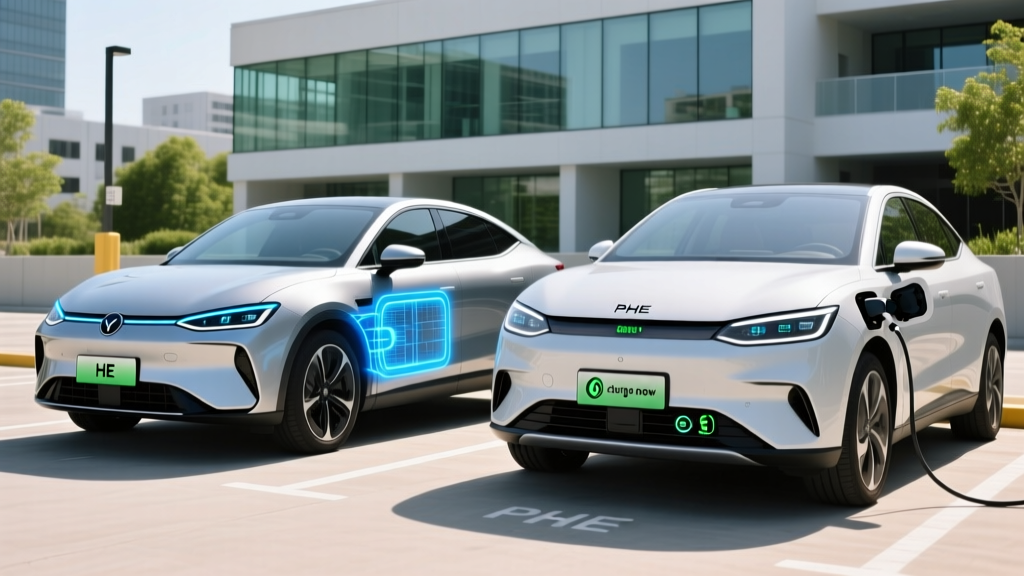
Conventional Hybrid (HEV)
- Battery: 1–2 kWh, small pack
- Plug in? No — charges via engine and regenerative braking only
- Electric-only driving: Minimal (under 1 mile at low speed)
- Fuel economy: 40–57 MPG combined typical
- Federal tax credit: None (does not qualify under §30D)
- Example: 2026 Toyota Prius, Honda CR-V Hybrid
Plug-In Hybrid (PHEV)
- Battery: 13–25 kWh, much larger pack
- Plug in? Yes — charges from a wall outlet or Level 2 charger
- Electric-only driving: 25–45+ miles before the engine starts
- Fuel economy: 70–115 MPGe combined (electric mode); 30–40 MPG gas-only
- Federal tax credit: Up to $7,500 under §30D (subject to sourcing, income, and MSRP caps)
- Example: 2026 Toyota RAV4 Prime, Chrysler Pacifica PHEV
The conventional hybrid is a gas car that is more efficient. The plug-in hybrid is an electric car for short trips that has a gasoline backup for longer ones. That framing simplifies the purchase decision enormously.
Real-World Fuel Economy: How Many MPG Does a Hybrid Get?
Hybrid fuel economy varies dramatically by vehicle class, but here are representative EPA figures for popular 2026 models, pulled from fueleconomy.gov:
| Vehicle | Type | City MPG | Highway MPG | Combined MPG | EV Range (mi) |
|---|---|---|---|---|---|
| 2026 Toyota Prius LE | HEV | 57 | 56 | 57 | — |
| 2026 Honda CR-V Hybrid Sport-L | HEV | 43 | 36 | 40 | — |
| 2026 Toyota RAV4 Prime | PHEV | 94 MPGe | 84 MPGe | 94 MPGe | 42 |
| 2026 Chrysler Pacifica PHEV | PHEV | 82 MPGe | — | 82 MPGe | 32 |
| 2026 Hyundai Tucson PHEV | PHEV | 80 MPGe | 75 MPGe | 80 MPGe | 33 |
| 2026 Ford Escape PHEV | PHEV | 105 MPGe | 92 MPGe | 105 MPGe | 37 |
Real-world MPG reality check: Conventional hybrids routinely exceed their EPA city estimates in stop-and-go traffic because regenerative braking recovers more energy in urban driving. On the highway, however, expect 5–10% below the EPA highway number due to aerodynamic drag at sustained speeds — the electric motor provides less benefit at 75 mph than it does at 30 mph. For PHEVs, the MPGe figure only applies when the battery is charged; once the battery depletes, you are driving a heavy hybrid and should expect 30–40 MPG combined depending on the model.
PHEV Electric-Only Range and Total Range
The electric-only range of a PHEV is determined primarily by battery size and vehicle weight. For 2026 models, here is how the leading PHEVs stack up:
| PHEV Model | Battery (kWh usable) | EV Range (mi) | Total Range (mi) | L2 Charge Time (0–100%) | DC Fast Charge? |
|---|---|---|---|---|---|
| Toyota RAV4 Prime | 14.9 | 42 | ~600 | ~2.5 hr (240V/16A) | No |
| Ford Escape PHEV | 14.4 | 37 | ~520 | ~3.5 hr (240V/12A) | No |
| Hyundai Tucson PHEV | 13.8 | 33 | ~440 | ~2 hr (240V/32A) | No |
| Chrysler Pacifica PHEV | 16.0 | 32 | ~520 | ~2 hr (240V/32A) | No |
| BMW X5 xDrive50e | 25.7 | 38 | ~460 | ~3 hr (240V/32A) | No |
Cold-weather caveat: Electric-only range drops 15–30% in freezing temperatures because the battery is less efficient and cabin heating draws from the pack. A RAV4 Prime rated at 42 miles of EV range may deliver only 28–35 miles on a 20°F morning. The engine will also start sooner to provide heat.
Charging note: Virtually no PHEVs sold in the US support DC fast charging. Their batteries are too small to justify the cost and weight of DC hardware. You charge at home on a standard 120V outlet (Level 1, roughly 4–5 miles of range per hour) or a 240V Level 2 charger. Overnight on Level 1 is sufficient for most PHEVs to reach a full charge by morning.
Powertrain Specs: Engine, Motor, and Combined Horsepower
Hybrid powertrains are not simply additive — the combined horsepower figure is typically less than engine HP plus motor HP because peak outputs occur at different RPM points. Here are representative specs:
- 2026 Toyota Prius HEV: 2.0L 4-cyl + 2 motors → 196 combined HP, 0–60 in ~7.0 sec
- 2026 Toyota RAV4 Prime PHEV: 2.5L 4-cyl + 2 motors → 302 combined HP, 0–60 in 5.7 sec
- 2026 Honda CR-V Hybrid: 2.0L 4-cyl + 2 motors → 204 combined HP, 0–60 in ~7.6 sec
- 2026 Hyundai Tucson PHEV: 1.6L turbo 4-cyl + 1 motor → 261 combined HP, 0–60 in ~7.1 sec
- 2026 BMW X5 xDrive50e: 3.0L turbo I6 + 1 motor → 483 combined HP, 0–60 in 4.6 sec
The performance benefit of a hybrid is most noticeable in city driving, where instant electric torque eliminates the lag of a small turbocharged engine spooling up. On the highway, the engine does most of the work alone.
Pricing and Federal Tax Credit Eligibility
Hybrid pricing has come down significantly as the technology matures. Here are starting MSRPs for 2026:
- Toyota Prius LE (HEV): ~$29,445
- Honda CR-V Hybrid Sport-L (HEV): ~$37,695
- Toyota RAV4 Prime SE (PHEV): ~$44,900
- Hyundai Tucson PHEV SEL (PHEV): ~$39,995
- Ford Escape PHEV (PHEV): ~$39,500
Do hybrids qualify for tax credits? This is where the distinction between HEV and PHEV becomes a wallet issue.
§30D Federal Tax Credit — Hybrid Eligibility
Conventional hybrids (HEVs): Do not qualify. The battery is too small and the vehicle cannot be plugged in.
Plug-in hybrids (PHEVs): May qualify for up to $3,750 or $7,500 depending on battery-component and critical-mineral sourcing requirements under current IRS §30D rules. Key eligibility requirements include:
- Vehicle MSRP must not exceed $80,000 (SUVs/vans/pickups) or $55,000 (sedans)
- Buyer modified adjusted gross income must not exceed $150,000 (single) / $300,000 (joint)
- Battery components and critical minerals must meet phased-in domestic-sourcing thresholds
- Credit can be transferred to the dealer as a point-of-sale discount
Eligibility changes as sourcing rules tighten. Always verify your specific vehicle's VIN against the IRS qualified-vehicle list before purchasing.
Some states offer additional rebates for PHEVs (California, Colorado, and New York are notable), but these vary by jurisdiction and income level. Check your state energy office for current programs.
Battery Reliability, Warranty, and Replacement Cost
Hybrid battery longevity is one of the most-searched concerns among buyers, and the data is reassuring. Toyota alone has placed millions of hybrid battery packs on the road since the 2001 Prius, and large-scale failure before 150,000 miles is uncommon.
Hybrid Battery Warranty Standards
Federal law mandates that hybrid and EV battery packs carry a minimum warranty of 8 years / 100,000 miles. In California Air Resources Board (CARB) states, that extends to 10 years / 150,000 miles.
- Toyota (HEV and PHEV): 10 years / 150,000 miles (nationwide for 2020+ models)
- Honda: 8 years / 100,000 miles (10/150k in CARB states)
- Hyundai/Kia: 10 years / 100,000 miles
- Ford: 8 years / 100,000 miles
- BMW: 8 years / 80,000 miles
The warranty covers capacity loss below a specified threshold (typically 60–70% of original capacity), not just total failure.
Replacement cost if out of warranty:
- HEV battery (1–2 kWh): $2,000–$4,000 for the pack, plus ~$500–$1,000 labor
- PHEV battery (14–26 kWh): $5,000–$9,000 for the pack, plus $1,000–$2,000 labor
Individual cell or module replacement is often possible at independent hybrid specialists for $500–$1,500, extending the pack's life without a full swap. Many 15-year-old Priuses are still running on refurbished packs that cost the owner under $2,000.
Hybrid vs PHEV vs EV: Which Fits Your Life?
This is the decision framework that resolves most buyer indecision:
Choose a Conventional Hybrid (HEV) If:
- You cannot charge at home (apartment, street parking)
- You want maximum MPG with zero behavior change
- Your budget is under $35,000
- You drive mostly city miles
- You want proven, simple reliability
Choose a Plug-In Hybrid (PHEV) If:
- You can charge at home (garage or driveway with 120V/240V access)
- Your daily commute is under 35 miles round-trip
- You take occasional road trips over 200 miles
- You want EV-like daily driving without range anxiety
- You want a potential $3,750–$7,500 federal tax credit
Choose a Full EV (BEV) If:
- You can install a Level 2 home charger
- Your daily driving is under 250 miles
- You want near-zero maintenance (no oil, no spark plugs)
- You want the lowest per-mile fuel cost
- You qualify for the full $7,500 §30D credit
The honest trade-off: A PHEV gives you the best of both worlds but at a higher purchase price and with two systems to maintain (engine oil changes and battery health monitoring). If you never plug it in, a PHEV becomes a heavy, less-efficient HEV — you paid a premium for electric range you never use. Conversely, if you can charge nightly and your commute is short, a PHEV may burn zero gasoline for months at a time.
Frequently Asked Questions
Do conventional hybrids need to be plugged in?
No. A conventional hybrid (HEV) charges its small battery entirely through the gasoline engine and regenerative braking. There is no plug, no charging cable, and no change to your fueling routine — you simply visit gas stations less often.
How many MPG does a hybrid get compared to a gas car?
Typically 30–60% more combined MPG than the non-hybrid version of the same vehicle. The Toyota RAV4 gas model gets 30 MPG combined; the RAV4 Hybrid gets 39 MPG combined — a 30% improvement. The Prius, designed as a hybrid from the ground up, achieves 57 MPG combined versus a comparable gas compact at roughly 33 MPG — a 73% improvement.
How far can a PHEV go on electric power alone?
Between 25 and 45 miles for most 2026 models, depending on battery size and vehicle weight. The Toyota RAV4 Prime leads the mainstream market at 42 miles EPA. Luxury PHEVs like the BMW X5 xDrive50e achieve 38 miles with a larger, heavier vehicle. Expect 15–30% less in cold weather.
Is a hybrid reliable long-term?
Yes. Hybrid powertrains from Toyota, Honda, and Hyundai have extensive real-world track records spanning 20+ years. The electric motor actually reduces wear on the gasoline engine (it runs less often and under less load), and regenerative braking reduces wear on brake pads. Hybrid battery packs routinely last 150,000–200,000+ miles. The main reliability risk is the same as any car: deferred maintenance on the engine side.
What does hybrid battery replacement cost?
For a conventional hybrid (HEV), expect $2,500–$5,000 total (parts and labor). For a PHEV, expect $6,000–$11,000. However, most packs last well beyond the 8–10 year warranty period, and refurbished or module-level repairs can cut these costs substantially. Per Consumer Reports long-term data, hybrid battery failure before 150,000 miles is uncommon in mainstream brands.
Does a hybrid qualify for any tax credit?
Conventional hybrids (HEVs) do not qualify for the federal §30D clean vehicle credit. Plug-in hybrids (PHEVs) may qualify for $3,750 or $7,500 depending on battery sourcing requirements, buyer income limits, and vehicle MSRP caps. Check the IRS qualified vehicles list for your specific model and trim.
What is MPGe and how do I read it?
MPGe (miles per gallon equivalent) is the EPA's way of expressing electric-mode efficiency in gasoline terms. One gallon of gasoline contains the energy equivalent of 33.7 kWh of electricity. So a PHEV rated at 94 MPGe is using electricity as efficiently as a gas car that gets 94 MPG — but only while the battery has charge. Once the battery depletes, the car switches to its gasoline MPG rating (typically 30–40 MPG combined).
The meaning of "hybrid" ultimately comes down to how much electrification you want and how much charging infrastructure you can access. A conventional hybrid asks nothing of you except filling up less often. A plug-in hybrid asks for a place to plug in overnight and rewards you with silent, gasoline-free commuting most days. Both are proven, reliable technologies — the right one depends entirely on your driveway, your commute, and your budget.