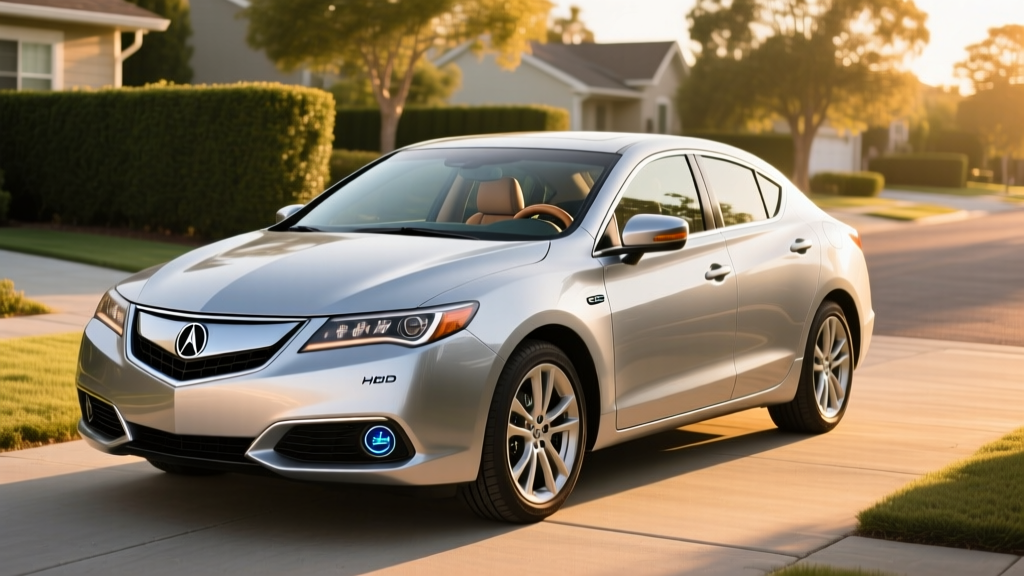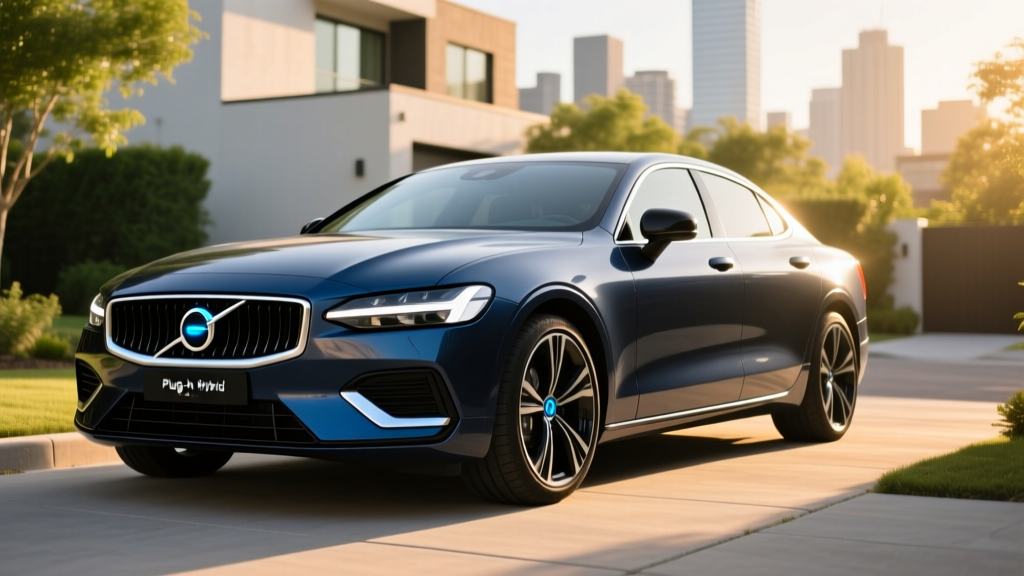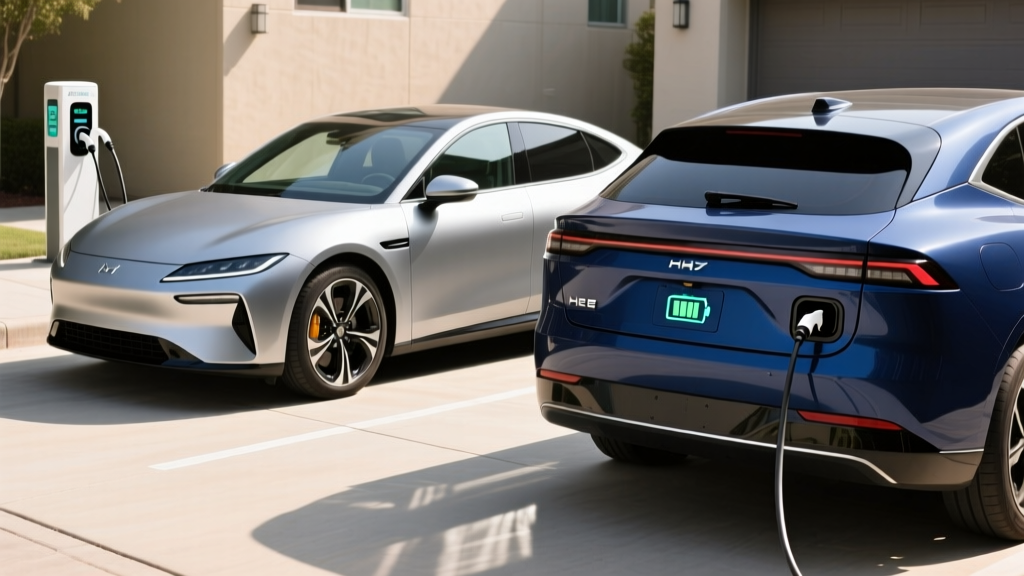
If you've searched for the meaning of hybrid car, you've likely found vague definitions that don't help you decide whether to buy one. A hybrid car combines a gasoline engine with an electric motor and battery to improve fuel economy — but that simple definition hides two very different vehicle categories with distinct ownership experiences, costs, and capabilities.
This guide cuts through the confusion with exact EPA MPG figures, battery specifications, pricing, and real-world ownership data so you can decide whether a conventional hybrid (HEV), a plug-in hybrid (PHEV), or a full battery-electric vehicle (BEV) fits your driving life.
What Does Hybrid Car Mean? The Two Types Explained
At its core, a hybrid car uses two power sources — an internal combustion engine and an electric motor — to move the vehicle. The electric motor handles low-speed driving, assists during acceleration, and captures energy during braking (regenerative braking). The result: less fuel consumed, fewer emissions, and in some cases, the ability to drive short distances on electricity alone.
But the meaning of hybrid car splits into two distinct architectures, and the difference matters enormously for your wallet and daily routine:
Conventional Hybrid (HEV)
A self-charging hybrid that never plugs in. A small battery (typically 1.0–2.0 kWh) is recharged by the gasoline engine and regenerative braking. The electric motor assists the engine but cannot propel the car alone for more than a mile or two at very low speeds. You fuel it like a normal gas car — the hybrid system simply makes every gallon go further.
Best-known examples: Toyota Prius, Honda Accord Hybrid, Toyota RAV4 Hybrid, Hyundai Tucson Hybrid.
Plug-In Hybrid (PHEV)
A larger-battery hybrid that plugs in to charge. With a battery typically between 13–25 kWh, a PHEV can drive 25–50 miles on electricity alone before the gasoline engine activates. Once the electric range is depleted, it operates like a conventional hybrid. You get an EV for your daily commute and a gas car for road trips.
Best-known examples: Toyota RAV4 Prime, Jeep Wrangler 4xe, Chrysler Pacifica Hybrid, BMW X5 xDrive50e.
HEV vs PHEV: Spec-by-Spec Comparison
The following table compares representative 2025–2026 models to illustrate the real-world differences between the two hybrid types. All figures are EPA-published or manufacturer-confirmed.
| Specification | Toyota Prius (HEV) | Toyota RAV4 Prime (PHEV) | Toyota RAV4 Hybrid (HEV) |
|---|---|---|---|
| Powertrain | 2.0L 4-cyl + electric motor | 2.5L 4-cyl + 2 electric motors | 2.5L 4-cyl + 2 electric motors |
| Combined Horsepower | 196 hp | 302 hp | 219 hp |
| Battery Capacity | ~1.0 kWh (NiMH/Li-ion) | 18.1 kWh (Li-ion) | ~1.6 kWh (Li-ion) |
| Plugs In? | No | Yes | No |
| Electric-Only Range | N/A | 42 miles (EPA) | N/A |
| Total Combined Range | ~580 miles | ~600 miles (gas + electric) | ~580 miles |
| EPA MPG (City / Hwy / Combined) | 57 / 56 / 57 MPG | 94 MPGe (electric) / 38 MPG (gas-only) | 41 / 38 / 41 MPG |
| DC Fast Charge? | N/A | No (Level 2 AC only, ~2.5 hrs to full) | N/A |
| 0–60 mph | 7.0 sec | 5.7 sec | 7.4 sec |
| Starting MSRP | ~$28,550 | ~$44,500 | ~$32,500 |
Sources: fueleconomy.gov — Toyota Prius, fueleconomy.gov — RAV4 Prime, manufacturer spec sheets.
Fuel Economy: Real-World MPG vs EPA Sticker
Hybrids — especially conventional HEVs — have a unique fuel-economy characteristic that surprises first-time buyers: they often exceed their EPA city rating in real-world driving. This is the opposite of most gas cars, which fall short of EPA estimates in stop-and-go traffic.
The reason is physics. City driving involves constant braking and acceleration. Hybrids recapture braking energy through regeneration and use the electric motor for the least efficient part of driving (launching from a stop). Highway driving, by contrast, is where the gasoline engine runs alone at steady state — and there, hybrids perform more like conventional cars.
| Model | EPA City | EPA Highway | EPA Combined | Real-World Expectation |
|---|---|---|---|---|
| Toyota Prius (LE AWD) | 57 MPG | 56 MPG | 57 MPG | 55–60 MPG city; 48–52 MPG highway |
| Honda Accord Hybrid | 51 MPG | 44 MPG | 48 MPG | 48–54 MPG city; 40–44 MPG highway |
| Toyota RAV4 Hybrid | 41 MPG | 38 MPG | 41 MPG | 38–43 MPG city; 34–37 MPG highway |
| Hyundai Tucson Hybrid | 38 MPG | 38 MPG | 38 MPG | 35–40 MPG combined |
| Ford Maverick Hybrid | 42 MPG | 33 MPG | 37 MPG | 40–45 MPG city; 30–33 MPG highway |
PHEV fuel economy is context-dependent. A RAV4 Prime driven 30 miles daily with nightly charging might use zero gasoline for months. The same vehicle driven 500 miles on a road trip without charging returns ~36–38 MPG — still excellent for an AWD SUV, but not dramatically better than the standard RAV4 Hybrid. The PHEV premium pays off only if you can charge regularly.
How Far Can a PHEV Go on Electric Only?
Electric-only range is the PHEV's defining advantage. Here's what current popular models deliver, per EPA testing:
- Toyota RAV4 Prime: 42 miles electric-only
- Jeep Wrangler 4xe: 21 miles electric-only
- Chrysler Pacifica Hybrid: 32 miles electric-only
- BMW X5 xDrive50e: 38 miles electric-only
- Toyota Prius Prime: 44 miles electric-only (SE trim)
- Hyundai Tucson PHEV: 33 miles electric-only
- Ford Escape PHEV: 37 miles electric-only
If your daily round-trip commute falls within the electric range — and the majority of American commutes are under 40 miles, according to FHWA data — a PHEV functions as a daily EV with zero range anxiety for longer trips. You charge at home overnight using a standard 120V outlet (Level 1, ~8–12 hours for a full charge) or a 240V Level 2 charger (~2–3 hours).
Cold-weather caveat: Expect 15–25% electric-range loss in freezing temperatures. Battery chemistry becomes less efficient in the cold, and cabin heating draws significant energy. A RAV4 Prime rated at 42 miles may deliver 30–35 miles in January in Minnesota. This is less severe than full BEV range loss because the gas engine can supplement heat, but it's real.
Pricing, Tax Credits, and Total Cost
Hybrids carry a price premium over their gas-only counterparts, but the gap has narrowed significantly. Here's the current landscape:
Conventional Hybrids (HEV)
Most HEVs cost $1,500–$3,500 more than equivalent gas models. A Toyota RAV4 Hybrid starts around $32,500 versus ~$29,000 for the gas RAV4. At a savings of ~$600–$900/year in fuel (based on 15,000 miles/year and $3.50/gallon), the hybrid premium pays for itself in 3–5 years.
Federal tax credit: Conventional hybrids do not qualify for the IRS §30D Clean Vehicle Credit. That credit applies only to plug-in vehicles (PHEVs and BEVs). Some states offer small rebates for HEVs, but these vary by jurisdiction — check your state energy office for current programs.
Plug-In Hybrids (PHEV)
PHEVs carry a larger premium — typically $5,000–$10,000 above the gas equivalent — but can qualify for significant incentives.
- Federal §30D Credit (up to $7,500): PHEVs may qualify for up to $7,500 in federal tax credits, split into two halves — $3,750 for battery-component sourcing and $3,750 for critical-minerals sourcing. As of 2026, the vehicle must meet MSRP caps ($80,000 for SUVs/vans/pickups; $55,000 for sedans), buyer income limits ($300,000 joint / $150,000 single AGI), and battery-sourcing requirements. The credit can be transferred to the dealer as a point-of-sale discount. Check the latest rules at IRS.gov.
- State incentives: States like California, Colorado, and New York offer additional rebates ($1,000–$4,000) for PHEVs. Amounts vary by income and model year — consult your state's energy or DMV website.
Example: A Toyota RAV4 Prime at ~$44,500 MSRP, with the full $7,500 federal credit applied at point of sale, effectively costs ~$37,000 — narrowing the gap with the RAV4 Hybrid significantly while adding 42 miles of EV range and 302 hp.
Battery Reliability, Warranty, and Replacement Cost
Hybrid Battery Warranty Standard
Federal law mandates that hybrid and EV battery systems carry a minimum warranty of 8 years / 100,000 miles in most states, and 10 years / 150,000 miles in CARB (California Air Resources Board) states including CA, NY, MA, NJ, CT, RI, VT, ME, WA, OR, CO, VA, MD, DE, NM, and MN.
This warranty covers capacity loss below a defined threshold (typically 60–70% of original capacity) and defects. Most manufacturers honor full replacement, not just repair, under this warranty.
Hybrid battery reliability has proven exceptional over two decades of real-world data. The Toyota Prius, in continuous production since 2000 in the US, has documented cases of original batteries lasting 200,000+ miles. Consumer Reports consistently rates Toyota and Lexus hybrids among the most reliable vehicles in any category.
Out-of-warranty replacement costs:
- HEV battery replacement: $2,000–$4,000 (smaller battery, simpler chemistry)
- PHEV battery replacement: $6,000–$12,000 (larger battery, higher capacity)
- BEV battery replacement: $10,000–$20,000+ (largest packs)
The key insight: hybrid batteries rarely fail catastrophically. Individual cells degrade unevenly, and specialist shops can now replace individual modules for $500–$1,500 rather than the entire pack. The fear of a sudden $8,000 bill is largely overstated for modern hybrids.
Hybrid vs PHEV vs EV: Which Should You Choose?
Choose a Conventional Hybrid (HEV) If:
- You cannot charge at home or work (apartment, street parking, no garage)
- You want maximum MPG with zero lifestyle changes
- Your budget is under $35,000 and you want proven reliability
- You drive a mix of city and highway with no predictable short commute
Choose a Plug-In Hybrid (PHEV) If:
- You can charge at home (even a standard 120V outlet works overnight)
- Your daily commute is under 40 miles round-trip
- You want EV-like daily driving but take road trips 3+ times per year
- You want to qualify for the $7,500 federal tax credit
- You have one vehicle that must do everything — commute, tow, road-trip
Choose a Full EV (BEV) If:
- You have reliable home Level 2 charging
- Your daily driving is under 250 miles
- You want the lowest per-mile fuel cost (~$0.04–$0.06/mile vs $0.12–$0.18 for gas)
- You want minimal maintenance (no oil changes, no transmission fluid, fewer moving parts)
- You're ready to plan around DC fast-charging for road trips
Pros and Cons of Hybrid Ownership
Pros
- Significantly better fuel economy than gas equivalents (40–57 MPG combined for top HEVs)
- No range anxiety — fuel at any gas station nationwide
- Lower maintenance costs than gas cars (regen braking saves brake pads; no turbo complexity in most)
- Proven long-term reliability — 20+ years of hybrid data
- PHEVs offer EV commuting without range limitation on road trips
- Strong resale value, especially Toyota/Lexus hybrids
Cons
- Higher upfront cost than gas equivalents ($1,500–$10,000 premium)
- HEVs do not qualify for the $7,500 federal tax credit
- PHEVs require home charging access to realize their value
- Complexity: two powertrains means more components that could theoretically fail (though data shows this is rare)
- Some hybrids have less cargo space due to battery placement (check specific model)
- PHEV gas-only MPG is often only marginally better than the HEV equivalent
Frequently Asked Questions
How many MPG does a hybrid car get?
It depends on the model. The most efficient conventional hybrid, the Toyota Prius, achieves 57 MPG combined (EPA). Midsize SUV hybrids like the RAV4 Hybrid deliver 38–41 MPG combined. PHEVs are rated in MPGe when running on electricity (e.g., 94 MPGe for the RAV4 Prime) and 34–40 MPG when running on gasoline alone. In real-world city driving, many hybrids match or slightly exceed their EPA city ratings thanks to regenerative braking.
Do hybrid cars need to be plugged in?
No — conventional hybrids (HEVs) never plug in. They recharge their small battery through the gasoline engine and regenerative braking. Only plug-in hybrids (PHEVs) require or benefit from plugging in. If you buy a standard Prius, RAV4 Hybrid, or Accord Hybrid, you will never touch a charging cable.
How long do hybrid batteries last?
Modern hybrid batteries are designed to last the life of the vehicle. Toyota's hybrid battery warranty is 10 years / 150,000 miles in most states. Real-world data from Consumer Reports and iFixit shows many Prius batteries lasting 200,000+ miles before significant degradation. If replacement is eventually needed, HEV batteries cost $2,000–$4,000, and cell-level repair is increasingly available for less.
Does a hybrid qualify for a tax credit?
Conventional hybrids (HEVs) do not qualify for the federal §30D Clean Vehicle Credit. Plug-in hybrids (PHEVs) may qualify for up to $7,500, subject to MSRP caps ($80,000 for SUVs; $55,000 for sedans), buyer income limits, and battery-sourcing requirements. The credit can be applied as a point-of-sale discount at participating dealers. Always verify current eligibility at IRS.gov and consult a tax professional for your specific situation.
Is a hybrid better than a gas car?
For most buyers, yes. A hybrid uses 25–40% less fuel than an equivalent gas-only car, costs only slightly more upfront, and delivers identical or better performance. The payback period on the hybrid premium is typically 3–5 years based on average driving. The main exception: if you drive very few miles per year (under 5,000), the fuel savings may not offset the higher purchase price within your ownership period.
Can a PHEV save me more money than an HEV?
Yes — if you charge regularly. A PHEV driven within its electric range daily uses almost no gasoline for commuting. At $0.13/kWh (national average electricity rate), driving 35 electric miles costs about $1.30 versus ~$4.50 in gasoline for the same distance. Over a year of weekday commuting, that's roughly $800–$1,200 in additional savings versus an HEV. Add the potential $7,500 federal tax credit, and the PHEV can be the better financial choice — but only if you actually plug it in.
The Bottom Line on Hybrid Cars
The meaning of hybrid car in 2026 is straightforward: it's a vehicle that uses an electric motor to make a gasoline engine more efficient. If you can't charge at home, a conventional HEV delivers 40–57 MPG with zero behavior change. If you can charge at home and commute under 40 miles, a PHEV gives you the best of both worlds — electric daily driving with gas-powered freedom for road trips, plus access to up to $7,500 in federal tax credits.
Neither type requires you to change how you drive, plan routes, or worry about charging infrastructure. That's the practical promise of hybrid technology: meaningful fuel savings without the anxiety. For the millions of Americans who aren't ready for a full EV — whether due to apartment living, road-trip habits, or budget — hybrids remain the most accessible path to lower transportation costs.