The McLaren Hybrid SUV: Why Woking Is Finally Building One
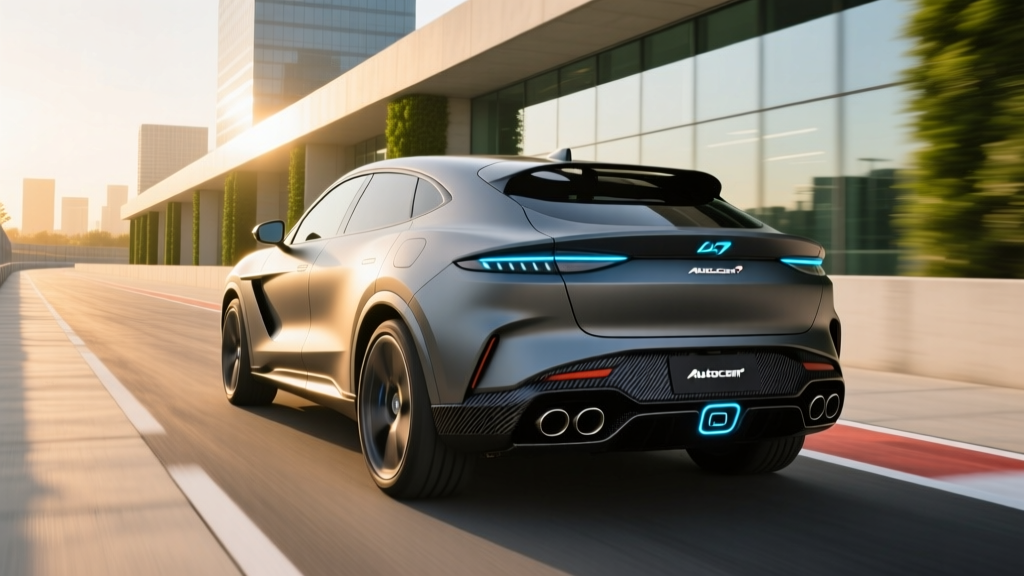
McLaren has resisted the SUV trend longer than almost any other performance marque. While Lamborghini launched the Urus, Ferrari introduced the Purosangue, and Aston Martin fielded the DBX, Woking held firm — supercars and nothing else. That stance is softening. Industry reports and statements from McLaren's leadership indicate a hybrid SUV is under active development, with a target market arrival around 2028. If the McLaren hybrid SUV 2028 timeline holds, it will be one of the most anticipated performance-utility vehicles of the decade.
This article compiles every confirmed detail, credible leak, and engineering signal available as of early 2026. Because the vehicle has not been officially unveiled, all specifications are preliminary and subject to change. We will update this guide as McLaren releases confirmed data.
HEV vs PHEV: Which Hybrid Architecture Will McLaren Choose?
Before speculating about range and charging, it is essential to distinguish the two hybrid architectures McLaren could deploy. This distinction shapes everything from daily usability to tax-credit eligibility.
Conventional Hybrid (HEV)
- Small battery (1–2 kWh)
- Self-charging via regenerative braking and engine
- No plug required — fuel at any gas station
- Electric motor assists engine; no meaningful electric-only driving
- Better fuel economy than gas-only, especially in city driving
- No federal EV tax credit eligibility
Plug-In Hybrid (PHEV)
- Larger battery (15–30 kWh typical for performance SUVs)
- Plugs in to charge — Level 1 (120V), Level 2 (240V), sometimes DC fast charge
- 20–50 miles of electric-only range before engine engages
- Combined gas + electric range often exceeds 400 miles
- Can operate as a pure EV for daily commutes
- May qualify for up to $7,500 federal tax credit (§30D) if requirements are met
McLaren's current road-car portfolio offers a strong clue. The Artura supercar uses a plug-in hybrid system with a 7.4 kWh battery and roughly 19 miles of electric-only range. The brand has invested heavily in its E-motor and battery packaging expertise. A performance SUV would almost certainly adopt a PHEV architecture, likely with a larger battery than the Artura to deliver 25–40 miles of electric-only range — enough for most daily commutes while preserving a twin-turbo V6 or V8 for track-capable performance and long-distance touring.
A conventional HEV is less likely for McLaren. Self-charging hybrids prioritize efficiency over performance character, and McLaren's brand positioning demands the instant torque and silent EV-mode departure that only a plug-in system provides.
Estimated Powertrain and Performance Specifications
McLaren's engineering DNA points toward a mid-engine or rear-biased PHEV layout with an electric motor integrated into the transmission. Here is what industry analysis and McLaren's existing component set suggest for the 2028 SUV:
| Specification | Estimate |
|---|---|
| Powertrain | Twin-turbo V6 + E-motor (PHEV) |
| Combined Horsepower | 700–800 HP (estimated) |
| Engine Output | ~600 HP (twin-turbo V6) |
| E-Motor Output | ~100–150 HP |
| Battery Capacity | 15–25 kWh (estimated, NMC chemistry) |
| Electric-Only Range | 25–40 miles (estimated) |
| Total Combined Range | 400–500+ miles (gas + electric) |
| 0–60 mph | ~3.0 seconds (estimated) |
| Drivetrain | AWD (rear-biased with front E-motor or mechanical link) |
| Transmission | 8-speed dual-clutch with integrated E-motor |
| DC Fast Charging | Unlikely — most performance PHEVs charge via Level 2 only |
| Level 2 Charge Time (est.) | 2.5–4 hours (0–100% at 7.2 kW) |
| Curb Weight | ~4,500–5,000 lbs (estimated) |
| Base MSRP | $200,000–$280,000 (estimated) |
For context, the current McLaren Artura pairs a 3.0L twin-turbo V6 with an axial-flux E-motor for 671 combined HP. A larger, heavier SUV would need more total output to deliver McLaren-level performance, hence the 700–800 HP estimate. Competitors like the Lamborghini Urus Performante (657 HP) and Ferrari Purosangue (715 HP, naturally aspirated V12) set the performance benchmark this vehicle must clear.
Fuel Economy: What MPG Can You Expect?
Performance PHEV SUVs occupy a unique efficiency space. On short trips within electric-only range, they consume zero gasoline. On long highway drives after the battery is depleted, they revert to hybrid operation with fuel economy similar to — or slightly worse than — a conventional performance SUV due to the weight penalty of carrying the battery and E-motor.
| Vehicle | City MPG | Highway MPG | Combined MPG | MPGe (PHEV) |
|---|---|---|---|---|
| McLaren Hybrid SUV (est. charge-depleted) | 16–18 | 20–23 | 17–20 | 40–55 (est.) |
| Lamborghini Urus Performante | 12 | 17 | 14 | N/A (gas) |
| Ferrari Purosangue | 11 | 16 | 13 | N/A (gas) |
| Porsche Cayenne Turbo E-Hybrid | — | — | ~21 | ~46 |
Real-world MPG note: PHEV fuel economy is highly dependent on driving patterns. If your daily commute falls within the 25–40 mile electric-only range and you charge nightly, you may use gasoline only on weekend road trips — effectively achieving 100+ MPGe on average. If you rarely charge and drive long distances, expect fuel economy in the charge-depleted range of 17–20 MPG combined, which still improves on gas-only rivals like the Urus and Purosangue. Data from fueleconomy.gov shows that PHEV owners who charge regularly report 40–60% lower fuel costs than gas-only counterparts in the same vehicle class.
Charging: What Owners Will Need at Home
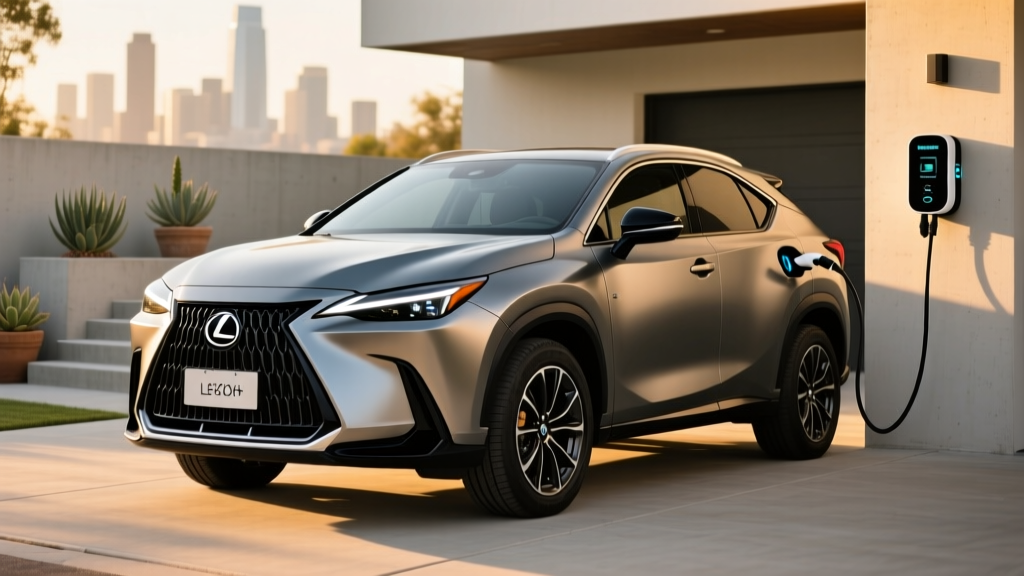
Most performance PHEVs — including the Artura and the Porsche Cayenne E-Hybrid — use Level 2 AC charging only and do not support DC fast charging. The battery packs are simply too small (15–25 kWh) to justify the cost and weight of DC fast-charge hardware, and the cells can absorb a full Level 2 charge in a few hours anyway.
| Level | Power (kW) | Full Charge Time (est.) | Notes |
|---|---|---|---|
| Level 1 (120V household outlet) | ~1.4 kW | 12–18 hours | Emergency/trickle use only |
| Level 2 (240V home charger) | 7.2 kW | 2.5–4 hours | Primary home charging — overnight ready |
| DC Fast Charge | N/A (not expected) | — | Most performance PHEVs lack DC capability |
A Level 2 home charger installation typically costs $500–$2,500 total (equipment plus electrician labor), depending on panel proximity and local permit requirements. For a PHEV with a 20 kWh battery, a nightly Level 2 charge adds roughly $1.50–$3.00 in electricity cost depending on your local utility rate — far less than the $8–$15 in premium gasoline that same 25–40 mile range would require in a gas-only performance SUV.
Pricing, Trims, and Tax Credit Eligibility
McLaren does not sell budget vehicles. The Artura starts above $240,000. A utility vehicle with more material, a larger powertrain, and SUV practicality will likely command a similar or higher entry price.
Estimated pricing:
- Base model: $200,000–$240,000
- Performance variant (if offered): $250,000–$300,000+
- Limited-production launch edition: potentially $300,000+
Does the McLaren Hybrid SUV Qualify for a Federal Tax Credit?
Under current IRS §30D rules, a new plug-in hybrid may qualify for up to $7,500 in federal tax credit — but several requirements create serious obstacles for a vehicle in this class:
- MSRP cap: SUVs must have an MSRP at or below $80,000. The McLaren hybrid SUV will almost certainly exceed this threshold, making it ineligible for the §30D credit.
- Buyer income cap: Modified adjusted gross income must not exceed $300,000 (joint filers), $225,000 (head of household), or $150,000 (single). Many McLaren buyers will exceed these limits.
- Battery sourcing and critical minerals: A percentage of battery components must be manufactured or assembled in North America, and critical minerals must be sourced from the U.S. or free-trade-agreement partners. McLaren's supply chain is primarily European.
- Point-of-sale transfer: Eligible buyers can transfer the credit to the dealer at purchase for an immediate price reduction — but only if the vehicle qualifies in the first place.
Bottom line: Do not expect the McLaren hybrid SUV to qualify for any federal EV or PHEV tax credit. The MSRP cap alone disqualifies it. Buyers should budget for the full purchase price. Some states offer additional incentives for PHEVs, but these also typically have price caps. Consult a tax professional for your specific situation.
Battery Longevity, Warranty, and Replacement Cost
Federal law mandates that hybrid and EV battery packs carry a minimum warranty of 8 years / 100,000 miles in states that follow California Air Resources Board (CARB) rules, and at least 8 years / 80,000 miles under federal EPA requirements. McLaren currently covers the Artura's hybrid battery for 6 years with unlimited mileage — a policy that may evolve for a higher-volume SUV, but buyers should expect at minimum 6–8 years of coverage.
Battery degradation: PHEV batteries are smaller and experience more frequent charge cycles than full EV batteries, but they also have robust thermal management. Based on data from similar performance PHEVs (Porsche Cayenne E-Hybrid, BMW XM), expect 10–15% capacity loss over 8–10 years of normal use. This translates to a reduction from, say, 35 miles of electric range to roughly 30 miles — noticeable but not debilitating.
Replacement cost: If the battery fails outside warranty, replacement for a 20 kWh performance-grade NMC pack typically runs $8,000–$15,000 including labor. For a vehicle in the $200,000+ range, this is a manageable long-term cost — comparable to a major service interval on a high-end internal-combustion supercar. McLaren's carbon-fiber construction and low production volumes mean parts availability may be slower than mainstream brands, however.
Who Should Choose the McLaren Hybrid SUV — And Who Shouldn't?
Decision Framework
Choose the McLaren hybrid SUV if:
- You want supercar-level performance (700+ HP, ~3-second 0–60) with everyday utility and cargo space
- You want to drive electric on short commutes but need a gas engine for road trips and track days
- You already own or have driven McLaren and want the brand's first utility vehicle
- You are cross-shopping the Ferrari Purosangue, Lamborghini Urus, or Aston Martin DBX and want a PHEV option
- Budget is $200,000+ and tax-credit eligibility is irrelevant to your purchase decision
Choose a full EV (e.g., Lotus Eletre, Tesla Model X Plaid) instead if:
- You want zero tailpipe emissions and no gasoline dependency
- You want lower running costs and minimal powertrain maintenance
- You have reliable home and destination charging access
- You want access to the latest ADAS and autonomous driving features (McLaren prioritizes driver engagement over automation)
Choose a conventional gas SUV (Urus, DBX) instead if:
- You lack home charging access and cannot plug in regularly
- You prefer the simplicity of gas-only fueling with no charging behavior change
- You want a proven platform with years of reliability data and established dealer service
McLaren Hybrid SUV vs the Competition
The 2028 McLaren hybrid SUV will enter a segment where every competitor is either gas-only or just beginning to electrify. Here is how it stacks up against announced and current rivals:
| Attribute | McLaren Hybrid SUV (est.) | Ferrari Purosangue | Lamborghini Urus SE (PHEV) | Lotus Eletre R |
|---|---|---|---|---|
| Powertrain | V6 PHEV | V12 Gas | V8 PHEV | Full EV |
| Horsepower | 700–800 | 715 | 789 | 905 |
| 0–60 mph | ~3.0s | 3.3s | 3.4s | 2.95s |
| Electric-Only Range | 25–40 mi (est.) | 0 (gas) | ~37 mi | 300+ mi (full EV) |
| Base Price | $200K–$280K | $398K | $265K | $120K |
The Lamborghini Urus SE is the closest direct rival — also a PHEV performance SUV with a V8. The Lotus Eletre R offers more power and electric range at a far lower price, but lacks the exclusivity and combustion character McLaren buyers seek. The Ferrari Purosangue remains gas-only, giving McLaren a potential PHEV differentiation advantage if it delivers on electric-only commuting capability.
Projected Pros
- McLaren driving dynamics in an SUV package — hydraulic steering, carbon-fiber chassis
- PHEV flexibility: electric commutes + gas road trips
- 700+ HP with instant electric torque fill
- Extreme exclusivity — low production volume
- Potentially best-in-class weight for a performance SUV (carbon construction)
Projected Cons
- $200,000+ price with no federal tax credit
- Limited dealer and service network compared to Porsche or BMW
- PHEV electric range likely modest (25–40 mi) vs full EVs
- No DC fast charging expected
- Unproven reliability for McLaren's first SUV
- Long wait times — production allocation will be extremely limited
Frequently Asked Questions
How many MPG does the McLaren hybrid SUV get?
Official EPA figures are not yet available. Based on comparable performance PHEVs, expect approximately 17–20 MPG combined when operating in charge-depleted (hybrid) mode, and an MPGe rating of 40–55 when factoring in electric-only driving. Your actual fuel consumption will depend heavily on how often you charge — regular charging can reduce gasoline use by 40–60%.
How far can the McLaren hybrid SUV go on electric only?
Estimates point to 25–40 miles of electric-only range, sufficient for most daily commutes. This is comparable to the Lamborghini Urus SE (~37 miles) and significantly more than the current Artura supercar (~19 miles). Final EPA-certified range will be published closer to launch.
Is the McLaren hybrid SUV a conventional hybrid or a plug-in?
All available evidence points to a plug-in hybrid (PHEV) architecture, meaning the battery can be charged via a wall outlet or Level 2 home charger. A conventional HEV (self-charging, no plug) is unlikely given McLaren's existing PHEV investment in the Artura platform.
Is this hybrid reliable and what does battery replacement cost?
McLaren has limited long-term reliability data as a low-volume manufacturer, and this will be the brand's first SUV — an inherent unknown. The hybrid battery should carry at least a 6–8 year warranty. Out-of-warranty battery replacement is estimated at $8,000–$15,000. For comparison, J.D. Power and owner surveys show that mainstream PHEVs from Toyota and Porsche demonstrate strong battery longevity, with most retaining 85–90% capacity after 8 years.
Does the McLaren hybrid SUV qualify for any tax credit?
Almost certainly not. Under current IRS §30D rules, the $80,000 MSRP cap for SUVs will disqualify any McLaren product. Even if the price cap were met, buyer income limits and battery-sourcing requirements would likely exclude it. Budget for the full purchase price without credit assumptions.
When will the McLaren hybrid SUV be available to buy?
Industry reports target a 2028 model-year launch, with an official reveal likely in late 2027. McLaren typically begins taking deposits 6–12 months before production starts. Allocation will be extremely limited — expect a waitlist similar to the Artura launch, where early buyers waited 12–18 months.
Will it have all-wheel drive?
Yes, AWD is virtually certain for a performance SUV. McLaren will likely use a rear-biased system, potentially with an electric motor driving the front axle for torque-vectoring capability — similar to the approach used in the Ferrari 296 GTB and Lamborghini Revuelto.
This article will be updated as McLaren releases official specifications. All estimates are based on industry analysis, McLaren's current engineering portfolio, and competitive benchmarking as of early 2026. For the latest confirmed data, check McLaren's official site.