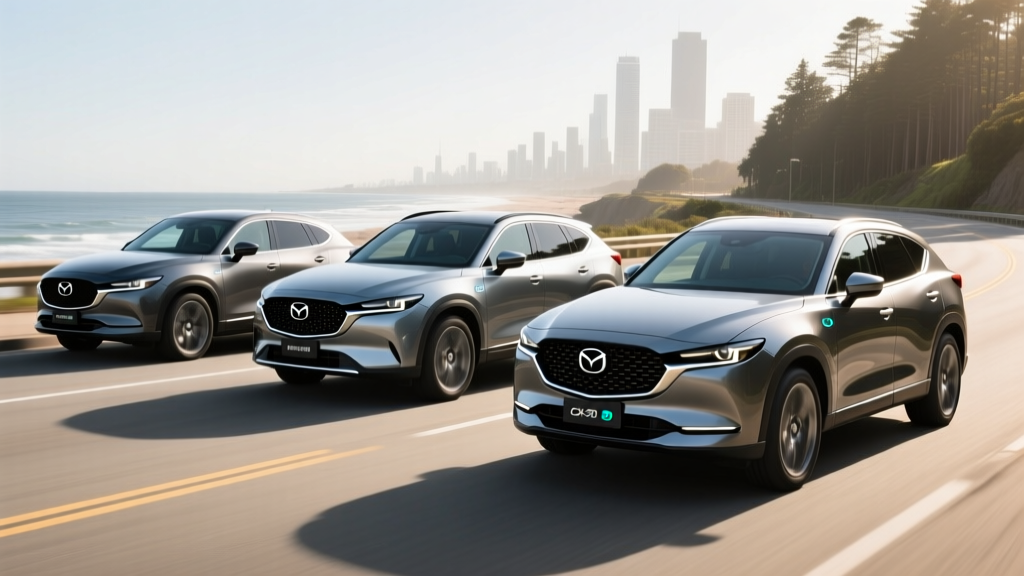
Mazda's electrification strategy has taken a distinctly pragmatic shape for 2026. Rather than rushing a full battery-electric SUV to market, the Hiroshima automaker has invested heavily in hybrid and plug-in hybrid powertrains across its core SUV lineup. If you're searching for a Mazda SUV hybrid, you now have three distinct options spanning two different electrification philosophies: a conventional hybrid (HEV) that never needs plugging in, and two plug-in hybrids (PHEVs) that deliver meaningful electric-only commuting range before the gas engine takes over.
This guide breaks down every 2026 Mazda SUV hybrid with exact EPA figures, real-world expectations, battery specs, pricing, and tax-credit eligibility — the data points that actually matter when you're comparing these against a full EV, a Toyota RAV4 Hybrid, or a gas-only competitor.
HEV vs. PHEV: Understanding Mazda's Two Hybrid Approaches
Before comparing models, it's essential to understand the fundamental difference between Mazda's hybrid types, because the ownership experience diverges significantly.
Conventional Hybrid (HEV) — CX-50 Hybrid
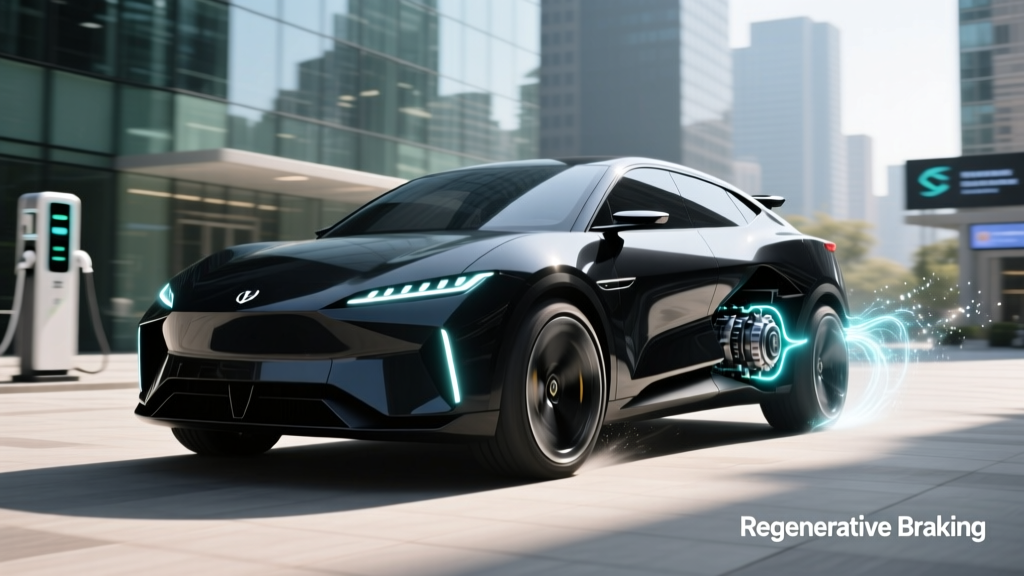
- No plug required. The battery recharges through regenerative braking and the gasoline engine.
- Small battery (~1.1 kWh) — assists the engine but cannot drive the vehicle on electricity alone for meaningful distances.
- Lower upfront cost and simpler ownership — no home charger needed.
- Best for: Drivers without reliable access to plug-in charging who still want improved fuel economy.
Plug-In Hybrid (PHEV) — CX-70 PHEV & CX-90 PHEV
- Must be plugged in to access the electric-only range. Operates as a conventional hybrid once the battery depletes.
- Larger battery (17.8 kWh) — enables 26–28 miles of electric-only driving.
- Higher upfront cost but potential for near-zero fuel use on short commutes.
- Best for: Drivers with home Level 2 charging and daily commutes under 30 miles who want EV-like daily driving with gas-engine road-trip flexibility.
2026 Mazda CX-50 Hybrid: The No-Plug Efficiency Play
The CX-50 Hybrid is Mazda's sole conventional hybrid SUV for 2026, and it shares its powertrain architecture with the Toyota RAV4 Hybrid — a result of the Toyota-Mazda manufacturing partnership. This is a proven, high-volume system repackaged in Mazda's more rugged, outdoor-oriented CX-50 body.
| Specification | 2026 Mazda CX-50 Hybrid |
|---|---|
| Powertrain | 2.5L 4-cylinder + electric motor (HEV) |
| Combined Horsepower | 219 hp |
| Drivetrain | AWD (electronic on-demand) |
| Battery Capacity | ~1.1 kWh (NiMH) |
| EPA MPG (City / Hwy / Combined) | 39 / 35 / 37 mpg |
| Real-World MPG Expectation | 36–41 mpg combined (city-biased driving favors higher numbers) |
| Fuel Tank | 14.5 gallons |
| Estimated Total Range | ~535 miles |
| 0–60 mph | ~7.8 seconds |
| Starting MSRP | ~$35,395 |
| Federal Tax Credit | None (HEVs do not qualify for §30D) |
| Battery Warranty | 8 years / 100,000 miles |
Real-World MPG: What to Actually Expect
The EPA combined rating of 37 mpg is solid for a compact AWD crossover. In real-world driving, conventional hybrids tend to exceed their EPA city ratings in stop-and-go traffic (where regenerative braking shines) but fall slightly short on sustained highway driving. Expect 39–42 mpg in mostly urban driving and 33–36 mpg on extended highway trips at 70+ mph. Cold weather will reduce these figures by roughly 5–8% due to reduced battery efficiency and engine warm-up demands.
2026 Mazda CX-70 PHEV: The Two-Row Plug-In
The CX-70 PHEV is Mazda's newest entry — a two-row midsize SUV positioned as a sportier, more personal alternative to the three-row CX-90. It shares the PHEV powertrain with its larger sibling but in a lighter, slightly more agile package.
| Specification | 2026 Mazda CX-70 PHEV |
|---|---|
| Powertrain | 2.5L 4-cylinder + electric motor (PHEV) |
| Combined Horsepower | 323 hp / 369 lb-ft torque |
| Drivetrain | AWD |
| Battery Capacity | 17.8 kWh (lithium-ion) |
| EPA Electric-Only Range | 28 miles |
| EPA MPGe (Charge-Sustaining) | 56 MPGe combined |
| EPA MPG (Gas Only, Battery Depleted) | 25 mpg combined |
| Level 2 Charging (240V) | ~2.5 hours (7.2 kW onboard charger) |
| DC Fast Charging | Not available |
| Total Combined Range (EV + Gas) | ~430 miles |
| 0–60 mph | ~6.3 seconds |
| Starting MSRP | ~$55,895 |
| Federal Tax Credit (§30D) | Up to $3,750 (see eligibility below) |
| Battery Warranty | 8 years / 100,000 miles |
Electric-Only Range in Practice
The EPA-rated 28 miles of electric-only range is adequate for many daily commutes, but real-world results depend heavily on conditions. In mild weather (55–75°F) at city speeds, owners consistently report 26–30 miles before the gas engine engages. In cold weather (below 30°F), expect that to drop to 18–22 miles as the battery loses efficiency and cabin heating draws additional power. Highway-speed electric-only driving (65+ mph) will deplete the battery in roughly 20–22 miles due to higher aerodynamic drag.
2026 Mazda CX-90 PHEV: The Three-Row Family Plug-In
The CX-90 PHEV remains Mazda's flagship electrified SUV — a three-row, rear-biased AWD crossover built on Mazda's large-vehicle architecture. It targets buyers who need family seating but want to electrify their daily commute without committing to a full EV.
| Specification | 2026 Mazda CX-90 PHEV |
|---|---|
| Powertrain | 2.5L 4-cylinder + electric motor (PHEV) |
| Combined Horsepower | 323 hp / 369 lb-ft torque |
| Drivetrain | AWD (rear-biased) |
| Battery Capacity | 17.8 kWh (lithium-ion) |
| EPA Electric-Only Range | 26 miles |
| EPA MPGe (Charge-Sustaining) | 56 MPGe combined |
| EPA MPG (Gas Only, Battery Depleted) | 25 mpg combined |
| Level 2 Charging (240V) | ~2.5 hours (7.2 kW onboard charger) |
| DC Fast Charging | Not available |
| Total Combined Range (EV + Gas) | ~430 miles |
| 0–60 mph | ~6.5 seconds |
| Starting MSRP | ~$51,495 |
| Federal Tax Credit (§30D) | Up to $3,750 (see eligibility below) |
| Battery Warranty | 8 years / 100,000 miles |
The CX-90 PHEV's 26-mile EPA electric range is slightly lower than the CX-70's 28 miles, attributable to the additional ~350 pounds of three-row seating hardware and a larger, heavier body. The real-world dynamics are otherwise identical: plan for 20–24 miles in mixed driving, and 16–20 miles in deep cold.
Fuel Economy Compared: MPG Table Across the Lineup
| Model | Type | EPA City | EPA Hwy | EPA Combined | EV Range | Real-World Note |
|---|---|---|---|---|---|---|
| CX-50 Hybrid | HEV | 39 mpg | 35 mpg | 37 mpg | N/A | City driving often yields 39–42 mpg; highway drops to 33–36 mpg |
| CX-70 PHEV | PHEV | — | — | 56 MPGe / 25 mpg (gas) | 28 mi | EV range shrinks ~25–30% in cold weather |
| CX-90 PHEV | PHEV | — | — | 56 MPGe / 25 mpg (gas) | 26 mi | Heavier body reduces EV range slightly vs CX-70 |
Understanding MPGe: MPGe (miles per gallon equivalent) measures how far the vehicle travels on the energy equivalent of one gallon of gasoline when operating in electric mode. It's useful for comparing electric efficiency but does not represent what you'll achieve once the battery is depleted — that's the gas-only MPG figure, which is what matters on long road trips.
Pricing, Trims, and Federal Tax Credit Eligibility
Pricing for Mazda's 2026 hybrid SUVs spans a wide range, from the accessible CX-50 Hybrid to the premium-positioned CX-70 and CX-90 PHEVs. Here's the breakdown:
- 2026 CX-50 Hybrid: Starts at ~$35,395 (Preferred trim). Top Hybrid Premium Plus trim reaches ~$41,000.
- 2026 CX-90 PHEV: Starts at ~$51,495 (Preferred Plus). Top Premium Plus trim reaches ~$58,950.
- 2026 CX-70 PHEV: Starts at ~$55,895 (Premium). Top Premium Plus trim reaches ~$61,000.
Federal Tax Credit (§30D) — What Qualifies?
The conventional CX-50 Hybrid does not qualify for the federal §30D clean vehicle credit — this credit applies only to plug-in electric vehicles (BEVs and PHEVs) meeting specific battery-sourcing and critical-mineral requirements.
Both the CX-70 PHEV and CX-90 PHEV may qualify for up to $3,750 under current IRS §30D rules. The credit amount depends on whether the vehicle's battery components and critical minerals meet domestic-sourcing thresholds, which shift annually. Key eligibility requirements include:
- Buyer income caps: Modified AGI must not exceed $150,000 (single), $225,000 (head of household), or $300,000 (joint).
- MSRP cap: The vehicle's MSRP must not exceed $80,000 for SUVs — all Mazda PHEV trims clear this threshold.
- Battery sourcing: The $3,750 partial credit requires meeting either the critical-minerals requirement or the battery-components requirement (not necessarily both for the partial amount).
- Point-of-sale transfer: As of 2024, eligible buyers can transfer the credit to the dealer at purchase, reducing the out-of-pocket price immediately rather than waiting for a tax refund.
Important: Tax credit rules are subject to change and vary by individual circumstance. Consult a tax professional and verify current eligibility on IRS.gov before purchasing.
Battery Warranty, Reliability, and Replacement Costs
Hybrid battery longevity is consistently the top concern among first-time hybrid buyers. Here's what Mazda provides and what the data shows:
Mazda Hybrid Battery Warranty: 8 years or 100,000 miles (whichever comes first) across all hybrid and PHEV models. This covers defects and capacity loss below a functional threshold. In California Air Resources Board (CARB) states, the warranty extends to 10 years or 150,000 miles for PHEV models under emissions-related component coverage.
Real-World Reliability
The CX-50 Hybrid's Toyota-sourced powertrain benefits from two decades of hybrid-system refinement. Toyota's hybrid synergy drive architecture has demonstrated exceptional longevity — taxi fleets and high-mileage owners routinely report 200,000+ miles on original hybrid batteries with minimal degradation.
Mazda's in-house PHEV system (CX-70/CX-90) is newer, debuting with the 2024 CX-90. Early reliability data is limited, but the 2.5L engine is a carryover from Mazda's proven Skyactiv-G family, and the electric motor and inverter are comparatively simple components with few failure points.
Battery Replacement Cost
Should a hybrid battery require replacement outside of warranty:
- CX-50 Hybrid (HEV): ~$2,500–$4,000 for the smaller NiMH battery pack, plus labor.
- CX-70/CX-90 PHEV: ~$6,000–$9,000 for the 17.8 kWh lithium-ion pack, plus labor. Prices are expected to decline as the battery supply chain matures.
For context, most hybrid batteries outlast the vehicle's useful economic life. Data from Consumer Reports and fleet operators suggest fewer than 5% of hybrid batteries require replacement before 150,000 miles under normal use.
Who Should Choose a Mazda Hybrid vs. a Full EV or Gas SUV?
The right choice depends on your charging access, commute pattern, and road-trip frequency. Here's a decision framework:
Choose the CX-50 Hybrid (HEV) if:
- You cannot install a home charger (apartment, street parking, no garage).
- Your priority is lower fuel cost with zero behavioral change.
- You want a proven Toyota-derived hybrid system at an accessible price.
- You frequently take long road trips and don't want to plan around charging stops.
Choose the CX-70 or CX-90 PHEV if:
- You have home Level 2 charging (or reliable workplace charging).
- Your daily commute is under 25–28 miles round-trip (enabling mostly electric daily driving).
- You want EV-like quiet, instant-torque commuting but need gas-engine range for weekend trips.
- You value the 323 hp powertrain output — both PHEVs are significantly quicker than the CX-50 Hybrid.
Choose a Full EV (e.g., Tesla Model Y, Hyundai Ioniq 5) if:
- You have reliable home charging and your daily driving rarely exceeds 200 miles.
- You want to eliminate gasoline entirely and minimize maintenance (no oil changes, no engine).
- You qualify for the full $7,500 federal credit on a qualifying BEV, making the economics more favorable.
- You're comfortable planning DC fast-charging stops on longer road trips.
Charging the PHEVs: What You Need at Home
Neither the CX-70 PHEV nor the CX-90 PHEV supports DC fast charging — a notable omission that limits their appeal for drivers who want quick top-ups on road trips. All charging is AC-based:
| Charging Level | Power | Time (0–100%) | Notes |
|---|---|---|---|
| Level 1 (120V household outlet) | ~1.4 kW | ~12–14 hours | Adequate for overnight top-ups if daily use is under 20 miles |
| Level 2 (240V home charger) | 7.2 kW | ~2.5 hours | Recommended for daily PHEV owners; a full charge during a work-from-home day is practical |
A Level 2 home charger installation typically costs $500–$2,000 depending on electrical panel proximity and local permit requirements. For PHEV owners who charge nightly, a Level 2 unit ensures the battery is fully replenished by morning regardless of how depleted it was after the day's drive. A standard 120V outlet can work if you drive less than 20 miles daily, but expect the charge to take all night and potentially not reach 100% by morning after a fully depleted drive.
Pros and Cons: Mazda's Hybrid SUV Lineup at a Glance
Pros
- CX-50 Hybrid offers proven Toyota-derived reliability at a competitive price
- PHEV models deliver 26–28 miles of genuine electric commuting range
- 323 hp PHEV powertrain provides strong acceleration (6.3–6.5 sec 0–60)
- Premium interiors with Mazda's signature build quality across all three models
- No range anxiety — gas engine provides 430+ miles of total range on PHEVs
- AWD standard on all hybrid models
- 8-year/100,000-mile hybrid battery warranty across the lineup
Cons
- No DC fast charging on PHEV models — a significant limitation for road-trip charging
- Gas-only MPG on PHEVs (25 mpg combined) is mediocre once the battery depletes
- PHEV pricing ($51K–$61K) places these in premium-competitor territory
- Only partial federal tax credit ($3,750 max) vs. $7,500 available on some full EVs
- CX-50 Hybrid's 1.1 kWh battery provides no meaningful electric-only driving
- Third-row space in CX-90 is tight for adults on longer trips
Frequently Asked Questions
How many MPG does the Mazda CX-50 Hybrid get?
The 2026 CX-50 Hybrid is EPA-rated at 39 city / 35 highway / 37 combined mpg. In real-world city-heavy driving, owners often achieve 39–42 mpg. Sustained highway driving at 70+ mph typically yields 33–36 mpg. These figures come from fueleconomy.gov data and owner reports.
How far can the Mazda CX-90 PHEV go on electric only?
The EPA rates the CX-90 PHEV at 26 miles of electric-only range. Real-world results range from 20–24 miles in mixed conditions to as low as 16–20 miles in freezing temperatures. The CX-70 PHEV, being lighter, achieves 28 miles EPA-rated and 22–26 miles in practice.
Does the Mazda CX-50 Hybrid qualify for a tax credit?
No. Conventional hybrids (HEVs) that cannot be plugged in do not qualify for the federal §30D clean vehicle credit. Only plug-in vehicles (BEVs and PHEVs) are eligible. Some states or local utilities may offer separate rebates for hybrids — check your state's energy office for current programs.
Is the Mazda CX-90 PHEV reliable?
Early reliability data for the CX-90 PHEV (introduced for 2024) is still accumulating. The 2.5L Skyactiv-G engine is well-proven across Mazda's lineup, and the hybrid components carry an 8-year/100,000-mile warranty. Mazda's overall brand reliability has improved significantly in recent years according to Consumer Reports and J.D. Power data, though the PHEV system is newer and less field-tested than Toyota's hybrid architecture.
What does it cost to replace a Mazda hybrid battery?
For the CX-50 Hybrid's smaller NiMH pack, expect $2,500–$4,000. For the CX-70/CX-90 PHEV's 17.8 kWh lithium-ion pack, expect $6,000–$9,000. However, hybrid battery failures before 150,000 miles are statistically rare (under 5% based on fleet data), and the 8-year/100,000-mile warranty provides substantial coverage.
Can I charge the Mazda PHEV at a public DC fast charger?
No. Neither the CX-70 PHEV nor the CX-90 PHEV has a DC fast-charging port. They accept only AC charging (Level 1 at 120V or Level 2 at 240V). This is common among PHEVs — the smaller battery size makes DC fast charging less practical from an engineering standpoint — but it means you cannot quickly top up the battery on road trips.
Hybrid vs. PHEV vs. full EV — which Mazda SUV is right for me?
If you lack home charging access, the CX-50 Hybrid (HEV) is the only practical choice. If you can charge at home and commute under 28 miles daily, the CX-70 or CX-90 PHEV lets you drive mostly on electricity while retaining gas-engine freedom for longer trips. If you're ready to go fully electric, Mazda doesn't yet offer a competitive long-range BEV SUV in the US market — consider the Tesla Model Y, Hyundai Ioniq 5, or Ford Mustang Mach-E instead.