Mazda's Plug-In Hybrid Strategy: What You're Actually Buying
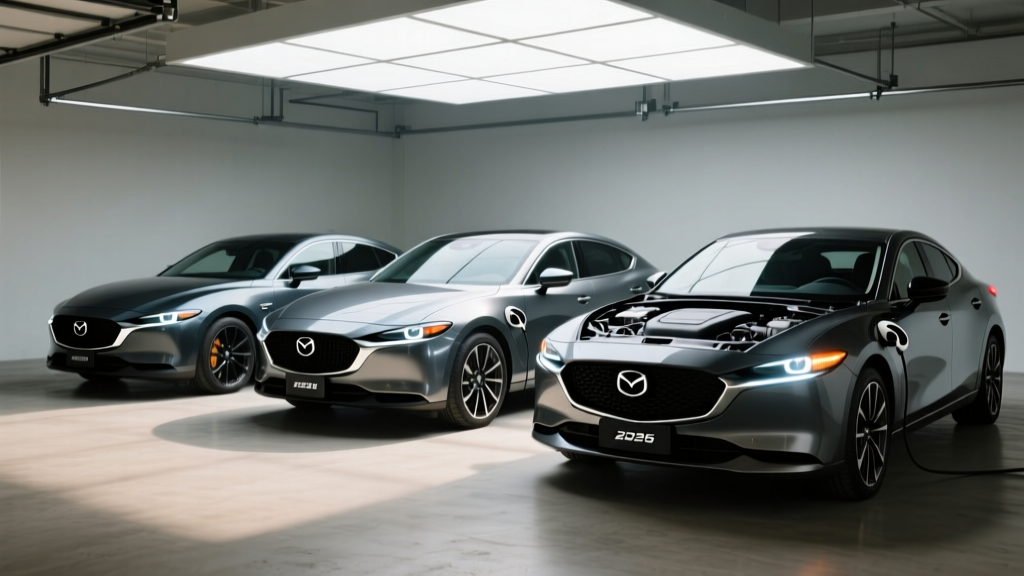
Mazda has committed to electrification without abandoning the internal combustion engine entirely. For 2026, the brand offers a focused plug-in hybrid (PHEV) lineup centered on its large-vehicle platform: the CX-70 PHEV and CX-90 PHEV for the US market, with the CX-60 PHEV available in select international markets. These aren't compliance cars — they pair a 2.5-liter four-cylinder engine with a substantial electric motor and a 17.8 kWh battery pack, delivering genuine electric-only commuting range before the gas engine takes over.
If you're searching for a Mazda plug-in hybrid, this guide breaks down every number that matters: real-world electric range, EPA MPG, charging times, battery warranty, and whether these models qualify for the federal §30D tax credit under current IRS rules.
2026 Mazda PHEV Lineup: Side-by-Side Specs
| Spec | CX-70 PHEV | CX-90 PHEV |
|---|---|---|
| Powertrain | 2.5L I4 + electric motor | 2.5L I4 + electric motor |
| Combined HP | 323 hp / 369 lb-ft | 323 hp / 369 lb-ft |
| Battery (usable) | 17.8 kWh (NMC) | 17.8 kWh (NMC) |
| EPA Electric Range | 26 miles | 26 miles |
| EPA MPG (gas mode) | 25 combined (24 city / 27 hwy) | 25 combined (24 city / 27 hwy) |
| MPGe (electric + gas) | 56 MPGe | 56 MPGe |
| Level 2 Charge Time (0-100%) | ~2.5 hours at 7.2 kW | ~2.5 hours at 7.2 kW |
| DC Fast Charging | No | No |
| 0-60 mph | ~6.1 sec | ~6.3 sec |
| Base MSRP (2026) | ~$55,855 | ~$57,450 |
| Battery Warranty | 8 yr / 100,000 mi | 8 yr / 100,000 mi |
Sources: EPA fueleconomy.gov, Mazda USA. Specs reflect 2025–2026 model year data. Verify current-year figures at time of purchase.
Electric-Only Range: What 26 Miles Actually Means
The EPA rates both the CX-70 PHEV and CX-90 PHEV at 26 miles of electric-only range. That number comes from the 17.8 kWh battery pack (approximately 14.9 kWh usable after the system's top and bottom buffer reserves protect battery health).
- Ideal conditions (65°F, flat city driving): 26-28 miles — you may slightly exceed EPA on gentle routes
- Highway at 70 mph: 18-22 miles — electric motors are less efficient at sustained high speed
- Cold weather (below 30°F): 15-20 miles — cabin heating and battery chemistry reduce usable capacity by 25-35%
- Hilly terrain / heavy cargo: 18-22 miles — increased load draws more from the pack
For a commuter with a sub-25-mile round trip and home charging, 26 EPA miles means you could drive months without the gasoline engine engaging. Once the battery depletes, the 2.5-liter engine seamlessly takes over, and you're driving a conventional hybrid with 25 MPG combined — no range anxiety, no charging-station hunting.
Fuel Economy Breakdown: Gas-Mode MPG and MPGe
| Mode | City | Highway | Combined |
|---|---|---|---|
| Charge-Depleted (gas hybrid mode) | 24 MPG | 27 MPG | 25 MPG |
| Charge-Sustaining (blended PHEV) | 56 MPGe (EPA combined with full battery) | ||
How MPGe works: MPGe (miles per gallon equivalent) converts electricity consumption into a gasoline-equivalent number. The 56 MPGe figure applies when you start with a full battery and blend electric and gas driving. Once the battery is depleted, you're on the 25 MPG combined figure — which is respectable for a 4,800+ lb SUV, but not class-leading. For comparison, the Toyota RAV4 Prime delivers 38 MPG combined in gas-only mode with a smaller, lighter vehicle.
Real-world MPG note: Hybrids and PHEVs in gas mode often exceed EPA city estimates because regenerative braking recovers more energy in stop-and-go traffic. Expect 26-28 MPG in heavy urban driving, and 25-27 MPG on the highway where regen opportunities are fewer. This is the opposite of gas-only vehicles, which get worse mileage in the city.
Charging the Mazda PHEV: Level 1, Level 2, and What's Missing
Both the CX-70 PHEV and CX-90 PHEV use a J1772 connector (standard for non-Tesla PHEVs in North America) and accept Level 1 and Level 2 AC charging only. There is no DC fast charging capability — a notable omission if you frequently take road trips and want to top up at highway chargers.
| Charging Level | Power | Time (0-100%) | Miles Added per Hour |
|---|---|---|---|
| Level 1 (120V outlet) | ~1.4 kW | ~12-14 hours | ~2-3 miles |
| Level 2 (240V, 32A) | ~7.2 kW | ~2.5 hours | ~10-12 miles |
Practical charging advice: A Level 2 home charger is essential for PHEV ownership. At 7.2 kW, the battery fully replenishes in about 2.5 hours — plug in when you get home, and you'll wake up to a full battery every morning. Level 1 on a standard 120V outlet works for overnight top-ups if your commute is under 15 miles, but a full recharge takes 12+ hours.
Level 2 home charger installation typically runs $500–$2,000 depending on whether your electrical panel needs an upgrade. A quality Level 2 unit (ChargePoint Home Flex, Emporia Vue, or Wallbox Pulsar Plus) costs $350–$700 before installation. Factor this into your total purchase budget.
Powertrain Deep Dive: 323 HP From a Four-Cylinder Hybrid
Mazda's PHEV powertrain pairs a naturally aspirated 2.5-liter inline-four (producing approximately 189 hp on its own) with an electric motor integrated into the 8-speed automatic transmission. Combined output reaches 323 horsepower and 369 lb-ft of torque — enough to push the CX-70 to 60 mph in roughly 6.1 seconds and the heavier CX-90 in about 6.3 seconds.
Unlike some competitors that use a continuously variable transmission (CVT), Mazda retains its 8-speed automatic. This gives the PHEV a more traditional driving feel with distinct gear shifts — a deliberate choice for drivers who find CVTs rubbery and disconnected. The tradeoff is slightly less seamless blending between electric and gas power at low speeds, though Mazda's calibration has improved significantly in the 2025-2026 model years.
The electric motor alone can propel the vehicle at speeds up to approximately 84 mph under light load, meaning highway cruising on electricity alone is possible on flat terrain. Under hard acceleration, the engine engages immediately for maximum combined output.
Pricing, Trims, and Federal Tax Credit Eligibility
The 2026 Mazda CX-70 PHEV starts at approximately $55,855 (Preferred trim), with Premium and Premium Plus trims reaching the low $60,000s. The CX-90 PHEV starts around $57,450 and tops out near $65,000 for the Premium Plus.
Under current IRS §30D rules, PHEVs may qualify for up to $7,500 in federal tax credits, but eligibility depends on several conditions:
- MSRP cap: SUVs must be under $80,000 — both Mazda PHEVs qualify
- Buyer income cap: AGI must not exceed $150,000 (single), $225,000 (head of household), or $300,000 (joint filing)
- Battery sourcing: Critical minerals and battery components must meet phased-in percentages from US or free-trade-agreement countries — verify current-year compliance for your specific model on the fueleconomy.gov tax credit lookup
- Point-of-sale transfer: As of 2024, eligible buyers can transfer the credit to the dealer for an immediate price reduction at purchase, rather than waiting to claim it on their tax return
Critical caveat: Battery sourcing requirements tighten annually. A model that qualifies in early 2026 may lose eligibility mid-year as supply chains shift. Always confirm with your dealer and a tax professional before relying on the credit in your purchase decision.
Battery Longevity, Warranty, and Replacement Cost
How long will it actually last? Modern NMC (nickel-manganese-cobalt) lithium-ion PHEV batteries are engineered for 1,500–2,000 full charge cycles before reaching 70-80% capacity. For a PHEV with 26 miles of range charged once daily, that translates to roughly 10-15 years of daily use before meaningful degradation. Real-world data from earlier Mazda hybrid systems and comparable Toyota/Honda PHEV packs shows most batteries retain 85-90% capacity at the 8-year mark under normal conditions.
Replacement cost: If the battery fails out of warranty, expect a replacement cost of approximately $8,000–$12,000 including parts and labor for the 17.8 kWh pack. This is lower than full EV battery replacements ($15,000–$25,000) because the pack is much smaller. However, it's a real long-term ownership cost to budget for if you plan to keep the vehicle beyond 12-15 years.
Maximizing battery life: Avoid routinely charging to 100% and leaving the car parked in extreme heat. Mazda's battery management system includes thermal safeguards, but setting the charge limit to 80-90% for daily use (if the infotainment system allows it) and using preconditioning when available will extend pack longevity.
Who Should Buy a Mazda PHEV vs. a Full EV or Conventional Hybrid?
✓ Choose the Mazda PHEV If:
- Your daily commute is under 25 miles and you can charge at home
- You take regular road trips and don't want to plan around charging stations
- You want 323 hp and Mazda's premium interior without full EV commitment
- You live in an apartment or area with limited public charging infrastructure
- You want a three-row SUV (CX-90) with some electric capability
✗ Look at a Full EV Instead If:
- You have reliable home charging and rarely drive over 250 miles in a day
- You want zero tailpipe emissions and lower per-mile fuel costs
- You want to avoid oil changes, transmission fluid, and engine maintenance entirely
- You qualify for the full $7,500 credit on a BEV (broader model eligibility)
- Lower long-term total cost of ownership is your top priority
✓ Choose a Conventional Hybrid (HEV) If:
- You cannot install a home charger and public charging is inconvenient
- You want simpler ownership with no plug-in routine
- Your budget is under $40,000 (options like the CX-50 Hybrid start lower)
- Your commute is long (50+ miles) and you'd rarely use PHEV electric range
- You want the lowest purchase price with better-than-gas MPG
Frequently Asked Questions
How many MPG does the Mazda plug-in hybrid get?
Once the battery is depleted, both the CX-70 PHEV and CX-90 PHEV achieve an EPA-rated 25 MPG combined (24 city / 27 highway) running as a conventional hybrid. With a full charge, the combined rating is 56 MPGe. Real-world city driving in gas mode often yields 26-28 MPG thanks to regenerative braking in stop-and-go traffic.
How far can the Mazda PHEV go on electric only?
The EPA rates Mazda's PHEVs at 26 miles of electric-only range. In real-world conditions, expect 18-22 miles on the highway, 15-20 miles in cold weather, and up to 28 miles in gentle city driving at moderate temperatures. For commutes under 25 miles with daily home charging, you may go weeks without using gasoline.
Does the Mazda plug-in hybrid qualify for a tax credit?
Both the CX-70 PHEV and CX-90 PHEV may qualify for up to $7,500 under the federal §30D clean vehicle credit, subject to buyer income limits ($150K single / $300K joint), the $80,000 SUV MSRP cap (which both models meet), and battery-sourcing requirements that change annually. Check the current eligibility on fueleconomy.gov and consult a tax professional before purchasing.
Is the Mazda PHEV reliable? What does battery replacement cost?
Mazda's PHEV powertrain is built on proven 2.5L engine architecture with an established 8-speed transmission. The high-voltage battery carries an 8-year/100,000-mile warranty (10 years/150,000 miles in CARB states). Out-of-warranty battery replacement runs approximately $8,000–$12,000. NMC PHEV batteries typically retain 85-90% capacity at 8 years under normal use, and most owners will never need a replacement during typical ownership.
Can I DC fast charge the Mazda PHEV?
No. The CX-70 PHEV and CX-90 PHEV support AC charging only — Level 1 (120V) and Level 2 (240V). There is no DC fast charging port. A full Level 2 charge takes approximately 2.5 hours. For a PHEV with 26 miles of electric range, overnight home charging is sufficient for most owners, and the lack of DC fast charging is less impactful than it would be on a full EV.
Hybrid vs PHEV vs EV — which is right for me?
A conventional hybrid (HEV) suits drivers who can't charge at home and want better MPG with zero behavior change. A plug-in hybrid (PHEV) is ideal for home-chargers with short commutes who also take long road trips. A full EV (BEV) makes the most sense for drivers with home charging, predictable routes under 250 miles, and a priority on lowest operating cost and zero tailpipe emissions. The Mazda PHEV occupies the middle ground — electric commuting with gas-engine freedom.