Mazda's Electrified Lineup: PHEVs, Not Conventional Hybrids
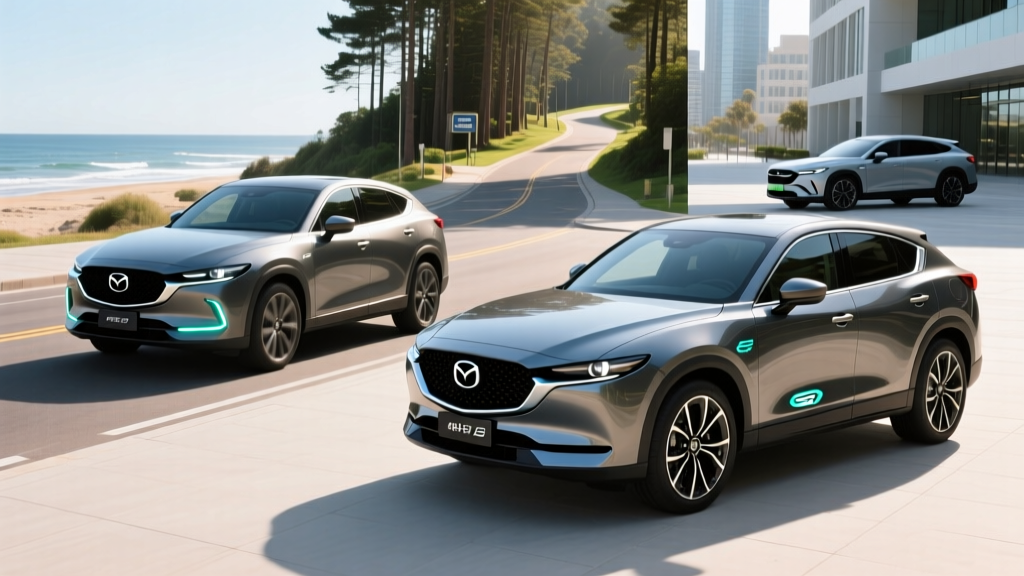
If you've been searching for a Mazda hybrid, the short answer is yes — but with an important distinction. Mazda does not currently sell a conventional hybrid (HEV) in the United States. Instead, the automaker has committed to plug-in hybrid electric vehicles (PHEVs) as its bridge between gasoline and full electric powertrains. For the 2026 model year, Mazda offers three PHEV models: the CX-50 PHEV, the CX-70 PHEV, and the CX-90 PHEV.
Unlike a conventional hybrid such as the Toyota RAV4 Hybrid — which recharges its small battery through regenerative braking and the engine alone — Mazda's PHEVs feature larger battery packs you can plug in to charge, delivering meaningful electric-only driving before the gasoline engine takes over. This is a critical distinction for buyers weighing efficiency, fuel cost, and daily driving patterns.
HEV vs. PHEV: What's the Difference?
| Feature | Conventional Hybrid (HEV) | Plug-In Hybrid (PHEV) |
|---|---|---|
| Plug in to charge? | No | Yes |
| Electric-only range | 0–2 miles at low speed | 20–35+ miles (Mazda PHEVs) |
| Battery size | ~1–2 kWh | 17.8 kWh (Mazda PHEVs) |
| Federal tax credit | None | Up to $3,750 (§30D, subject to eligibility) |
| Best for | No home charging access | Home/work charging + short commutes |
2026 Mazda PHEV Specs: CX-50, CX-70, and CX-90 at a Glance
All three Mazda PHEVs share the same plug-in hybrid powertrain architecture: a 2.5-liter four-cylinder engine paired with an electric motor and a 17.8 kWh lithium-ion battery pack. However, tuning, vehicle weight, and aerodynamics produce different efficiency and range results across the lineup.
| Spec | 2026 CX-50 PHEV | 2026 CX-70 PHEV | 2026 CX-90 PHEV |
|---|---|---|---|
| Combined HP | 327 hp | 327 hp | 327 hp |
| Combined Torque | 382 lb-ft | 382 lb-ft | 382 lb-ft |
| Battery (usable) | 17.8 kWh | 17.8 kWh | 17.8 kWh |
| EPA Electric Range | 28 mi | 26 mi | 26 mi |
| EPA Combined MPGe | 92 MPGe | 90 MPGe | 89 MPGe |
| Gas-only MPG (combined) | 25 MPG | 25 MPG | 24 MPG |
| Total Range (gas + electric) | ~430 mi | ~440 mi | ~450 mi |
| 0–60 mph | 6.2 sec (est.) | 6.0 sec (est.) | 6.3 sec (est.) |
| Level 2 Charge Time (0–100%) | ~2.5 hours | ~2.5 hours | ~2.5 hours |
| DC Fast Charging | No | No | No |
| Drivetrain | AWD | AWD | AWD |
| Starting MSRP | $41,550 | $55,950 | $51,950 |
Sources: EPA Fuel Economy, Mazda USA specifications.
Fuel Economy Breakdown: Real-World MPG vs. EPA Stickers
| Model | EPA City | EPA Highway | EPA Combined | Real-World Expectation |
|---|---|---|---|---|
| CX-50 PHEV (gas only) | 24 MPG | 27 MPG | 25 MPG | 23–26 MPG depending on terrain and climate |
| CX-70 PHEV (gas only) | 24 MPG | 27 MPG | 25 MPG | 23–26 MPG; heavier curb weight affects city driving |
| CX-90 PHEV (gas only) | 23 MPG | 26 MPG | 24 MPG | 22–25 MPG; three-row weight penalty shows on highway |
PHEVs reward city and suburban driving more than highway cruising. Around town, the electric motor handles low-speed acceleration, reducing engine load and fuel consumption. On sustained highway runs above 70 mph, the gasoline engine does most of the work, and real-world MPG tends to land within 1–2 MPG of the EPA estimate.
Cold-weather note: Expect 15–25% reduction in electric-only range when temperatures drop below freezing. The battery's chemistry becomes less efficient, and cabin heating draws from the pack. A 26-mile EPA electric range may shrink to 19–22 miles in January conditions. Once the battery depletes, the gas engine operates normally, and MPG impact is minimal.
Electric-Only Range and Charging: What PHEV Owners Need to Know
The 17.8 kWh battery pack across all three Mazda PHEVs delivers 26–28 miles of electric-only driving on a full charge, per the EPA. For many commuters, this covers a round-trip daily drive without burning a drop of gasoline — provided you charge at home or work.
Charging is straightforward but limited compared to full EVs:
- Level 1 (120V household outlet): Approximately 10–12 hours for a full charge. Viable for overnight top-ups if your daily electric use is under 15 miles.
- Level 2 (240V home or public charger): Approximately 2.5 hours from empty to full at ~7.2 kW. This is the practical standard for PHEV owners.
- DC Fast Charging: Not supported on any Mazda PHEV. You cannot use CCS or NACS DC fast chargers to charge these vehicles. This is a notable limitation compared to competitors like the Toyota RAV4 Prime, which does offer optional DC fast charging.
Battery Warranty and Replacement Cost
Mazda covers the PHEV high-voltage battery with a 8-year/100,000-mile warranty (extended to 10 years/150,000 miles in California Air Resources Board states including CA, CO, CT, MA, MD, ME, NJ, NY, OR, RI, VT, and WA). The warranty guarantees the battery will retain sufficient capacity to deliver meaningful electric range — typically above 60–70% of original capacity.
Out-of-warranty replacement cost for the 17.8 kWh pack is estimated at $5,000–$8,000 including labor, based on comparable PHEV battery pricing in the industry. However, PHEV batteries experience less stress than full EV batteries due to smaller charge/discharge cycles, and real-world degradation data from similar platforms suggests these packs should last well beyond 150,000 miles with gradual capacity loss rather than sudden failure.
Pricing, Trims, and Federal Tax Credit Eligibility
Mazda positions its PHEVs as premium offerings within each model's lineup. Here's what the pricing landscape looks like for 2026:
- CX-50 PHEV: Starting at $41,550 (Preferred Plus trim). Fully loaded Meridian Edition approaches $48,000.
- CX-90 PHEV: Starting at $51,950 (Preferred Plus). Top Premium Plus trim reaches ~$59,000.
- CX-70 PHEV: Starting at $55,950 (Preferred). Premium Plus trim tops ~$62,000.
Federal Tax Credit: Up to $3,750 Under §30D
Mazda PHEVs may qualify for a partial federal tax credit of up to $3,750 under the IRS §30D Clean Vehicle Credit, but eligibility is not automatic. The credit amount depends on battery sourcing and critical mineral requirements that shift annually. As of 2026, the full $7,500 credit requires meeting both critical mineral and battery component sourcing thresholds; many PHEVs with smaller batteries qualify for only the $3,750 half.
§30D Credit Requirements (2026)
- Buyer income cap: $150,000 single / $300,000 joint modified AGI
- Vehicle MSRP cap: $80,000 for SUVs (all Mazda PHEVs qualify)
- Battery sourcing: critical minerals and components must meet phased-in thresholds
- Point-of-sale transfer: credit can be applied at purchase to reduce out-of-pocket cost
- Verify current eligibility at IRS.gov before purchasing — sourcing rules change annually
State incentives vary widely. California, Colorado, and several other states offer additional rebates for PHEVs, often $1,000–$2,500. Check your state energy office or fueleconomy.gov for current state-level programs.
Who Should Buy a Mazda PHEV — And Who Shouldn't
Pros
- 26–28 miles electric covers most daily commutes gasoline-free
- No range anxiety — gas engine provides 400+ miles total range
- 327 hp delivers genuinely quick acceleration across the lineup
- Standard AWD on all PHEV trims
- Premium interior materials that compete with luxury brands
- Eligible for partial federal tax credit
Cons
- No DC fast charging — limits road-trip electric driving
- Electric-only range trails the RAV4 Prime (42 mi) and Tucson PHEV (33 mi)
- Gas-only MPG (24–25 combined) is unremarkable for a hybrid once battery depletes
- Premium pricing — base PHEV trims start above $41,000
- No conventional hybrid option for buyers without charging access
PHEV vs. Full EV vs. Gas: Which Fits You?
Choose a Mazda PHEV if: You have home Level 2 charging, your daily round-trip commute is under 30 miles, you regularly take road trips beyond 300 miles, and you want Mazda's driving dynamics and interior quality without committing to a full EV.
Choose a full EV (e.g., Tesla Model Y, Hyundai Ioniq 5) if: You have reliable home charging, your daily driving is under 250 miles, you want zero tailpipe emissions, and you're ready to eliminate gasoline entirely.
Choose a conventional gas car if: You cannot charge at home or work, your budget is below $35,000, or you drive primarily long highway routes where hybrid advantages diminish.
Reliability and Long-Term Ownership Outlook
Mazda's PHEV powertrain is derived from a proven 2.5-liter engine architecture the company has used for years, paired with an electric motor system developed in-house. Mazda consistently ranks in the upper third of Consumer Reports reliability surveys, and the brand's conventional powertrains have a strong track record for longevity.
For the high-voltage battery specifically, PHEV ownership tends to be less stressful on battery chemistry than full EV ownership. The battery cycles through a smaller portion of its total capacity daily, and the engine handles high-load scenarios like sustained highway driving. Based on data from similar PHEV platforms, expect less than 10% capacity degradation over 100,000 miles under normal use.
Maintenance costs favor the PHEV over a gas-only vehicle: regenerative braking extends brake pad life, and the engine runs fewer total hours when electric mode handles city driving. Oil change intervals remain similar, but overall engine wear is reduced.
Frequently Asked Questions
Does Mazda have a conventional hybrid (non-plug-in)?
No. As of the 2026 model year, Mazda does not sell a conventional hybrid (HEV) in the US market. All Mazda electrified vehicles are plug-in hybrids (PHEVs) that can be plugged in to charge and offer 26–28 miles of electric-only range. Mazda previously offered a mild-hybrid system in some markets, but not a full HEV comparable to the Toyota RAV4 Hybrid or Honda CR-V Hybrid.
How many MPG does a Mazda PHEV get?
Once the battery is depleted, Mazda PHEVs achieve 24–25 MPG combined (EPA), depending on the model. The CX-50 and CX-70 PHEV are rated at 25 MPG combined; the larger CX-90 PHEV is rated at 24 MPG combined. During electric-only operation, efficiency is rated at 89–92 MPGe. In practice, if you charge daily and drive under 26 miles, you may use almost no gasoline on typical weekdays.
How far can Mazda PHEVs go on electric only?
The EPA rates the CX-50 PHEV at 28 miles electric-only and both the CX-70 and CX-90 PHEV at 26 miles. Real-world results vary: expect 22–28 miles in mild weather with moderate driving, and 19–22 miles in freezing temperatures or aggressive acceleration. This range is shorter than the Toyota RAV4 Prime (42 miles) but competitive with the Hyundai Tucson PHEV (33 miles) and Hyundai Santa Fe PHEV (30 miles).
Do Mazda PHEVs qualify for a tax credit?
Mazda PHEVs may qualify for a partial federal tax credit of up to $3,750 under IRS §30D rules. Eligibility depends on buyer income (under $150K single / $300K joint), vehicle MSRP (under $80K for SUVs — all Mazda PHEVs qualify), and battery sourcing requirements that change annually. The credit can be transferred to the dealer at point of sale to reduce your purchase price. Always verify current eligibility at IRS.gov before finalizing a purchase.
Is the Mazda PHEV battery reliable and what does replacement cost?
Mazda provides an 8-year/100,000-mile warranty on the PHEV battery (10 years/150,000 miles in CARB states). PHEV batteries generally degrade slowly — expect under 10% capacity loss over 100,000 miles. Out-of-warranty replacement is estimated at $5,000–$8,000, though most owners will never need to replace the pack during typical ownership. The smaller battery size and partial cycling reduce degradation stress compared to full EV batteries.
Can I charge a Mazda PHEV at a DC fast charger?
No. Mazda PHEVs do not support DC fast charging (CCS, NACS, or CHAdeMO). They charge only via Level 1 (120V) or Level 2 (240V) AC charging. A full Level 2 charge takes approximately 2.5 hours. This is a meaningful limitation for road trips — you cannot top up the battery at highway fast-charging stations.