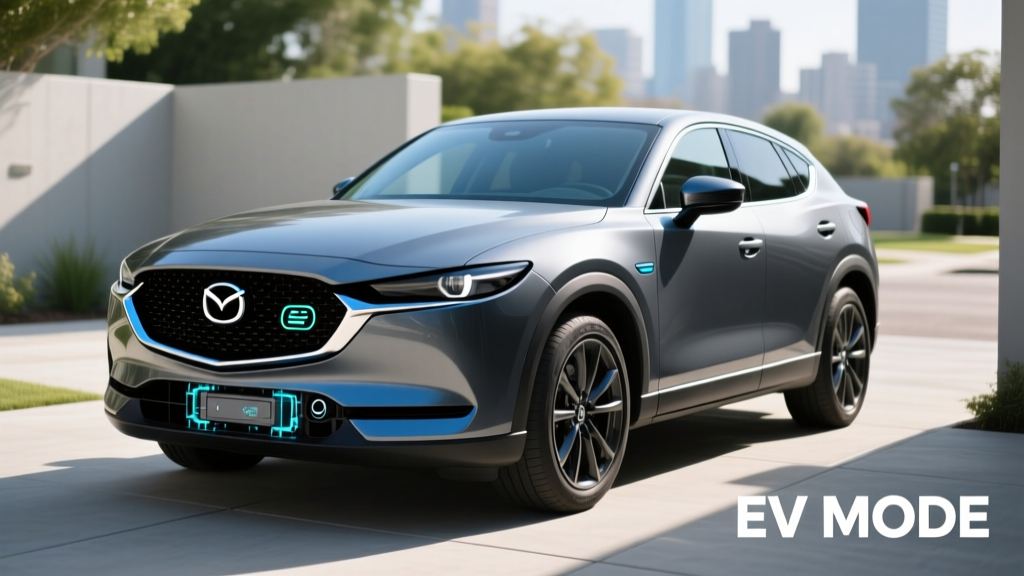
Mazda entered the hybrid SUV game with a pragmatic move: borrowing Toyota's proven hybrid powertrain and wrapping it in the CX-50's rugged, upscale shell. For the 2026 model year, the Mazda CX-50 Hybrid continues as a conventional hybrid (HEV) — no plug required — targeting buyers who want meaningful fuel savings without changing their refueling habits. If you've been searching for CX-50 Hybrid MPG numbers and real-world efficiency data, this guide covers every spec that matters.
CX-50 Hybrid MPG: EPA Estimates vs. Real-World Results
The headline number for the CX-50 Hybrid is its EPA-rated fuel economy. Because it uses Toyota's fourth-generation hybrid synergy drive system — the same architecture underpinning the RAV4 Hybrid — the efficiency figures are well-established and trustworthy.
| Metric | EPA Estimate | Real-World Expectation |
|---|---|---|
| City | 39 MPG | 40–43 MPG (hybrids excel in stop-and-go) |
| Highway | 37 MPG | 34–36 MPG (sustained 70+ mph reduces regen benefit) |
| Combined | 39 MPG | 37–41 MPG depending on driving mix |
| Fuel Tank | 14.5 gallons | ~540–565 miles total range |
Hybrids like the CX-50 often exceed their EPA city rating in real-world driving because regenerative braking recovers energy during frequent stops. Highway driving tells a different story: at sustained speeds above 70 mph, the electric motor provides less assist and the gasoline engine does most of the work, which is why highway MPG tends to dip slightly below the sticker. According to fueleconomy.gov, the CX-50 Hybrid's combined rating matches or beats most AWD compact SUV competitors.
Hybrid (HEV) vs. Plug-In Hybrid (PHEV): Where the CX-50 Fits
This is a critical distinction that trips up many shoppers. The Mazda CX-50 Hybrid is a conventional hybrid (HEV). It does not have a charging port, cannot be plugged in, and has no meaningful electric-only driving range. It simply uses a small battery pack and electric motor to assist the gasoline engine and capture braking energy.
| Feature | HEV (CX-50 Hybrid) | PHEV (e.g., RAV4 Prime) | Full EV (e.g., Tesla Model Y) |
|---|---|---|---|
| Plug-in Required? | No | Yes (optional) | Yes (mandatory) |
| Electric-Only Range | ~1 mile (low-speed creep) | 25–42 miles typical | 250–330+ miles |
| Battery Size | ~1.6 kWh (NiMH/small Li-ion) | 14–18 kWh | 60–82 kWh |
| Federal Tax Credit (§30D) | No | Up to $7,500 (if eligible) | Up to $7,500 (if eligible) |
| Fuel Cost per Mile | ~$0.09 (at $3.50/gal, 39 MPG) | ~$0.04–0.09 (electric + gas mix) | ~$0.04–0.06 (electricity only) |
| Home Charging Needed? | No | Recommended for max benefit | Essential |
The CX-50 Hybrid is the right call if you don't have access to home or workplace charging, if your daily commute involves mixed driving rather than short electric-range loops, or if you simply want lower fuel bills without any behavioral change. If you do have charging access and a short commute, a PHEV like the Toyota RAV4 Prime (42 miles electric-only) could eliminate most of your gasoline use on weekdays while still offering gas-engine range for road trips.
Powertrain and Performance Specs
Mazda sourced the hybrid system directly from Toyota, which means proven reliability but also a driving character that prioritizes efficiency over sportiness. Here's the complete powertrain breakdown:
| Specification | Value |
|---|---|
| Engine | 2.5L naturally aspirated 4-cylinder (Atkinson cycle) |
| Engine Output | 176 hp / 163 lb-ft torque |
| Electric Motor | Front + rear e-motors (electronic AWD) |
| Combined System Output | 219 hp |
| Transmission | eCVT (planetary gearset, not a belt-driven CVT) |
| 0–60 mph | ~7.4 seconds |
| Drivetrain | Electronic AWD (eAWD) standard |
| Towing Capacity | 1,500 lbs (hybrid); non-hybrid turbo models: up to 3,500 lbs |
The eCVT in this system is Toyota's planetary-gear design, which is fundamentally different from the rubber-belt CVTs found in some competitors. It has no belts to wear and is one of the most durable transmissions in the industry. The 219 combined horsepower provides adequate acceleration for merging and passing, though the CX-50 Hybrid doesn't match the punch of Mazda's turbocharged non-hybrid models (which produce up to 256 hp on premium fuel).
One trade-off worth noting: the hybrid's towing capacity drops to 1,500 pounds compared to 3,500 pounds for the turbocharged CX-50 variants. If you need to tow a small trailer or boat, the hybrid isn't the right configuration.
Pricing, Trims, and Tax Credit Eligibility
The 2026 CX-50 Hybrid is offered across multiple trims. Pricing reflects Mazda's positioning as a near-premium brand:
- Preferred Hybrid: ~$35,000 MSRP (base hybrid trim)
- Premium Hybrid: ~$38,500 MSRP
- Premium Plus Hybrid: ~$41,000 MSRP
These are manufacturer MSRPs; destination charges add approximately $1,300. Dealer markups or discounts vary by market.
Does the CX-50 Hybrid Qualify for a Tax Credit?
No. Under current IRS §30D rules, the federal clean vehicle credit (up to $7,500) applies only to plug-in electric vehicles and fuel-cell vehicles with sufficient battery capacity. Conventional hybrids like the CX-50 Hybrid do not qualify. This also means it is ineligible for most state-level EV rebates and incentives that are tied to plug-in capability.
However, some states and local utilities offer smaller incentives for any high-efficiency vehicle, and the CX-50 Hybrid's lower fuel consumption delivers ongoing savings at the pump. At 39 MPG combined versus ~28 MPG for the non-hybrid CX-50 turbo, the hybrid saves approximately $600–$800 per year in fuel costs for a driver covering 15,000 miles annually (assuming $3.50/gallon regular unleaded).
Battery Warranty, Reliability, and Replacement Cost
Because the CX-50 Hybrid uses Toyota's hybrid system, reliability data can be extrapolated from millions of RAV4 Hybrids and Camry Hybrids on the road. Toyota's hybrid synergy drive is among the most proven electrified powertrains globally, with many examples exceeding 200,000 miles on the original battery pack.
Hybrid Battery Replacement Cost
If the hybrid battery does need replacement outside of warranty, expect to pay between $2,500 and $4,000 for a refurbished or new pack plus labor. This is significantly less than a full EV battery replacement ($8,000–$20,000+) because the hybrid battery is much smaller (~1.6 kWh vs. 60–82 kWh in a BEV). Third-party refurbishers and aftermarket options are increasingly available, often bringing costs below $2,500.
The gasoline engine, eCVT transmission, and standard powertrain components are covered under Mazda's 5-year/60,000-mile powertrain warranty. The eAWD rear motor and associated electronics fall under the hybrid-system warranty.
Who Should Choose the CX-50 Hybrid?
Choose the CX-50 Hybrid If:
- You want 35–40+ MPG without plugging in or changing habits
- You don't have reliable access to home or workplace charging
- You want standard AWD for snow/rain without the fuel penalty of a traditional AWD system
- You value Mazda's interior quality and driving dynamics but want lower running costs
- Your towing needs are light (under 1,500 lbs)
Consider a PHEV or Full EV Instead If:
- You have home charging and a commute under 30 miles (a PHEV eliminates most gas use)
- You want federal tax credit eligibility ($7,500 potential savings)
- You want electric-only driving for quiet, zero tailpipe emissions in your neighborhood
- You need more than 1,500 lbs of towing capacity (look at the CX-50 Turbo or a truck-based PHEV)
How the CX-50 Hybrid Stacks Up Against Competitors
The compact hybrid SUV segment is competitive. Here's how the CX-50 Hybrid compares on key metrics:
| Model | Combined MPG | Combined HP | AWD? | Starting MSRP |
|---|---|---|---|---|
| Mazda CX-50 Hybrid | 39 | 219 | Standard | ~$35,000 |
| Toyota RAV4 Hybrid | 39 | 219 | Standard | ~$33,500 |
| Honda CR-V Hybrid | 37 | 204 | Available | ~$35,000 |
| Ford Escape Hybrid | 39 | 210 | Available | ~$34,000 |
| Subaru Forester Hybrid | 35 | 194 | Standard | ~$34,500 |
The CX-50 Hybrid ties the RAV4 Hybrid on MPG and horsepower — unsurprising given the shared powertrain — but differentiates with Mazda's more upscale interior materials, a longer wheelbase for improved rear-seat room, and a more composed ride on highway pavement. The RAV4 Hybrid starts slightly lower and offers the RAV4 Prime PHEV variant if you want plug-in capability within the same family.
Frequently Asked Questions
How many MPG does the Mazda CX-50 Hybrid get?
The 2026 Mazda CX-50 Hybrid is EPA-rated at 39 MPG city, 37 MPG highway, and 39 MPG combined. Real-world results typically range from 37 MPG (highway-heavy driving) to 43 MPG (mostly city driving with frequent stops). Cold weather and aggressive driving will reduce these numbers by 5–10%.
Is the CX-50 Hybrid a plug-in hybrid?
No. The CX-50 Hybrid is a conventional hybrid (HEV). It has no plug, no charging port, and no meaningful electric-only range. It charges its small battery through regenerative braking and the gasoline engine. You fuel it exclusively at gas stations, just like a conventional car.
Does the CX-50 Hybrid qualify for any federal tax credit?
No. Under IRS §30D, the federal clean vehicle credit applies only to plug-in hybrids (PHEVs) and battery electric vehicles (BEVs) that meet battery-capacity, MSRP, income, and critical-mineral sourcing requirements. Conventional hybrids are not eligible. Check irs.gov for current rules.
Is the CX-50 Hybrid reliable?
The CX-50 Hybrid uses Toyota's fourth-generation hybrid system, which has been deployed in millions of vehicles worldwide with an excellent reliability track record. The eCVT transmission uses a planetary gearset with no belts or clutches to wear. Mazda covers the hybrid battery for 8 years/100,000 miles (10 years/150,000 miles in CARB states).
How much does it cost to replace the CX-50 Hybrid battery?
Out-of-warranty hybrid battery replacement typically costs $2,500–$4,000 including labor. Refurbished and aftermarket options can reduce this to under $2,500. For context, many Toyota-sourced hybrid batteries last well beyond 150,000–200,000 miles before needing replacement.
What's the difference between the CX-50 Hybrid and the CX-50 Turbo?
The CX-50 Turbo uses a 2.5L turbocharged engine producing up to 256 hp (on 93-octane fuel) and 320 lb-ft of torque, with a conventional 6-speed automatic and mechanical AWD. It's rated around 25 MPG combined but can tow up to 3,500 lbs. The Hybrid prioritizes fuel efficiency (39 MPG combined) with 219 hp and a 1,500-lb tow rating. Choose Turbo for power and towing; choose Hybrid for efficiency.
Hybrid vs. PHEV vs. EV — which should I buy?
If you lack home charging and drive a mix of city and highway, the CX-50 Hybrid (HEV) offers the simplest path to better fuel economy. If you have home charging and a short commute (under 30 miles), a PHEV like the RAV4 Prime lets you drive most days on electricity while keeping a gas engine for long trips. If you have reliable charging and want the lowest operating cost and zero tailpipe emissions, a full EV like the Tesla Model Y or Hyundai Ioniq 5 is the long-term play — with a higher upfront cost offset by the $7,500 federal credit and minimal maintenance.