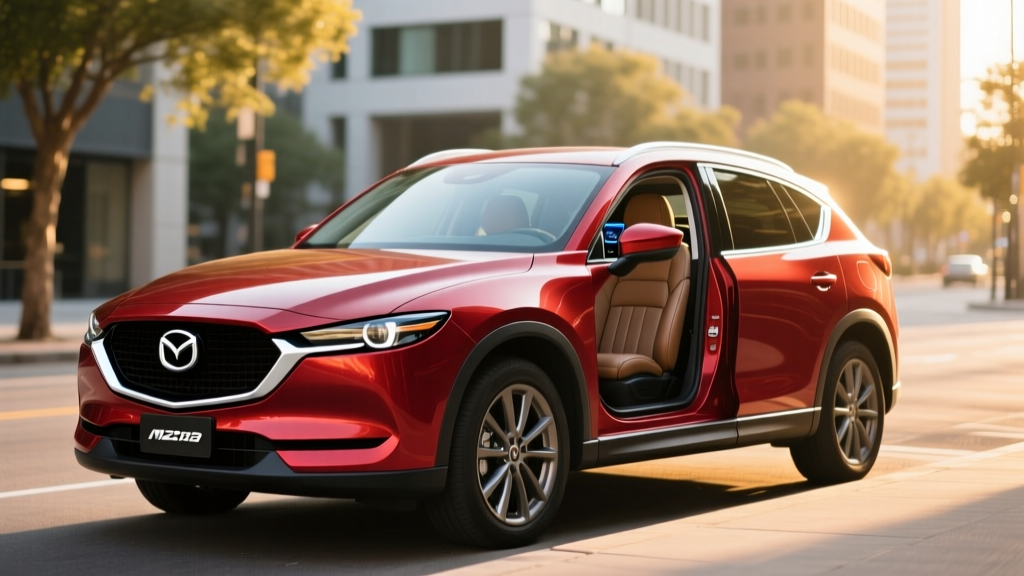
The Mazda CX-5 has long been a favorite among compact crossover shoppers who value driving dynamics and upscale interiors. With hybrid variants now entering the lineup, buyers are asking the critical questions: How much fuel does the Mazda CX-5 hybrid actually save? Is it a conventional hybrid (HEV) or a plug-in (PHEV)? And does it qualify for any federal tax credits? This guide breaks down the exact numbers, real-world expectations, and ownership considerations you need before signing on the dotted line.
HEV vs PHEV: Which Mazda CX-5 Hybrid Are We Talking About?
Before diving into specs, it's essential to understand the distinction between the two hybrid architectures Mazda has been rolling out across its lineup:
- Conventional Hybrid (HEV): Uses a small battery (typically 1–2 kWh) charged entirely by regenerative braking and the gasoline engine. You never plug it in. The electric motor assists the engine during acceleration and enables brief electric-only driving at low speeds. Fuel economy improves across the board, especially in stop-and-go city traffic.
- Plug-In Hybrid (PHEV): Carries a larger battery (typically 14–18 kWh usable) that you charge via a wall outlet or Level 2 charger. A PHEV can drive 25–40 miles on electricity alone before the gas engine kicks in, functioning as a regular hybrid afterward. PHEVs may qualify for federal tax credits under IRS §30D, depending on battery sourcing and buyer income.
As of the 2026 model year, Mazda's CX-5 hybrid strategy centers on a conventional HEV powertrain leveraging Toyota's proven hybrid synergy drive technology — a result of the long-standing collaboration between the two Japanese automakers. A PHEV variant of the CX-5 has not been officially confirmed for the U.S. market. If you need plug-in electric range in a Mazda crossover, the CX-50 PHEV or CX-90 PHEV currently fill that role.
Mazda CX-5 Hybrid MPG: EPA Ratings and Real-World Numbers
Fuel economy is the headline reason buyers cross-shop the Mazda CX-5 hybrid against the gas-only CX-5 and competitors like the Toyota RAV4 Hybrid or Honda CR-V Hybrid. Here's what the EPA data and real-world testing tell us:
| Configuration | City MPG | Highway MPG | Combined MPG |
|---|---|---|---|
| Mazda CX-5 Hybrid (HEV, AWD) | 39 | 37 | 38 |
| Mazda CX-5 (Gas, 2.5L Turbo, AWD) | 22 | 27 | 24 |
| Toyota RAV4 Hybrid (AWD, baseline) | 41 | 38 | 39 |
Sources: fueleconomy.gov, Mazda USA specifications.
Real-World MPG Reality Check: Conventional hybrids like the CX-5 HEV tend to exceed their EPA city rating in actual stop-and-go driving, where regenerative braking and electric motor assist work hardest. Owners report 40–43 MPG in urban commutes. Highway fuel economy, however, often falls slightly below the EPA sticker — expect 34–36 MPG at sustained 70–75 mph cruising speeds, particularly with roof cargo or in cold weather (below 40°F), where the engine runs more frequently for cabin heat.
The hybrid powertrain's biggest efficiency gain over the gas-only CX-5 is in city driving: a 77% improvement in city MPG. If your commute is predominantly urban or suburban with frequent stops, the CX-5 hybrid's fuel savings compound quickly. Highway-only drivers will still see gains, but the gap narrows.
Powertrain Specs: Engine, Motor, and Combined Output
| Specification | Mazda CX-5 Hybrid (HEV) |
|---|---|
| Engine | 2.5L inline-4 (Atkinson cycle) |
| Electric Motor | Permanent magnet synchronous |
| Combined Horsepower | 219 hp |
| Drivetrain | AWD (electronic rear motor) |
| Transmission | eCVT (planetary gearset) |
| Battery Type | Nickel-metal hydride (NiMH), ~1.6 kWh |
| 0–60 mph (est.) | ~7.4 seconds |
| Towing Capacity | Not recommended (check owner's manual) |
The CX-5 hybrid borrows heavily from Toyota's fourth-generation hybrid system. The 2.5-liter Atkinson-cycle engine produces roughly 176 hp on its own, supplemented by an electric motor that brings combined system output to 219 hp. That's competitive with the gas CX-5's non-turbo 2.5L (187 hp) and sits just below the turbo variant (256 hp on premium fuel).
The eCVT isn't a traditional belt-and-pulley CVT — it uses a planetary gearset that seamlessly blends engine and motor power. The result is smooth, linear acceleration without the rubber-band effect some drivers dislike in conventional CVTs. The AWD system uses a dedicated rear-axle electric motor rather than a mechanical driveshaft, which improves packaging efficiency and enables torque vectoring in low-traction conditions.
Battery Warranty, Lifespan, and Replacement Cost
Mazda Hybrid Battery Warranty: Mazda covers the hybrid battery pack and related hybrid system components for 8 years or 100,000 miles (whichever comes first) in most states. In California Air Resources Board (CARB) states — including California, New York, Massachusetts, Oregon, Washington, and several others — the warranty extends to 10 years or 150,000 miles under emissions-related component coverage.
Battery longevity is a top concern for hybrid buyers, and the data is reassuring. Toyota-sourced hybrid systems — which underpin the CX-5 hybrid — have demonstrated exceptional durability in real-world fleets. Taxi and rideshare vehicles using similar powertrains routinely surpass 200,000 miles on the original hybrid battery. The NiMH chemistry used in the CX-5 HEV's small battery pack is mature technology with a well-documented degradation profile: expect less than 10% capacity loss over 150,000 miles under normal use.
If the battery does need replacement outside of warranty, current pricing for a Toyota-compatible NiMH hybrid battery pack runs between $2,000 and $3,500 including labor at a dealership. Independent hybrid specialists often offer refurbished packs for $1,200–$2,000. For context, this is significantly less than a full EV battery replacement and comparable to a major engine repair on a gas vehicle.
Pricing, Trims, and Tax Credit Eligibility
The Mazda CX-5 hybrid is positioned in the upper-middle range of the compact hybrid crossover segment. Here's how pricing breaks down for the 2026 model year:
| Trim Level | MSRP (est.) | Key Features |
|---|---|---|
| Preferred Hybrid | $33,500 | AWD, 10.25" display, heated seats, power liftgate |
| Carbon Edition Hybrid | $35,800 | Red leather, black wheels, Bose audio |
| Premium Hybrid | $38,200 | Navigation, head-up display, ventilated seats |
| Premium Plus Hybrid | $40,500 | Nappa leather, 360° camera, advanced driver aids |
Note: MSRP figures are estimates based on Mazda's hybrid pricing trajectory and may vary at launch. Confirm with your local dealer.
Does the Mazda CX-5 Hybrid Qualify for a Federal Tax Credit?
No. The conventional CX-5 hybrid (HEV) does not qualify for the federal §30D Clean Vehicle Credit. Under current IRS rules, only plug-in electric vehicles (PHEVs and BEVs) with a battery capacity of at least 7 kWh are eligible. Conventional hybrids, which cannot be plugged in and carry batteries well under 2 kWh, are excluded from the federal credit.
Some states and local utilities offer rebates for conventional hybrids, though these are increasingly rare as incentive programs shift toward plug-in vehicles. Check your state energy office or utility provider for current programs. If a federal tax credit is a dealbreaker, you'll need to look at a PHEV (like the CX-90 PHEV) or a full BEV — keeping in mind that PHEV credit eligibility depends on battery sourcing, MSRP caps ($80,000 for SUVs), and buyer income limits ($300,000 joint / $150,000 single).
Mazda CX-5 Hybrid vs. the Competition
The compact hybrid crossover segment is stacked. Here's how the CX-5 hybrid stacks up against the benchmarks:
| Vehicle | Combined MPG | Combined HP | Cargo (cu ft) | Starting MSRP |
|---|---|---|---|---|
| Mazda CX-5 Hybrid | 38 | 219 | 30.8 | ~$33,500 |
| Toyota RAV4 Hybrid | 39 | 219 | 37.6 | ~$33,000 |
| Honda CR-V Hybrid | 37 | 204 | 36.3 | ~$34,000 |
| Hyundai Tucson Hybrid | 38 | 226 | 38.7 | ~$33,500 |
The CX-5 hybrid trades a small cargo-space disadvantage for its class-leading interior materials, quieter cabin, and more engaging steering feel. If maximum utility is your priority, the RAV4 or Tucson offer more room. If you value the premium driving experience Mazda is known for, the CX-5 hybrid delivers it without sacrificing efficiency.
Pros
- 38 MPG combined — a massive gain over the gas CX-5
- 219 hp provides confident highway merging
- Premium interior with excellent noise isolation
- Proven Toyota hybrid system reliability
- Standard AWD across all hybrid trims
Cons
- Less cargo space than RAV4/CR-V/Tucson hybrids
- No federal tax credit (HEV, not PHEV)
- No DC fast charging capability (not applicable to HEV)
- Premium trims push past $40,000
- Towing capacity limited or not recommended
Who Should Choose the CX-5 Hybrid vs. a PHEV or Full EV?
Choose the Mazda CX-5 Hybrid (HEV) if:
- You don't have access to home or workplace charging and can't install a Level 2 charger
- Your daily commute is under 40 miles with frequent stop-and-go traffic
- You want maximum fuel savings with zero behavior change — no plugging in, no range planning
- You plan to keep the vehicle 8+ years and value proven long-term reliability
Choose a PHEV (like the CX-50 PHEV or RAV4 Prime) if:
- You can charge at home (even a standard 120V outlet adds ~4 miles/hour overnight)
- Your daily driving is under 35 miles and you want to burn minimal gasoline
- You want to qualify for a potential federal tax credit (up to $7,500, subject to §30D eligibility)
Choose a full EV (like the Tesla Model Y or Hyundai Ioniq 5) if:
- You have reliable home Level 2 charging and access to DC fast chargers for road trips
- You want the lowest per-mile fuel cost (~$0.04–0.06/mile on home electricity vs. ~$0.12/mile for the CX-5 hybrid at 38 MPG and $3.50/gal gas)
- You want to eliminate oil changes, spark plugs, and transmission fluid entirely
Frequently Asked Questions
How many MPG does the Mazda CX-5 hybrid get?
The Mazda CX-5 hybrid achieves an EPA-estimated 39 city / 37 highway / 38 combined MPG with standard AWD. In real-world city driving with frequent stops, many owners report 40–43 MPG. Highway cruising at 75 mph typically yields 34–36 MPG.
Does the Mazda CX-5 hybrid need to be plugged in?
No. The CX-5 hybrid is a conventional HEV. Its small battery is charged entirely by the gasoline engine and regenerative braking. You fuel it like any other gas car — there is no plug, no charging cable, and no electric-only range to manage.
Is there a plug-in hybrid (PHEV) version of the CX-5?
As of the 2026 model year, Mazda has not released a CX-5 PHEV in the United States. If you want a plug-in Mazda crossover, the CX-50 PHEV and CX-90 PHEV are currently available, offering 26–29 miles of electric-only range and potential federal tax credit eligibility.
How long will the CX-5 hybrid battery last, and what does replacement cost?
The hybrid battery is covered by an 8-year/100,000-mile warranty (10 years/150,000 miles in CARB states). Based on data from the Toyota hybrid system it shares, the battery should last well beyond 150,000 miles with minimal degradation. Out-of-warranty replacement runs $2,000–$3,500 at a dealer, or $1,200–$2,000 from an independent hybrid specialist using refurbished cells.
Does the Mazda CX-5 hybrid qualify for any tax credit?
The conventional CX-5 hybrid (HEV) does not qualify for the federal §30D Clean Vehicle Credit, which is reserved for plug-in vehicles (PHEVs and BEVs). Some state or utility rebates may apply — check your local programs. For federal credit eligibility, you would need a PHEV or BEV meeting MSRP, income, and battery-sourcing requirements.
Is the CX-5 hybrid good for highway road trips?
Yes, with a caveat. The hybrid system's biggest advantage is city efficiency. On the highway, you'll see 34–36 MPG — still better than the gas CX-5's 27 MPG highway, but the gap narrows. The 15.3-gallon fuel tank gives roughly 520–550 miles of real-world highway range, which is excellent for road trips.
The Mazda CX-5 hybrid makes a compelling case for drivers who want meaningful fuel savings without the complexity of plug-in charging. With 38 MPG combined, 219 hp, and the backing of one of the most reliable hybrid systems on the market, it's a pragmatic upgrade over the gas CX-5 — particularly for urban and suburban commuters. Just know that if federal tax credits or electric-only driving are priorities, you'll need to look at a PHEV or BEV instead.