Quick Verdict: The CX-50 Hybrid's Efficiency Story
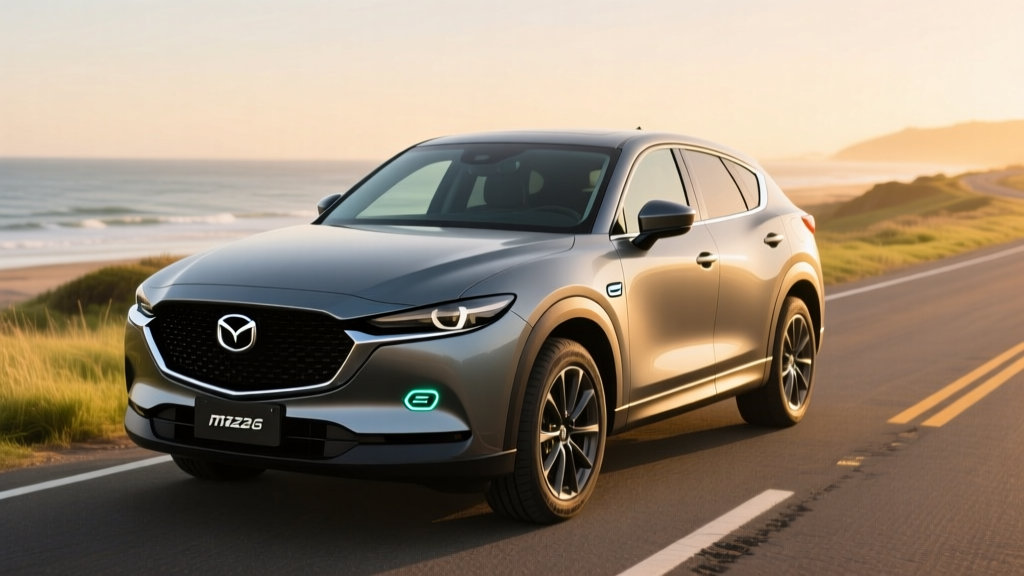
Mazda's CX-50 Hybrid pairs the brand's signature driving dynamics with Toyota's proven hybrid powertrain to deliver meaningful fuel savings over the standard turbocharged model. For buyers researching Mazda CX-50 Hybrid miles per gallon, the numbers tell a compelling story: an EPA-estimated 38 MPG combined, with real-world results that frequently exceed that figure in city driving. It's a conventional hybrid (HEV)—meaning no plug, no range anxiety, and no behavior change required from the driver.
| Spec | 2026 Mazda CX-50 Hybrid |
|---|---|
| EPA MPG (City / Highway / Combined) | 39 / 37 / 38 |
| Powertrain | 2.5L 4-cyl + electric motor (HEV) |
| Combined Horsepower | 219 hp |
| Drivetrain | AWD (electronic on-demand) |
| 0–60 mph | ~7.8 seconds |
| Hybrid Battery | ~1.6 kWh NiMH (self-charging) |
| Starting MSRP | $35,395 (Preferred trim) |
| Federal Tax Credit | Not eligible (§30D requires plug-in) |
| Hybrid Battery Warranty | 10 years / 150,000 miles |
EPA MPG Breakdown: City, Highway, and Combined
The 2026 Mazda CX-50 Hybrid achieves its best efficiency in the driving conditions where conventional hybrids excel: stop-and-go city traffic. The electric motor handles low-speed propulsion, engine restarts, and regenerative braking, which is where the bulk of energy recapture happens.
| Driving Condition | EPA Estimate | Real-World Expectation |
|---|---|---|
| City | 39 MPG | 40–44 MPG (hybrids often beat EPA in city) |
| Highway | 37 MPG | 34–37 MPG (aerodynamic drag reduces hybrid advantage) |
| Combined | 38 MPG | 36–41 MPG (depends on city/highway mix) |
According to fueleconomy.gov, the CX-50 Hybrid's combined 38 MPG represents a roughly 50% improvement over the non-hybrid 2.5L turbo AWD model, which returns approximately 25 MPG combined. Over 15,000 miles of annual driving, that translates to roughly 200 fewer gallons of fuel per year, or approximately $600–$800 in annual savings at $3.25/gallon.
Real-World MPG: What Owners Actually Report
Conventional hybrids like the CX-50 Hybrid routinely exceed their EPA city estimates because the test cycle doesn't fully capture how aggressively regenerative braking and electric-only low-speed driving conserve fuel in real commutes. Owners of the mechanically related Toyota RAV4 Hybrid—sharing the same powertrain architecture—routinely report 41–43 MPG in mixed suburban driving.
Expect the CX-50 Hybrid to deliver:
- Urban commuting (sub-45 mph, frequent stops): 40–44 MPG
- Suburban mixed driving: 37–41 MPG
- Sustained highway (70+ mph): 33–37 MPG
- Cold weather (below 32°F): 33–36 MPG combined (engine runs more to heat the cabin)
The cold-weather penalty is real but modest. Unlike a full EV, where range can drop 20–30% in winter, the CX-50 Hybrid's engine waste heat warms the cabin without a significant efficiency hit. You'll lose roughly 2–4 MPG in sustained sub-freezing conditions, primarily because the engine idles more frequently to maintain cabin temperature and the battery's charge/discharge efficiency decreases slightly.
HEV vs. PHEV vs. EV: Which Powertrain Fits You?
The CX-50 is available only as a conventional hybrid (HEV). Mazda does not currently offer a plug-in hybrid (PHEV) version. Here's how the three electrified options compare for buyers cross-shopping this segment:
| Factor | HEV (CX-50 Hybrid) | PHEV (e.g., RAV4 Prime) | Full EV (e.g., Ioniq 5) |
|---|---|---|---|
| Plug-in Required? | No | Yes (for EV range) | Yes |
| Electric-Only Range | None (motor assists only) | 35–42 miles | 250–310 miles |
| Fuel / Energy Cost per Mile | ~$0.09 | ~$0.04 (EV mode) / ~$0.09 (gas) | ~$0.04 |
| Home Charging Needed | No | Recommended (Level 2) | Essential |
| Federal Tax Credit (§30D) | Not eligible | Up to $7,500 (if eligible) | Up to $7,500 (if eligible) |
| Upfront Price Premium (vs. gas) | ~$1,500–$2,500 | ~$5,000–$8,000 | ~$8,000–$15,000 |
| Best For | No home charging; simple ownership | Short commutes + road trips | Home charging + daily commuting |
Choose the CX-50 Hybrid (HEV) if: You don't have access to home or workplace charging, you want better fuel economy without changing your refueling habits, and you prefer a lower purchase price. The HEV requires zero infrastructure investment—just fill up at any gas station as usual.
Look at a PHEV instead if: You have a garage or driveway where you can install a Level 2 charger, your daily commute is under 40 miles round-trip, and you still want the flexibility for longer road trips without charging-station planning. A PHEV like the Toyota RAV4 Prime can operate as an EV for most daily driving while retaining a gas engine for longer trips.
Go full EV if: You have reliable home charging, your daily driving is under 250 miles, and you want the lowest per-mile energy cost plus minimal maintenance. The trade-off is a higher purchase price and the need to plan road trips around DC fast-charging infrastructure.
Powertrain Deep Dive: Toyota Hybrid Muscle in a Mazda Body
The CX-50 Hybrid uses Toyota's fifth-generation hybrid system—the same architecture found in the RAV4 Hybrid and Highlander Hybrid. Mazda licensed this proven powertrain rather than developing its own, a pragmatic decision that gives buyers one of the most reliable hybrid systems on the market.
Here's what's under the hood:
- Gas engine: 2.5-liter naturally aspirated inline-4 (176 hp, 163 lb-ft)
- Front electric motor: 134 hp, integrated into the transaxle
- Rear electric motor: 54 hp (provides electronic Awd)
- Combined system output: 219 hp
- Hybrid battery: ~1.6 kWh nickel-metal hydride (NiMH), located under the rear seats
- Transmission: eCVT (planetary gearset, not a traditional belt CVT)
The eCVT is worth clarifying: it's not the rubber-band-feeling continuously variable transmission found in some competitors. Toyota's planetary-gear eCVT has no belts or pulleys. It seamlessly blends power from the gas engine and electric motors through a fixed gearset, which contributes to both its durability and its smooth, linear acceleration feel.
The 219 combined horsepower puts the CX-50 Hybrid between the standard 2.5L non-turbo (187 hp) and the 2.5L turbo (256 hp) in Mazda's lineup. The 0–60 mph time of approximately 7.8 seconds is adequate for merging and passing—noticeably quicker than the base engine, though not as punchy as the turbo. The electric motor's instant torque delivery makes the hybrid feel more responsive in city driving than the horsepower number alone suggests.
Pricing, Trims, and Tax Credit Eligibility
The 2026 Mazda CX-50 Hybrid is offered across multiple trims, with pricing starting in the mid-$35,000 range:
| Trim | MSRP | Key Features |
|---|---|---|
| Preferred Hybrid | $35,395 | 18" wheels, power liftgate, heated front seats, 10.25" display |
| Premium Hybrid | $38,595 | Panoramic moonroof, Bose 12-speaker audio, leatherette, wireless CarPlay |
| Premium Plus Hybrid | $41,395 | Leather seats, ventilated front seats, heated steering wheel, 360° camera |
All trims include AWD as standard equipment—there is no FWD-only hybrid variant.
Federal Tax Credit: Not Eligible
The CX-50 Hybrid does not qualify for the IRS §30D Clean Vehicle Credit. Federal law restricts this credit to plug-in electric vehicles (PHEVs and BEVs) with a minimum battery capacity of 7 kWh and the ability to charge from an external source. Conventional hybrids like the CX-50 Hybrid, which recharge their small battery exclusively through regenerative braking and the gas engine, are excluded.
This is a straightforward limitation: no plug, no federal credit. However, the CX-50 Hybrid's lower purchase price (compared to PHEV and EV alternatives) and the absence of any charging infrastructure cost partially offset this. The fuel savings alone—roughly $600–$800/year over the gas model—recoup the hybrid premium within 2–4 years depending on your driving volume.
Some states and local utilities offer rebates for hybrid vehicles, though these are less common than EV incentives. Check your state energy office or utility provider for current programs.
Battery Warranty, Reliability, and Replacement Costs
Hybrid Battery Warranty
Coverage: 10 years / 150,000 miles (whichever comes first), in accordance with California Air Resources Board (CARB) emissions-component requirements that Mazda honors nationwide.
What's covered: Hybrid battery pack, hybrid control module, inverter, and associated high-voltage components.
Capacity threshold: Mazda/Toyota does not publish a specific State of Health (SoH) degradation threshold for warranty replacement, but in practice, the system is designed to maintain full functionality for the warranty period.
How Long Will the Hybrid Battery Last?
This is the single most common concern among first-time hybrid buyers. The data is reassuring. Toyota's hybrid battery systems—the exact architecture in the CX-50 Hybrid—have an exceptional longevity track record. Taxi fleets running Toyota hybrids routinely exceed 300,000 miles on the original battery pack. The NiMH chemistry used here is less energy-dense than the lithium-ion batteries in full EVs, but it is far more tolerant of the shallow charge/discharge cycles that hybrid operation demands.
The CX-50 Hybrid's battery never fully charges or fully discharges during normal operation. The system maintains a state of charge between roughly 40% and 80%, which is the optimal longevity window for NiMH cells. This partial-cycling strategy is why hybrid batteries routinely outlast the vehicles themselves.
What If It Does Need Replacement?
Out-of-warranty hybrid battery replacement for Toyota-based systems typically costs $2,500–$4,000 for a refurbished or aftermarket pack, or $4,000–$6,000 for a new OEM unit from a Mazda dealer. Independent hybrid specialists in most metro areas can perform the swap in 2–3 hours.
For context, this is dramatically less than EV battery replacement ($10,000–$20,000+), and the likelihood of needing it within the vehicle's useful life is low. According to long-term data from Consumer Reports, hybrid battery failure rates within the first 150,000 miles are well below 5%.
Overall Reliability Outlook
The CX-50 Hybrid benefits from two reliability tailwinds: Mazda's strong build quality (consistently top-tier in Consumer Reports brand rankings) and Toyota's hybrid system, which is arguably the most proven electrified powertrain in automotive history. The eCVT has no wear-prone belts, the regenerative braking system extends the life of the friction brake pads (many hybrid owners report 80,000+ miles on original brake pads), and the engine operates under less stress because the electric motor handles peak-load acceleration.
Who Should Buy the CX-50 Hybrid — and Who Shouldn't
Pros
- 38 MPG combined with no plug-in requirement or behavior change
- Proven Toyota hybrid powertrain with 10-year/150k-mile battery warranty
- AWD standard on every hybrid trim
- Real-world city MPG often exceeds EPA estimates
- Lower purchase price than PHEV/EV competitors
- Strong Mazda interior quality and driving feel
Cons
- No federal tax credit eligibility
- No EV-only driving mode for zero-emission operation
- Less powerful than the available 2.5L turbo (256 hp)
- Highway MPG advantage narrows vs. efficient gas models
- PHEV version not offered in Mazda's lineup
The CX-50 Hybrid is the right choice if you:
- Live in an apartment or park on the street with no access to charging
- Want fuel savings without learning new habits or installing equipment
- Drive 10,000–20,000 miles per year and want to reduce fuel cost
- Value AWD for weather but don't need serious off-road capability
- Plan to keep the vehicle 8–12 years (battery warranty covers the ownership period)
Look elsewhere if you:
- Have home charging and want zero-emission daily driving (consider a PHEV or EV)
- Want maximum acceleration (the 2.5L turbo CX-50 or a performance EV better suits you)
- Drive mostly highway miles at 75+ mph (the hybrid advantage shrinks; a diesel or efficient turbo may match it)
- Want the federal tax credit (you must choose a PHEV or BEV to qualify for §30D)
5-Year Cost of Ownership Snapshot
To put the CX-50 Hybrid's value in perspective, here's a simplified 5-year/75,000-mile ownership comparison against the non-hybrid 2.5L turbo CX-50 and a comparable full EV:
| Cost Factor | CX-50 Hybrid (HEV) | CX-50 2.5T (Gas) | Comparable EV (e.g., Ioniq 5) |
|---|---|---|---|
| Purchase Price (base) | $35,395 | $37,550 | $42,600 |
| Federal Tax Credit | $0 | $0 | Up to $7,500* |
| Fuel/Energy (75k mi) | ~$5,900 | ~$9,000 | ~$3,000 |
| Maintenance (5 yr) | ~$2,200 | ~$3,000 | ~$1,500 |
| Estimated Insurance (5 yr) | ~$7,800 | ~$7,500 | ~$8,500 |
| 5-Year Total (approx.) | ~$51,295 | ~$57,050 | ~$48,100 |
*EV tax credit subject to IRS §30D eligibility requirements including buyer income limits, MSRP caps, and battery sourcing rules. Consult a tax professional.
The CX-50 Hybrid costs roughly $5,700 less over five years than the gas-only turbo model, driven almost entirely by fuel savings and slightly lower maintenance (less brake wear, no turbo-related service). A comparable EV with the full tax credit can undercut both, but only if you qualify for §30D and have home charging access.
Frequently Asked Questions
How many MPG does the Mazda CX-50 Hybrid get?
The 2026 Mazda CX-50 Hybrid achieves an EPA-estimated 39 MPG city, 37 MPG highway, and 38 MPG combined. In real-world city driving, owners frequently report 40–44 MPG thanks to regenerative braking and electric-only low-speed operation. Highway driving at sustained speeds above 70 mph typically returns 33–37 MPG.
Does the CX-50 Hybrid need to be plugged in?
No. The CX-50 Hybrid is a conventional hybrid (HEV), not a plug-in hybrid (PHEV). Its small battery recharges entirely through regenerative braking and the gas engine. You refuel it at a standard gas station, exactly like a conventional vehicle.
Is the CX-50 available as a plug-in hybrid (PHEV)?
Not as of the 2026 model year. Mazda offers the CX-50 exclusively as a conventional hybrid (HEV) alongside the standard gas models. If plug-in hybrid capability is a priority, the mechanically similar Toyota RAV4 Prime (PHEV) offers 42 miles of electric-only range and eligibility for the federal tax credit, though at a significantly higher purchase price.
Is the Mazda CX-50 Hybrid reliable?
Yes. The CX-50 Hybrid uses Toyota's fifth-generation hybrid system, which has been in continuous production since 1997 and is one of the most reliable powertrains in the automotive industry. The eCVT transmission has no wear-prone belts, regenerative braking extends brake pad life, and the hybrid battery carries a 10-year/150,000-mile warranty. Out-of-warranty battery replacement, if ever needed, costs $2,500–$6,000 depending on OEM vs. aftermarket sourcing.
Does the CX-50 Hybrid qualify for any tax credit?
The CX-50 Hybrid does not qualify for the federal IRS §30D Clean Vehicle Credit, which is limited to plug-in vehicles (PHEVs and BEVs). Some state or utility-level incentives may be available for hybrid vehicles—check your local programs. The fuel savings alone (~$600–$800/year vs. the gas model) provide a meaningful ownership cost advantage without any tax incentive.
How does the CX-50 Hybrid compare to the RAV4 Hybrid?
The CX-50 Hybrid and RAV4 Hybrid share the same Toyota hybrid powertrain and deliver nearly identical fuel economy (38 MPG combined vs. 39–41 MPG for the RAV4 Hybrid, depending on trim). The CX-50 offers a more premium interior, sportier styling, and Mazda's driving dynamics, while the RAV4 Hybrid is available in a PHEV variant (RAV4 Prime) and has a longer track record in the market. Pricing is comparable, though trim-for-trim the Mazda carries a slight premium.
What is the CX-50 Hybrid's towing capacity?
The CX-50 Hybrid is rated to tow up to 3,500 pounds when properly equipped—matching the non-turbo gas models. This is sufficient for a small utility trailer, a pair of personal watercraft, or a light camping trailer, but falls short of the 2.5L turbo model's higher rating. If heavy towing is a priority, the turbocharged gas model is the better choice.