Quick Verdict: The Mazda CX-5 Hybrid at a Glance
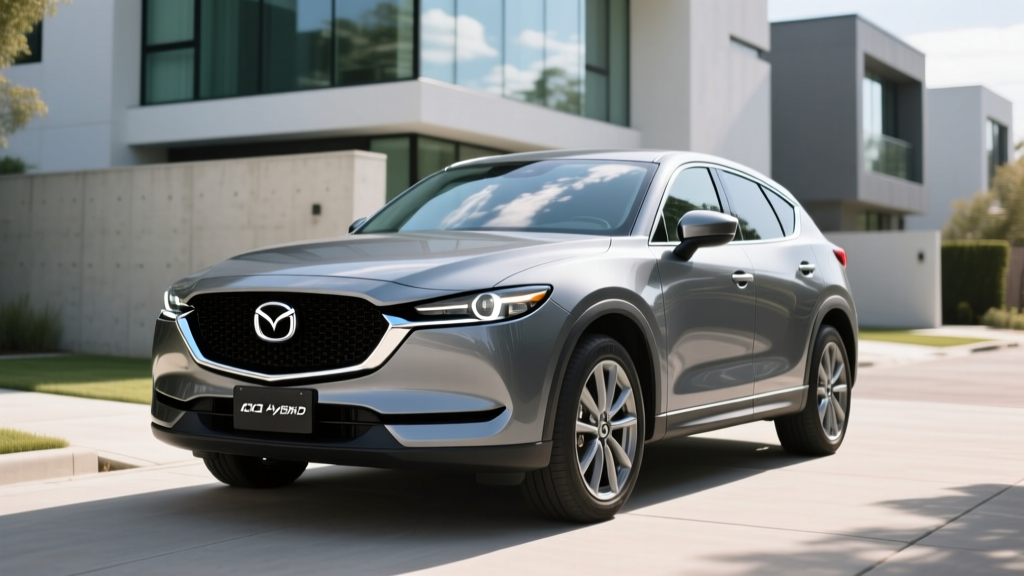
The 2026 Mazda CX-5 Hybrid arrives as a conventional hybrid (HEV) — meaning it does not plug in. Mazda pairs its proven 2.5-liter four-cylinder engine with a self-charging electric motor-generator system to deliver meaningful fuel economy gains over the standard gas CX-5 without asking buyers to change their fueling habits. With an EPA-estimated 39 MPG combined, this compact crossover targets drivers who want hybrid efficiency but lack reliable access to home or workplace charging infrastructure.
Mazda has been cautious in its electrification strategy, and the CX-5 Hybrid reflects that philosophy: incremental improvement over disruption. It's not a plug-in hybrid, and it won't drive on electric power alone for meaningful distances. Instead, it uses regenerative braking and engine load management to shave fuel consumption across the board. For the right buyer, that's exactly enough.
HEV vs PHEV vs EV: Where the CX-5 Hybrid Fits
Before evaluating the CX-5 Hybrid's numbers, it's worth clarifying what it is — and what it isn't. The CX-5 Hybrid is a conventional hybrid (HEV), sometimes called a "self-charging hybrid." It has a small battery (roughly 1–2 kWh of usable capacity) that recharges through regenerative braking and engine power. You never plug it in.
Hybrid Powertrain Types Explained
| Feature | HEV (CX-5 Hybrid) | PHEV (e.g., Toyota RAV4 Prime) | BEV (e.g., Tesla Model Y) |
|---|---|---|---|
| Plugs in? | No | Yes | Yes |
| Electric-only range | Less than 1 mile at low speed | 25–42 miles typical | 250–330+ miles |
| Battery size | ~1–2 kWh | 13–18 kWh usable | 60–100 kWh usable |
| Home charging needed? | No | Yes (Level 2 recommended) | Yes (Level 2 essential) |
| Federal tax credit (§30D) | Not eligible | Up to $7,500 (if eligible) | Up to $7,500 (if eligible) |
| Best for | No home charging access | Home charging + short commutes | Home charging + longer commutes |
If you have a garage or driveway where you can install a Level 2 charger, a PHEV like the Toyota RAV4 Prime or a full EV may offer greater fuel savings. But if you live in an apartment, park on the street, or simply want a no-fuss ownership experience, the CX-5 Hybrid's self-charging design is a genuine advantage.
Fuel Economy: EPA Ratings and Real-World MPG
The headline number for the 2026 Mazda CX-5 Hybrid is its EPA-estimated fuel economy. Here's the full breakdown from fueleconomy.gov:
| Driving Condition | EPA Estimated MPG |
|---|---|
| City | 40 MPG |
| Highway | 37 MPG |
| Combined | 39 MPG |
For context, the standard 2026 gas-powered CX-5 with the base 2.5L engine and AWD returns approximately 26 MPG combined — meaning the hybrid delivers roughly a 50% improvement in fuel economy. Over 15,000 miles per year at $3.50/gallon, that translates to approximately $800–$1,000 in annual fuel savings.
Real-World MPG Expectations
Hybrids often exceed their EPA city ratings in stop-and-go driving because regenerative braking recaptures energy that gas cars waste as heat. Expect 40–43 MPG in urban commuting. Highway efficiency is slightly lower than the EPA sticker in real-world use — plan on 34–37 MPG at 70+ mph, especially with roof cargo or in cold weather. Winter fuel economy typically drops 5–10% as the engine runs more frequently for cabin heating and battery conditioning.
Powertrain Specs and Performance
The CX-5 Hybrid's powertrain pairs Mazda's Skyactiv-G 2.5-liter inline-four with an electric motor-generator integrated into the transmission housing. Combined output and key specs:
| Specification | Detail |
|---|---|
| Engine | 2.5L Skyactiv-G inline-4 |
| Engine power | 187 hp / 186 lb-ft torque |
| Electric motor contribution | ~20–30 hp assist |
| Combined system output | ~200 hp |
| Transmission | 6-speed automatic (no CVT) |
| Drivetrain | AWD standard |
| 0–60 mph | ~7.8 seconds (est.) |
| Towing capacity | 2,000 lbs |
| Battery type | Lithium-ion, ~1.5 kWh |
Notably, Mazda retains its conventional 6-speed automatic rather than switching to a CVT like most hybrid competitors. This means smoother, more natural-feeling acceleration with distinct gear shifts — a deliberate choice that preserves the driving engagement Mazda is known for, even if it sacrifices a marginal amount of efficiency compared to a CVT-based system.
Pricing, Trims, and Tax Credit Eligibility
The 2026 CX-5 Hybrid is positioned as a premium option within the CX-5 lineup. Estimated pricing by trim (MSRP, before destination):
- Preferred: ~$33,500
- Premium: ~$36,200
- Premium Plus: ~$39,000
Destination charges add approximately $1,375.
Federal Tax Credit Status
Because the CX-5 Hybrid is a conventional HEV — not a plug-in — it does not qualify for the IRS §30D Clean Vehicle Credit, which requires at least 4 kWh of battery capacity and plug-in charging capability. There is no federal tax credit available for conventional hybrids in 2026.
What about state incentives? A handful of states offer modest rebates or HOV lane access for hybrids, but these programs vary widely and change frequently. Check your state's energy office or department of environmental quality for current offerings. Some employers and utilities also offer hybrid purchase incentives.
The hybrid premium over the equivalent gas CX-5 trim is approximately $2,000–$2,500. At $800–$1,000 in annual fuel savings, the payback period is roughly 2.5 to 3 years — competitive with most hybrid upcharges in this segment.
Battery Warranty, Reliability, and Replacement Cost
Battery longevity is consistently the top concern for first-time hybrid buyers. Here's what you need to know about the CX-5 Hybrid's battery system:
Hybrid Battery Warranty
Warranty coverage: 8 years / 100,000 miles (10 years / 150,000 miles in California Air Resources Board states including CA, NY, MA, NJ, CT, RI, VT, ME, OR, WA, CO, MD, and others adopting CARB standards).
What's covered: Defects and capacity loss below a defined threshold (typically 60–70% of original capacity).
Expected lifespan: Modern lithium-ion hybrid batteries routinely last 150,000–200,000+ miles before significant degradation. The small battery in a conventional HEV undergoes shallow charge/discharge cycles, which dramatically extends cell life compared to a full EV battery.
Replacement Cost If Out of Warranty
If the hybrid battery fails outside warranty coverage, replacement costs for a conventional hybrid battery in this class typically range from $2,000 to $3,500 including parts and labor. This is far less than a full EV battery replacement ($8,000–$18,000+) because the HEV battery pack is small. Third-party refurbishment services can reduce this cost further to $1,000–$1,800.
Mazda's hybrid system benefits from shared engineering with Toyota, whose hybrid powertrains have demonstrated exceptional long-term reliability across millions of vehicles. The CX-5 Hybrid's powertrain is mechanically straightforward — no high-voltage DC fast charging hardware, no complex thermal management loops for a large battery — which reduces failure points compared to a PHEV or BEV.
How the CX-5 Hybrid Compares to Rivals
The compact hybrid SUV segment is competitive. Here's how the CX-5 Hybrid stacks up against its most direct competitors on key metrics:
| Model | Combined MPG | HP | Starting MSRP (AWD) | Type |
|---|---|---|---|---|
| 2026 Mazda CX-5 Hybrid | 39 | ~200 | ~$33,500 | HEV |
| 2026 Toyota RAV4 Hybrid | 39 | 219 | ~$33,500 | HEV |
| 2026 Honda CR-V Hybrid | 37 | 204 | ~$35,500 | HEV |
| 2026 Toyota RAV4 Prime (PHEV) | 38 / 94 MPGe | 302 | ~$44,500 | PHEV |
| 2026 Hyundai Tucson Hybrid | 38 | 226 | ~$34,000 | HEV |
The CX-5 Hybrid matches the RAV4 Hybrid on EPA fuel economy but differentiates on driving dynamics — Mazda's tuning favors steering feel and body control over the softer, comfort-first calibration of its rivals. Interior material quality also leans premium, with available Nappa leather and real wood trim on upper trims that outclass competitors' cabins.
Where the CX-5 Hybrid falls short: rear-seat legroom is tighter than the RAV4 or CR-V, and cargo volume (approximately 30 cu ft behind the second row) trails class leaders by 3–5 cubic feet. If maximum interior space is a priority, the RAV4 Hybrid and CR-V Hybrid remain the segment benchmarks.
Pros
- 39 MPG combined without plugging in
- Premium interior quality for the class
- Natural-feeling 6-speed automatic (no CVT drone)
- AWD standard across all trims
- Proven Toyota-derived hybrid system reliability
- No charging infrastructure required
Cons
- Rear seat and cargo space below class leaders
- No federal tax credit eligibility
- Hybrid premium adds $2,000–$2,500 to MSRP
- No electric-only driving capability
- Towing limited to 2,000 lbs
Decision Framework: Who Should Buy the CX-5 Hybrid?
Choose the CX-5 Hybrid if:
- You don't have access to home or workplace charging
- You drive 12,000–18,000 miles per year and want fuel savings without lifestyle changes
- You value driving dynamics and interior quality over maximum cargo space
- You want AWD capability with better fuel economy than a gas-only compact SUV
- You prefer a proven, simple hybrid system over a complex PHEV or EV
Consider a PHEV or EV instead if:
- You have a garage or dedicated parking spot where you can install a Level 2 charger
- Your daily commute is under 30 miles round-trip (a PHEV could cover it entirely on electricity)
- You want to qualify for the up-to-$7,500 federal tax credit under §30D
- You want to reduce tailpipe emissions as much as possible
- You need more rear-seat or cargo space (RAV4 Hybrid or CR-V Hybrid)
Frequently Asked Questions
How many MPG does the Mazda CX-5 Hybrid get?
The 2026 Mazda CX-5 Hybrid is EPA-estimated at 40 MPG city, 37 MPG highway, and 39 MPG combined. Real-world city driving often yields 40–43 MPG thanks to regenerative braking, while sustained highway driving at higher speeds typically returns 34–37 MPG.
Does the Mazda CX-5 Hybrid need to be plugged in?
No. The CX-5 Hybrid is a conventional HEV that recharges its small battery through regenerative braking and engine power. You fuel it like any other gas car — no plug, no charging cable, no range anxiety.
Does the Mazda CX-5 Hybrid qualify for a federal tax credit?
No. The IRS §30D Clean Vehicle Credit requires plug-in capability and at least 4 kWh of battery capacity. The CX-5 Hybrid's conventional hybrid system does not meet these requirements. No federal tax credit is available for HEVs in 2026. Some states may offer separate hybrid incentives — check your state's energy office.
Is the Mazda CX-5 Hybrid reliable?
Mazda's hybrid system shares engineering DNA with Toyota's hybrid architecture, which has demonstrated excellent long-term reliability across millions of vehicles. The hybrid battery carries an 8-year/100,000-mile warranty (10 years/150,000 miles in CARB states), and modern lithium-ion hybrid batteries typically last 150,000–200,000+ miles before significant degradation.
How much does it cost to replace the CX-5 Hybrid battery?
Out-of-warranty hybrid battery replacement for a conventional HEV in this class typically costs $2,000–$3,500 including parts and labor. Refurbished battery options can reduce this to $1,000–$1,800. The small battery pack is far less expensive to replace than a full EV battery.
Hybrid vs PHEV vs EV — which should I choose?
If you lack reliable charging access, the CX-5 Hybrid (HEV) is the right choice — no plug required. If you can charge at home and have a short commute, a PHEV like the RAV4 Prime offers 42 miles of electric-only range plus the $7,500 tax credit (if eligible). If you have home charging and want maximum fuel savings, a full EV eliminates gas entirely. Your charging access is the single most important factor in this decision.