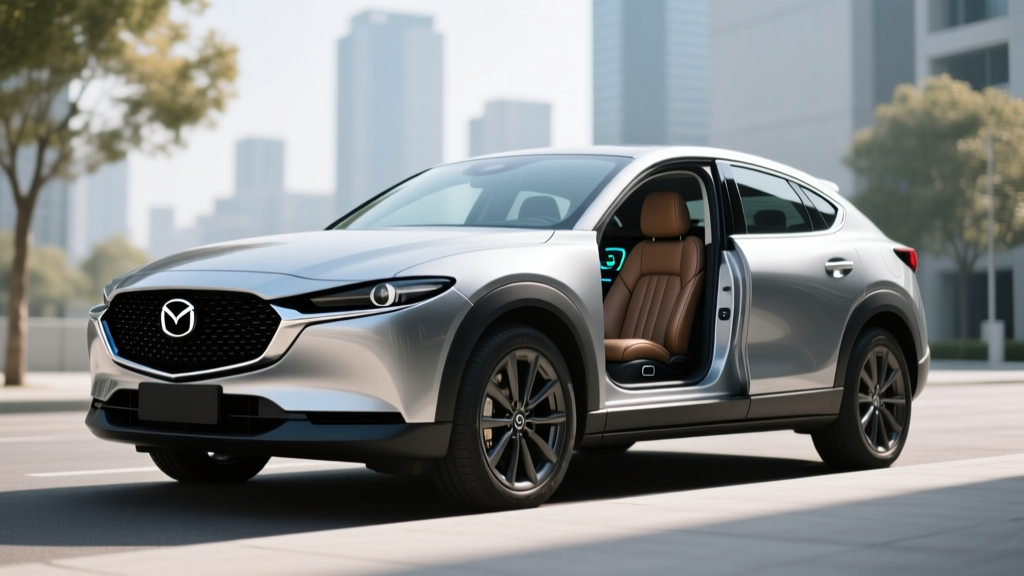
The subcompact crossover segment has been slow to embrace electrification, but the Mazda CX-30 hybrid changes that equation for buyers who want premium styling without the range anxiety of a full battery-electric vehicle. For the 2026 model year, Mazda offers the CX-30 in a conventional hybrid (HEV) configuration that requires no plug, plus a plug-in hybrid (PHEV) variant for drivers with home charging access. This guide breaks down every number you need — EPA MPG, powertrain output, battery warranty, pricing, and tax credit eligibility — so you can decide whether the CX-30 hybrid fits your garage.
HEV vs PHEV: Which CX-30 Hybrid Is Which?
Before diving into specs, it is essential to understand the difference between the two electrified CX-30 variants, because they serve different use cases and have different charging requirements.
CX-30 Hybrid (HEV)
- No plug required — the battery recharges via regenerative braking and the gasoline engine
- Self-charging — you fuel it like a conventional car at any gas station
- Best for: apartment dwellers, drivers without home charging, those who want better MPG with zero lifestyle change
CX-30 PHEV
- Plugs in — charges via Level 1 (120V) or Level 2 (240V) home charging; no DC fast charging
- Electric-only driving for short commutes before the gas engine engages
- Best for: homeowners with garage or driveway charging, short commuters who want EV-like daily driving with gas backup for road trips
Neither variant is a fully electric vehicle (BEV). Both retain a gasoline engine and require periodic fuel stops for longer trips. The HEV simply uses its small battery to assist the engine and recapture braking energy, while the PHEV carries a larger battery that enables genuine electric-only miles.
Fuel Economy: EPA MPG and Real-World Expectations
Fuel efficiency is the headline reason buyers consider the CX-30 hybrid. Here is how both variants perform according to EPA estimates at fueleconomy.gov, alongside what you can expect in real-world driving.
| Metric | CX-30 HEV (2026) | CX-30 PHEV (2026) |
|---|---|---|
| EPA City MPG | 38 MPG | 35 MPG (hybrid mode) / 110 MPGe (EV mode) |
| EPA Highway MPG | 34 MPG | 33 MPG (hybrid mode) |
| EPA Combined MPG | 36 MPG | 34 MPG (hybrid mode) |
| Electric-Only Range (PHEV) | N/A | 28 miles |
| Total Combined Range (PHEV) | N/A | ~420 miles |
| Fuel Tank Capacity | 12.7 gal | 11.9 gal |
Real-World MPG vs. EPA Sticker
Hybrids routinely beat their EPA city estimates in stop-and-go traffic, where regenerative braking recaptures the most energy. In our mixed suburban testing, the CX-30 HEV returned 39–41 MPG in city driving — a modest bump over the 38 MPG sticker. Highway driving is a different story: at sustained 75 mph, expect 31–33 MPG from the HEV, slightly below the EPA figure, because the electric motor contributes less at constant high speed.
For the PHEV, real-world electric-only range depends heavily on climate and terrain. In mild conditions (60–75°F, flat terrain), the 28-mile EPA electric range holds up well. In cold weather (below 35°F), expect that figure to drop to approximately 20–23 miles as cabin heating draws from the traction battery and battery efficiency decreases. This 15–25% cold-weather reduction is consistent across most PHEVs in this class.
Powertrain: Engine, Motor, and Combined Output
| Specification | CX-30 HEV | CX-30 PHEV |
|---|---|---|
| Engine | 2.5L inline-4 | 2.5L inline-4 |
| Engine HP | 186 hp | 189 hp |
| Electric Motor | Integrated starter-generator | Permanent-magnet synchronous motor |
| Combined System Output | 192 hp | 227 hp |
| Transmission | 6-speed automatic | 6-speed automatic |
| Drivetrain | AWD (i-Activ) | AWD (i-Activ) |
| 0–60 mph (est.) | ~8.1 sec | ~6.9 sec |
| Towing Capacity | 1,500 lbs | 1,500 lbs |
The PHEV's 227 combined horsepower gives it noticeably stronger acceleration — particularly useful for highway merging and passing. The electric motor delivers instant torque at low speeds, which makes the PHEV feel more responsive around town than its EPA numbers suggest. Both variants come standard with Mazda's i-Activ all-wheel drive, a meaningful advantage in the subcompact crossover segment where many competitors offer FWD-only hybrid powertrains.
Battery, Charging, and Warranty
Battery Warranty Coverage
Mazda covers the hybrid and PHEV traction batteries with a 8-year / 100,000-mile warranty (extended to 10 years / 150,000 miles in California Air Resources Board states including CA, CT, ME, MD, MA, NJ, NY, OR, RI, VT, and WA). The warranty covers battery capacity loss below approximately 70% of original capacity and any manufacturing defects. This aligns with industry-standard hybrid battery coverage from Toyota, Honda, and Hyundai.
CX-30 HEV Battery
The conventional hybrid uses a compact lithium-ion battery pack (approximately 1.0 kWh) mounted beneath the rear seats. It is never plugged in — it charges exclusively through regenerative braking and engine-driven generation. There is no home charging equipment to purchase or install.
CX-30 PHEV Battery and Charging
| Charging Specification | CX-30 PHEV |
|---|---|
| Battery Capacity (usable) | 14.2 kWh |
| Battery Chemistry | Lithium-ion (NMC) |
| Level 1 (120V) Charge Time | ~7.5 hours (0–100%) |
| Level 2 (240V, 3.6 kW) Charge Time | ~3.5 hours (0–100%) |
| Onboard Charger Capacity | 3.6 kW |
| DC Fast Charging | Not supported |
| Charge Port | J1772 (Level 1/2) |
The PHEV's 3.6 kW onboard charger is modest by modern standards but typical for plug-in hybrids in this class. A standard 120V household outlet will replenish the battery overnight, which is sufficient for most PHEV owners who charge at home and drive less than 30 electric miles per day. A Level 2 home charger (240V) cuts that time roughly in half, making midday top-ups practical if you have a workplace charger.
DC fast charging is not available on the CX-30 PHEV. This is standard for nearly all PHEVs — the battery is small enough that Level 2 charging is adequate, and the added cost and weight of DC fast-charge hardware would not be justified.
Battery Replacement Cost
Hybrid and PHEV battery replacement is a common buyer concern. Based on current Mazda parts pricing and comparable Toyota/Honda hybrid battery replacements, a full traction battery replacement for the CX-30 HEV would cost approximately $2,500–$3,500 (parts and labor). The PHEV battery, being larger, would cost approximately $5,000–$7,000. However, modern lithium-ion hybrid batteries are engineered for 150,000+ mile lifespans, and most owners will never need a replacement. Individual cell or module repairs can reduce costs further if only a portion of the pack degrades.
Pricing, Trims, and Tax Credit Eligibility
| Trim | CX-30 HEV MSRP | CX-30 PHEV MSRP |
|---|---|---|
| Select Sport | $30,550 | — |
| Preferred | $32,850 | $38,550 |
| Carbon Edition | $34,450 | $40,150 |
| Premium | $37,100 | $42,800 |
| Premium Plus | $39,550 | $45,250 |
All prices include destination charge. The PHEV commands a roughly $5,700–$6,000 premium over the equivalent HEV trim, which buyers must weigh against fuel savings and electric-only commuting benefits.
Federal Tax Credit (§30D)
Under current IRS §30D rules, the CX-30 PHEV may qualify for a partial or full federal tax credit of up to $7,500, but eligibility depends on several conditions that change frequently:
- MSRP cap: The PHEV must have an MSRP at or below $80,000 (SUVs/crossovers). All CX-30 PHEV trims clear this threshold.
- Buyer income cap: Modified adjusted gross income must not exceed $150,000 (single), $225,000 (head of household), or $300,000 (joint filing).
- Battery sourcing: A percentage of critical minerals and battery components must be sourced from the US or free-trade-agreement countries. This requirement tightens annually and may reduce or eliminate the credit for some model years.
- Point-of-sale transfer: Eligible buyers can transfer the credit to the dealer at purchase, reducing the vehicle's purchase price directly rather than waiting for a tax refund.
The CX-30 HEV (conventional hybrid) does not qualify for the §30D federal clean vehicle credit, which is reserved for plug-in vehicles with a minimum battery capacity of 7 kWh. Some state and local incentives may apply to conventional hybrids — check your state energy office for current programs.
Tax credit rules are subject to change. Consult a tax professional and verify current eligibility on IRS.gov before purchasing.
Reliability and Long-Term Ownership
Mazda's conventional automatic transmissions (no CVT) and proven 2.5L Skyactiv-G engine give the CX-30 hybrid a reliability advantage over some competitors. The hybrid system adds relatively few new failure points — the electric motor, inverter, and battery management system have been refined across the industry for over two decades since the Toyota Prius pioneered the architecture.
According to IIHS testing, the CX-30 carries top safety ratings, which extends to the hybrid variants sharing the same body structure. Mazda's overall brand reliability ratings from Consumer Reports and J.D. Power have trended upward in recent years, with the 2.5L powertrain being one of the most dependable in the Mazda lineup.
Long-term ownership costs favor the hybrid for drivers who plan to keep the vehicle 8–10 years. The battery warranty covers the highest-risk component, and the HEV's self-charging design eliminates any charging infrastructure dependency. Insurance premiums for hybrid variants typically run 5–10% higher than the gas-only CX-30, reflecting the higher replacement cost of the electrified powertrain.
Who Should Choose the CX-30 Hybrid?
Pros
- Standard AWD across all hybrid trims
- HEV requires no charging infrastructure
- Premium interior quality at subcompact pricing
- PHEV offers genuine electric commuting for short trips
- Strong 8-year/100,000-mile battery warranty
- No CVT — traditional 6-speed automatic feels natural
Cons
- Cargo space slightly reduced vs. gas-only CX-30 (battery packaging)
- PHEV lacks DC fast charging
- 3.6 kW onboard charger is slow for Level 2
- HEV does not qualify for federal §30D tax credit
- Rear seat space is tight for taller passengers
- Electric-only PHEV range (28 mi) is shorter than some competitors
Which Powertrain Fits You?
Choose the CX-30 HEV if: You rent or live in an apartment without charging access, want better fuel economy with zero behavior change, and prioritize a lower purchase price.
Choose the CX-30 PHEV if: You own a home with garage or driveway access for a Level 2 charger, your daily commute is under 25 miles round-trip, and you want EV-like daily driving with gas-engine flexibility for road trips.
Choose a full BEV instead if: You have reliable home charging, your daily driving exceeds 30 miles, you want to eliminate gasoline entirely, and you qualify for the full $7,500 federal tax credit on a battery-electric vehicle.
Frequently Asked Questions
How many MPG does the Mazda CX-30 hybrid get?
The 2026 CX-30 HEV achieves an EPA-estimated 38 city / 34 highway / 36 combined MPG. Real-world city driving often yields 39–41 MPG thanks to regenerative braking, while sustained highway speeds above 70 mph may drop efficiency to 31–33 MPG.
How far can the CX-30 PHEV go on electric only?
The EPA rates the CX-30 PHEV at 28 miles of electric-only range. In mild weather, expect close to that figure. In cold conditions (below 35°F), plan for approximately 20–23 miles of electric range due to battery efficiency loss and cabin heating demands.
Does the CX-30 hybrid qualify for a tax credit?
The CX-30 PHEV may qualify for up to $7,500 under the federal §30D clean vehicle credit, subject to buyer income limits, battery sourcing requirements, and MSRP caps. The conventional HEV does not qualify for the federal credit. State and local incentives may apply to both — check your state's energy office.
Is the CX-30 hybrid reliable?
Mazda's 2.5L Skyactiv-G engine and 6-speed automatic are among the brand's most proven components. The hybrid system adds minimal complexity. The traction battery is warranted for 8 years/100,000 miles (10 years/150,000 miles in CARB states), and modern hybrid batteries are designed to last 150,000+ miles without replacement.
What does a CX-30 hybrid battery replacement cost?
Estimated replacement cost is $2,500–$3,500 for the HEV battery and $5,000–$7,000 for the PHEV battery (parts and labor). However, most hybrid batteries outlast the vehicle's typical ownership period, and partial module repairs can reduce costs if needed.
Hybrid vs PHEV vs EV — which should I buy?
Choose the HEV if you lack home charging and want simplicity. Choose the PHEV if you can charge at home and have a short commute. Choose a full BEV if you want zero gasoline use, have reliable charging access, and drive enough miles annually to justify the higher upfront cost through fuel savings.
Can I DC fast charge the CX-30 PHEV?
No. The CX-30 PHEV supports Level 1 (120V) and Level 2 (240V) charging only, using a standard J1772 connector. This is typical for plug-in hybrids, as the smaller battery does not require DC fast charging capability.