Quick Verdict: A Quiet Luxury Hybrid Bargain on the Used Market
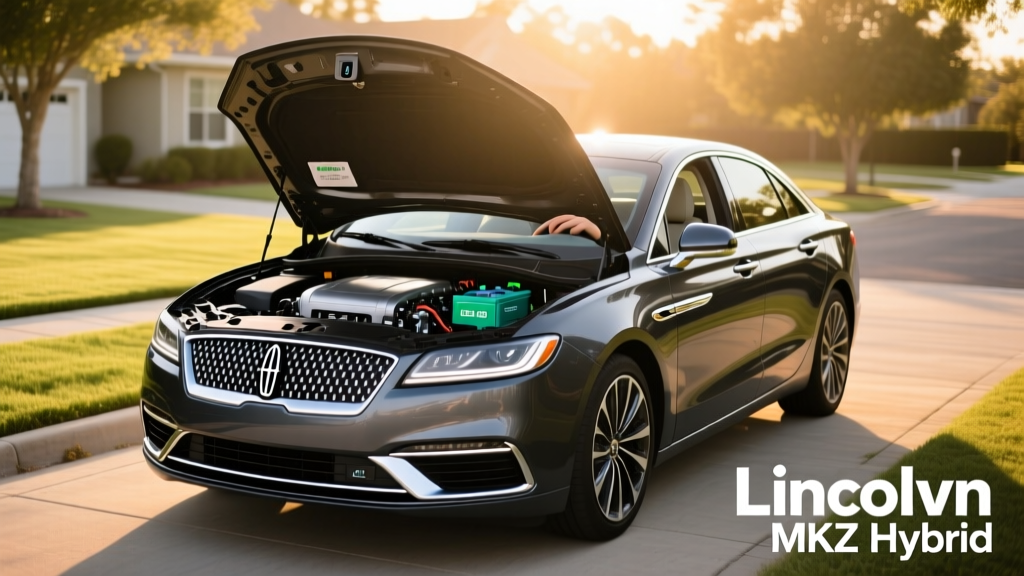
The Lincoln MKZ Hybrid was discontinued after the 2020 model year, but it remains one of the most compelling used luxury hybrids available. Built on Ford's CD4 platform alongside the Fusion Hybrid, the MKZ Hybrid pairs a 2.0-liter Atkinson-cycle four-cylinder with an electric motor for a combined 188 horsepower and an EPA-estimated 42 MPG combined. Unlike plug-in hybrids, it requires no charging infrastructure — you simply fuel it like any conventional sedan and let the hybrid system optimize efficiency.
For 2026 buyers shopping the used market, the MKZ Hybrid offers genuine luxury appointments, proven Toyota-rivaling hybrid reliability, and fuel economy that undercuts most modern competitors. This guide covers everything you need to evaluate one: exact MPG figures, real-world fuel economy expectations, battery longevity, replacement costs, and whether it still makes sense versus a newer PHEV or full EV.
HEV vs PHEV: What the MKZ Hybrid Actually Is
A common source of confusion among hybrid shoppers is the difference between a conventional hybrid (HEV) and a plug-in hybrid (PHEV). The Lincoln MKZ was offered in both configurations during its production run, and they operate very differently.
| Feature | MKZ Hybrid (HEV) | MKZ Energi (PHEV) |
|---|---|---|
| Plug-in charging required? | No | Yes (Level 1/Level 2) |
| Battery capacity | 1.4 kWh (usable ~1.0 kWh) | 7.6 kWh (usable ~5.8 kWh) |
| Electric-only range | None (EV assist only) | EPA 21 miles |
| EPA combined MPG / MPGe | 42 MPG | 38 MPG (gas) / 88 MPGe |
| Total range | ~610 miles | ~480 miles combined |
| Federal tax credit (when new) | None | Up to $4,609 (expired) |
| DC fast charging | No | No (AC only) |
| Trunk space | 15.4 cu ft | 11.1 cu ft (battery intrusion) |
Key takeaway: The MKZ Hybrid (HEV) is a self-charging conventional hybrid. It recovers energy through regenerative braking and the engine — you never plug it in. The MKZ Energi (PHEV) can be plugged in for about 21 miles of electric-only driving before the gasoline engine takes over. If you see "MKZ Hybrid" in a listing, verify whether it's the HEV or the Energi PHEV, as the trunk space, efficiency profile, and ownership experience differ substantially.
Fuel Economy: EPA Ratings and Real-World MPG
The MKZ Hybrid's efficiency is its headline feature. Here are the official EPA estimates from fueleconomy.gov for the final 2020 model year:
| Driving Cycle | EPA MPG |
|---|---|
| City | 42 MPG |
| Highway | 39 MPG |
| Combined | 42 MPG |
These numbers held steady across the 2017–2020 model years after Ford updated the hybrid powertrain calibration. Earlier 2013–2016 models were rated slightly lower at 38–40 MPG combined.
Real-World MPG: What Owners Actually Report
Conventional hybrids like the MKZ often exceed their EPA city rating in stop-and-go traffic because regenerative braking captures more energy at low speeds. On fueleconomy.gov's MyMPG tracker, MKZ Hybrid owners report a real-world average of 39–44 MPG combined, with city-heavy commuters occasionally hitting 45+ MPG.
However, real-world efficiency drops under these conditions:
- Highway cruising above 75 mph: Expect 34–37 MPG. Aerodynamic drag dominates and the electric motor provides minimal assist at sustained high speed.
- Cold weather (below 30°F): Engine runs more frequently for cabin heat and battery warmup. Expect 33–37 MPG in winter city driving.
- Mountainous terrain: Climbing grades reduces efficiency significantly, though regen on descents partially recovers energy.
For comparison, a similarly sized gasoline-only luxury sedan from the same era (e.g., Lexus ES 350) achieves roughly 25–26 MPG combined. The MKZ Hybrid cuts fuel consumption by about 38%.
Powertrain Specs: Engine, Motor, and Performance
| Specification | Lincoln MKZ Hybrid (2017–2020) |
|---|---|
| Engine | 2.0L Atkinson-cycle inline-4 |
| Engine output | 141 hp @ 6,000 rpm / 129 lb-ft torque |
| Electric motor output | 120 hp / 166 lb-ft torque |
| Combined system horsepower | 188 hp |
| Transmission | eCVT (planetary gearset, not a belt CVT) |
| 0–60 mph | ~8.3 seconds |
| Drivetrain | Front-wheel drive |
| Fuel tank | 14.0 gallons |
| Total driving range | ~588–610 miles |
| Cargo volume | 15.4 cu ft (trunk) |
The eCVT in the MKZ Hybrid is not a traditional continuously variable transmission with a steel belt and pulleys. It uses a planetary gearset to blend power from the engine and two motor-generators. This design, shared with the Ford Fusion Hybrid, has proven extremely durable — there are no belts to wear, no clutch packs to burn out, and no fixed gear ratios to shift. Failures are rare.
Performance is adequate rather than exciting. The 188 combined horsepower moves the 3,700-pound sedan competently in city traffic and highway merging, but the 8.3-second 0–60 time won't win any stoplight contests. The electric motor's instant torque (166 lb-ft available from zero RPM) gives the MKZ Hybrid a surprisingly responsive feel off the line, even if top-end acceleration is modest.
Battery Longevity, Warranty, and Replacement Cost
Hybrid battery longevity is the number one concern for used hybrid buyers — and it's the area where the MKZ Hybrid has the strongest track record.
Battery Warranty (When New)
- Standard coverage: 8 years / 100,000 miles (whichever comes first)
- CARB states: 10 years / 150,000 miles in states that adopted California's stricter hybrid warranty requirements (CA, CT, ME, MD, MA, NJ, NY, OR, RI, VT, WA, and others)
- Capacity threshold: Ford warranted the battery against failure or capacity loss below a functional threshold (typically ~60% of original capacity)
Real-World Battery Lifespan
The MKZ Hybrid uses a 1.4 kWh lithium-ion battery pack (2017–2020 models; earlier 2013–2016 models used a 1.4 kWh NiMH pack). Because the hybrid system never fully depletes or fully charges the battery — it operates in a narrow state-of-charge window between roughly 40% and 80% — stress on the cells is minimal.
Ford's hybrid battery data, combined with owner reports across Ford Fusion Hybrid and MKZ Hybrid forums, shows that most original batteries last well beyond 150,000 miles with minimal degradation. Taxis and fleet vehicles using the same powertrain have exceeded 300,000 miles on original batteries. Complete battery failure before 100,000 miles is uncommon.
Battery Replacement Cost
If replacement is eventually needed:
- New OEM battery (Ford/Lincoln dealer): $3,000–$4,500 installed
- Refurbished/remanufactured battery: $1,500–$2,500 installed
- Individual cell/module replacement: $500–$1,200 (only the failed module is replaced, not the entire pack — an option at specialized hybrid repair shops)
For context, the MKZ Hybrid's small 1.4 kWh battery is far less expensive to replace than a full EV's 60–100 kWh pack. This is one of the ownership-cost advantages of conventional hybrids over battery-electric vehicles.
Used Market Pricing and Tax Credit Eligibility
Because the MKZ Hybrid was discontinued after 2020, all examples are now purchased on the used market. Here's what 2026 pricing looks like:
- 2017–2018 models (60,000–90,000 miles): $14,000–$19,000
- 2019–2020 models (30,000–60,000 miles): $18,000–$25,000
- Low-mileage 2020 examples (under 30,000 miles): $23,000–$28,000
Does It Qualify for a Federal Tax Credit?
No — at least not the new-vehicle §30D credit. The IRS clean vehicle credit applies only to new vehicles meeting current battery-sourcing, MSRP, and buyer-income requirements. The MKZ Hybrid never qualified for the full $7,500 credit even when new (conventional HEVs are ineligible; only the Energi PHEV version qualified for up to $4,609, and that credit has long since been claimed or expired).
Used EV credit (§25E): The federal used clean vehicle credit offers up to $4,000 (30% of sale price, capped at $4,000) for qualifying used plug-in EVs and PHEVs purchased from a dealer for $25,000 or less. However, conventional hybrids (HEVs) like the MKZ Hybrid do not qualify. The MKZ Energi PHEV may qualify under §25E if the sale price is $25,000 or below and the buyer meets income caps ($75,000 single / $150,000 joint). Verify current eligibility on irs.gov.
Hybrid vs PHEV vs Full EV: Which Fits Your Situation?
The MKZ Hybrid occupies a specific niche. Here's a decision framework to determine whether it — or a PHEV or full EV — is the right choice for your circumstances.
Choose the MKZ Hybrid (HEV) if:
- You have no access to home or workplace charging (apartment, street parking)
- You want luxury-car comfort with minimal fuel cost and zero behavior change
- Your budget is under $25,000 and you want a proven, reliable sedan
- You drive a mix of city and highway with no single commute pattern
- You want to avoid any concern about charging infrastructure on road trips
Choose a PHEV (like the MKZ Energi, Toyota RAV4 Prime, or Chrysler Pacifica Hybrid) if:
- You can install a Level 2 charger at home and your daily commute is under 25–40 miles
- You want electric-only daily driving but need gasoline flexibility for longer trips
- You want to reduce fuel consumption by 60–80% without range limitations
Choose a full EV (like a used Tesla Model 3, Hyundai Ioniq 5, or Chevy Bolt) if:
- You have reliable home Level 2 charging
- Your daily driving is predictable and within the vehicle's range
- You want zero tailpipe emissions, minimal maintenance, and the lowest per-mile energy cost
- You're willing to plan around DC fast charging on road trips
Pros, Cons, and Ownership Realities
Pros
- 42 MPG EPA combined — excellent for a luxury sedan
- No plug-in charging required; zero lifestyle change from a gas car
- Proven, durable hybrid powertrain with 150,000+ mile battery track record
- Genuine luxury features: leather, heated/cooled seats, premium audio, adaptive cruise
- Strong trunk space (15.4 cu ft) — no battery intrusion unlike the Energi PHEV
- Low used-market pricing relative to Lexus or BMW hybrid alternatives
- ~610-mile total range reduces fuel stop frequency
Cons
- Discontinued since 2020 — no new examples available, limited dealer support
- Modest 188 hp — acceleration is adequate, not sporty
- Infotainment system (SYNC 3) feels dated versus 2026 competitors
- No all-wheel-drive option
- Lincoln brand depreciation means lower resale value than Lexus equivalents
- Some interior materials (door panels, lower dash) feel below the luxury price point
- No federal tax credit eligibility (HEV)
Frequently Asked Questions
How many MPG does the Lincoln MKZ Hybrid get?
The 2017–2020 Lincoln MKZ Hybrid is EPA-rated at 42 MPG city, 39 MPG highway, and 42 MPG combined. Real-world owner reports average 39–44 MPG combined, with city-heavy drivers often exceeding the EPA estimate. Highway driving above 75 mph and cold weather reduce efficiency to the mid-30s.
Is the Lincoln MKZ Hybrid a plug-in hybrid?
No. The standard MKZ Hybrid is a conventional hybrid (HEV) that never needs to be plugged in. It charges its small battery through regenerative braking and the gasoline engine. Lincoln did offer a plug-in hybrid version called the MKZ Energi, which provided 21 miles of electric-only range and could be charged via a plug. These are distinct models — verify which one you're looking at before purchasing.
How reliable is the MKZ Hybrid, and what does a battery replacement cost?
The MKZ Hybrid's powertrain has proven highly reliable. The 2.0L Atkinson-cycle engine and planetary eCVT are simple, low-stress components, and the hybrid battery typically lasts 150,000+ miles. If replacement is needed, expect $3,000–$4,500 for a new OEM battery or $1,500–$2,500 for a refurbished unit. Individual module repairs can cost as little as $500–$1,200.
Does the MKZ Hybrid qualify for any tax credit in 2026?
The conventional MKZ Hybrid (HEV) does not qualify for any federal tax credit — neither the new-vehicle §30D credit nor the used-vehicle §25E credit, as these apply only to plug-in vehicles. The MKZ Energi PHEV may qualify for the up-to-$4,000 used clean vehicle credit under §25E if purchased from a dealer for $25,000 or less and the buyer meets income requirements. Check current rules at irs.gov.
Should I buy the MKZ Hybrid or a full EV?
If you lack home charging access, drive unpredictable distances, or want zero behavior change from a gas car, the MKZ Hybrid is the practical choice. If you have Level 2 home charging, a predictable commute, and want the lowest per-mile cost with zero tailpipe emissions, a used EV like a Tesla Model 3 or Chevy Bolt will save more on fuel and maintenance over time. The MKZ Hybrid is the bridge for buyers who want efficiency without charging logistics.
What's the difference between the MKZ Hybrid and the MKZ Energi?
The MKZ Hybrid (HEV) is a self-charging conventional hybrid with 42 MPG combined and 15.4 cu ft of trunk space. The MKZ Energi (PHEV) has a larger 7.6 kWh battery, 21 miles of electric-only range, 88 MPGe when running on electricity, but only 11.1 cu ft of trunk space due to battery intrusion. The Energi requires plug-in charging to realize its efficiency advantage; driven without charging, it gets roughly 38 MPG — less than the standard hybrid.