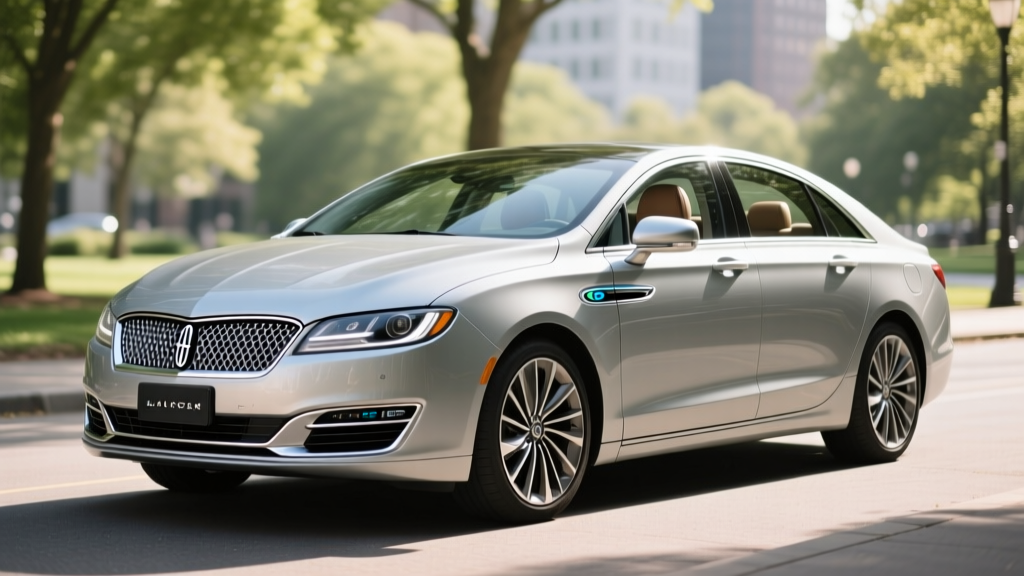
The 2014 Lincoln MKZ Hybrid occupies a specific niche in the used luxury sedan market: a mid-size premium hybrid that prioritizes comfort and fuel economy over sportiness. Built on Ford's CD4 platform and sharing its hybrid powertrain with the Ford Fusion Hybrid, the MKZ Hybrid delivers a refined ride with genuinely impressive city fuel economy. For buyers in 2026 searching for an affordable entry into hybrid ownership, this model warrants a closer look at what it offers — and where it falls short.
2014 Lincoln MKZ Hybrid: Key Specifications
| Powertrain | 2.0L Atkinson-cycle I4 + electric motor |
|---|---|
| Combined Horsepower | 188 hp (net system) |
| Transmission | eCVT (planetary gearset) |
| EPA MPG (City / Hwy / Combined) | 41 / 36 / 38 MPG |
| Fuel Tank | 13.5 gallons |
| Total Range | ~513 miles (EPA combined) |
| Hybrid Battery | 1.4 kWh lithium-ion (net usable ~1.0 kWh) |
| 0-60 mph | ~8.4 seconds |
| Drivetrain | Front-wheel drive |
| Original MSRP (2014) | $36,190 (base) |
| Typical Used Price (2026) | $8,000 – $13,000 |
| Hybrid Battery Warranty (Original) | 8 years / 100,000 miles |
Understanding the HEV vs PHEV Distinction
The 2014 Lincoln MKZ Hybrid is a conventional hybrid electric vehicle (HEV), not a plug-in hybrid (PHEV). This distinction matters because it fundamentally shapes how you own and operate the car.
HEV (Conventional Hybrid) — What the MKZ Is
- No plug required. The battery recharges through regenerative braking and the gasoline engine.
- Small battery (~1.4 kWh). Stores just enough energy for short electric-only bursts at low speeds.
- Electric-only range: Less than 1 mile at speeds under ~25 mph.
- No EV tax credit eligibility. Federal §30D credits apply only to plug-in vehicles with larger batteries.
- Ownership simplicity: Drive it like any gas car; the hybrid system operates transparently.
PHEV (Plug-In Hybrid) — What the MKZ Is Not
- Requires plugging in to access meaningful electric-only range (typically 20-50 miles on modern PHEVs).
- Larger battery (10-30+ kWh). Can be charged via Level 1 (120V) or Level 2 (240V) outlets.
- Tax credit eligible when new (depending on battery capacity and IRS §30D rules).
- More complex ownership: Requires home or workplace charging access to maximize value.
The MKZ Hybrid was never offered as a PHEV. Lincoln's parent company Ford offered the Fusion Energi as a plug-in variant, but the MKZ lineup remained HEV-only throughout its production run (2013-2020).
Fuel Economy: EPA Ratings vs Real-World MPG
The EPA rates the 2014 MKZ Hybrid at 41 MPG city, 36 MPG highway, and 38 MPG combined — figures sourced from fueleconomy.gov. These are strong numbers for a luxury mid-size sedan, and they reflect how hybrid powertrains excel in stop-and-go driving where regenerative braking recovers energy that would otherwise be lost.
| Driving Condition | EPA Rating | Real-World Expectation |
|---|---|---|
| City | 41 MPG | 38 – 44 MPG (hybrids often exceed EPA in city) |
| Highway (70 mph cruise) | 36 MPG | 33 – 37 MPG |
| Combined | 38 MPG | 35 – 40 MPG |
| Cold Weather (below 30°F) | — | 30 – 34 MPG (engine runs more for cabin heat) |
Why City MPG Beats Highway MPG in Hybrids
Unlike gas-only cars, hybrids achieve their best fuel economy in city driving. Frequent stops allow the regenerative braking system to recharge the battery, and the electric motor handles low-speed acceleration where gasoline engines are least efficient. On the highway, the MKZ Hybrid operates primarily as a gasoline car with the electric motor providing modest assist, so aerodynamic drag and the 2.0L engine's efficiency curve dominate.
Real-World Owner Reports
Owner forums and aggregated data from sources like Fuelly suggest most 2014 MKZ Hybrid drivers report combined fuel economy in the 35 to 40 MPG range over thousands of miles. Drivers with predominantly urban commutes frequently report exceeding the 38 MPG combined EPA figure, while those with long highway-heavy commutes see averages closer to 34-36 MPG. Cold-weather operation in northern climates can drop combined figures to the low 30s due to increased engine idling for cabin heat and reduced battery efficiency at low temperatures.
Powertrain and Driving Experience
The MKZ Hybrid pairs a 2.0-liter Atkinson-cycle four-cylinder engine (producing 141 hp and 129 lb-ft of torque on its own) with a permanent-magnet electric motor. Combined net system output is 188 horsepower. Power flows through an electronically controlled continuously variable transmission (eCVT) — technically a planetary gearset that blends engine and motor power seamlessly rather than using a traditional belt-and-pulley CVT design.
The driving experience prioritizes smoothness and quiet over urgency. The 0-60 mph time of approximately 8.4 seconds is adequate for merging and passing but won't satisfy drivers seeking sport-sedan acceleration. The eCVT eliminates shift shock entirely, and the transition between electric-only and engine-assisted driving is one of the smoothest in the segment. Road and wind noise are well-suppressed, consistent with Lincoln's luxury positioning.
One characteristic to note: the brake pedal feel in the MKZ Hybrid can feel somewhat numb during the initial pedal travel, where regenerative braking is doing most of the deceleration work before the friction brakes engage. This is common in hybrids of this era and takes some acclimation.
Hybrid Battery Lifespan, Warranty, and Replacement Cost
Original Hybrid Battery Warranty
When sold new, the 2014 MKZ Hybrid's lithium-ion battery pack was covered by Ford/Lincoln's hybrid component warranty: 8 years or 100,000 miles (whichever comes first). In California Air Resources Board (CARB) states, hybrid battery coverage extended to 10 years or 150,000 miles.
By 2026, the original factory warranty has expired for virtually all 2014 models unless a certified extended warranty was purchased separately.
Battery Degradation and Real-World Lifespan
The MKZ Hybrid's 1.4 kWh lithium-ion pack is small and operates within a conservative state-of-charge window (the hybrid control system never fully charges or fully depletes the battery). This shallow-cycling strategy significantly extends battery life compared to full EVs or PHEVs that regularly cycle through deeper charge ranges.
Based on data from high-mileage Fusion Hybrids and MKZ Hybrids sharing the same powertrain architecture, most original batteries remain functional well past 150,000 miles. Capacity loss is typically modest — perhaps 10-15% over 100,000 miles — manifesting as slightly reduced electric-only assist duration rather than a dramatic fuel economy drop.
Battery Replacement Cost
If the hybrid battery does fail outside warranty, replacement costs in 2026 break down as follows:
| Option | Estimated Cost | Notes |
|---|---|---|
| New OEM battery (dealer) | $3,500 – $5,000 | Includes parts and labor; price varies by market |
| Remanufactured battery | $1,800 – $3,000 | Third-party suppliers; often includes 3-year warranty |
| Used/salvage battery | $800 – $1,500 | From wrecked vehicles; condition and remaining life uncertain |
| Individual module replacement | $400 – $900 | Only viable if a single module is faulty; requires specialist diagnosis |
For context, the 2014 MKZ Hybrid's lithium-ion pack is shared with the 2013-2014 Ford Fusion Hybrid, which helps keep aftermarket supply available and costs moderate compared to larger or more proprietary battery packs.
Reliability and Common Issues
The 2014 MKZ Hybrid's powertrain — shared extensively with the Ford Fusion Hybrid — has proven to be one of Ford's most reliable drivetrain configurations. The eCVT planetary gearset has no belts, clutches, or bands to wear, and the electric motor has far fewer moving parts than a conventional automatic transmission. Many examples have surpassed 200,000 miles with routine maintenance.
Areas to inspect on a used 2014 MKZ Hybrid include:
- 12V auxiliary battery: Like all hybrids, the MKZ has a conventional 12V battery that can fail independently of the hybrid pack. A weak 12V battery can cause confusing error messages and starting issues.
- Coolant system: The hybrid system has its own dedicated coolant loop. Verify maintenance records show coolant service at recommended intervals.
- Infotainment system (MyLincoln Touch): The 2014 model year uses Ford's SYNC/MyLincoln Touch system, which was known for sluggish response and occasional software glitches. A software update may resolve some issues, but the hardware is dated by 2026 standards.
- Suspension components: Standard wear items (struts, bushings, sway bar links) are typical for a 10+ year old vehicle and are not hybrid-specific.
The NHTSA vehicle page lists any open recalls and technical service bulletins — always check the VIN before purchasing.
Tax Credits and Used Pricing in 2026
Federal Tax Credit Eligibility
The 2014 Lincoln MKZ Hybrid does not qualify for the federal §30D new clean vehicle tax credit (up to $7,500). This credit applies only to plug-in electric vehicles with battery capacities of at least 7 kWh, and the MKZ Hybrid's 1.4 kWh battery falls well below this threshold. As a conventional HEV, it was never eligible for the credit even when sold new.
For the Used Clean Vehicle Credit (up to $4,000 or 30% of sale price under IRS §25E), the vehicle must be a qualified plug-in EV or fuel cell vehicle. Conventional hybrids like the MKZ Hybrid are not eligible for this credit either. For current eligibility rules, consult the IRS used vehicle credit page.
Used Market Pricing (2026)
As of early 2026, the 2014 Lincoln MKZ Hybrid typically trades in the used market between $8,000 and $13,000, depending on mileage, condition, trim level (Premiere, Reserve, or Black Label was not yet available in 2014), and regional demand. Low-mileage, well-maintained examples with service records command the top of this range. Examples with over 120,000 miles or deferred maintenance can be found below $9,000.
Pros
- Strong city fuel economy (41 MPG EPA, often exceeded in real-world driving)
- Smooth, quiet ride quality befitting a luxury sedan
- Proven, reliable hybrid powertrain shared with high-volume Fusion Hybrid
- Moderate battery replacement costs due to parts availability
- No charging infrastructure needed — operates like a standard gas car
- Comfortable, well-appointed interior with supportive seats
Cons
- Sluggish acceleration (8.4 sec 0-60) compared to turbocharged rivals
- Highway MPG (36) trails city figure — less ideal for long-commute drivers
- Dated infotainment system with no Apple CarPlay or Android Auto
- No plug-in option available — cannot access electric-only driving for meaningful distances
- Original hybrid battery warranty has expired on nearly all examples
- Brake pedal feel requires acclimation due to regen blending
Who Should Buy the 2014 MKZ Hybrid — and Who Should Look Elsewhere
Choose the 2014 Lincoln MKZ Hybrid If:
- Your commute is predominantly urban or suburban with frequent stops where the hybrid system maximizes fuel savings.
- You want luxury sedan comfort on a tight budget (under $12,000) without the complexity of plug-in charging.
- You lack access to home or workplace charging and cannot practically own a PHEV or full EV.
- You value proven reliability over cutting-edge technology or sporty driving dynamics.
- You want lower fuel costs without range anxiety or charging planning — the MKZ Hybrid refuels at any gas station in minutes.
Consider a Full EV or Modern PHEV Instead If:
- You have home Level 2 charging access and want to eliminate gasoline use for daily driving. A used Chevrolet Bolt EV, Nissan Leaf, or modern PHEV like the Toyota RAV4 Prime offers electric-only commuting.
- Your commute is highway-heavy. The MKZ Hybrid's 36 MPG highway rating is respectable but not exceptional — a modern full EV or diesel would be more efficient at sustained highway speeds.
- You want current technology. No CarPlay, no Android Auto, no advanced ADAS beyond basic stability control and standard airbags. Modern vehicles offer substantially better connectivity and driver-assist features.
- You want tax credit benefits. A used qualifying EV (under $25,000 from a dealer) may be eligible for the up-to-$4,000 Used Clean Vehicle Credit under §25E.
Hybrid vs PHEV vs EV: Which Fits Your Situation?
For buyers weighing the 2014 MKZ Hybrid against other electrified options, the decision framework comes down to charging access, daily mileage, and budget:
| Factor | HEV (MKZ Hybrid) | PHEV | Full EV (BEV) |
|---|---|---|---|
| Plug-in charging required? | No | Yes (for EV range) | Yes |
| Electric-only range | <1 mile | 20-50 miles (modern) | 200-400+ miles |
| Home charging needed? | No | Strongly recommended | Essential |
| Fuel cost per mile (est.) | ~$0.10 – $0.12 | ~$0.04 (electric) / ~$0.10 (gas) | ~$0.03 – $0.06 |
| Maintenance complexity | Low (gas + hybrid) | Moderate (gas + EV systems) | Low (no engine) |
| Tax credit eligible (used)? | No | Yes (if qualified) | Yes (if qualified) |
| Best for | No-charging-access buyers | Home chargers with short commutes | Home chargers, lower running costs |
Frequently Asked Questions
How many MPG does the 2014 Lincoln MKZ Hybrid get?
The EPA rates it at 41 MPG city, 36 MPG highway, and 38 MPG combined. Real-world owners typically report 35-40 MPG combined, with city-heavy drivers sometimes exceeding the EPA city figure and highway-heavy drivers seeing averages closer to 33-37 MPG.
Can the 2014 MKZ Hybrid drive on electric power only?
Technically yes, but only for very short distances (under 1 mile) at low speeds (below ~25 mph). It is a conventional hybrid, not a plug-in, so the battery is too small (1.4 kWh) to provide meaningful electric-only driving. The electric motor primarily assists the gasoline engine during acceleration and handles low-speed maneuvering.
Is the 2014 Lincoln MKZ Hybrid reliable?
Yes. The hybrid powertrain, shared with the Ford Fusion Hybrid, has a strong reliability record. The eCVT has fewer wear components than a conventional automatic transmission, and the lithium-ion battery is designed to last well beyond 150,000 miles with proper maintenance. Common issues are typically non-powertrain related (infotainment glitches, standard suspension wear).
How much does it cost to replace the hybrid battery?
A new OEM replacement battery costs approximately $3,500-$5,000 installed at a dealer. Remanufactured options from third-party suppliers range from $1,800-$3,000, and used/salvage batteries can be found for $800-$1,500. Most original batteries in these vehicles are still functioning, so replacement is not a guaranteed expense.
Does the 2014 MKZ Hybrid qualify for any federal tax credit?
No. As a conventional hybrid (HEV), it does not qualify for either the §30D new vehicle credit or the §25E used clean vehicle credit. These credits require plug-in capability and minimum battery capacity thresholds that the MKZ Hybrid does not meet.
Does the 2014 MKZ Hybrid need to be plugged in?
No. It is a self-charging conventional hybrid. The battery recharges through regenerative braking and the gasoline engine. You refuel it at any gas station exactly like a conventional car.
What is the difference between the MKZ Hybrid and the Fusion Hybrid?
They share the same CD4 platform, 2.0L hybrid powertrain (188 hp combined), and eCVT. The MKZ adds Lincoln-specific luxury features (premium leather, upgraded sound insulation, Lincoln branding, available Revel audio), a unique exterior design, and a slightly higher original MSRP. Fuel economy is nearly identical between the two.
Is the 2014 MKZ Hybrid a good used car buy in 2026?
For buyers seeking an affordable luxury hybrid sedan with proven reliability and strong city fuel economy — and who don't need modern infotainment or plug-in capability — it represents solid value in the $8,000-$13,000 range. The main considerations are the expired hybrid battery warranty and the vehicle's age. A pre-purchase inspection by a technician familiar with Ford/Lincoln hybrid systems is strongly recommended.