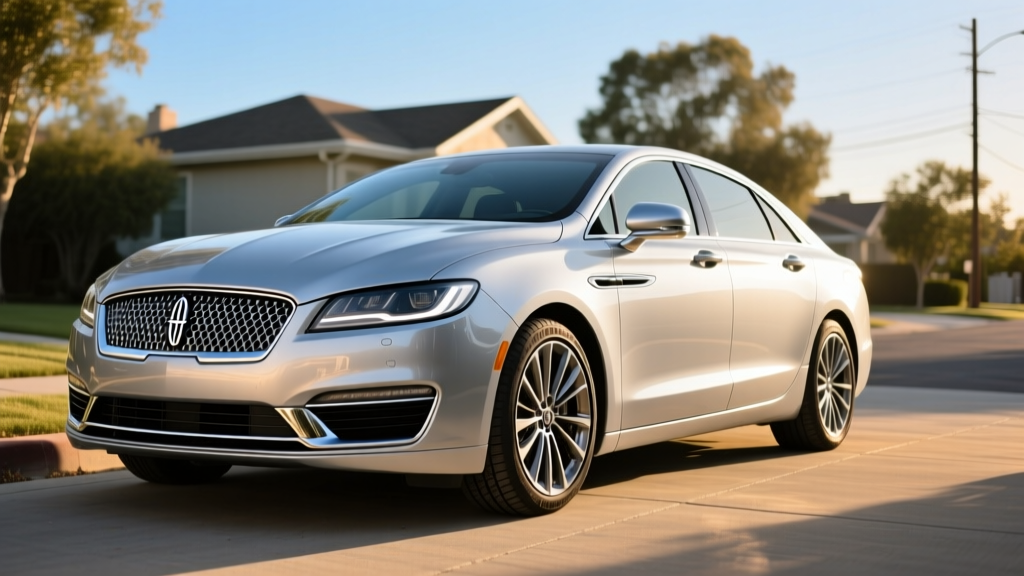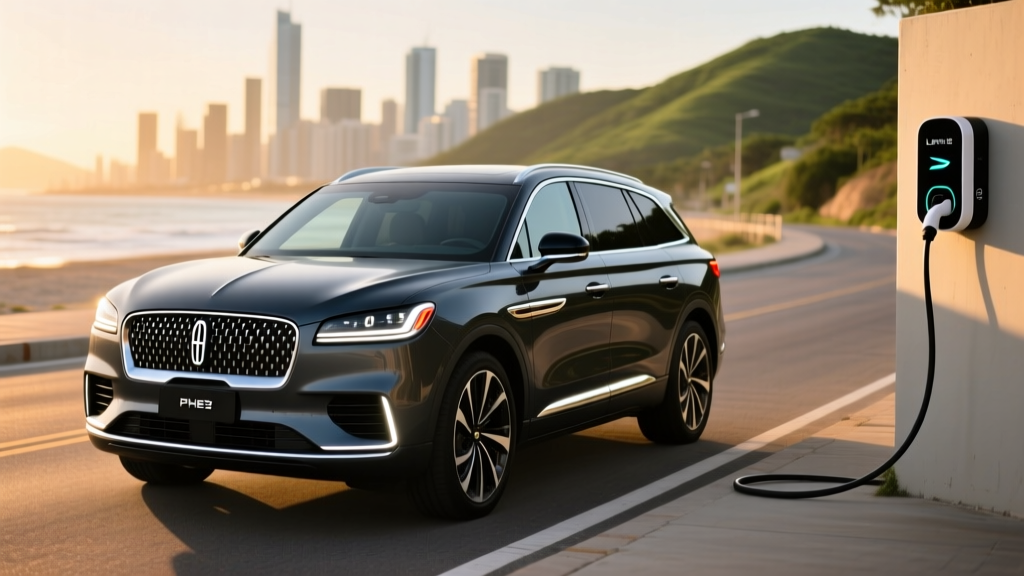
The Lincoln Aviator Grand Touring occupies a narrow but compelling niche: a three-row luxury plug-in hybrid SUV that can handle daily commutes on electricity alone while offering the range and towing capability of a gas-powered family hauler. For 2026, Lincoln continues this PHEV variant alongside the conventional gas Aviator, giving buyers a choice between pure convenience and partial electrification.
This guide breaks down exactly what the Grand Touring delivers — electric-only range, real-world fuel economy, charging logistics, powertrain output, and whether the federal tax credit applies — so you can decide if this PHEV fits your garage or if a full BEV or conventional hybrid makes more sense.
What Is the Lincoln Aviator Grand Touring? PHEV vs. Gas Aviator
The Aviator Grand Touring is a plug-in hybrid electric vehicle (PHEV), not a conventional hybrid (HEV). That distinction matters for how you fuel it, how far it drives on electricity, and what incentives may apply.
| Attribute | Aviator (Gas / Mild Hybrid) | Aviator Grand Touring (PHEV) |
|---|---|---|
| Powertrain type | 3.0L twin-turbo V6 + mild-hybrid assist | 3.0L twin-turbo V6 + electric motor (PHEV) |
| Plug-in capable | No — self-charging only | Yes — AC Level 1/2 charging |
| Combined horsepower | 400 hp | 494 hp |
| Combined torque | 415 lb-ft | 630 lb-ft |
| EPA electric-only range | N/A | 21 miles |
| EPA MPGe (electric + gas) | N/A | 56 MPGe |
| EPA MPG (gas only) | 20 combined (17 city / 24 hwy) | 23 combined (22 city / 25 hwy) |
| Drivetrain | RWD or AWD | AWD standard (eAWD via rear motor) |
The conventional Aviator uses a small 48-volt mild-hybrid system that assists the engine during acceleration and enables stop-start — it cannot drive on electricity alone. The Grand Touring's PHEV system is fundamentally different: a larger high-voltage battery and an electric motor integrated into the transmission enable genuine zero-emission driving at highway speeds for short distances.
Electric-Only Range and Total Driving Range
Real-World Expectation: 16–19 miles in mixed driving; 12–15 miles in cold weather or sustained highway speeds above 70 mph
Total Combined Range (electric + gas): ~430 miles
The Grand Touring's 13.6 kWh lithium-ion battery (approximately 11.2 kWh usable) powers an electric motor producing 127 hp on its own. That's enough for neighborhood errands, school drop-offs, and short commutes without burning a drop of gasoline — provided you charge regularly.
Twenty-one miles of EPA-rated electric range won't cover a long commute, but it aligns with PHEVs in this class. The EPA's fueleconomy.gov listing confirms the 21-mile figure. In practice, expect the battery to deplete faster during winter months — cold temperatures reduce lithium-ion efficiency and cabin heating draws significant power. Preconditioning the cabin while still plugged in helps preserve range.
Once the battery depletes, the Aviator Grand Touring operates as a conventional hybrid, with the V6 and electric motor working together. The total combined range of approximately 430 miles means no range anxiety on road trips — you refuel at any gas station.
Fuel Economy: EPA MPG and Real-World Efficiency
| Mode | City | Highway | Combined |
|---|---|---|---|
| Electric + Gas (MPGe) | — | — | 56 MPGe |
| Gas-only (charge-depleted MPG) | 22 | 25 | 23 |
How many MPG does this hybrid get? It depends on how often you plug in. If you charge nightly and your daily driving stays under 20 miles, you may go weeks without visiting a gas station, effectively achieving 56 MPGe over those short trips. Once the battery is depleted and you're running on gasoline alone, expect 22–23 MPG in mixed driving — a modest improvement over the gas-only Aviator's 20 MPG combined.
Real-world PHEV efficiency is highly usage-dependent. Owners who rarely plug in will see fuel economy close to the gas-only Aviator, negating much of the PHEV's efficiency advantage. The Grand Touring rewards disciplined charging habits.
On the highway at 75 mph with a depleted battery, expect roughly 23–24 MPG. In city driving with frequent regenerative braking opportunities, the charge-sustaining mode can push closer to 24–25 MPG. These figures track with fueleconomy.gov data and owner-reported averages.
Powertrain Deep Dive: 494 HP and eAWD
| Engine | 3.0L twin-turbocharged V6 |
| Engine output | 400 hp / 415 lb-ft |
| Electric motor output | 127 hp / 215 lb-ft |
| Combined system output | 494 hp / 630 lb-ft |
| Battery capacity | 13.6 kWh gross (~11.2 kWh usable), lithium-ion |
| Transmission | 10-speed automatic with integrated electric motor |
| Drivetrain | eAWD (electric motor drives rear axle) |
| 0–60 mph | ~5.5 seconds (est.) |
| Towing capacity | 5,600 lbs (with Class IV tow package) |
| Curb weight | ~5,700 lbs |
The Grand Touring's eAWD system uses the electric motor to drive the rear wheels independently of the engine-driven front axle. This provides confident all-weather traction and enables electric-only driving using the rear motor alone at lower speeds. The combined 630 lb-ft of torque is available nearly instantly, giving this 5,700-pound SUV surprising shove off the line.
Towing capacity drops slightly compared to the gas Aviator (5,600 lbs vs. 6,700 lbs) due to the added battery weight and different cooling priorities, but it remains competitive for a luxury midsize PHEV SUV.
Charging: Level 1, Level 2, and What to Expect
The Aviator Grand Touring charges via AC only — there is no DC fast charging capability. This is standard for PHEVs in this class, where the relatively small battery makes DC fast charging unnecessary for most use cases.
| Charging Level | Power (kW) | Time (0–100%) | Notes |
|---|---|---|---|
| Level 1 (120V household outlet) | ~1.4 kW | ~8–10 hours | Adequate for overnight top-up |
| Level 2 (240V, 32A home charger) | ~7.7 kW | ~3.5–4 hours | Recommended for daily use |
| DC Fast Charging | N/A | N/A | Not supported |
A Level 2 home charger is the practical choice for Grand Touring owners. A full charge in about 3.5–4 hours means you can top up during the workday or between evening errands. Level 1 (standard 120V outlet) will fully replenish the battery overnight but is better suited as a backup or for occasional use.
The charging port uses a standard J1772 connector, compatible with virtually all public Level 2 stations and home charging equipment. No adapter is needed for AC charging.
Pricing, Trims, and Federal Tax Credit Eligibility
The 2026 Lincoln Aviator Grand Touring starts at approximately $70,595 (including destination) for the Reserve trim, climbing to $82,795 for the Black Label. These prices represent a $10,000–$12,000 premium over the equivalently trimmed gas-only Aviator.
- Credit amount: Up to $7,500 if all requirements are met
- MSRP cap: SUVs/vans must be under $80,000 — the Reserve trim qualifies; Black Label does not
- Buyer income cap: AGI must not exceed $150K (single), $225K (head of household), $300K (joint)
- Battery sourcing: Critical minerals and battery component requirements must be met — verify current-year compliance on the IRS qualified vehicle list
- Point-of-sale transfer: Eligible buyers can apply the credit as a down-payment reduction at the dealer
Source: IRS §30D Clean Vehicle Credit. Eligibility changes — always confirm with a tax professional before purchasing.
The Grand Touring's PHEV powertrain makes it potentially eligible for the federal clean vehicle credit, but the $80,000 MSRP cap eliminates the Black Label trim. Battery component and critical-mineral sourcing requirements add another layer of complexity — Lincoln's supply chain compliance can shift model year to model year. Check the DOE's qualified vehicle list on fueleconomy.gov before committing.
Battery Warranty, Reliability, and Replacement Cost
Capacity retention threshold: Battery is covered if it falls below approximately 70% of original capacity during the warranty period
Powertrain warranty: 6 years / 70,000 miles
Estimated out-of-warranty battery replacement: $8,000–$14,000 (parts and labor, based on comparable Ford/Lincoln PHEV systems)
Is this hybrid reliable? The Aviator Grand Touring shares its PHEV architecture with the Ford Explorer Hybrid, which has accumulated substantial real-world mileage data. Lincoln's hybrid battery warranty meets the federal mandate of 8 years/100,000 miles for emissions-related components, which covers the high-voltage battery.
PHEV batteries in this class typically retain 85–90% of original capacity after 100,000 miles when properly maintained. The relatively small 13.6 kWh battery undergoes shallower charge cycles than a full BEV battery, which generally favors longevity. Avoid routinely charging to 100% and sitting in extreme heat to maximize battery life.
The more complex powertrain — combining a twin-turbo V6, 10-speed automatic, electric motor, and high-voltage battery — introduces more potential failure points than either a pure EV or a simple gas engine. However, Lincoln's dealer network and the shared Ford architecture mean parts availability and technician familiarity are strong. NHTSA safety and recall data should be monitored for any emerging patterns.
Who Should Choose the Aviator Grand Touring vs. a Full EV or Gas SUV
- You need three rows and luxury appointments but want some electric driving
- Your daily commute is under 20 miles and you can charge at home
- You regularly take road trips where charging infrastructure is sparse
- You want 494 hp and 630 lb-ft without the range compromise of a full EV
- Towing capacity (5,600 lbs) is important to you
- You want zero tailpipe emissions and lower per-mile fuel costs
- You have reliable home and workplace charging
- Your daily driving is predictable and within 250–300 miles
- You prefer minimal drivetrain maintenance (no engine oil, spark plugs, or transmission fluid changes on the ICE side)
- You cannot charge at home or work
- The $10,000+ PHEV premium doesn't pencil out for your mileage
- You want maximum towing (6,700 lbs) and lower curb weight
The Grand Touring makes the most financial sense for owners who can charge daily and whose weekday driving stays within the 21-mile electric envelope. Over a year of weekday commutes charged at home, you could offset roughly 5,000 miles of gasoline driving with electricity — a meaningful fuel savings that partially justifies the PHEV premium. Weekend road trips use the V6 without any charging hassle.
- 21 miles of real electric-only range covers many daily commutes
- 494 hp / 630 lb-ft — the most powerful Aviator variant
- Three-row luxury interior with Lincoln's latest tech
- No range anxiety — 430+ miles total range with gas engine
- Potential $7,500 federal tax credit (Reserve trim, income/sourcing eligible)
- eAWD provides confident all-weather traction
- $10,000+ premium over gas Aviator; payback period depends on charging habits
- No DC fast charging — impractical for quick public top-ups
- Electric range drops significantly in cold weather
- Black Label trim exceeds $80K MSRP cap for tax credit
- Towing reduced to 5,600 lbs vs. 6,700 lbs for gas model
- Heavy curb weight (~5,700 lbs) hurts gas-only MPG when battery is depleted
Frequently Asked Questions
How many MPG does the Lincoln Aviator Grand Touring hybrid get?
With a charged battery, the Grand Touring achieves 56 MPGe combined. Once the battery depletes, it operates as a conventional hybrid at 23 MPG combined (22 city / 25 highway). Your actual efficiency depends entirely on how frequently you charge.
How far can the Aviator Grand Touring go on electric only?
The EPA rates it at 21 miles of electric-only range. In real-world mixed driving, expect 16–19 miles. In cold weather (below 32°F), that can drop to 12–15 miles due to reduced battery efficiency and cabin heating demands.
Does the Lincoln Aviator Grand Touring qualify for a tax credit?
It may qualify for up to $7,500 under the federal §30D Clean Vehicle Credit, but eligibility depends on the buyer's income (under $300K joint), the vehicle's MSRP (under $80K — so Reserve trim qualifies, Black Label does not), and current battery sourcing requirements. Confirm eligibility on the IRS qualified vehicle list before purchasing.
Is the Aviator Grand Touring hybrid reliable?
The PHEV system shares architecture with the Ford Explorer Hybrid, which has a substantial service history. The high-voltage battery carries an 8-year/100,000-mile warranty. The added complexity of combining a twin-turbo V6 with an electric motor means more potential maintenance points than a pure EV, but Lincoln's dealer network supports the platform well.
What does it cost to replace the PHEV battery?
Out-of-warranty replacement is estimated at $8,000–$14,000 including parts and labor, based on comparable Ford/Lincoln PHEV battery systems. However, PHEV batteries typically retain 85–90% capacity at 100,000 miles, and many last the life of the vehicle with proper care.
Can the Aviator Grand Touring DC fast charge?
No. The Grand Touring supports AC charging only — Level 1 (120V) at ~1.4 kW and Level 2 (240V) at ~7.7 kW. A full Level 2 charge takes approximately 3.5–4 hours. This is typical for PHEVs, where the small battery makes DC fast charging unnecessary.
Hybrid vs PHEV vs EV — which is right for me?
A conventional hybrid (HEV) like the gas Aviator requires no plug-in and offers modest MPG gains. A PHEV like the Grand Touring gives you 15–20 miles of electric driving if you charge regularly, plus a gas engine for longer trips. A full BEV eliminates gasoline entirely but requires reliable charging access and acceptance of range limitations. If you can charge at home and drive under 25 miles daily but need road-trip flexibility, the PHEV is the strongest compromise.