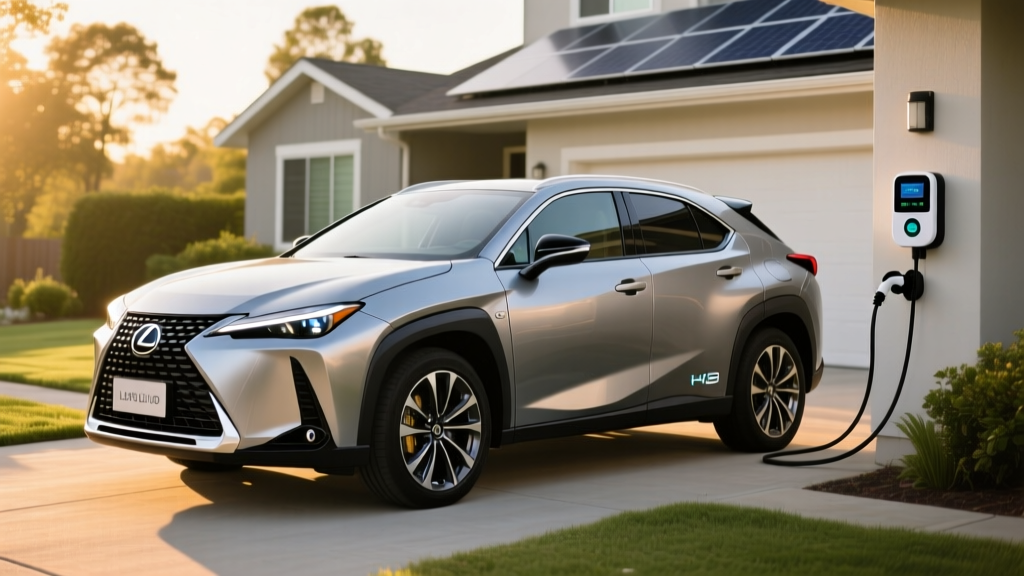
The subcompact luxury hybrid crossover segment doesn't have many players, and the Lexus UX hybrid SUV — officially badged the UX 250h — has carved out a niche as the default choice for buyers who want premium badging, exceptional city fuel economy, and Toyota-grade reliability without plugging in. For 2026, the UX 250h continues with the fourth-generation Toyota hybrid powertrain, all-wheel drive standard on every trim, and a starting price that undercuts European rivals by thousands.
But with electrification accelerating, the real question for shoppers isn't just whether the UX 250h gets good mileage — it's whether a conventional hybrid (HEV) still makes sense versus a plug-in hybrid (PHEV) or a full battery-electric vehicle (BEV). This guide breaks down every number that matters: EPA MPG, real-world fuel economy, powertrain specs, battery longevity, warranty coverage, tax-credit eligibility, and the decision framework to help you choose the right electrified vehicle for your driving pattern.
2026 Lexus UX 250h: Core Specifications at a Glance
| Attribute | Value |
|---|---|
| Powertrain Type | Conventional Hybrid (HEV) — no plug-in required |
| Engine | 2.0L inline-4 Atkinson-cycle + 2 electric motor-generators |
| Combined System Horsepower | 181 hp |
| Drivetrain | Electronic AWD (e-AWD) standard on all trims |
| Hybrid Battery | ~1.4 kWh lithium-ion (NiMH on earlier gens; Li-ion current) |
| EPA Fuel Economy (Combined) | 42 MPGe / 42 MPG combined |
| EPA City | 43 MPG |
| EPA Highway | 41 MPG |
| Fuel Tank | 10.6 gallons |
| Total Driving Range (EPA est.) | ~445 miles |
| 0–60 mph | 8.5 seconds |
| Cargo Volume (behind rear seats) | 21.7 cu ft |
| Base MSRP (UX 250h Premium) | $39,390 (incl. destination) |
| Hybrid Battery Warranty | 10 years / 150,000 miles |
| Powertrain Warranty | 6 years / 70,000 miles |
Sources: fueleconomy.gov (EPA), Lexus USA.
How Many MPG Does the Lexus UX Hybrid SUV Actually Get?
The EPA rates the 2026 Lexus UX 250h at 43 MPG city / 41 MPG highway / 42 MPG combined. These are strong numbers for a luxury AWD crossover, and they place the UX 250h near the top of its class. But EPA stickers are averages — real-world results depend heavily on your driving mix.
- City / stop-and-go driving: Hybrids excel here. Expect 44–48 MPG in urban commutes. The electric motor handles low-speed propulsion, and regenerative braking recaptures energy at every stop. Many owners report beating the EPA city estimate.
- Highway cruising (70–80 mph): Expect 36–39 MPG. At sustained highway speeds, the gasoline engine does most of the work and aerodynamic drag dominates. The UX's compact crossover profile isn't as slippery as a sedan.
- Cold weather (below 30°F): Plan for 35–38 MPG combined. The engine runs more frequently to heat the cabin and keep the catalytic converter warm, reducing the hybrid system's electric-only operating windows.
- Mixed real-world average (owner-reported): 39–43 MPG, depending on climate and driving style.
The key takeaway: if your commute is mostly urban or suburban with frequent stops, the UX 250h will likely exceed its EPA rating. If you're primarily a highway driver, expect to fall a few MPG short of the sticker. This is a characteristic of all hybrid systems, not a flaw — it's simply where the physics of regenerative braking pays the biggest dividends.
HEV vs. PHEV vs. EV: Which Powertrain Fits Your Life?
The Lexus UX 250h is a conventional hybrid (HEV), meaning it never needs to be plugged in. The gasoline engine and regenerative braking keep the small hybrid battery charged. This is fundamentally different from a plug-in hybrid (PHEV) like the Toyota RAV4 Prime or a full battery-electric vehicle (BEV) like the Tesla Model Y. Here's how the three powertrain types compare for a typical buyer considering the UX:
| Factor | HEV (UX 250h) | PHEV (e.g., RAV4 Prime) | BEV (e.g., Model Y) |
|---|---|---|---|
| Plug-in Required? | No | Yes (for EV range benefit) | Yes (always) |
| Electric-Only Range | ~1 mi at low speed | 35–42 mi typical | 250–330 mi (EPA) |
| Home Charging Needed? | No | Recommended (Level 2) | Essential (Level 2) |
| Best For | No home charger; mixed driving | Short commute + home charger | Home charger + mostly electric |
| Federal Tax Credit | Not eligible (§30D) | Up to $7,500 (if eligible) | Up to $7,500 (if eligible) |
| Upfront Price (luxury compact SUV) | ~$39K–$47K | ~$44K–$52K | ~$44K–$58K |
| Fuel Cost per Year (15K mi) | ~$1,250 (gas) | ~$600–$900 (gas + elec) | ~$550–$750 (electric) |
| Maintenance Complexity | Low (mature hybrid system) | Moderate (two full powertrains) | Low (fewer moving parts) |
Choose a PHEV if: You have a garage or driveway where you can install a Level 2 charger, your daily commute is under 40 miles round-trip (so you drive mostly on electricity), and you want the option of gas-engine range for longer trips.
Choose a BEV if: You have home charging, your daily driving is under 250 miles, you want to eliminate gasoline entirely, and you're comfortable planning around DC fast charging on road trips.
Powertrain Deep Dive: How the UX 250h Hybrid System Works
The 2026 UX 250h uses Toyota's well-proven hybrid synergy drive architecture, now in its fourth generation. Here's the mechanical breakdown:
- Gasoline engine: 2.0-liter inline-4, Atkinson-cycle, producing approximately 146 hp and 139 lb-ft of torque on its own. The Atkinson cycle sacrifices some low-end torque for higher thermal efficiency — ideal for a hybrid where the electric motor fills in the torque gap.
- Front electric motor (MG2): Permanent-magnet synchronous motor integrated into the transaxle, contributing to the combined 181 hp system output.
- Rear electric motor (e-AWD): A smaller, independent electric motor on the rear axle provides all-wheel-drive traction without a mechanical driveshaft. It activates during acceleration, low-traction conditions, and certain low-speed scenarios.
- Hybrid battery: A compact lithium-ion pack (~1.4 kWh gross capacity) located under the rear seats. This is not the same as an EV battery — it's designed for frequent shallow charge-discharge cycles, not long-range energy storage.
- Transmission: Electronically controlled continuously variable transmission (eCVT). No traditional gears or belts — the power-split device seamlessly blends engine and motor output.
The result is smooth, linear acceleration to 60 mph in approximately 8.5 seconds. That's adequate for merging and city driving but won't feel sporty. The UX 250h prioritizes efficiency and refinement over performance. The eCVT eliminates shift shock entirely, and the transition between electric and gasoline power is nearly imperceptible under normal driving conditions.
Pricing, Trims, and Tax Credit Reality for the UX 250h
The 2026 Lexus UX 250h is offered in several trims, all with the same hybrid powertrain and AWD:
| Trim | MSRP (incl. destination) | Key Additions |
|---|---|---|
| Premium | $39,390 | 12.3" touchscreen, wireless CarPlay/Android Auto, Lexus Safety System+ 3.0, heated front seats |
| Premium Plus | $42,190 | Power moonroof, blind-spot monitor w/ rear cross-traffic alert, auto-dimming mirrors, power liftgate |
| F SPORT Handling | $44,690 | Sport-tuned suspension, F SPORT seats/steering wheel, 18" alloy wheels, aluminum pedals |
| Luxury | $47,390 | Semi-aniline leather, ventilated front seats, heated steering wheel, power-folding rear seats |
Does the Lexus UX Hybrid Qualify for a Federal Tax Credit?
No. Under IRS §30D rules, the federal Clean Vehicle Credit (up to $7,500) applies only to plug-in electric vehicles — battery-electric vehicles (BEVs) and plug-in hybrids (PHEVs) with a minimum battery capacity of 7 kWh. The UX 250h's ~1.4 kWh hybrid battery does not meet this threshold, and conventional hybrids are categorically excluded from §30D.
This is a deliberate policy design: the credit incentivizes vehicles that can operate on grid electricity. However, the UX 250h's lower purchase price (thousands less than comparable PHEVs or BEVs) and strong fuel economy partially offset the lack of a credit. Over five years and 75,000 miles, the UX 250h's fuel savings versus a comparable gas-only luxury crossover (at ~25 MPG combined) can total $2,500–$3,500 depending on local gas prices — not as dramatic as going fully electric, but meaningful.
Some states offer separate incentives for hybrid purchases or reduced registration fees for efficient vehicles. Check your state's energy office or department of revenue for current programs, as these vary significantly by jurisdiction and change frequently.
Battery Longevity, Warranty, and Replacement Cost
Battery reliability is the single most common concern for first-time hybrid buyers. Here's what the data shows:
Coverage: 10 years or 150,000 miles (whichever comes first) for the hybrid battery pack.
What's covered: Defects and capacity loss that causes the battery to fail to hold a sufficient charge for hybrid system operation.
Transferable: Yes — the warranty transfers to subsequent owners automatically, which supports resale value.
Additional coverage: Hybrid system components (inverter, motor-generators, eCVT) are covered for 8 years / 100,000 miles.
How Long Do Lexus Hybrid Batteries Actually Last?
Toyota/Lexus hybrid batteries have an extensive real-world track record spanning over two decades (since the 2001 Prius). The data is reassuring:
- Typical lifespan: Most Lexus/Toyota hybrid batteries last 150,000–200,000+ miles or 12–15+ years before needing replacement. Many original Prius batteries are still in service past 200,000 miles.
- Failure rate: Independent surveys and warranty claim data suggest a hybrid battery replacement rate of roughly 1–3% within the warranty period for modern (post-2015) lithium-ion packs.
- Degradation pattern: Unlike EV batteries, hybrid batteries operate in a narrow state-of-charge window (roughly 40–80% SoC) managed by the vehicle's computer. This "shallow cycling" dramatically reduces stress and extends cycle life. You won't notice meaningful range or MPG loss over time as you might with an EV.
- Climate impact: Extreme heat (sustained 100°F+ ambient) is the primary longevity enemy for lithium-ion chemistry. Owners in hot climates (Arizona, Texas, Southern California) may see slightly earlier degradation, though the thermal management system mitigates this.
What Does a Lexus UX Hybrid Battery Replacement Cost?
If your hybrid battery does fail outside of warranty:
- New OEM replacement (Lexus dealer): $3,000–$4,500 including parts and labor.
- Refurbished/remanufactured battery: $1,500–$2,500 from specialty hybrid repair shops — a viable option for older, high-mileage vehicles.
- Individual cell/module replacement: Some hybrid specialist shops can diagnose and replace only the failed module(s) for $500–$1,200, though this is less common on newer lithium-ion packs than on older NiMH designs.
For context, a transmission replacement on a conventional gas vehicle typically costs $3,000–$5,000, and the hybrid eCVT has far fewer wear components than a traditional automatic. The hybrid system's reliability record, combined with the 10-year/150,000-mile battery warranty, makes the long-term ownership risk quite low.
Real-World Ownership: What Living With the UX 250h Is Actually Like
Specs tell part of the story; daily life tells the rest. Here are the practical realities of owning the UX 250h that don't appear on a window sticker:
- Fueling: The 10.6-gallon tank is smaller than many crossovers, but at 42 MPG combined, you're looking at roughly 445 miles between fill-ups. That's comparable to gas vehicles with larger tanks. You'll visit the station about 11–12 times per year at 15,000 miles annually.
- No charging routine: This sounds obvious but bears emphasis — there is zero behavior change required from a gas car. No apps, no charging cables, no route planning around chargers, no preconditioning. You drive it exactly like a conventional vehicle.
- Regenerative braking feel: The UX 250h's regen is relatively mild compared to a full EV. You won't get true one-pedal driving. The brake pedal feel is natural and progressive — a common complaint on some hybrids (early Prius generations) has been thoroughly addressed.
- Cargo space: At 21.7 cubic feet behind the rear seats, the UX is compact. It fits groceries, carry-on luggage, and a stroller, but it's not a family hauler. The hybrid battery does not intrude on cargo space (it's packaged under the rear seats).
- Lexus Safety System+ 3.0: Standard on every trim. Includes pre-collision system with pedestrian detection, lane departure alert with steering assist, dynamic radar cruise control (full-speed), lane tracing assist, and road sign assist. This is an IIHS-recognized suite, and the UX has historically earned top safety marks.
- Insurance: Expect premiums in line with other luxury subcompact crossovers. Hybrid vehicles don't typically carry an insurance surcharge (unlike some high-performance EVs), and the UX's moderate power output keeps rates reasonable.
Pros, Cons, and the Honest Verdict
✓ Pros
- 42 MPG combined EPA; frequently exceeded in city driving
- Standard AWD on every trim — rare in the luxury hybrid subcompact class
- 10-year/150,000-mile hybrid battery warranty
- No plug-in required; zero lifestyle change from a gas vehicle
- Lexus reliability and strong resale value
- Refined, quiet cabin with premium materials
- Comprehensive ADAS suite standard
- Lower starting price than European luxury rivals
✗ Cons
- Modest 181 hp — adequate but not quick (8.5 sec 0–60)
- Compact cargo area (21.7 cu ft) limits utility
- Highway MPG drops to ~36–39 real-world at 75+ mph
- No federal tax credit eligibility (HEV exclusion)
- Rear seat space is tight for taller adults
- eCVT drone under hard acceleration
- No PHEV variant offered (no electric-only commute option)
Frequently Asked Questions
How many MPG does the Lexus UX hybrid SUV get?
The EPA rates the 2026 Lexus UX 250h at 43 MPG city, 41 MPG highway, and 42 MPG combined. In real-world city driving, many owners achieve 44–48 MPG thanks to the hybrid system's regenerative braking and electric-only low-speed operation. Highway driving at 70–80 mph typically yields 36–39 MPG.
Does the Lexus UX hybrid need to be plugged in?
No. The UX 250h is a conventional hybrid (HEV), not a plug-in hybrid. Its small hybrid battery is charged by the gasoline engine and by regenerative braking during deceleration. You fuel it exactly like a gas car — at a gas station, with no charging cables or outlets required.
Is the Lexus UX hybrid reliable, and what does battery replacement cost?
Lexus/Toyota hybrid systems have one of the strongest reliability records in the automotive industry, with over 20 years of real-world data. The hybrid battery is warranted for 10 years or 150,000 miles. Typical battery lifespan exceeds 150,000–200,000 miles. Out-of-warranty replacement costs range from $3,000–$4,500 for a new OEM battery, or $1,500–$2,500 for a refurbished unit.
Does the Lexus UX 250h qualify for a federal tax credit?
No. The IRS §30D Clean Vehicle Credit applies only to plug-in vehicles (BEVs and PHEVs) with a battery capacity of at least 7 kWh. The UX 250h's ~1.4 kWh hybrid battery does not qualify. Some states may offer separate incentives for efficient vehicles — check your state's energy office for current programs.
How does the UX 250h compare to a full EV like the Tesla Model Y?
They serve different buyers. The Model Y offers 300+ miles of electric range, lower per-mile fuel costs (~$0.04–$0.06/mile vs. ~$0.08–$0.10/mile for the UX on gas), and eligibility for the $7,500 federal credit (subject to income and sourcing requirements). However, it requires home charging access, costs $5,000–$10,000 more upfront, and requires charging planning on road trips. The UX 250h is the pragmatic choice for buyers without reliable charging access or who frequently drive in areas with sparse charging infrastructure.
Is the Lexus UX hybrid good in snow and ice?
Yes. The electronic AWD (e-AWD) system is standard on every UX 250h trim and provides independent rear-axle torque via the rear electric motor. It's not a rugged off-road system, but it provides confident traction in snow, rain, and light ice. Combined with the UX's moderate weight (~3,600 lbs) and standard all-season tires, it performs well in typical winter commuting conditions.
What's the total cost of ownership over 5 years?
For a 2026 UX 250h Premium ($39,390 MSRP) driven 15,000 miles per year with gas at $3.50/gallon: estimated fuel costs are roughly $1,250/year ($6,250 over 5 years). Insurance averages $1,400–$1,800/year depending on location and profile. Maintenance is minimal — oil changes every 10,000 miles, no transmission fluid service intervals under normal use, and regenerative braking extends brake pad life significantly (many hybrid owners report 80,000+ miles on original pads). Total 5-year operating costs (fuel + insurance + maintenance) typically fall in the $14,000–$18,000 range, well below comparable gas-only luxury crossovers and competitive with PHEVs when the lack of a tax credit is factored in.