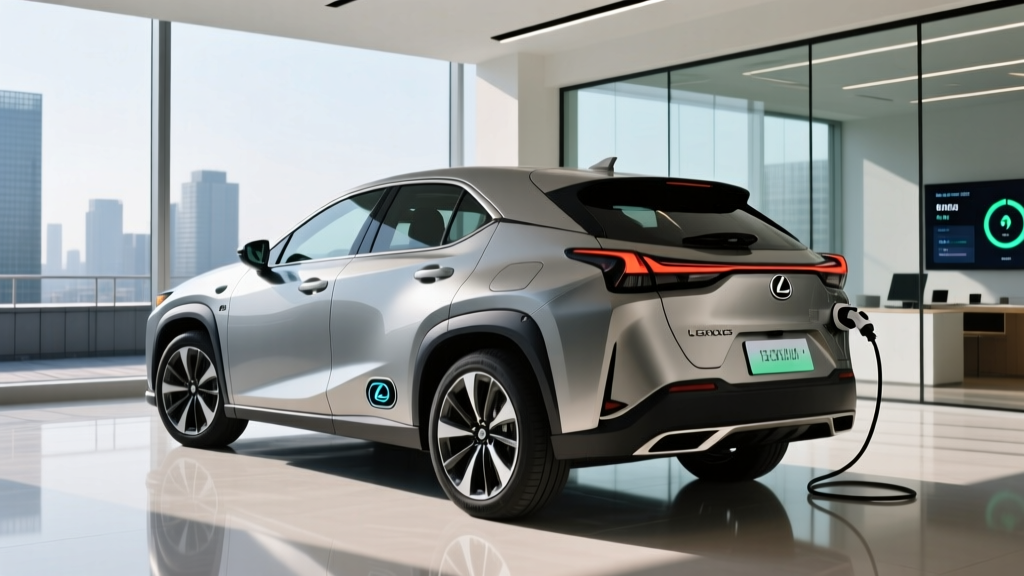
If you've been searching for a Lexus UX hybrid lease, you've likely noticed something: the UX 250h is one of the most fuel-efficient luxury subcompact crossovers on the market, yet it rarely shows up in EV tax credit conversations. That's because it's a conventional hybrid (HEV), not a plug-in — and that distinction matters enormously for your wallet, your daily routine, and whether leasing makes financial sense in 2026.
This guide covers everything a lease-minded buyer needs: exact EPA MPG figures, real-world fuel economy data, powertrain specs, battery longevity, warranty coverage, pricing by trim, and a clear decision framework for whether the UX 250h is the right electrified vehicle for you — or whether a PHEV or full BEV would serve you better.
2026 Lexus UX 250h: Powertrain and Key Specs at a Glance
| Specification | 2026 Lexus UX 250h |
|---|---|
| Powertrain Type | Conventional Hybrid (HEV) — no plug required |
| Engine | 2.0L inline-4 Atkinson-cycle + dual electric motors |
| Combined Horsepower | 181 hp |
| Drivetrain | FWD standard; E-Four AWD available |
| Transmission | eCVT (electronically controlled continuously variable) |
| Hybrid Battery | ~1.4 kWh nickel-metal hydride (NiMH) |
| 0–60 mph | ~8.0 seconds (FWD) |
| EPA Fuel Economy (FWD) | 43 city / 41 highway / 42 combined MPG |
| EPA Fuel Economy (AWD) | 41 city / 38 highway / 39 combined MPG |
| Fuel Tank Capacity | 10.6 gallons |
| Total Driving Range | ~445 miles (FWD combined) |
| Cargo Volume | 21.7 cu ft (rear seats up) / 46.2 cu ft (folded) |
The UX 250h pairs a 2.0-liter four-cylinder engine running the Atkinson cycle (optimized for efficiency over peak power) with two electric motor-generators and an eCVT. The result is seamless electric-assisted acceleration at low speeds and regenerative braking that recaptures energy you'd otherwise waste as heat. There is no plug, no charging cable, and no electric-only driving mode of meaningful distance. The small hybrid battery charges itself through regeneration and the engine.
How Many MPG Does the Lexus UX 250h Actually Get?
| Configuration | City | Highway | Combined |
|---|---|---|---|
| FWD (EPA Estimate) | 43 MPG | 41 MPG | 42 MPG |
| AWD (EPA Estimate) | 41 MPG | 38 MPG | 39 MPG |
| FWD (Real-World Mixed) | 44–47 MPG | 37–40 MPG | 40–44 MPG |
| AWD (Real-World Mixed) | 42–45 MPG | 35–38 MPG | 38–42 MPG |
Source: EPA Fuel Economy
Real-world note: Toyota/Lexus hybrids consistently outperform their EPA city estimates in stop-and-go driving because regenerative braking captures more energy at lower speeds. On the highway, however, aerodynamic drag dominates and the small engine works harder — expect highway MPG to dip 2–4 MPG below the sticker, especially at speeds above 70 mph or in cold weather when the engine runs more frequently to provide cabin heat.
For a 15,000-mile/year driver averaging 42 MPG combined, annual fuel consumption is approximately 357 gallons. At $3.40/gallon (2026 national average for regular unleaded), that's roughly $1,214 per year in fuel — compared to about $1,870 for a comparable non-hybrid luxury crossover averaging 27 MPG.
HEV vs. PHEV vs. Full EV: Which Is Right for You?
The UX 250h is a conventional hybrid. It does not plug in. If you're comparing it to plug-in hybrids or battery-electric vehicles, here's how the three categories stack up for different lifestyles:
| Factor | HEV (UX 250h) | PHEV (e.g., Toyota RAV4 Prime) | BEV (e.g., Tesla Model Y) |
|---|---|---|---|
| Plug-in Required? | No | Yes (for EV range) | Yes (always) |
| Electric-Only Range | ~1 mile at low speed | 35–42 miles typical | 280–330+ miles |
| Total Range | ~445 miles | ~550+ miles combined | 280–330+ miles |
| Home Charging Needed? | No | Recommended (120V OK, 240V ideal) | Yes (240V Level 2 strongly recommended) |
| Federal Tax Credit (§30D) | Not eligible | Up to $7,500 (if eligible) | Up to $7,500 (if eligible) |
| Best For | No home charging access; want simplicity | Short commute + home charging + road trips | Home charging + daily driving under 300 mi |
| Maintenance Complexity | Lowest (no plug, proven system) | Moderate (two systems to maintain) | Lowest (no engine, no oil changes) |
Choose the UX 250h HEV if: You rent or live in a condo without charging access, you want a luxury badge with minimal complexity, and your priority is reducing fuel costs without changing your refueling habits.
Choose a PHEV if: You have home or workplace Level 2 charging, your commute is under 40 miles round-trip (so you can drive mostly on electricity), but you also take regular road trips where gas flexibility matters.
Choose a BEV if: You have reliable home charging, want the lowest per-mile energy cost, and are comfortable planning around DC fast charging on longer trips.
2026 Lexus UX 250h Lease Pricing and Monthly Cost
| Trim Level | MSRP (2026 Est.) | Typical Lease (36 mo / 10K mi) |
|---|---|---|
| UX 250h Base (FWD) | $38,450 | $479–$539/mo |
| UX 250h Premium (FWD) | $40,950 | $519–$579/mo |
| UX 250h F SPORT Handling (AWD) | $44,600 | $569–$629/mo |
| UX 250h Luxury (AWD) | $46,150 | $589–$649/mo |
Lease pricing varies by region, dealer, money factor, and residual value. Lexus Financial Services typically sets residuals between 52–56% for the UX 250h on a 36-month lease, which is competitive for the luxury subcompact segment. The hybrid powertrain's strong resale value helps keep monthly payments reasonable.
Does the Lexus UX 250h Qualify for a Federal Tax Credit?
No. The UX 250h is a conventional hybrid (HEV) and does not qualify for the IRS §30D Clean Vehicle Credit. That credit applies only to plug-in electric vehicles (BEVs and PHEVs) meeting battery-sourcing, MSRP, and buyer income requirements.
However, some states offer rebates or tax incentives for conventional hybrids. Check your state's energy office or the Alternative Fuels Data Center for current local incentives. If you purchase (not lease) and itemize, certain energy-efficient deductions may apply — consult a tax professional.
For lessees: under current IRS rules, the §30D credit on leased EVs/PHEVs flows to the leasing company (the lessor), which may or may not pass savings to you as a capitalized-cost reduction. Since the UX 250h doesn't qualify regardless, this isn't a factor here — but it's critical to understand if you cross-shop with a PHEV.
Battery Longevity, Warranty, and Replacement Cost
This is the number-one concern for hybrid buyers, and it's where Lexus/Toyota's track record stands out.
Lexus UX 250h Hybrid Battery Warranty
- Hybrid Battery Coverage: 10 years / 150,000 miles (whichever comes first) — covers the hybrid traction battery and related components
- Powertrain Warranty: 6 years / 70,000 miles
- Basic (Bumper-to-Bumper): 4 years / 50,000 miles
- Hybrid System Components: 8 years / 100,000 miles (inverter, transaxle, control modules)
Real-world longevity data: Toyota and Lexus hybrid batteries routinely last 150,000–200,000+ miles. The UX 250h uses a relatively small nickel-metal hydride (NiMH) pack that is shallow-cycled — it never fully depletes or fully charges, which dramatically extends cell life. Toyota's hybrid synergy drive system has been in production since 1997 (Prius), and failure rates on modern hybrid batteries are well under 2% within the warranty period.
Out-of-warranty replacement cost: If the hybrid battery does fail after the 10-year/150,000-mile window, a new OEM replacement runs approximately $2,500–$3,800 including labor at a Lexus dealer. Third-party refurbished packs are available for $1,200–$2,000. Given the UX's age (introduced 2019), very few are currently outside warranty.
For lessees: A 36-month lease puts you well within all warranty coverage. Battery degradation or failure during your lease is the leasing company's problem, not yours.
Reliability and Ownership Costs
Lexus consistently ranks at or near the top of J.D. Power Vehicle Dependability Studies and Consumer Reports reliability surveys. The UX 250h benefits from:
- Proven powertrain: The 2.0L hybrid system shares architecture with the Toyota Corolla Hybrid and Prius — millions of units on the road
- eCVT simplicity: Unlike traditional automatic or dual-clutch transmissions, the planetary-gear eCVT has no clutches, bands, or torque converter to wear out
- Regenerative braking: Extends brake pad life significantly — many Lexus hybrid owners report original brake pads at 80,000+ miles
- Insurance: Typically 5–10% lower than comparable BEVs due to lower repair costs and established parts availability
Estimated 5-year total cost of ownership for a UX 250h (FWD, 15K miles/year):
| Category | Estimated 5-Year Cost |
|---|---|
| Fuel (42 MPG combined, $3.40/gal) | $6,070 |
| Maintenance (oil, filters, brakes, tires) | $3,200 |
| Insurance (national avg. luxury subcompact) | $8,500 |
| Depreciation (estimated) | $14,500 |
| Repairs (out of pocket, within warranty) | $400 |
| Total (purchase scenario) | ~$32,670 |
For a lease scenario, your primary costs are monthly payments, fuel, insurance, and any disposition fee (~$350–$400) at lease end. Maintenance is often included for the first 2 years / 20,000 miles through Lexus's complimentary scheduled maintenance program.
Who Should Lease the Lexus UX 250h — And Who Shouldn't
Lease the UX 250h If You...
- Want luxury-crossover comfort with 40+ MPG without plugging in
- Live in an apartment or condo with no charging access
- Prefer the lowest possible maintenance burden
- Drive 10,000–12,000 miles/year (ideal for a 10K–12K lease)
- Value Lexus reliability and dealer experience
- Want to swap vehicles every 3 years without resale hassle
Look Elsewhere If You...
- Want electric-only commuting (consider a PHEV like the RAV4 Prime)
- Want to claim the $7,500 federal EV tax credit
- Need more than 21.7 cu ft of cargo space (UX is compact)
- Drive more than 15,000 miles/year (excess-mile penalties apply)
- Want the lowest possible per-mile energy cost (BEV wins)
- Prefer sporty driving dynamics (the UX prioritizes comfort over performance)
Frequently Asked Questions
How many MPG does the Lexus UX 250h get in real-world driving?
In mixed driving, expect 40–44 MPG with the FWD model. City-heavy commutes with frequent stops can push it to 45–47 MPG thanks to aggressive regenerative braking. Highway-only driving at 75+ mph may drop to 36–38 MPG. Cold weather (below 30°F) typically reduces fuel economy by 3–5 MPG due to increased engine runtime for cabin heating.
Does the Lexus UX hybrid need to be plugged in?
No. The UX 250h is a conventional hybrid (HEV). Its small battery recharges through regenerative braking and the gasoline engine. You fuel it exactly like a regular car — at a gas station. There is no plug, no charging cable, and no electric-only driving range beyond trivial low-speed maneuvers.
Is the Lexus UX 250h reliable long-term?
Yes. Lexus and Toyota hybrid systems have over 25 years of proven reliability. The UX 250h's hybrid battery is warrantied for 10 years/150,000 miles, and real-world data shows these batteries commonly last 150,000–200,000+ miles. The eCVT transmission has no wearable clutch components. Lexus ranks #1 or #2 in most J.D. Power dependability studies.
What does a Lexus hybrid battery replacement cost?
An OEM hybrid battery replacement for the UX 250h costs approximately $2,500–$3,800 at a Lexus dealer, including labor. Refurbished third-party batteries run $1,200–$2,000. However, given the 10-year/150,000-mile warranty and typical battery lifespan exceeding 150,000 miles, most owners never face this cost. Lessees are fully covered during their lease term.
Does the Lexus UX 250h qualify for any tax credit?
No federal tax credit applies. The IRS §30D Clean Vehicle Credit is limited to plug-in vehicles (BEVs and PHEVs) with qualifying battery sourcing. The UX 250h, as a conventional hybrid, is ineligible. Some states may offer small incentives for high-efficiency vehicles — check the Alternative Fuels Data Center for your state's current programs.
How does the UX 250h compare to a PHEV like the Toyota RAV4 Prime?
The RAV4 Prime offers 42 miles of electric-only range and qualifies for up to $7,500 in federal tax credits (subject to IRS §30D eligibility). It's larger, more powerful (302 hp), and more expensive ($44,000+ MSRP). The UX 250h sacrifices electric-only driving and the tax credit but costs less, requires no charging infrastructure, and delivers comparable combined MPG once the RAV4 Prime's battery is depleted (~35–38 MPG in hybrid mode).
Is leasing or buying the UX 250h a better deal in 2026?
Leasing makes sense if you value lower monthly payments, want to stay under warranty indefinitely, and don't mind mileage restrictions. Buying (or financing) makes sense if you drive 15,000+ miles/year, plan to keep the vehicle 5+ years, and want to build equity. The UX 250h holds value well — Lexus residuals are among the best in the luxury segment — which narrows the lease-vs-buy gap compared to brands that depreciate faster.
Specs and pricing reflect 2026 model-year estimates based on manufacturer data and may vary by trim and region. Always confirm current MSRP, lease terms, and incentive eligibility with your local Lexus dealer and the IRS before signing.