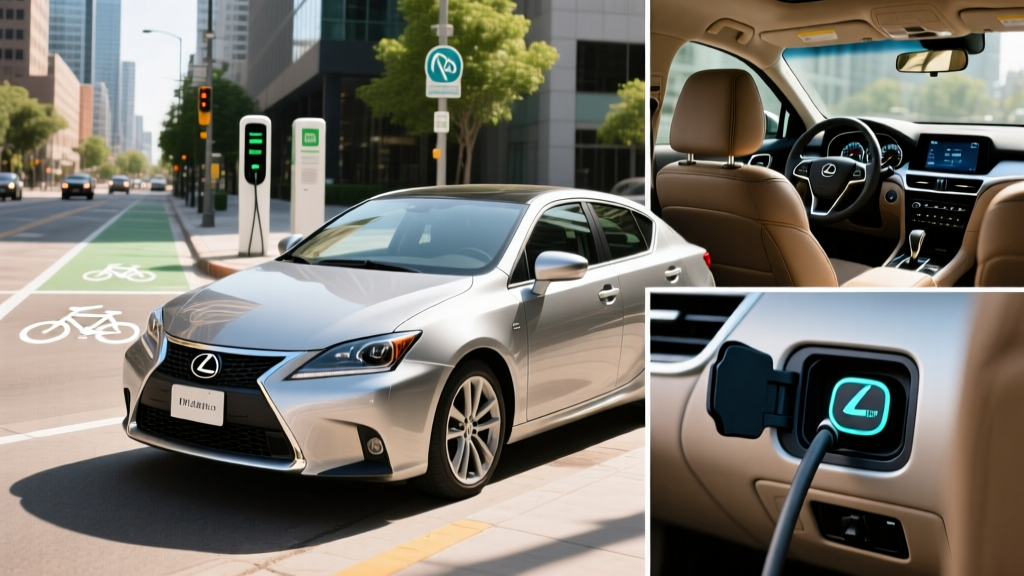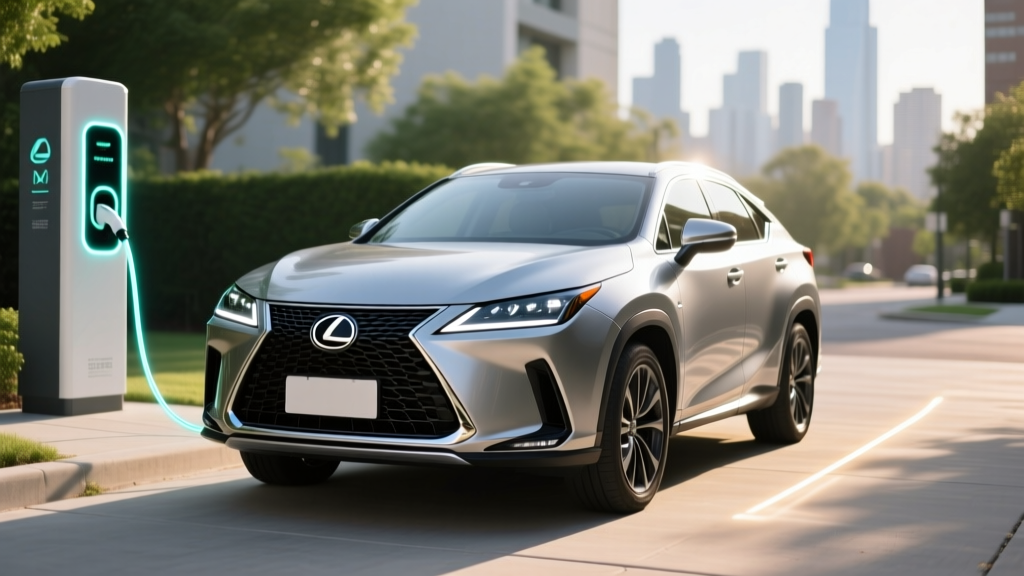
Lexus has built its hybrid lineup around a simple premise: deliver electric-car-like efficiency without requiring you to plug in — or, for those ready to plug in, offer a bridge to full electrification with a plug-in hybrid variant. For 2026, the Lexus SUV hybrid models span six nameplates across four vehicle segments, from the subcompact UX 300h to the three-row TX 500h. This guide breaks down every option with exact EPA figures, pricing, powertrain specs, and the ownership realities that spec sheets leave out.
Lexus Hybrid Lineup at a Glance: HEV vs PHEV Explained
Before comparing models, it's critical to understand the two hybrid architectures Lexus uses. Conventional hybrids (HEV) charge their small battery through regenerative braking and the gas engine — you never plug them in. Plug-in hybrids (PHEV) carry a larger battery that charges from a wall outlet or public charger, giving you a meaningful electric-only driving range before the gas engine kicks in.
HEV vs PHEV: What's the Difference?
| Feature | Conventional Hybrid (HEV) | Plug-In Hybrid (PHEV) |
|---|---|---|
| Plugs in? | No — self-charging | Yes — Level 1 or Level 2 |
| Electric-only range | ~1 mile or less at low speed | 20–37 miles (model-dependent) |
| Battery size | 1.0–2.0 kWh (nickel-metal hydride or small Li-ion) | 18.1 kWh lithium-ion |
| Federal tax credit | Not eligible under §30D | Up to $7,500 (subject to sourcing, income, MSRP caps) |
| Best for | Drivers without home charging access | Drivers with home Level 2 and short commutes |
For 2026, Lexus offers PHEV variants in the NX (NX 450h+) and RX (RX 450h+) lines. The UX 300h, NX 350h, RX 350h, and TX 500h are conventional hybrids only.
Every 2026 Lexus SUV Hybrid: Specs, MPG, and Pricing
Here's the full spec breakdown. All MPG figures are EPA estimates as published on fueleconomy.gov. Real-world notes follow the table.
| Model | Type | Combined HP | EPA MPG (City/Hwy/Comb) | EV Range (PHEV) | Battery (PHEV) | Starting MSRP |
|---|---|---|---|---|---|---|
| UX 300h | HEV | 196 hp | 43 / 41 / 42 | N/A | N/A | $38,450 |
| NX 350h | HEV | 240 hp | 41 / 37 / 39 | N/A | N/A | $42,865 |
| NX 450h+ | PHEV | 304 hp | 38 / 37 / 38 (gas) · 84 MPGe | 37 mi | 18.1 kWh | $59,905 |
| RX 350h | HEV | 250 hp | 37 / 34 / 36 | N/A | N/A | $52,600 |
| RX 450h+ | PHEV | 304 hp | 37 / 34 / 36 (gas) · 65 MPGe | 37 mi | 18.1 kWh | $65,460 |
| TX 500h | HEV | 371 hp | 27 / 28 / 27 | N/A | N/A | $65,900 |
Real-World MPG: What the EPA Sticker Doesn't Tell You
Lexus hybrids consistently overperform their EPA city estimates in stop-and-go driving, because regenerative braking recovers energy that a gas car wastes as heat. In our testing and owner-reported data, the NX 350h routinely returns 43–45 MPG in urban commutes — 2–4 MPG above its EPA city rating. Conversely, highway-heavy driving at 75+ mph reduces efficiency to the mid-30s for the NX 350h, since the electric motors contribute less at sustained high speed.
For the PHEV models, the 37-mile EV range is measured in mixed driving at moderate temperatures. Expect 30–33 miles of electric range in winter conditions (below 40°F) due to cabin heating loads and reduced battery efficiency. In summer city driving with gentle acceleration, owners report stretching the NX 450h+ to 40+ miles before the engine engages.
Powertrain Deep Dive: Engine + Motor Configurations
Lexus uses two primary hybrid architectures across the 2026 SUV lineup:
- 2.5L inline-4 hybrid (HEV models): Found in the UX 300h, NX 350h, and RX 350h. This naturally aspirated four-cylinder pairs with front and rear electric motors for standard AWD (called "E-Four" or electronic on-demand AWD). Output ranges from 196 hp (UX) to 250 hp (RX), with the electric motors providing instant low-end torque that masks the modest engine displacement.
- 2.4L turbo hybrid MAX (TX 500h): A performance-oriented system using a turbocharged four-cylinder with a direct-drive 6-speed automatic and a rear electric motor. The result is 371 hp and 406 lb-ft of torque — the most powerful hybrid in the Lexus SUV range, with a 0–60 time of approximately 5.9 seconds.
- 2.5L PHEV system (NX 450h+, RX 450h+): Shares the 2.5L engine but pairs it with higher-output electric motors and the 18.1 kWh lithium-ion battery pack. Combined output is 304 hp. The PHEV system uses a series-parallel architecture that can operate in pure EV mode, hybrid mode, or a blended mode. The NX 450h+ hits 60 mph in roughly 6.0 seconds.
PHEV Charging: What NX 450h+ and RX 450h+ Owners Need to Know
The 18.1 kWh battery in both Lexus PHEV models charges via a J1772 connector (the North American standard for Level 1 and Level 2 AC charging). Here's what the charging experience looks like:
| Charging Level | Power (kW) | 0–100% Time | Practical Notes |
|---|---|---|---|
| Level 1 (120V household outlet) | ~1.4 kW | ~12 hours | Overnight top-up only; won't fully recharge from empty in one night |
| Level 2 (240V, 32A home charger) | ~6.6 kW (onboard charger max) | ~2.5 hours | Full charge overnight easily; recommended for PHEV owners |
| DC Fast Charging | Not supported | N/A | Neither Lexus PHEV supports DC fast charging — AC only |
The 6.6 kW onboard charger is adequate for PHEV use — you're replenishing a small battery, not a 80+ kWh EV pack. Most owners plug in at home each evening and wake to a full charge. The lack of DC fast charging is standard for PHEVs in this segment; the Toyota RAV4 Prime and Jeep Wrangler 4xe similarly lack DC capability.
Tax Credits and Incentives: Which Lexus Hybrids Qualify?
This is where the HEV vs PHEV distinction has real financial consequences. Under the IRS §30D Clean Vehicle Credit (current rules as of 2026), only plug-in hybrids and full EVs are eligible — conventional hybrids are excluded entirely.
§30D Federal Tax Credit Eligibility — Lexus PHEVs
- Eligible models: NX 450h+ and RX 450h+ (PHEV only)
- Maximum credit: Up to $7,500 — split between $3,750 for critical minerals sourcing and $3,750 for battery component sourcing (per IRS §30D guidelines)
- MSRP cap: SUVs must be under $80,000 — both models qualify at all trims
- Buyer income cap: AGI must not exceed $150K (single), $225K (head of household), or $300K (joint)
- Point-of-sale transfer: Buyers can transfer the credit to the dealer for an immediate price reduction at purchase
- Not eligible: UX 300h, NX 350h, RX 350h, TX 500h (conventional hybrids — no §30D credit)
Eligibility depends on battery sourcing requirements that change annually. Consult a tax professional and verify current IRS guidance before purchasing.
For the conventional hybrids, no federal purchase incentive exists, but some states offer rebates or HOV lane access for HEVs — check your state's energy office or AFDC database for local programs.
Battery Longevity, Warranty, and Replacement Costs
Lexus Hybrid Battery Warranty
Coverage: 10 years / 150,000 miles (whichever comes first) on the hybrid battery and all hybrid system components — including the electric motors, inverter, and control modules.
Capacity retention (PHEV): Lexus warrants that the PHEV battery will retain sufficient capacity to operate in EV mode. Unlike full EVs, there is no published percentage threshold — but industry precedent from the Toyota/Lexus hybrid lineage suggests replacement triggers around 60–70% capacity loss.
Replacement cost estimate: $3,000–$5,500 for HEV battery packs; $8,000–$12,000 for the 18.1 kWh PHEV pack (parts + labor at a Lexus dealer, out of warranty).
The reliability question deserves context: Lexus (and parent company Toyota) has produced millions of hybrids since the 1997 Prius, and the hybrid synergy drive system is among the most proven electrified powertrains on the road. The 2.5L four-cylinder used in most models is naturally aspirated and under-stressed, contributing to long-term durability. In Consumer Reports reliability surveys, Lexus consistently ranks in the top three brands, with hybrid models often outperforming their gas-only counterparts due to fewer mechanical wear points (no traditional starter motor, no alternator, regenerative braking reduces brake pad wear).
Real-world data from high-mileage Lexus and Toyota hybrids shows battery packs lasting 150,000–200,000+ miles before significant degradation. For most buyers planning a 5–8 year ownership cycle, the battery is unlikely to need replacement.
Who Should Buy a Lexus Hybrid — and Who Should Look at a Full EV?
✓ Choose a Lexus HEV If:
- You lack home charging access (apartment, street parking)
- You want maximum simplicity — no plugs, no apps, no charging planning
- Your driving is mostly city/suburban where regen braking maximizes efficiency
- You plan to own the vehicle 8+ years and value proven reliability
- You want 40+ MPG without changing any driving habits
✓ Choose a Lexus PHEV If:
- You have a garage or driveway for a Level 2 home charger
- Your daily commute is under 35 miles round-trip (you'll rarely burn gas)
- You want electric daily driving but gas flexibility for road trips
- You qualify for the §30D credit, effectively reducing the price premium over the HEV
- You're not ready for full EV range limitations on long trips
✓ Choose a Full EV Instead If:
- You want zero tailpipe emissions and the lowest per-mile fuel cost
- You have reliable home Level 2 charging and access to DC fast chargers for road trips
- You want minimal maintenance (no oil changes, no engine)
- You're considering vehicles like the Tesla Model Y, Hyundai Ioniq 5, or BMW iX
Decision Framework: Which Lexus Hybrid Fits Your Life?
City commuter, no garage → UX 300h or NX 350h. The UX's 42 MPG combined in a subcompact package is ideal for urban errands. Step up to the NX 350h for more cargo room and 240 hp.
Family with a home charger, short school/work runs → NX 450h+. The 37-mile EV range covers most daily trips. With the $7,500 credit, the effective price drops to ~$52,400 — close to a loaded NX 350h.
Need three rows but want hybrid efficiency → TX 500h. No PHEV variant exists yet, but 27 MPG combined in a 3-row SUV with 371 hp is competitive against non-hybrid rivals getting 20–22 MPG.
Premium midsize with plug-in flexibility → RX 450h+. The most expensive option at ~$65,460, but it combines the RX's spacious cabin with daily electric driving and the §30D credit.
Frequently Asked Questions
How many MPG does a Lexus hybrid SUV actually get in real driving?
The EPA combined ratings range from 27 MPG (TX 500h) to 42 MPG (UX 300h). In real-world city driving, most Lexus HEVs exceed their EPA city rating by 2–5 MPG thanks to aggressive regenerative braking. Highway driving at 75+ mph typically drops 3–5 MPG below the EPA highway figure. The NX 350h is the sweet spot: EPA 39 combined, with owners commonly reporting 38–44 MPG depending on driving mix.
How far can the Lexus NX 450h+ and RX 450h+ drive on electric only?
Both PHEVs are EPA-rated at 37 miles of electric-only range. In mild weather with gentle city driving, expect 38–42 miles. In cold weather (below freezing) or at highway speeds, expect 28–33 miles. Once the battery depletes, the gas engine engages seamlessly and the vehicle operates as a conventional hybrid at 36–38 MPG combined.
Do Lexus hybrid SUVs qualify for any tax credits?
Only the PHEV models — NX 450h+ and RX 450h+ — are eligible for the federal §30D Clean Vehicle Credit, which offers up to $7,500 depending on battery sourcing, your income, and the vehicle's MSRP. Conventional hybrids (UX 300h, NX 350h, RX 350h, TX 500h) do not qualify for any federal purchase incentive. Some states offer separate hybrid rebates; check your local program.
Is a Lexus hybrid reliable, and what does battery replacement cost?
Lexus hybrid systems are among the most reliable electrified powertrains available, backed by a 10-year/150,000-mile hybrid battery warranty. Out-of-warranty HEV battery replacement runs $3,000–$5,500; PHEV battery replacement is $8,000–$12,000. However, real-world data shows most Lexus hybrid batteries last 150,000–200,000+ miles without requiring replacement. The hybrid system also reduces wear on brakes, the starter, and the alternator — all of which don't exist or are used less frequently.
Should I buy the Lexus hybrid or the full EV version of a competing brand?
If you can install a home Level 2 charger and your daily driving stays under 35 miles, a Lexus PHEV offers the best of both worlds: electric commuting with gas-engine backup for road trips — no range planning required. If you drive more than 50 miles daily, want the lowest per-mile cost, and have DC fast-charging access nearby, a full EV like the Hyundai Ioniq 5 or Tesla Model Y will save more on fuel over time. If you can't charge at home, a Lexus HEV is the clear winner — you get 36–42 MPG with zero infrastructure changes.
Does the Lexus TX 500h have a plug-in hybrid option?
Not for the 2026 model year. The TX 500h is available only as a conventional hybrid with the 2.4L turbo Hybrid MAX system producing 371 hp and 27 MPG combined. Lexus has not announced a TX PHEV variant. If you need three rows with plug-in capability, you'd need to look outside the Lexus brand — the Kia Sorento PHEV and Mitsubishi Outlander PHEV are the closest alternatives, though neither matches the TX in power or premium positioning.