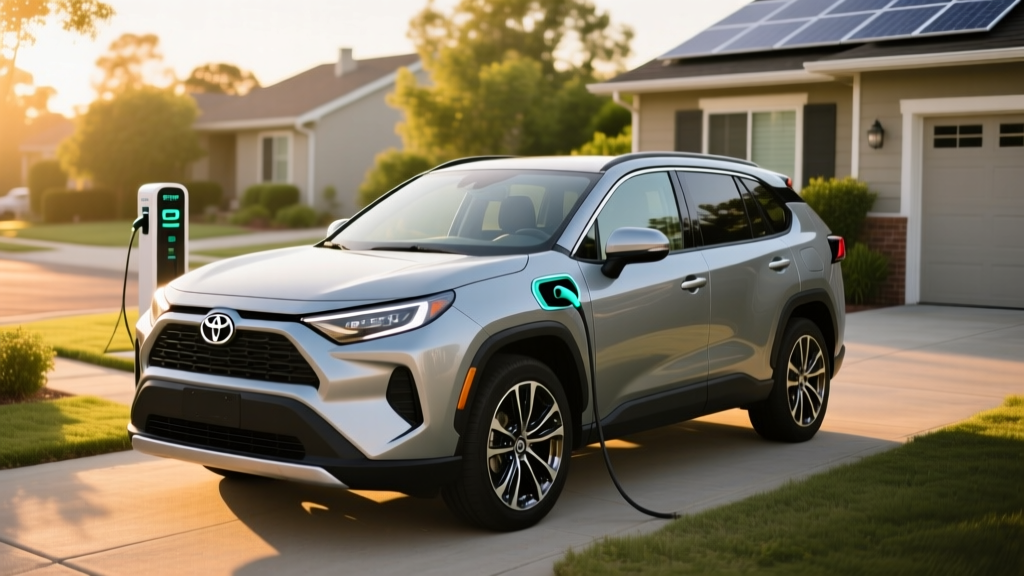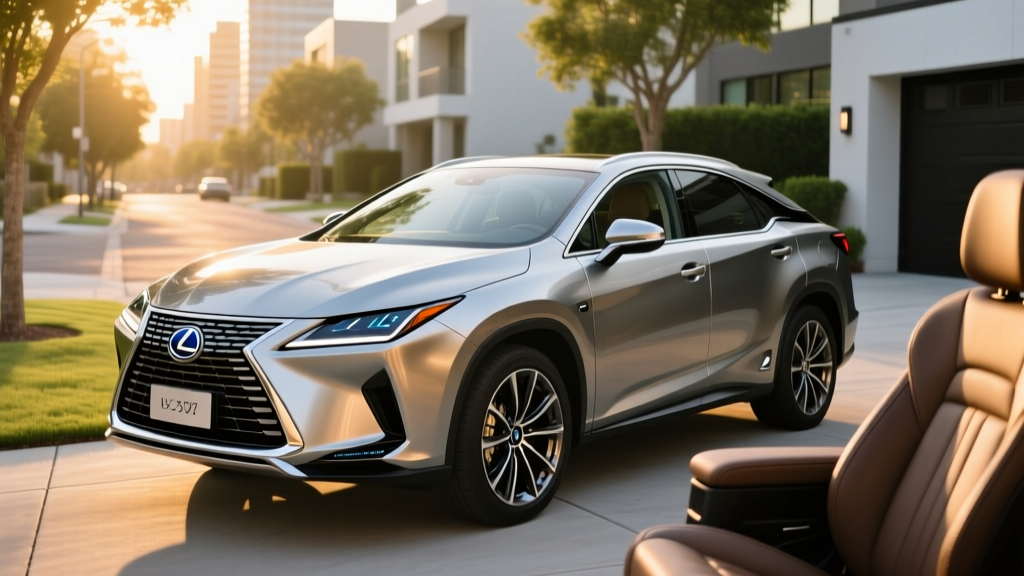
The midsize luxury SUV segment is crowded, but the Lexus RX 350h hybrid occupies a distinct lane: a conventional hybrid electric vehicle (HEV) that prioritizes fuel economy, refinement, and long-term reliability over raw performance or plug-in capability. For the 2026 model year, the RX 350h continues as the volume-selling hybrid in the RX lineup, sitting between the more powerful RX 500h turbo hybrid and the plug-in RX 450h+.
If you are researching the Lexus RX 350 hybrid, you will encounter two electrified variants: the RX 350h (a self-charging HEV) and the RX 450h+ (a plug-in hybrid). This guide focuses on the RX 350h while clarifying where the PHEV variant fits, so you can choose the right powertrain for your driving patterns.
HEV vs PHEV: Which Lexus RX Hybrid Is Which?
Before diving into specs, it is critical to distinguish the two hybrid RX models. Confusing them is one of the most common mistakes buyers make.
| Attribute | RX 350h (HEV) | RX 450h+ (PHEV) |
|---|---|---|
| Powertrain Type | Conventional Hybrid (no plug) | Plug-in Hybrid (requires plug for EV range) |
| Electric-Only Range | None (EV assist only at low speeds) | ~37 miles (EPA est.) |
| Battery Size | ~1.6 kWh (small, self-charging) | ~18.1 kWh usable |
| Charging | Regenerative braking + engine only | Level 2 AC (~3 hrs); no DC fast charge |
| Combined MPG / MPGe | 36 MPG combined | 65 MPGe (EV+gas); 35 MPG (gas only) |
| Federal Tax Credit | Not eligible (§30D requires plug-in) | Up to $7,500 (subject to §30D rules) |
| Base MSRP (2026 est.) | ~$52,750 | ~$63,550 |
The RX 350h never plugs in. Its small battery charges through regenerative braking and the gasoline engine. The RX 450h+ has a much larger battery you charge via a wall outlet or Level 2 station, enabling around 37 miles of pure electric driving before the gasoline engine engages.
Fuel Economy: EPA Ratings and Real-World MPG
The headline number for the Lexus RX 350h hybrid is its EPA-estimated fuel economy. Here is the full breakdown for the 2026 model year with front-wheel-drive and all-wheel-drive configurations:
| Configuration | City MPG | Highway MPG | Combined MPG |
|---|---|---|---|
| RX 350h FWD | 37 | 34 | 36 |
| RX 350h AWD | 37 | 34 | 36 |
Source: EPA Fuel Economy
Real-World MPG vs. EPA Sticker
Conventional hybrids like the RX 350h tend to outperform their EPA city estimates in stop-and-go traffic, where regenerative braking captures energy that would otherwise be wasted as heat. In mixed suburban driving, owners frequently report 37–39 MPG in warm weather.
Highway driving is where the RX 350h falls slightly short of its sticker. At sustained 70–80 mph speeds, the electric motor provides minimal assist, and the 2.5-liter four-cylinder engine does most of the work. Expect 32–34 MPG on long highway trips. Cold weather (below 40°F) reduces fuel economy by roughly 5–8% due to increased engine runtime for cabin heat and reduced battery efficiency.
For comparison, the non-hybrid RX 350 (turbocharged 2.4L, gas-only) returns 25 MPG combined — meaning the 350h delivers a 44% fuel economy improvement.
Powertrain Specs: Engine, Motors, and Horsepower
| Specification | 2026 Lexus RX 350h |
|---|---|
| Engine | 2.5L inline-4 Atkinson cycle |
| Engine Output | 184 hp / 184 lb-ft torque |
| Electric Motor(s) | Front: 134 kW; AWD adds rear: 40 kW |
| Combined System Output | 246 hp |
| Transmission | eCVT (electronically controlled) |
| Drivetrain | FWD or AWD (electronic rear motor) |
| 0–60 mph | 7.4 seconds (est.) |
| Towing Capacity | Not rated for towing |
| Battery Type | Nickel-metal hydride (NiMH), ~1.6 kWh |
The RX 350h uses Toyota/Lexus's fourth-generation hybrid system. The Atkinson-cycle engine sacrifices peak power for thermal efficiency, while the electric motor fills in torque at low RPMs. The result is seamless acceleration from a stop — the electric motor handles initial movement, and the engine engages progressively. The eCVT is not a traditional belt-and-pulley CVT; it uses a planetary gearset that is mechanically simple and highly reliable.
The AWD variant (branded "E-Four") does not use a mechanical driveshaft. Instead, a separate 40 kW rear electric motor powers the rear axle when traction demands it. This system adds minimal weight and avoids the parasitic drivetrain losses of a conventional AWD setup.
Pricing, Trims, and Tax Credit Eligibility
The 2026 Lexus RX 350h is available in five trims. Pricing (including destination) starts at approximately $52,750:
- Premium: ~$52,750
- Premium+: ~$55,250
- Luxury: ~$59,750
- F SPORT Handling: ~$57,250
- F SPORT Design: ~$55,750
Does the Lexus RX 350h Qualify for a Federal Tax Credit?
No. The RX 350h is a conventional hybrid (HEV), not a plug-in vehicle. The federal §30D Clean Vehicle Credit applies only to plug-in electric vehicles (BEVs and PHEVs) with a battery capacity of at least 7 kWh. Since the RX 350h's battery is approximately 1.6 kWh and the vehicle cannot be plugged in, it does not qualify for any federal EV tax credit.
If tax-credit eligibility is a priority, the RX 450h+ PHEV may qualify for up to $7,500 under current IRS §30D rules, subject to buyer income caps ($150K single / $300K joint), MSRP caps ($80K for SUVs), and battery-component/critical-minerals sourcing requirements. Always verify current-year eligibility with a tax professional, as sourcing rules tighten annually.
Some states offer their own hybrid or clean-vehicle rebates that may partially apply to HEVs. Check your state energy office or AFDC state incentive database for local programs.
Battery Warranty, Lifespan, and Replacement Cost
Lexus Hybrid Battery Warranty: 10 years or 150,000 miles (whichever comes first), covering defects and capacity loss below a specified threshold. This applies to all 2026 Lexus hybrid models, including the RX 350h.
How Long Does the RX 350h Hybrid Battery Last?
Lexus uses a nickel-metal hydride (NiMH) battery in the RX 350h — a chemistry proven over two decades of Toyota/Lexus hybrid production. Unlike the lithium-ion packs in full EVs, this small NiMH pack operates within a narrow state-of-charge window (roughly 40–80%), managed by the vehicle's computer to minimize degradation.
Based on historical data from millions of Toyota/Lexus hybrids on the road, hybrid battery packs routinely last 150,000–200,000+ miles before significant capacity loss. Many first-generation Prius and RX 400h units are still operating on original batteries past 200,000 miles.
Hybrid Battery Replacement Cost
If the hybrid battery does fail outside warranty, a replacement NiMH pack for the RX 350h costs approximately $3,000–$4,500 (parts and labor at a Lexus dealer). Independent hybrid specialists often offer refurbished packs for $2,000–$2,800. Given the 10-year/150,000-mile warranty and the proven longevity of NiMH chemistry, battery replacement is a low-probability event during typical ownership.
Reliability and Long-Term Ownership
The Lexus RX has historically been one of the highest-rated vehicles for long-term reliability in the luxury segment. The hybrid powertrain adds complexity (electric motors, power electronics, regenerative braking) but eliminates several failure-prone components found in conventional vehicles: there is no traditional automatic transmission with clutch packs or torque converter, no starter motor, and no alternator. The eCVT planetary gearset has fewer moving parts than a conventional transmission.
Brake wear is significantly reduced thanks to regenerative braking, which handles most deceleration without engaging the friction brakes. Many RX hybrid owners report original brake pads lasting 80,000–100,000 miles.
Lexus's overall reliability ratings from Consumer Reports consistently place the brand in the top tier, and the RX is typically among the brand's most dependable models.
Who Should Choose the RX 350h vs. a PHEV or Full EV?
Choose the RX 350h (HEV) if:
- You cannot charge at home (apartment, street parking, no garage outlet)
- You want maximum simplicity — no plug, no charging apps, no route planning
- Your daily commute is longer than 37 miles, making PHEV EV-range less impactful
- You prioritize proven long-term reliability and low maintenance costs
- You drive 12,000–15,000 miles/year and want to cut fuel costs by ~40% vs. gas-only
Choose the RX 450h+ (PHEV) if:
- You have Level 2 home charging and a commute under 37 miles round-trip
- You want to drive mostly on electricity on weekdays, with gas flexibility for road trips
- You qualify for the §30D tax credit (up to $7,500), narrowing the price gap
- You want the quietest, smoothest daily driving experience
Choose a full EV (e.g., Tesla Model Y, BMW iX, Genesis GV60) if:
- You have reliable home Level 2 charging
- You want zero tailpipe emissions and the lowest per-mile energy cost
- You are comfortable with public DC fast charging for road trips
- You want maximum performance and instant torque
Pros and Cons at a Glance
Pros
- 36 MPG combined — exceptional for a 4,500-lb luxury SUV
- No plug-in required; zero behavior change from a gas car
- 10-year/150,000-mile hybrid battery warranty
- Proven, reliable eCVT powertrain with decades of data
- Quiet, refined ride quality with Lexus build standards
- Standard Lexus Safety System+ 3.0 (ADAS suite)
Cons
- No federal tax credit eligibility (HEV, not plug-in)
- Modest 246 hp — slower than turbocharged competitors
- Highway MPG drops to ~32–34 at sustained 75+ mph
- Not rated for towing (zero tow capacity)
- Base price ~$7,000 above gas-only RX 350
- Four-cylinder engine can sound coarse under hard acceleration
Frequently Asked Questions
How many MPG does the Lexus RX 350h hybrid get?
The 2026 Lexus RX 350h is EPA-rated at 37 city / 34 highway / 36 combined MPG for both FWD and AWD configurations. Real-world city driving often yields 37–39 MPG, while sustained highway driving returns 32–34 MPG.
Does the Lexus RX 350h need to be plugged in?
No. The RX 350h is a conventional hybrid (HEV). Its small battery charges entirely through regenerative braking and the gasoline engine. You fuel it exactly like a regular gas car — no plug, no charger, no apps required.
How far can the Lexus RX hybrid go on electric only?
The RX 350h (HEV) has no meaningful electric-only range. The electric motor assists at low speeds and during acceleration but cannot propel the vehicle independently for more than a fraction of a mile. If electric-only driving is a priority, the RX 450h+ PHEV offers approximately 37 miles of EV range.
Is the Lexus RX 350h hybrid reliable?
Yes. The Lexus hybrid system is one of the most proven electrified powertrains in production, with over 20 years of real-world data from Toyota and Lexus vehicles. The NiMH battery, eCVT, and electric motors have demonstrated exceptional longevity, often exceeding 200,000 miles with proper maintenance.
What is the hybrid battery replacement cost for the RX 350h?
A new OEM hybrid battery replacement costs approximately $3,000–$4,500 at a Lexus dealer. Refurbished packs from independent specialists run $2,000–$2,800. However, the 10-year/150,000-mile warranty and proven NiMH longevity make out-of-warranty replacement uncommon during typical ownership.
Does the Lexus RX 350h qualify for any tax credit?
No federal tax credit applies to the RX 350h because it is a conventional hybrid, not a plug-in vehicle. The federal §30D credit requires a plug-in vehicle with at least 7 kWh of battery capacity. Some state or local programs may offer small incentives for hybrids — check your state's clean-vehicle incentive database.
How does the RX 350h compare to the gas-only RX 350?
The gas-only RX 350 (turbocharged 2.4L) produces 275 hp but returns only 25 MPG combined. The RX 350h trades 29 horsepower for a 44% fuel economy improvement (36 vs. 25 MPG combined). Over 5 years and 75,000 miles, the 350h saves approximately $3,500–$4,500 in fuel costs at $3.50/gallon, partially offsetting its higher purchase price.
What is the difference between the RX 350h and RX 500h?
The RX 500h F SPORT Performance uses a turbocharged 2.4L hybrid powertrain producing 366 hp with a conventional 6-speed automatic (not eCVT). It returns 28 MPG combined and starts around $62,000. It targets buyers who want hybrid efficiency with significantly more performance.