Quick Verdict: Which Lexus RX Hybrid Saves You the Most at the Pump?
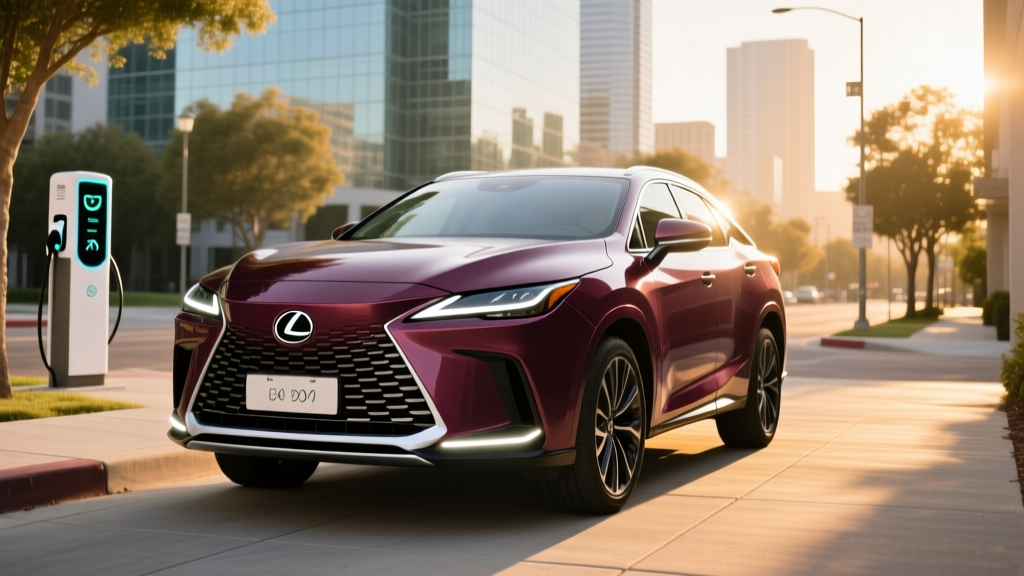
The 2026 Lexus RX lineup offers two distinct electrified paths: the conventional RX 350h hybrid (HEV) and the plug-in RX 450h+ (PHEV). Both deliver class-leading efficiency for a midsize luxury SUV, but they serve very different ownership styles. The RX 350h returns an EPA-estimated 36 MPG combined with zero lifestyle change — no plugging in, no range planning. The RX 450h+ PHEV delivers 37 miles of electric-only driving and 37 MPGe combined, but demands access to charging infrastructure to realize its efficiency advantage.
Below, we break down every efficiency number, powertrain spec, and ownership cost that matters — with real-world caveats the EPA sticker won't tell you.
HEV vs PHEV: Understanding the Two RX Hybrid Powertrains
Lexus offers the RX in two hybrid configurations, and confusing them is the single most common buyer mistake. Here's the fundamental difference:
RX 350h — Conventional Hybrid (HEV)
- No plug required. The battery charges through regenerative braking and the gasoline engine.
- Self-sufficient. You fuel up at gas stations exactly like a conventional car.
- 1.6 kWh battery (small, used for assist and regen buffering).
- Best for: Drivers without home charging access, apartment dwellers, or those who want zero behavior change.
RX 450h+ — Plug-In Hybrid (PHEV)
- Plug-in charging required to access electric-only range.
- 18.1 kWh battery (usable portion) enables 37 miles of EV driving.
- Gasoline engine kicks in once battery depletes or under heavy acceleration.
- Best for: Homeowners with Level 2 charging, short commutes under 37 miles, drivers who want EV daily driving with gas flexibility for road trips.
If you can't charge at home or at work, the PHEV's electric range is wasted and you're carrying 400+ extra pounds of battery for nothing. Choose accordingly.
Lexus RX Hybrid Fuel Economy: EPA Numbers and Real-World MPG
Fuel economy is the primary reason buyers cross-shop the RX hybrid lineup. Here's the complete EPA data, verified against fueleconomy.gov:
| Metric | RX 350h (HEV) | RX 450h+ (PHEV) | RX 350 (Gas Baseline) |
|---|---|---|---|
| City MPG | 37 | 38 (gas mode) | 22 |
| Highway MPG | 34 | 34 (gas mode) | 29 |
| Combined MPG | 36 | 35 (gas mode) | 25 |
| MPGe (combined) | N/A | 37 MPGe | N/A |
| Electric-only range | N/A | 37 miles | N/A |
| Total range | ~550 miles | ~440 miles (gas + electric) | ~450 miles |
| Fuel tank | 17.2 gal | 14.5 gal | 17.2 gal |
Real-World MPG vs. EPA Sticker
RX 350h: Lexus hybrids historically exceed their EPA city estimates in real-world stop-and-go driving — expect 38-40 MPG city in moderate weather. Highway efficiency drops to roughly 30-32 MPG at sustained 75-80 mph speeds, as the electric motor provides less assist at high velocity. Combined real-world: 33-37 MPG depending on driving mix.
RX 450h+ (PHEV): The 37-mile electric range holds up well in mild weather (60-80°F) with light loads. Expect 30-32 miles in winter or at highway speeds. Once the battery depletes, the gas-only mode returns roughly 33-34 MPG combined — slightly less than the 350h due to the PHEV's heavier curb weight (~4,800 lbs vs ~4,400 lbs).
Cold weather penalty: Both models lose 10-15% efficiency below freezing. The PHEV's electric range can drop to 25-28 miles in sub-30°F conditions due to battery chemistry limitations and cabin heating demand.
Powertrain Specs: Horsepower, Engines, and Motors
Efficiency doesn't mean slow — especially for the PHEV. Here's the powertrain breakdown:
| Specification | RX 350h (HEV) | RX 450h+ (PHEV) |
|---|---|---|
| Engine | 2.5L 4-cyl + 2 electric motors | 2.5L 4-cyl + 2 electric motors |
| Combined horsepower | 246 hp | 302 hp |
| 0-60 mph | 7.4 seconds | 6.2 seconds |
| Drivetrain | AWD (e-motor rear axle) | AWD (e-motor rear axle) |
| Transmission | eCVT | eCVT |
| Towing capacity | 3,500 lbs | 3,500 lbs |
| Battery capacity | 1.6 kWh (NiMH) | 18.1 kWh (lithium-ion) |
The RX 450h+ is the performance pick — 302 hp and a 6.2-second 0-60 time put it in the territory of sport-tuned luxury SUVs. The 350h is adequate for daily driving at 7.4 seconds, which is perfectly respectable for a comfort-oriented family hauler.
RX 450h+ Charging: Speed, Connectors, and Home Setup
If you're considering the PHEV, charging logistics determine whether it makes financial sense.
| Charging Level | Power (kW) | Time (0-100%) | Notes |
|---|---|---|---|
| Level 1 (120V household) | ~1.4 kW | ~12 hours | Overnight charge possible but slow; fine for low-mileage days |
| Level 2 (240V home/public) | 6.6 kW (max onboard) | ~2.5 hours | Recommended home charging method |
| DC Fast Charging | Not supported | N/A | The RX 450h+ does NOT accept DC fast charging |
Critical note: The RX 450h+ uses a J1772 connector for Level 2 AC charging. It has no DC fast-charge capability — common for PHEVs, since the 18.1 kWh battery is small enough that Level 2 replenishes it quickly. A full charge on a home Level 2 charger takes about 2.5 hours, meaning you can easily recharge during the workday or between errands.
Home charging cost: A basic Level 2 home charger installation (240V, 40A circuit) typically costs $500-$1,500 for equipment and electrician labor, depending on your panel's proximity to the garage. The RX 450h+ draws 6.6 kW, so a standard 32A or 40A Level 2 unit is sufficient — no need for the most expensive 48A chargers on the market.
2026 Pricing, Trims, and Tax Credit Eligibility
Here's what you'll actually pay at the dealership:
| Model / Trim | MSRP (2026) | Federal Tax Credit |
|---|---|---|
| RX 350h Premium | $53,750 | Not eligible (§30D is for PHEVs/EVs only) |
| RX 350h Luxury | $58,250 | Not eligible |
| RX 450h+ Premium | $62,750 | Up to $3,750 (see below) |
| RX 450h+ Luxury | $67,250 | Up to $3,750 (see below) |
§30D Federal Tax Credit Rules for the RX 450h+ (2026)
The RX 450h+ qualifies for a partial credit of up to $3,750 under current IRS rules. Full $7,500 credits require meeting both critical-mineral AND battery-component sourcing requirements. As of 2026, the RX 450h+ meets one of the two criteria, yielding $3,750. Eligibility requirements include:
- MSRP cap: SUVs must be under $80,000 — the RX 450h+ qualifies on all trims.
- Buyer income cap: Modified AGI must not exceed $150,000 (single), $225,000 (head of household), or $300,000 (joint).
- Battery sourcing: Critical mineral and component requirements phase up annually. Verify current-year compliance on the IRS qualified vehicles list before purchasing.
- Point-of-sale transfer: You can transfer the credit to the dealer at purchase for an immediate price reduction, rather than waiting to claim it on your tax return.
Note: The conventional RX 350h HEV does not qualify for any federal tax credit. Some states offer separate hybrid incentives — check your state's energy office for details.
Battery Reliability, Warranty, and Replacement Costs
Hybrid battery longevity is the number-one concern for buyers switching from a conventional vehicle. Lexus (and parent company Toyota) has the deepest track record in hybrid battery durability in the industry — the RX hybrid lineage stretches back to the 2006 RX 400h.
Battery & Powertrain Warranty Coverage
| Hybrid battery warranty | 10 years / 150,000 miles (all 50 states) |
| Hybrid system components | 8 years / 100,000 miles |
| Powertrain warranty | 6 years / 70,000 miles |
| Basic warranty | 4 years / 50,000 miles |
Lexus's 10-year/150,000-mile hybrid battery warranty is among the most comprehensive in the luxury segment. Toyota/Lexus hybrid batteries routinely last 150,000-200,000+ miles before significant degradation, based on fleet data and owner reports spanning two decades of hybrid production.
Replacement cost if out of warranty:
- RX 350h (HEV): The 1.6 kWh NiMH battery pack is relatively small and inexpensive. Expect $2,000-$3,500 for a replacement, including labor. Refurbished units are available for $1,200-$1,800.
- RX 450h+ (PHEV): The 18.1 kWh lithium-ion pack is substantially larger. Replacement cost: $6,000-$9,000 depending on dealer pricing and labor. This is comparable to other PHEV battery replacements in the segment.
Reliability track record: Lexus consistently ranks at or near the top in J.D. Power Vehicle Dependability Studies and Consumer Reports reliability surveys. The RX hybrid powertrain is one of the most proven electrified systems on the road. The eCVT transmission has no traditional gears or clutch packs to wear out — a significant long-term durability advantage over conventional automatics.
RX Hybrid vs. Full EV vs. Gas: Which Fits Your Life?
Choose the RX 350h (HEV) if:
- You live in an apartment or lack reliable home/work charging access.
- You want maximum simplicity — fuel and go, no cables or apps.
- Your annual mileage is high (15,000+ miles) and mostly highway driving.
- You want the lowest upfront price in the electrified RX lineup.
- You frequently drive in extreme cold, where EV range loss is a concern.
Choose the RX 450h+ (PHEV) if:
- You have a garage or driveway with 240V charging access.
- Your daily commute is under 37 miles round-trip (most of your driving is electric).
- You want EV-like quiet, smooth acceleration for daily driving but need gas flexibility for road trips.
- You qualify for the $3,750 federal tax credit, narrowing the price gap with the HEV.
- You value the 302 hp performance advantage.
Consider a full EV (e.g., Tesla Model X, BMW iX) instead if:
- You have reliable home Level 2 charging and access to DC fast-charging networks.
- You want zero gasoline expenses and minimal maintenance (no oil changes, no engine).
- Your state offers additional EV-only incentives beyond the federal credit.
- You drive fewer than 300 miles between charging opportunities on road trips.
RX 350h — Pros
- 36 MPG combined — 44% more efficient than gas RX 350
- No charging infrastructure needed
- Lower MSRP, proven reliability
- Excellent city MPG (37) — hybrid advantage in traffic
- Strong resale value (Lexus brand)
RX 350h — Cons
- No federal tax credit
- Modest 246 hp — adequate but not thrilling
- Highway MPG (34) less impressive than city
- No electric-only driving capability
RX 450h+ — Pros
- 37 miles electric — covers most daily commutes
- 302 hp and 6.2s 0-60 — genuinely quick
- $3,750 federal tax credit (if eligible)
- Silent, smooth EV mode for neighborhood driving
- Full gas flexibility for long road trips
RX 450h+ — Cons
- $9,000+ premium over RX 350h (before credit)
- No DC fast charging
- Smaller fuel tank (14.5 gal) reduces total range
- Requires home charging to justify the cost premium
- Heavier — slightly worse gas-only MPG than HEV
5-Year Cost of Ownership: RX 350h vs. RX 450h+ vs. Gas RX 350
Efficiency numbers only matter if they translate to real savings. Here's a 5-year/75,000-mile ownership projection, assuming $3.50/gallon gas and $0.14/kWh electricity:
| Cost Category | RX 350 (Gas) | RX 350h (HEV) | RX 450h+ (PHEV) |
|---|---|---|---|
| Fuel / energy cost (5 yr) | $10,500 | $7,290 | $5,100 (assumes 70% electric daily driving) |
| Maintenance (5 yr) | $3,200 | $2,800 | $2,600 |
| Purchase price (base) | $50,500 | $53,750 | $62,750 |
| Federal tax credit | $0 | $0 | -$3,750 |
| Net purchase | $50,500 | $53,750 | $59,000 |
| 5-year total (purchase + fuel + maint.) | $64,200 | $63,840 | $66,700 |
Takeaway: The RX 350h essentially breaks even with the gas model over 5 years while producing fewer emissions. The RX 450h+ costs more upfront even with the tax credit, but the gap narrows significantly if your electricity rates are low, your commute is short, and gas prices rise. The PHEV's financial case strengthens the longer you own it and the more electric miles you accumulate.
Frequently Asked Questions
How many MPG does the Lexus RX hybrid get?
The 2026 Lexus RX 350h achieves an EPA-estimated 37 city / 34 highway / 36 combined MPG. The RX 450h+ PHEV returns 38 city / 34 highway / 35 combined MPG in gasoline-only mode, plus 37 MPGe when factoring in electric driving. In real-world conditions, expect 33-37 MPG combined from the 350h depending on your driving mix, with city MPG often exceeding the EPA estimate.
How far can the RX 450h+ go on electric only?
The EPA rates the RX 450h+ at 37 miles of electric-only range. In real-world mild-weather driving at moderate speeds, owners report 33-37 miles. In cold weather (below 30°F) or at sustained highway speeds, expect 25-32 miles. Once the battery depletes, the gasoline engine takes over seamlessly — you never need to worry about being stranded.
Does the Lexus RX hybrid qualify for a tax credit?
The RX 450h+ PHEV qualifies for a partial federal tax credit of up to $3,750 under 2026 IRS §30D rules, subject to buyer income caps ($150K single / $300K joint) and battery-sourcing requirements. The conventional RX 350h HEV does not qualify for any federal tax credit. Always verify current eligibility on the IRS qualified vehicles list before purchasing.
Is the Lexus RX hybrid reliable?
Yes. Lexus and Toyota have produced hybrid vehicles since 1997 (Prius) and the RX hybrid since 2006. The brand consistently tops J.D. Power dependability rankings and Consumer Reports reliability surveys. The hybrid battery is covered by a 10-year/150,000-mile warranty. Toyota/Lexus hybrid batteries routinely exceed 150,000 miles without replacement. The eCVT transmission has fewer wear components than a conventional automatic.
What does it cost to replace the hybrid battery?
For the RX 350h, replacement runs $2,000-$3,500 (new) or $1,200-$1,800 (refurbished). For the RX 450h+ PHEV, the larger 18.1 kWh lithium-ion pack costs $6,000-$9,000 to replace. Given the 10-year/150,000-mile warranty and the proven longevity of Lexus hybrid batteries, most owners will never need a replacement during their ownership period.
Can I charge the RX 350h at home?
No — and it doesn't need charging. The RX 350h is a conventional hybrid (HEV). Its small battery is charged automatically through regenerative braking and the gasoline engine. You simply fill it with gas like any other car. Only the RX 450h+ PHEV requires (and benefits from) plug-in charging.
Does the RX 450h+ support DC fast charging?
No. The RX 450h+ only supports AC charging via a J1772 connector at up to 6.6 kW (Level 2). A full charge takes approximately 2.5 hours on Level 2, or about 12 hours on a standard 120V household outlet (Level 1). This is typical for PHEVs — the battery is small enough that DC fast charging isn't necessary for practical use.
Hybrid vs PHEV vs EV — which should I choose?
Choose the HEV (350h) if you lack charging access and want maximum simplicity. Choose the PHEV (450h+) if you have home charging and a short commute — you'll drive mostly electric daily with gas backup for trips. Choose a full EV if you have reliable charging and want zero gas costs and minimal maintenance. For a detailed breakdown, see our decision framework section above.
Sources: EPA fuel economy data via fueleconomy.gov; federal tax credit rules via IRS.gov §30D qualified vehicles; manufacturer specifications via Lexus USA.