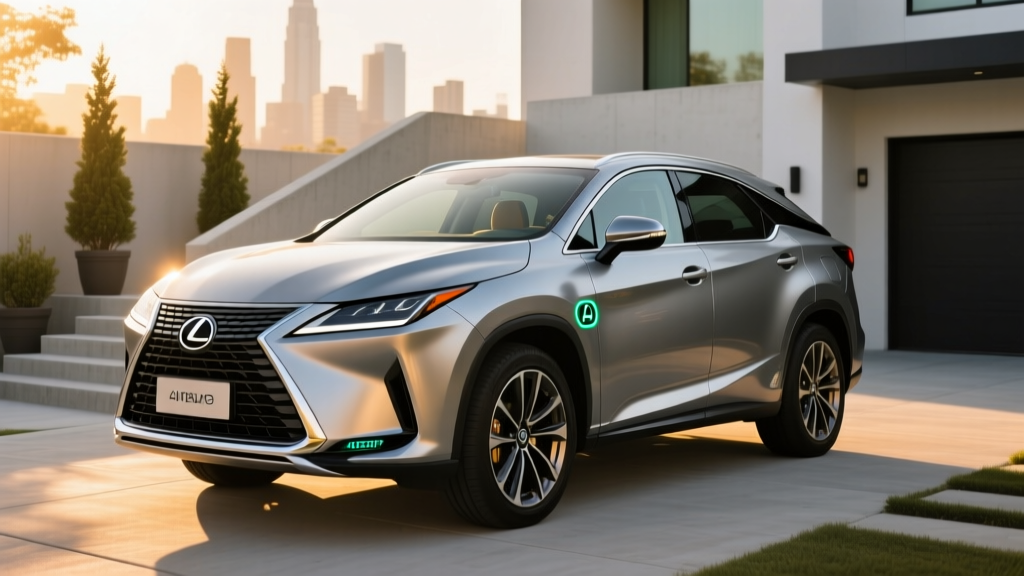
The Lexus RX 400h hybrid occupies a unique space in automotive history. Launched for the 2006 model year and produced through 2008, it was the world's first luxury hybrid SUV — a vehicle that proved electrification could deliver both efficiency and premium comfort. Nearly two decades later, the RX 400h remains a sought-after used vehicle for buyers who want proven hybrid reliability at a bargain price. But with aging batteries and evolving alternatives, does this pioneering hybrid still make sense in 2026?
This guide breaks down everything you need to know about the Lexus RX 400h hybrid: real-world MPG, battery longevity, replacement costs, and how it stacks up against modern hybrids, PHEVs, and full EVs.
Understanding the RX 400h: HEV, Not PHEV
Before diving into specs, it's essential to clarify what the RX 400h is — and isn't. The Lexus RX 400h is a conventional hybrid electric vehicle (HEV), not a plug-in hybrid (PHEV). It cannot be plugged in to charge, has no electric-only driving range, and does not qualify for federal EV tax credits. Instead, it captures energy through regenerative braking and its gasoline engine to keep a small battery charged automatically.
HEV vs PHEV: Where the RX 400h Fits
| Feature | HEV (RX 400h) | PHEV (e.g., modern RX 500h+) |
|---|---|---|
| Plugs in to charge? | No | Yes |
| Electric-only range | None | 20–37 miles typical |
| Battery capacity | ~1.9 kWh (NiMH) | 18+ kWh (lithium-ion) |
| Federal tax credit | Not eligible | Up to $7,500 (§30D) |
| Refueling | Gas station only | Gas + electric charging |
| Best for | Drivers without home charging | Drivers with home/work charging access |
If you're looking for a Lexus RX with plug-in capability, you'll want the current-generation RX 500h+ PHEV (introduced for the 2026 model year), which offers an EPA-estimated 37 miles of electric-only range. The RX 400h, by contrast, is purely a self-charging hybrid.
Fuel Economy: EPA Ratings vs Real-World MPG
The Lexus RX 400h hybrid was rated by the EPA at a combined 28 MPG, a remarkable figure for a 4,500-pound luxury SUV in 2006. Here's the official breakdown:
| Driving Cycle | EPA MPG Rating |
|---|---|
| City | 31 MPG |
| Highway | 25 MPG |
| Combined | 28 MPG |
Source: fueleconomy.gov
Real-World MPG: What Owners Actually See
Like most Toyota/Lexus hybrids, the RX 400h tends to perform very close to — and sometimes better than — its EPA ratings in mixed city driving, where regenerative braking and electric-motor assist shine. Owner-reported data across forums and Fuelly suggests:
- City-heavy commutes: 28–32 MPG (often exceeding EPA city rating)
- Highway cruising (70+ mph): 23–26 MPG
- Cold weather impact: Expect a 10–15% drop in winter months due to reduced battery efficiency and increased engine idling for cabin heat
- Aged battery impact: A degraded hybrid battery can reduce MPG by 2–5 MPG; replacement restores original efficiency
The RX 400h's hybrid system is most efficient at lower speeds and in stop-and-go traffic. Highway driving at sustained high speeds relies more heavily on the 3.3L V6 engine, where efficiency drops closer to that of the non-hybrid RX 350 of the same era.
Powertrain and Performance Specifications
The RX 400h's Hybrid Synergy Drive system was cutting-edge for its time and established the architecture that Toyota/Lexus hybrids still use today, albeit with significant refinements.
| Specification | Detail |
|---|---|
| Engine | 3.3L V6 (3MZ-FE), 208 hp |
| Front electric motor | 123 kW (165 hp) |
| Rear electric motor (AWD) | 50 kW (67 hp) |
| Combined system output | 272 hp |
| Transmission | eCVT (planetary gearset) |
| Drivetrain | AWD (E-Four electronic rear axle) |
| 0–60 mph | ~7.3 seconds |
| Curb weight | ~4,500 lbs |
| Towing capacity | 3,500 lbs |
| Hybrid battery | NiMH, ~1.9 kWh, 240V nominal |
The combined 272 hp output was genuinely quick for a midsize SUV in 2006, and the seamless eCVT provides smooth, linear acceleration without the shift shock of a conventional automatic. The E-Four AWD system uses the rear electric motor to drive the rear wheels when traction demands it — there's no mechanical driveshaft connecting the engine to the rear axle.
Battery Life, Degradation, and Replacement Cost
The single biggest concern for any used hybrid buyer is the traction battery. The RX 400h uses a nickel-metal hydride (NiMH) battery pack, which is less energy-dense than modern lithium-ion cells but is known for predictable, gradual degradation rather than sudden failure.
Original Battery Warranty
When new, the RX 400h's hybrid battery was covered by Lexus for 8 years / 100,000 miles (10 years / 150,000 miles in California and states adopting CARB emissions standards). As of 2026, all original battery warranties have expired for every RX 400h on the road.
How Long Does the RX 400h Battery Last?
Based on owner reports and repair data:
- Typical lifespan: 12–18 years / 150,000–220,000 miles
- Failure mode: Gradual capacity loss leading to reduced MPG, more frequent engine cycling, and eventually a hybrid system warning light
- Climate impact: Hot climates (Arizona, Texas, Southern California) accelerate NiMH degradation; cooler climates tend to see longer battery life
- Usage pattern: Regular driving actually helps battery longevity; long periods of inactivity can cause cell imbalance
Given that the newest RX 400h is now a 2008 model, most surviving examples are either on their original battery (with significant degradation) or have had a replacement. Always ask for battery health documentation when buying.
Battery Replacement Cost
| Option | Cost Range | Notes |
|---|---|---|
| New OEM battery (Lexus dealer) | $3,500–$5,000 | Full pack replacement, best longevity |
| Remanufactured battery | $2,000–$3,200 | Replaced cells in original casing, 1–3 yr warranty |
| Used/salvage battery | $800–$1,500 | Risky — unknown remaining life |
| Individual cell/module replacement | $500–$1,200 | Specialist shops can replace bad modules; requires reconditioning |
For a vehicle with a current market value of roughly $6,000–$12,000 depending on mileage and condition, a full OEM battery replacement can represent a significant percentage of the car's value. Many owners opt for remanufactured packs or cell-level repairs from hybrid specialists.
Reliability and Ownership Costs
The Lexus RX 400h hybrid inherits the legendary reliability of the Toyota/Lexus 3MZ-FE V6 engine and the proven Hybrid Synergy Drive system. However, age introduces considerations beyond the powertrain.
What Holds Up Well
- Engine: The 3MZ-FE is one of Toyota's most durable V6 engines; 250,000+ miles is common with basic maintenance
- eCVT transmission: The planetary gearset has no clutches, bands, or torque converter to wear out — failures are extremely rare
- Electronics: Lexus build quality means interior electronics and switches age well
- Brakes: Regenerative braking reduces wear on friction brakes; rotors and pads often last 80,000+ miles
What to Watch For
- Hybrid battery: As discussed, the primary expense risk
- Hybrid inverter coolant pump: Known failure point; replacement runs $300–$600
- Electric power steering: Some units develop issues around 150,000 miles
- Suspension components: Struts, bushings, and sway bar links are wear items on any 18-year-old vehicle
- A/C compressor: Electrically driven; replacement is pricier than a belt-driven unit ($800–$1,400)
Overall, the RX 400h is one of the most reliable hybrid SUVs ever built. Its main risk is age-related component wear, not systemic design flaws. For NHTSA safety ratings and recall history, check the NHTSA vehicle database.
Pricing and Tax Credit Eligibility
The Lexus RX 400h is only available on the used market. As of early 2026, pricing varies significantly by mileage, condition, and battery health:
| Condition | Mileage Range | Approximate Price |
|---|---|---|
| Excellent (new battery, low miles) | 80,000–120,000 | $10,000–$13,000 |
| Good (original battery, maintained) | 120,000–170,000 | $7,000–$10,000 |
| Fair (high miles, needs battery) | 170,000+ | $4,500–$7,000 |
Does the RX 400h Qualify for Any Tax Credit?
No. The Lexus RX 400h hybrid is not eligible for the federal §30D clean vehicle tax credit. That credit applies only to new plug-in electric vehicles (BEVs and PHEVs) meeting specific battery sourcing, MSRP, and buyer income requirements. The RX 400h was never a plug-in vehicle, and even when new, it qualified only for a now-expired hybrid tax credit (up to $2,200) that ended for Lexus in 2007.
Some states and local utilities offer rebates for used hybrid purchases or for hybrid battery replacements — check with your state energy office or utility provider for current programs.
Who Should Buy the RX 400h — And Who Shouldn't
The RX 400h serves a very specific buyer profile. Here's how to decide if it's right for you compared to modern alternatives.
Pros
- Proven, durable hybrid system with 20+ year track record
- No charging infrastructure needed — just add gas
- Lexus luxury and quiet ride at a budget price
- Strong MPG in city driving (often exceeds 30 MPG)
- AWD capability with 3,500-lb towing
- Excellent reliability reputation
Cons
- Aging hybrid battery is a $2,000–$5,000 liability
- No electric-only range; always burning fuel
- Dated infotainment and safety tech (no backup camera standard, no smartphone integration)
- No federal tax credit eligibility
- Highway MPG trails modern hybrids
- Parts availability may decline long-term
Choose the RX 400h If:
- You want a reliable, efficient SUV under $10,000
- You don't have access to home or workplace EV charging
- Your driving is mostly city and suburban (where hybrid efficiency peaks)
- You value Lexus build quality and don't mind older tech
- You're comfortable budgeting $2,000–$3,500 for a potential battery replacement
Consider a Modern Alternative If:
- You want the latest safety features (AEB, lane-keeping, adaptive cruise)
- You have home charging and want electric-only commuting (consider a PHEV like the current RX 500h+ or Toyota RAV4 Prime)
- You want zero tailpipe emissions (consider a BEV like the Hyundai Ioniq 5 or Tesla Model Y)
- You want a new-vehicle warranty and modern infotainment
Hybrid vs PHEV vs EV: Which Fits Your Needs?
The RX 400h represents the HEV end of the electrification spectrum. Here's how the three categories compare for a typical buyer:
| Factor | HEV (RX 400h) | PHEV (e.g., RX 500h+) | BEV (e.g., Model Y) |
|---|---|---|---|
| Purchase price (approx.) | $7,000–$13,000 used | $60,000–$75,000 new | $40,000–$55,000 new |
| Fuel cost per mile | ~$0.14 (gas) | ~$0.05 (electric) / $0.14 (gas) | ~$0.04 (electric) |
| Home charging needed? | No | Recommended for max benefit | Essential |
| Federal tax credit | None | Up to $7,500 | Up to $7,500 |
| Maintenance cost | Moderate (aging vehicle) | Low (new, under warranty) | Very low (fewer moving parts) |
| Best use case | Budget buyer, no charger | Short commute + road trips | Home charger, daily commute |
If you can charge at home and your budget allows, a modern PHEV or BEV will deliver significantly lower operating costs and better technology. But for buyers who need a dependable, no-plug-required SUV at the lowest possible entry price, the RX 400h hybrid remains a remarkably rational choice.
Frequently Asked Questions
How many MPG does the Lexus RX 400h hybrid get?
The EPA rates the RX 400h at 31 MPG city, 25 MPG highway, and 28 MPG combined. In real-world city driving, many owners report 28–32 MPG. Highway driving at sustained speeds typically yields 23–26 MPG. Cold weather can reduce these figures by 10–15%.
Does the RX 400h need to be plugged in?
No. The RX 400h is a conventional hybrid (HEV), not a plug-in hybrid. Its battery charges automatically through regenerative braking and the gasoline engine. There is no charging port and no electric-only driving mode.
How long does the Lexus RX 400h hybrid battery last?
The NiMH hybrid battery typically lasts 12–18 years or 150,000–220,000 miles. Hot climates and extended periods of inactivity can shorten lifespan. Given that the newest RX 400h is a 2008 model, most examples have either a degraded original battery or a replacement.
How much does it cost to replace the RX 400h hybrid battery?
A new OEM battery from a Lexus dealer runs $3,500–$5,000. Remanufactured batteries cost $2,000–$3,200. Specialist shops can sometimes replace individual modules for $500–$1,200. Always factor this potential cost into your purchase budget.
Is the Lexus RX 400h reliable?
Yes. The RX 400h is widely regarded as one of the most reliable hybrid SUVs ever made. The 3MZ-FE V6 engine and planetary-gear eCVT are extremely durable. The main reliability concern is the aging hybrid battery, which is a known maintenance item rather than a design defect.
Does the RX 400h qualify for any federal tax credit?
No. The federal §30D clean vehicle credit applies only to new plug-in vehicles (BEVs and PHEVs). The RX 400h is a conventional hybrid with no plug-in capability and is only available used. The hybrid tax credit that existed when it was new expired for Lexus in 2007.
How does the RX 400h compare to the modern Lexus RX hybrid?
The current-generation Lexus RX 350h (HEV) achieves an EPA-estimated 36 MPG combined — an 8 MPG improvement over the RX 400h — with modern safety tech, updated infotainment, and a new-vehicle warranty. The RX 500h+ PHEV adds 37 miles of electric-only range. However, the current RX starts above $52,000, making the used RX 400h a fraction of the cost.