The Lexus 350 Hybrid Lineup: What Buyers Need to Know
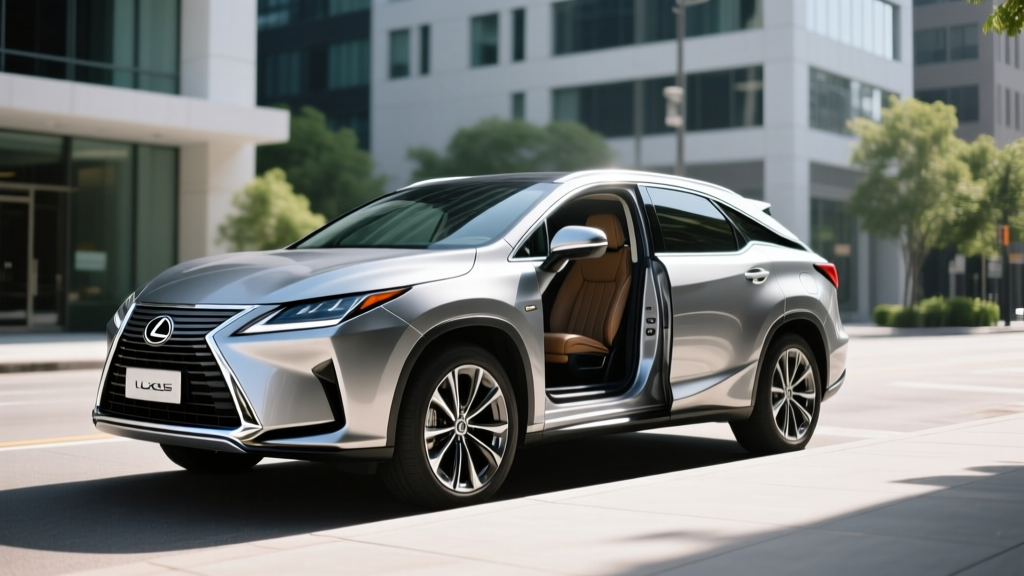
When shoppers search for a "Lexus 350 hybrid," they're almost always looking at one vehicle: the Lexus RX 350h, the hybrid variant of the brand's best-selling midsize luxury SUV. The RX 350h pairs a 2.5-liter four-cylinder engine with Lexus's fourth-generation hybrid system to deliver luxury-crossover comfort with fuel economy that embarrasses many compact sedans. For the 2026 model year, the RX 350h remains a conventional hybrid (HEV) — meaning no plug, no charging cable, and no range anxiety. You fuel it like any other car, and the hybrid system handles the rest.
But the RX isn't the only electrified Lexus in this segment. The RX 450h+ is the plug-in hybrid (PHEV) sibling, and the RX 500h is the performance hybrid. Understanding which "Lexus 350 hybrid" variant fits your driving pattern is the difference between saving $1,200 a year on fuel and spending $5,000 extra on a PHEV you never plug in. This guide breaks down the RX 350h in detail, compares it to the PHEV option, and helps you decide whether a hybrid, PHEV, or full battery-electric vehicle (BEV) is the right call.
HEV vs PHEV: Which Lexus RX Hybrid Is Which?
Before diving into specs, it's essential to understand the two fundamentally different hybrid architectures Lexus offers in the RX lineup. Conflating them is the single most common mistake luxury SUV shoppers make.
| Attribute | RX 350h (Conventional Hybrid) | RX 450h+ (Plug-In Hybrid) |
|---|---|---|
| Plug-in charging? | No — self-charging via engine & regen | Yes — plug in to access electric-only driving |
| Battery capacity | ~1.6 kWh (small, nickel-metal hydride) | 18.1 kWh usable (lithium-ion) |
| Electric-only range | Less than 1 mile at low speed | EPA-estimated 37 miles |
| Fueling | Gasoline only | Gasoline + electricity |
| Combined output | 246 hp | 302 hp |
| Starting MSRP (2026) | ~$53,100 | ~$63,500 |
| Federal tax credit | Not eligible (§30D is BEV/PHEV only) | Up to $7,500 if requirements met |
The RX 350h is the volume seller and the model most buyers mean when they say "Lexus 350 hybrid." It requires zero lifestyle change — no home charger, no plugging in at work, no route planning around charging stations. The RX 450h+ makes sense only if you can charge at home or work daily and have a commute under ~37 miles round-trip, letting you drive on electricity most days while keeping gas-engine range for road trips.
Fuel Economy: RX 350h EPA MPG and Real-World Results
The headline number for the Lexus RX 350h is its EPA-rated efficiency — and unlike many EVs whose real-world range falls short of their sticker, the RX 350h routinely exceeds its EPA estimates in city driving, where hybrid systems shine brightest.
| Drivetrain | City MPG | Highway MPG | Combined MPG |
|---|---|---|---|
| RX 350h AWD | 37 | 34 | 36 |
| RX 450h+ AWD (hybrid mode, battery depleted) | 35 | 32 | 34 |
| RX 450h+ AWD (charge-depleting, EV mode) | 94 MPGe combined (37 miles electric-only) | ||
Source: fueleconomy.gov
Real-World MPG vs. EPA: What Owners Actually See
In mixed suburban and city driving, RX 350h owners frequently report 37–40 MPG, particularly in stop-and-go traffic where regenerative braking recovers energy that a gas-only car wastes as heat. On sustained highway trips at 75+ mph, expect 31–33 MPG — hybrids lose their city advantage at constant high speed because the engine runs continuously. In cold weather (below 30°F), the engine runs more often to heat the cabin and warm the catalytic converter, dropping observed MPG by 3–5 points until the powertrain reaches operating temperature. This is normal hybrid behavior and still outperforms the gas-only RX 350 (24/29/26 MPG) by roughly 38%.
Powertrain and Performance Specs
The RX 350h uses Lexus's proven hybrid synergy drive: a 2.5-liter Atkinson-cycle four-cylinder engine paired with two electric motor-generators and an electronically controlled continuously variable transmission (eCVT). The system prioritizes smoothness and efficiency over sportiness, and it delivers.
| Specification | RX 350h |
|---|---|
| Engine | 2.5L inline-4 Atkinson cycle |
| Engine horsepower | 181 hp |
| Electric motors | Two motor-generators (front + rear) |
| Combined net output | 246 hp |
| Transmission | eCVT (electronically controlled) |
| Drivetrain | AWD (E-Four electronic rear axle) |
| 0–60 mph | 7.4 seconds |
| Towing capacity | 3,500 lbs (with tow prep) |
| Fuel tank | 17.2 gallons |
| Total range (est.) | ~620 miles |
| Hybrid battery | ~1.6 kWh, nickel-metal hydride (NiMH) |
The 246 combined horsepower is adequate for merging and passing but won't thrill enthusiasts — that's the RX 500h's role (366 hp, 2.4L turbo hybrid). The eCVT is seamless and free of the rubber-band effect that plagues some competitors' CVTs, because Lexus's power-split device blends engine and motor torque without a physical belt or pulley system.
Pricing, Trims, and Tax Credit Eligibility
The 2026 RX 350h starts at approximately $53,100 (including destination) for the base Premium trim and climbs to roughly $62,000 for the fully loaded Luxury grade with optional packages. That positions it about $2,500–$3,000 above the gas-only RX 350 and roughly $10,000 below the RX 450h+ PHEV.
Does the Lexus RX 350h Qualify for a Federal Tax Credit?
No. The federal §30D Clean Vehicle Credit applies only to battery-electric vehicles (BEVs) and plug-in hybrids (PHEVs) that meet battery-sourcing, critical-mineral, MSRP, and buyer-income requirements. The RX 350h is a conventional hybrid (HEV) with no plug-in capability, so it does not qualify for the up-to-$7,500 federal credit under current IRS rules.
The RX 450h+ PHEV may qualify for a partial or full credit depending on your adjusted gross income, the vehicle's MSRP relative to the SUV cap ($80,000), and whether its battery components and critical minerals meet the phased-in sourcing thresholds for the current tax year. Consult a tax professional and the latest IRS guidance before assuming eligibility — these rules have tightened annually.
Some states offer separate hybrid incentives (e.g., HOV lane access, registration fee reductions) that may apply to the RX 350h. Check your state's energy office or DMV for specifics.
Battery Warranty, Reliability, and Replacement Costs
Hybrid battery longevity is the number-one concern for first-time hybrid buyers, and this is where Lexus's track record is among the strongest in the industry. The RX 350h's NiMH hybrid battery is far simpler and less stressed than a full EV's large lithium-ion pack — it operates in a narrow state-of-charge window (roughly 40%–80%) that dramatically reduces degradation.
Lexus Hybrid Battery Warranty
- Hybrid battery: 10 years / 150,000 miles (whichever comes first)
- Hybrid system components: 8 years / 100,000 miles
- Bumper-to-bumper: 4 years / 50,000 miles
- Powertrain (engine, transmission): 6 years / 70,000 miles
Lexus has been building RX hybrids since 2006 (the RX 400h). Real-world data from owners and repair networks shows hybrid battery failures before 150,000 miles are rare. When replacement is needed out of warranty, a refurbished RX hybrid battery typically costs $2,000–$3,500 installed, while a new OEM unit runs $4,000–$5,500. Compare that to the $15,000–$25,000 replacement cost of a full EV battery pack.
Lexus consistently ranks at or near the top of J.D. Power dependability studies, and the RX nameplate specifically has one of the lowest cost-of-ownership profiles in the luxury midsize SUV segment. The hybrid system adds complexity (two motor-generators, an inverter, a DC-DC converter) but removes others — there is no traditional alternator, starter motor, or accessory belt to replace, and regenerative braking significantly extends brake pad life, often pushing replacements past 80,000 miles.
Who Should Buy the RX 350h — and Who Should Look Elsewhere?
The RX 350h occupies a specific sweet spot, and it's not the right answer for every buyer. Here's a practical decision framework:
Choose the RX 350h (HEV) if:
- You can't charge at home (apartment, street parking, no garage outlet)
- You want luxury-SUV comfort with 35+ MPG and zero behavior change
- Your annual mileage is high (15,000+ miles/year) — the fuel savings compound
- You value proven reliability and low maintenance costs
- You don't want to spend $10,000+ more for a PHEV or deal with charging logistics
Choose the RX 450h+ (PHEV) if:
- You can install a Level 2 home charger and have daily commutes under ~37 miles
- You want to drive on electricity most weekdays but need gas range for weekend trips
- You may qualify for the federal §30D credit, narrowing the price gap with the 350h
- You want the 302-hp powertrain upgrade
Choose a full BEV (like the Lexus RZ 450e or Tesla Model Y) if:
- You have reliable home charging and your daily driving is under 250 miles
- You want zero tailpipe emissions and minimal maintenance (no oil changes, no spark plugs)
- You want the maximum available tax credit and lowest per-mile "fuel" cost
- You're willing to plan around DC fast charging on road trips
Pros and Cons of the Lexus RX 350h
Pros
- 36 MPG combined — real-world city driving often hits 38–40 MPG
- No plug required — zero lifestyle adjustment from a gas car
- ~620 miles total range between fill-ups
- 10-year/150,000-mile hybrid battery warranty
- Quiet, refined cabin with Lexus Safety System+ 3.0 standard
- 3,500-lb towing capacity covers small boats and utility trailers
- Strong resale value — RX hybrids historically depreciate less than gas counterparts
Cons
- 246 hp is adequate, not quick — 7.4-second 0–60 trails turbocharged rivals
- No federal tax credit (HEV exclusion from §30D)
- eCVT drone under hard acceleration (though less intrusive than belt-type CVTs)
- ~$3,000 premium over the gas RX 350 (pays back in ~3–4 years at 15K miles/year)
- Cargo space slightly reduced vs. gas RX due to hybrid battery placement
- Highway MPG (34) is less impressive than city (37) — typical hybrid behavior
Frequently Asked Questions
How many MPG does the Lexus RX 350h hybrid get?
The EPA rates the 2026 RX 350h AWD at 37 city / 34 highway / 36 combined MPG. In real-world suburban and city driving, many owners observe 37–40 MPG thanks to frequent regenerative braking. Highway-only trips at 75+ mph typically return 31–33 MPG.
Does the Lexus 350 hybrid need to be plugged in?
No. The RX 350h is a conventional hybrid (HEV), not a plug-in. It charges its small hybrid battery through regenerative braking and the gasoline engine. You never plug it in — you simply fill it with gas like any other vehicle. If you want plug-in capability, look at the RX 450h+ PHEV instead.
How far can the RX 450h+ PHEV go on electric only?
The RX 450h+ has an EPA-estimated 37 miles of electric-only range on a full charge, enough for most daily commutes. Once the battery depletes, it operates as a conventional hybrid at roughly 34–35 MPG combined. Total range (electric + gas) exceeds 440 miles.
Is the Lexus RX 350h hybrid reliable? What does battery replacement cost?
Lexus's hybrid system is one of the most proven in the industry, with nearly two decades of RX hybrid production. The hybrid battery is covered for 10 years/150,000 miles. Out-of-warranty replacement runs $2,000–$3,500 for a refurbished unit or $4,000–$5,500 for new OEM. Failures before 150K miles are uncommon based on owner and repair-network data.
Does the RX 350h qualify for any federal tax credit?
No. The §30D Clean Vehicle Credit applies only to battery-electric vehicles and plug-in hybrids. The RX 350h is a conventional hybrid and is not eligible. The RX 450h+ PHEV may qualify depending on your income, the vehicle's MSRP, and battery-sourcing rules. Check the IRS §30D guidance for current-year eligibility details.
How does the RX 350h compare to the gas-only RX 350?
The gas RX 350 (turbocharged 2.4L) is rated at 24 city / 29 highway / 26 combined MPG with 275 hp. The RX 350h trades about 30 hp for a 38% improvement in combined fuel economy, plus smoother low-speed behavior and longer brake life. The hybrid costs roughly $2,500–$3,000 more upfront but typically recoups the premium within 3–4 years at average mileage.
Hybrid vs PHEV vs EV — which Lexus RX fits me?
If you can't charge at home, the RX 350h (HEV) is the clear choice — zero infrastructure needed. If you can charge at home and your commute is under 37 miles, the RX 450h+ (PHEV) lets you drive electric daily while keeping gas range for trips. If you want the lowest operating cost, maximum incentives, and can charge reliably, consider a full BEV like the Lexus RZ 450e — but be prepared for road-trip charging planning and cold-weather range loss of 20–30%.