Lexus RX 350h MPG: The Numbers That Matter
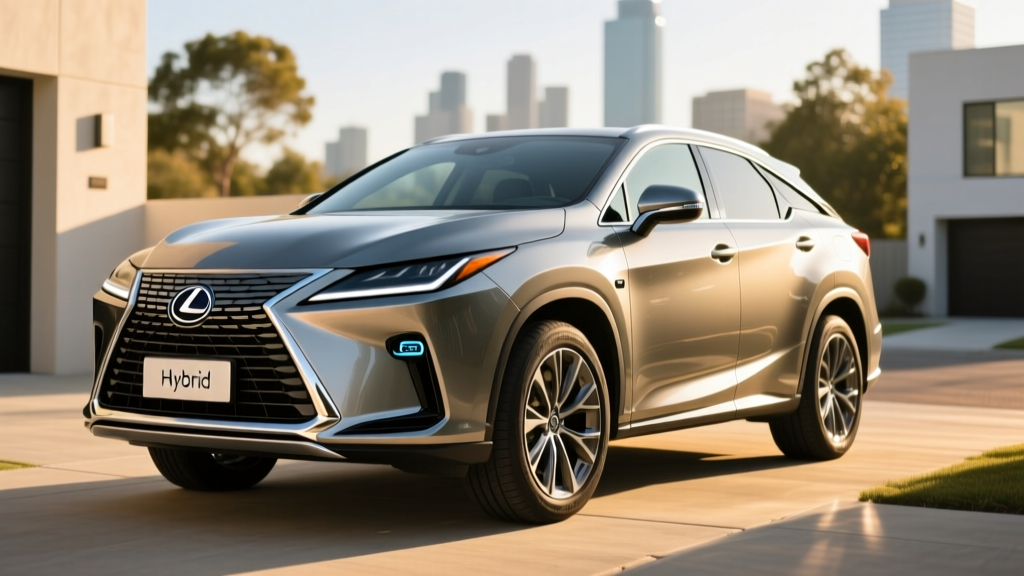
The Lexus RX has been the best-selling luxury vehicle in America for over a decade, and its hybrid variant — the RX 350h — is the version that makes the most financial sense for most buyers. If you're researching Lexus RX 350 hybrid MPG, you've likely noticed the lineup now includes both a conventional hybrid (RX 350h) and a plug-in hybrid (RX 450h+). They're fundamentally different powertrains with different use cases, different fuel economy, and different price tags.
This guide focuses on the RX 350h — the self-charging hybrid that requires no plug, no behavior change, and delivers consistent fuel savings over its gas-only sibling. We'll also compare it against the RX 450h+ PHEV so you can make the right call.
EPA Fuel Economy vs. Real-World MPG
The EPA rates the 2026 RX 350h at 37 MPG city, 34 MPG highway, and 36 MPG combined across all trims (Premium, Premium+, Luxury). All-wheel drive is standard — there's no FWD-only variant that changes these numbers. Here's the full breakdown:
| Metric | EPA Estimate | Real-World Expectation |
|---|---|---|
| City MPG | 37 | 38–40 |
| Highway MPG | 34 | 31–33 |
| Combined MPG | 36 | 34–37 |
| Fuel Tank | 17.2 gal | — |
| Total Range | ~619 mi | ~560–640 mi |
Source: fueleconomy.gov
Why city MPG beats highway in a hybrid: The RX 350h recovers kinetic energy during braking and deceleration, storing it in the hybrid battery to power the electric motors at low speeds. Stop-and-go traffic is where hybrids shine. On sustained highway runs above 70 mph, the gasoline engine does most of the work, and aerodynamic drag reduces efficiency — just like any vehicle.
Cold-weather note: Expect a 5–10% MPG reduction in winter months (roughly 32–34 combined). The engine runs more frequently to provide cabin heat and maintain battery temperature. This is normal hybrid behavior and far less severe than the range loss a full EV experiences in cold weather.
RX 350h (HEV) vs. RX 450h+ (PHEV): Which Powertrain Fits You?
Lexus offers two electrified RX variants, and confusing them is easy if you're skimming spec sheets. Here's the critical distinction:
RX 350h — Conventional Hybrid (HEV)
- Never plugs in — charges via regenerative braking and the engine
- Small ~1.6 kWh nickel-metal hydride battery
- No electric-only driving range (motor assists engine only)
- 36 MPG combined, always
- Starts at ~$52,000 MSRP
RX 450h+ — Plug-In Hybrid (PHEV)
- Plugs in to charge a larger 18.1 kWh lithium-ion battery
- EPA-estimated 37 miles electric-only range
- After battery depletes, operates as a hybrid (~35 MPG)
- 84 MPGe combined when battery is charged
- Starts at ~$63,000 MSRP
| Specification | RX 350h (HEV) | RX 450h+ (PHEV) |
|---|---|---|
| Powertrain | 2.5L I4 + 2 electric motors | 2.5L I4 + 2 electric motors (higher output) |
| Combined Horsepower | 246 hp | 302 hp |
| 0–60 mph | 7.4 sec | 6.2 sec |
| Hybrid Battery | ~1.6 kWh NiMH | 18.1 kWh Li-ion |
| Electric-Only Range | N/A | 37 mi (EPA) |
| EPA Combined MPG/MPGe | 36 MPG | 84 MPGe / 35 MPG (hybrid mode) |
| Level 2 Charge Time | N/A (self-charging) | ~2.5 hr (6.6 kW onboard) |
| DC Fast Charging | N/A | Not supported |
| Drivetrain | AWD (standard) | AWD (standard) |
| Starting MSRP (2026) | ~$52,100 | ~$63,350 |
The decision is straightforward: If you can charge at home and your daily commute is under 37 miles round-trip, the RX 450h+ lets you drive almost entirely on electricity during the week while keeping gas-engine range for road trips. If you lack home charging access, live in an apartment, or simply don't want to think about plugging in, the RX 350h delivers strong MPG with zero lifestyle change.
Powertrain Deep Dive: How the RX 350h Delivers 36 MPG
The RX 350h uses Toyota's fourth-generation hybrid system, pairing a 2.5-liter Atkinson-cycle four-cylinder engine with two electric motor-generators and an electronically controlled continuously variable transmission (eCVT). Combined system output is 246 horsepower.
The Atkinson-cycle engine sacrifices some low-RPM torque in exchange for higher thermal efficiency — it extracts more energy from each drop of fuel. The electric motors fill in the torque gap, providing instant response from a stop. The result is a powertrain that feels adequately quick around town (0–60 in 7.4 seconds) while sipping fuel at a rate that would impress a compact sedan.
The eCVT isn't a traditional belt-driven CVT. It's a planetary gearset that seamlessly blends engine and motor power with no fixed gear ratios. There are no shift shocks, no hunting for gears — just smooth, linear acceleration. The trade-off is the characteristic hybrid "drone" under hard acceleration, where engine RPM holds steady while vehicle speed climbs. Most RX 350h owners adapt to this quickly, and it's a non-issue during normal driving.
Regenerative braking is the unsung hero of hybrid efficiency. Every time you lift off the accelerator or press the brake pedal, the electric motors reverse direction, acting as generators to slow the vehicle and send electricity back to the hybrid battery. In city driving with frequent stops, this system recovers a significant amount of energy that a gas-only vehicle would waste as heat in the brake pads.
Battery Warranty, Lifespan, and Replacement Cost
How long do Lexus hybrid batteries actually last? Toyota and Lexus hybrid systems have an exceptional longevity track record. The Prius, which uses fundamentally identical technology, routinely reaches 200,000+ miles on its original hybrid battery. The RX 350h's nickel-metal hydride (NiMH) battery is less energy-dense than a full EV's lithium-ion pack, but NiMH chemistry is extremely durable — it tolerates thousands of shallow charge-discharge cycles with minimal degradation.
Because the RX 350h battery is small (~1.6 kWh) and the system never fully charges or fully depletes it (the computer maintains a state-of-charge window to protect longevity), stress on the cells is minimal. Most hybrid battery failures that do occur happen within the warranty period and are covered.
Replacement cost if out of warranty: A new OEM hybrid battery for the RX 350h runs approximately $3,000–$4,500 including labor at a Lexus dealer. Independent hybrid specialists can sometimes source refurbished packs for $2,000–$2,800. This is a fraction of full EV battery replacement costs, which can exceed $15,000.
Pricing, Trims, and Tax Credit Eligibility
The 2026 Lexus RX 350h is available in three trims:
- Premium: ~$52,100 MSRP — includes Lexus Safety System+ 3.0, 9.8-inch touchscreen, heated/ventilated front seats, power liftgate
- Premium+: ~$55,600 MSRP — adds panoramic roof, 14-inch touchscreen, navigation, wood interior trim
- Luxury: ~$60,200 MSRP — adds semi-aniline leather, heated rear seats, adaptive variable suspension, head-up display
Federal tax credit status: The RX 350h (conventional hybrid) does not qualify for the federal §30D Clean Vehicle Credit. Under current IRS rules, only plug-in electric vehicles (BEVs and PHEVs) with sufficient battery capacity are eligible. The RX 350h's small NiMH battery does not meet the minimum 7 kWh threshold.
The RX 450h+ (PHEV) may qualify for up to $3,750 of the §30D credit, depending on critical mineral and battery component sourcing requirements, buyer income caps ($150K single / $300K joint AGI), and the $80,000 SUV MSRP cap. Verify current eligibility on the IRS Clean Vehicle Credit page before purchasing, as sourcing rules tighten annually.
State incentives: Some states offer their own hybrid rebates or HOV lane access for hybrids. California's Clean Fuel Rebate, for example, has historically included PHEVs but not conventional hybrids. Check your state's energy or environmental agency for current programs.
Who Should Choose the RX 350h Over a Full EV or Gas Car?
✅ Choose the RX 350h If:
- You can't charge at home (apartment, street parking, no garage)
- You want lower fuel costs without changing any habits
- You regularly take long road trips and don't want to plan charging stops
- You live in an area with limited public charging infrastructure
- You want Lexus reliability with proven hybrid tech
- Your budget is under $55K for a luxury midsize SUV
❌ Look Elsewhere If:
- You can charge at home and want to drive mostly on electricity → consider the RX 450h+ PHEV
- You want zero tailpipe emissions → consider a full BEV like the BMW iX or Genesis Electrified GV70
- You want the fastest acceleration → the RX 500h F Sport Performance (366 hp) or a BEV will outpace it
- You want the federal tax credit → only PHEVs and BEVs qualify
The RX 350h occupies a specific and valuable niche: it's the electrified vehicle for people who don't want to think about electrification. You buy gas when the tank is low. You drive. The hybrid system handles everything else. For the majority of luxury SUV buyers who lack reliable home charging access, this is the pragmatic path to better fuel economy.
Frequently Asked Questions
How many MPG does the Lexus RX 350 hybrid get?
The 2026 Lexus RX 350h is EPA-rated at 37 MPG city, 34 MPG highway, and 36 MPG combined. Real-world city driving often yields 38–40 MPG thanks to regenerative braking. Highway-heavy driving at 75+ mph typically returns 31–33 MPG.
Does the Lexus RX 350h need to be plugged in?
No. The RX 350h is a conventional hybrid (HEV), not a plug-in hybrid. Its small hybrid battery charges through regenerative braking and the gasoline engine. You never plug it in. If you want plug-in capability with electric-only range, look at the RX 450h+.
Is the Lexus RX hybrid reliable?
Yes. Lexus consistently ranks at or near the top of J.D. Power and Consumer Reports reliability studies, and Toyota/Lexus hybrid systems have two decades of proven durability. The hybrid battery is warrantied for 10 years / 150,000 miles, and real-world data shows these batteries frequently outlast the vehicles themselves.
What does it cost to replace the RX 350h hybrid battery?
Out-of-warranty replacement runs approximately $3,000–$4,500 at a Lexus dealer (OEM pack plus labor). Refurbished batteries from independent hybrid specialists can reduce this to $2,000–$2,800. Given the 10-year/150,000-mile warranty and the proven longevity of NiMH hybrid batteries, most owners will never face this cost.
Hybrid vs. PHEV vs. full EV — which RX should I buy?
RX 350h (HEV): Best if you can't charge at home and want simple, reliable fuel savings. RX 450h+ (PHEV): Best if you have home charging and a short commute — you'll drive on electricity most weekdays and use gas only for longer trips. Full EV (e.g., BMW iX, Tesla Model X): Best if you want zero tailpipe emissions, can charge at home, and are comfortable planning longer road trips around DC fast-charging stops.
Does the RX 350h qualify for any tax credit?
The RX 350h conventional hybrid does not qualify for the federal §30D Clean Vehicle Credit, which requires plug-in vehicles with at least 7 kWh of battery capacity. The RX 450h+ PHEV may qualify for up to $3,750 depending on current-year sourcing rules and buyer income limits. Some states may offer separate hybrid incentives — check your state's energy office.