Quick Verdict: The RX 350h Delivers on Its Efficiency Promise
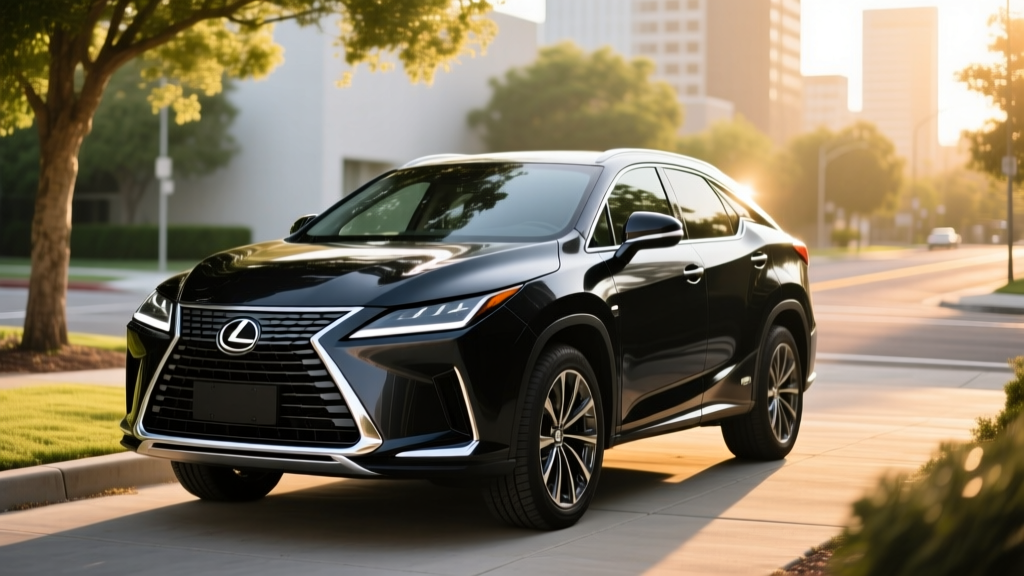
The 2026 Lexus RX 350h remains the default luxury midsize hybrid SUV for buyers who want premium comfort without the plug-in commitment. Its EPA-estimated 36 MPG combined is competitive with far smaller vehicles, and in real-world city driving, the hybrid system routinely exceeds that figure. If you're researching Lexus RX 350 hybrid gas mileage to decide whether this SUV fits your commute, this guide covers every number that matters — from powertrain output to battery warranty to total cost of ownership.
| Spec | 2026 Lexus RX 350h |
|---|---|
| Powertrain | 2.5L 4-cyl + 2 electric motors (AWD) |
| Combined Horsepower | 246 hp |
| EPA MPG (City / Hwy / Combined) | 37 / 34 / 36 |
| Fuel Tank Capacity | 17.2 gallons |
| Total Driving Range | ~619 miles |
| 0–60 mph | 7.4 seconds |
| Drivetrain | AWD (electronic rear motor) |
| Hybrid Battery | ~1.6 kWh NiMH (self-charging) |
| Starting MSRP | $52,750 (Premium trim) |
| Federal Tax Credit | Not eligible (§30D requires plug-in) |
| Hybrid Battery Warranty | 10 years / 150,000 miles |
Lexus RX 350h Gas Mileage: EPA Estimates vs. Real-World MPG
The EPA rates the 2026 RX 350h at 37 MPG city, 34 MPG highway, and 36 MPG combined according to fueleconomy.gov. These numbers apply across all trims (Premium, Premium+, Luxury) since the powertrain is identical.
| Driving Scenario | EPA Estimate | Real-World Expectation |
|---|---|---|
| City (stop-and-go) | 37 MPG | 36–40 MPG (hybrids excel here) |
| Highway (70+ mph) | 34 MPG | 30–33 MPG (aero drag, less regen) |
| Combined (55/45 mix) | 36 MPG | 33–37 MPG |
| Cold weather (below 30°F) | — | 30–33 MPG combined |
Why city MPG beats highway: Toyota's fourth-generation hybrid system recovers kinetic energy during braking and deceleration. In urban driving with frequent stops, the electric motors handle low-speed propulsion while the gas engine shuts off at lights. On sustained highway runs, the 2.5L engine carries more of the load with less regenerative benefit.
Cold-weather reality: Expect a 10–15% MPG reduction in winter months. The engine runs longer to heat the cabin and keep the catalytic converter at operating temperature. Seat heaters and a heated steering wheel (standard on Luxury, available on Premium+) help reduce HVAC load.
HEV vs. PHEV: Understanding the RX Hybrid Lineup
Lexus offers two electrified RX variants, and confusing them is the most common buyer mistake. Here's the split:
| Feature | RX 350h (HEV) | RX 450h+ (PHEV) |
|---|---|---|
| Type | Conventional hybrid | Plug-in hybrid |
| Needs to plug in? | No — self-charging | Yes — for electric range |
| EPA Combined MPG | 36 MPG | 35 MPG (gas only) / 83 MPGe (with charge) |
| Electric-Only Range | ~1 mile at low speed | 37 miles (EPA) |
| Battery Capacity | ~1.6 kWh (NiMH) | 18.1 kWh (lithium-ion) |
| Combined Horsepower | 246 hp | 302 hp |
| Level 2 Charging | N/A | ~4 hours (240V, 16A) |
| DC Fast Charging | N/A | Not supported |
| Starting MSRP | $52,750 | $62,750 |
| Federal Tax Credit (§30D) | Not eligible | Up to $7,500 (eligibility varies) |
The critical distinction: The RX 350h is a conventional hybrid — it generates electricity internally through regenerative braking and the gas engine. You never plug it in. The RX 450h+ is a plug-in hybrid (PHEV) with a much larger battery that you charge at home or at public Level 2 stations for up to 37 miles of electric-only driving before the gas engine engages.
If you searched for "Lexus RX 350 hybrid gas mileage" and don't have access to home charging, the RX 350h (HEV) is the model that fits your life. The RX 450h+ only delivers its efficiency advantage if you can plug in nightly.
Powertrain Deep Dive: How the RX 350h Achieves 36 MPG
The 2026 RX 350h pairs a 2.5-liter Atkinson-cycle four-cylinder engine with two front-mounted electric motor-generators and a separate rear electric motor for electronic all-wheel drive. Total system output is 246 horsepower, delivered through a continuously variable transmission (eCVT).
Engine: 184 hp / 175 lb-ft torque (2.5L inline-4)
Front motors: Integrated into the transaxle, providing low-speed propulsion and regenerative braking
Rear motor: 54 hp, activates for AWD traction and contributes to regen
Battery: ~1.6 kWh nickel-metal hydride (NiMH), positioned under the rear seat
The Atkinson cycle sacrifices some low-RPM torque for greater thermal efficiency — exactly the tradeoff a hybrid system needs, since electric motors fill in the torque gap at launch. The eCVT isn't a traditional belt-driven CVT; it's a planetary gearset that seamlessly blends engine and motor power with no fixed gear ratios.
Performance context: The 7.4-second 0–60 time is adequate for merging and passing but not sporty. If acceleration matters more, the RX 500h F SPORT Performance (366 hp, 5.9 seconds) trades ~8 MPG for significantly more thrust.
Pricing, Trims, and Tax Credit Reality
The 2026 RX 350h is offered in three trims:
- Premium: $52,750 — heated/ventilated front seats, 9.8-inch touchscreen, wireless CarPlay/Android Auto
- Premium+: $56,150 — 14-inch touchscreen, panoramic roof, head-up display
- Luxury: $60,150 — semi-aniline leather, adaptive suspension, 21-inch wheels
Destination charge adds $1,350 to all trims.
Federal Tax Credit: What You Need to Know
The RX 350h does NOT qualify for the federal §30D clean vehicle credit. Under current IRS rules, the §30D credit is available only for plug-in electric vehicles (BEVs and PHEVs) that meet battery sourcing, critical mineral, MSRP cap, and buyer income requirements. Conventional hybrids like the RX 350h are excluded.
The RX 450h+ (PHEV) may qualify for up to $7,500, but eligibility depends on battery component sourcing, your adjusted gross income (capped at $150K single / $300K joint), and the vehicle's MSRP staying under the $80,000 SUV cap. Always verify current-year rules with a tax professional before purchasing.
Some states and utilities offer rebates for conventional hybrids, though these are less common than EV incentives. Check your state energy office and local utility for current programs.
Battery Warranty, Reliability, and Replacement Costs
Hybrid battery longevity is the top concern for first-time hybrid buyers. Lexus backs the RX 350h hybrid battery with a 10-year / 150,000-mile warranty (whichever comes first), covering defects and capacity loss below a defined threshold.
Real-world durability: Toyota and Lexus hybrid systems have accumulated billions of real-world miles since the 2001 Prius. The NiMH battery in the RX 350h is far less stressed than a BEV pack — it operates in a narrow state-of-charge window (roughly 40–80%) managed by the hybrid control system, which minimizes degradation. Failures before 150,000 miles are uncommon.
Replacement cost if out of warranty: A new OEM hybrid battery for the RX 350h typically runs $3,000–$4,500 installed at a Lexus dealer. Independent hybrid specialists often offer refurbished units for $1,500–$2,500. For context, this is a fraction of the $10,000–$20,000+ that large BEV battery replacements can cost.
Broader reliability: Lexus consistently ranks at or near the top of J.D. Power and Consumer Reports reliability surveys. The RX lineup specifically benefits from a mature powertrain — the 2.5L hybrid system is in its second generation with extensive field data. The eCVT has no clutch packs or bands to wear, and regenerative braking significantly extends brake pad life (60,000–100,000 miles between replacements is common).
Who Should Buy the RX 350h vs. a PHEV or Full EV?
Choose the RX 350h (HEV) if:
- You lack reliable access to home or workplace charging
- You want premium comfort with minimal fuel cost and zero charging hassle
- Your annual mileage is moderate (10,000–15,000 miles) and mostly suburban/city
- You plan to keep the vehicle 8+ years and value proven long-term reliability
Choose the RX 450h+ (PHEV) if:
- You can install a Level 2 home charger and your daily commute is under 37 miles
- You want electric-only weekday driving with gas flexibility for road trips
- You may qualify for the §30D federal tax credit, narrowing the $10,000 price gap
Choose a full EV (e.g., Tesla Model Y, Genesis GV70 Electrified) if:
- You have reliable home charging and your trips rarely exceed 250 miles
- You want maximum fuel savings ($0.04–$0.06/mile on home electricity vs. $0.14–$0.18/mile on gas)
- You're ready for the EV ownership learning curve (route planning, charging apps, preconditioning)
At 15,000 miles per year and $3.50/gallon gas, the RX 350h's 36 MPG combined yields an annual fuel cost of roughly $1,458. A comparable gas-only luxury SUV at 22 MPG would cost $2,386 — a $928/year savings with the hybrid. Over a 10-year ownership cycle, that's $9,280 in fuel savings, which largely offsets the hybrid premium over a gas-only RX 350.
Pros and Cons at a Glance
Pros
- 36 MPG combined — best in the luxury midsize SUV segment
- AWD standard with no fuel-economy penalty vs. FWD
- 10-year/150,000-mile hybrid battery warranty
- Exceptional reliability track record (mature Toyota hybrid system)
- Strong resale value — Lexus RX historically retains 55–60% at 5 years
- No plug-in required — zero lifestyle change from a gas car
Cons
- No federal tax credit eligibility (HEV excluded from §30D)
- 246 hp feels modest for a 4,500-lb luxury SUV
- Highway MPG drops to low 30s at sustained 75+ mph
- eCVT drone under hard acceleration (common hybrid complaint)
- Premium trim 9.8-inch screen feels small vs. 14-inch on Premium+
- No spare tire — run-flat tires or inflator kit only
Frequently Asked Questions
How many MPG does the Lexus RX 350h hybrid get?
The EPA rates the 2026 RX 350h at 37 MPG city, 34 MPG highway, and 36 MPG combined. In real-world city driving with frequent stops, owners commonly report 36–40 MPG thanks to regenerative braking. Highway-only driving at 70+ mph typically returns 30–33 MPG.
Does the RX 350h need to be plugged in?
No. The RX 350h is a conventional hybrid (HEV). It charges its small battery internally through regenerative braking and the gas engine. You fuel it like any other car — just with fewer fill-ups.
How far can the RX 450h+ go on electric only?
The RX 450h+ (the plug-in variant) delivers an EPA-estimated 37 miles of electric-only range on a full charge. Once that's depleted, it operates as a conventional hybrid at roughly 35 MPG combined.
Is the Lexus RX hybrid reliable? What does battery replacement cost?
Lexus hybrid systems are among the most proven in the industry, with the NiMH battery managed in a conservative charge window that minimizes wear. The hybrid battery is warrantied for 10 years/150,000 miles. Out-of-warranty replacement runs $3,000–$4,500 at a dealer, or $1,500–$2,500 from an independent specialist with a refurbished unit.
Does the RX 350h qualify for any tax credit?
No. The federal §30D clean vehicle credit requires a plug-in vehicle (BEV or PHEV). The RX 350h is a conventional hybrid and does not qualify. The plug-in RX 450h+ may qualify for up to $7,500 depending on your income, the vehicle's battery sourcing, and current-year IRS rules. Consult IRS.gov or a tax professional for your specific situation.
How does the RX 350h compare to the gas-only RX 350 on fuel cost?
The gas-only RX 350 (turbocharged 2.4L) is EPA-rated at roughly 25 MPG combined. At 15,000 miles/year and $3.50/gallon, that's ~$2,100/year in fuel. The RX 350h at 36 MPG costs ~$1,458/year — saving about $642 annually. Over 10 years, the hybrid saves roughly $6,400 in fuel.
What is the total driving range of the RX 350h?
With its 17.2-gallon fuel tank and 36 MPG combined rating, the RX 350h can cover approximately 619 miles between fill-ups. Conservative highway driving may reduce this to 520–550 miles; city-heavy routes can push it past 630 miles.