Quick Verdict: Two Hybrid Paths in One Compact Luxury SUV
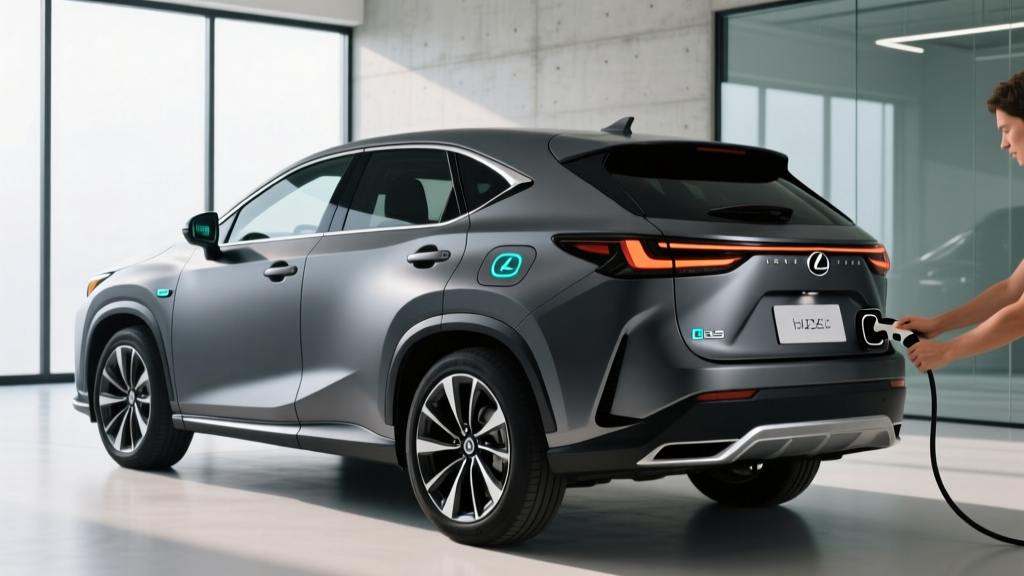
The 2026 Lexus NX lineup gives compact luxury SUV shoppers two distinct electrified choices: the NX 350h conventional hybrid (HEV) for effortless fuel savings with no plug, and the NX 450h+ plug-in hybrid (PHEV) for short electric-only commutes backed by a gasoline engine for longer trips. Both share the same refined cabin, Lexus Safety System+ 3.0, and all-wheel-drive traction, but their powertrains, range profiles, and price points serve very different daily routines.
- NX 350h (HEV): Self-charging hybrid. Regenerative braking and the engine recharge a small 1.6 kWh battery. You never plug it in.
- NX 450h+ (PHEV): Plug-in hybrid with a larger 18.1 kWh battery. Plug in overnight for ~37 miles of electric-only driving, then the gas engine takes over seamlessly.
NX 350h vs NX 450h+: Side-by-Side Specs
| Spec | NX 350h (HEV) | NX 450h+ (PHEV) |
|---|---|---|
| Powertrain | 2.5L 4-cyl + 2 electric motors | 2.5L 4-cyl + 2 high-output electric motors |
| Combined Horsepower | 244 hp | 304 hp |
| 0–60 mph | 7.2 sec | 6.0 sec |
| Drivetrain | AWD (e-AWD rear motor) | AWD (e-AWD rear motor) |
| Hybrid Battery | ~1.6 kWh (NiMH) | 18.1 kWh (lithium-ion) |
| EPA Electric-Only Range | N/A (no plug) | 37 miles |
| EPA Combined MPGe (EV mode) | N/A | 84 MPGe |
| Total Range (gas + electric) | ~560 miles | ~550 miles |
| Charging (Level 2, 240V) | N/A | ~2.5 hours (3.3 kW onboard) |
| DC Fast Charging | N/A | Not supported |
| Starting MSRP (2026) | ~$42,600 | ~$59,900 |
Source: fueleconomy.gov and Lexus USA specifications. MSRP reflects base trims before destination charges; actual pricing varies by dealer.
Fuel Economy: EPA Numbers and Real-World MPG
The NX 350h carries an EPA rating of 41 mpg city / 37 mpg highway / 39 mpg combined. As with most Toyota/Lexus hybrids, real-world city driving often matches or exceeds the EPA city figure because regenerative braking recovers energy at every stoplight. On a mixed suburban commute with frequent stops, owners routinely report 40–43 mpg. Sustained highway driving at 75+ mph, however, can dip to 33–35 mpg, where the gasoline engine does most of the work and aerodynamic drag dominates.
| Metric | NX 350h (EPA) | NX 350h (Real-World Est.) | NX 450h+ (charge-sustaining) |
|---|---|---|---|
| City | 41 mpg | 40–43 mpg | 35–38 mpg |
| Highway | 37 mpg | 33–35 mpg | 33–36 mpg |
| Combined | 39 mpg | 37–40 mpg | 36 mpg (EPA) |
The NX 450h+ earns an EPA combined 84 MPGe in electric mode and 36 mpg combined once the battery depletes and the engine takes over (charge-sustaining mode). If your daily commute is under 37 miles and you charge nightly, you may go months between fill-ups. On longer road trips, the 450h+ operates like a slightly heavier conventional hybrid — expect 33–36 mpg depending on speed and terrain.
Electric-Only Range and Charging the NX 450h+
The NX 450h+ delivers an EPA-rated 37 miles of electric-only range, enough to cover the average American one-way commute of ~16 miles (FHWA data) with room to spare for errands. In mild weather with moderate speeds, 38–40 miles is achievable. In freezing temperatures with cabin heating active, expect that figure to contract to roughly 28–32 miles — a ~20% reduction typical of lithium-ion batteries in cold conditions.
For a PHEV with a 3.3 kW charger, overnight home charging is the intended use case. If you lack home or workplace charging access, the 450h+ loses its primary advantage over the 350h, because you'll be carrying 18.1 kWh of battery weight without ever tapping its electric-only potential.
Powertrain Deep Dive: Engine, Motors, and Acceleration
Both NX hybrids use Toyota's proven 2.5-liter Dynamic Force four-cylinder engine paired with front and rear electric motors that provide electronic all-wheel drive (e-AWD). The rear axle has no mechanical connection to the engine — it's driven solely by a dedicated electric motor that engages during acceleration, low-traction conditions, and low-speed maneuvering.
NX 350h: The 2.5L engine produces 189 hp on its own, with electric motors bringing the combined system output to 244 hp. The result is a 0–60 mph time of 7.2 seconds — adequate for merging and passing, if not thrilling. The hybrid system's real strength is low-speed torque from the electric motors, which makes city driving feel punchier than the 0–60 number suggests.
NX 450h+: Higher-output electric motors push combined output to 304 hp and drop the 0–60 time to 6.0 seconds. That's legitimately quick for a compact luxury hybrid and makes highway overtaking effortless. The larger battery also enables EV mode at higher speeds (up to ~84 mph) compared to the 350h's lower electric-assist threshold.
Pricing, Trims, and Tax Credit Eligibility
For the 2026 model year, the NX hybrid lineup starts at approximately $42,600 for the NX 350h Premium trim (including destination) and climbs to roughly $59,900 for the NX 450h+ Premium. A fully loaded NX 450h+ F SPORT Handling can approach $65,000.
Under current IRS §30D rules, the NX 450h+ may qualify for a federal tax credit of up to $3,750 (partial credit based on critical-minerals and battery-component sourcing requirements). Key eligibility constraints:
- Buyer AGI must not exceed $150,000 (single) / $300,000 (joint) / $225,000 (head of household)
- Vehicle MSRP must be under $80,000 for SUVs — the 450h+ qualifies
- Credit is non-refundable — you must owe at least that much in federal tax
- Point-of-sale transfer to the dealer is available, effectively reducing your purchase price at signing
The NX 350h (conventional HEV) does not qualify for any federal EV tax credit because it has no plug-in capability. Always verify current-year sourcing requirements on IRS.gov or consult a tax professional, as battery-component and critical-minerals rules tighten annually.
Battery Warranty, Reliability, and Replacement Costs
- NX 350h: 10 years / 150,000 miles (whichever comes first) on the hybrid battery and all hybrid-system components
- NX 450h+: 10 years / 150,000 miles on the 18.1 kWh traction battery; 8 years / 100,000 miles on PHEV-specific emissions components
- Standard warranty: 4 years / 50,000 miles basic; 6 years / 70,000 miles powertrain
Lexus (and parent company Toyota) has built the strongest hybrid reliability reputation in the industry. The NX 350h's nickel-metal-hydride battery pack is a mature, well-proven chemistry that degrades slowly and predictably. Real-world data from Toyota RAV4 Hybrid owners (which shares the same powertrain architecture) shows minimal capacity loss over 100,000+ miles — typically under 10% degradation.
The NX 450h+'s larger lithium-ion pack carries more theoretical replacement cost risk out of warranty. A PHEV battery replacement at a Lexus dealer currently runs approximately $8,000–$12,000 including labor, though widespread failures within the first decade are exceedingly rare based on Toyota/Lexus PHEV track records. The 10-year/150,000-mile warranty provides substantial coverage for most ownership periods.
For context, Lexus consistently ranks at or near the top of J.D. Power Vehicle Dependability surveys, and the hybrid system has fewer wear components than a conventional gasoline powertrain — no starter motor, no alternator, no traditional transmission (the e-CVT has no gears or belts to wear).
Who Should Choose the NX Hybrid, a Full EV, or a Gas Car?
- You want maximum fuel efficiency with zero lifestyle change — no plug, no range planning
- You drive 15,000+ miles per year and want consistent ~39 mpg across all conditions
- You lack reliable home or workplace charging access
- You frequently take long road trips and don't want to plan around charging stops
- Budget is a priority — the 350h starts ~$17,000 less than the 450h+
- Your daily commute is under 35 miles round-trip and you can charge at home overnight
- You want electric-only driving for daily errands but gasoline flexibility for weekend road trips
- You value the 304 hp performance upgrade and quicker acceleration
- You can take advantage of the up-to-$3,750 federal tax credit
- You're not ready to commit to a full EV but want to reduce gasoline consumption
- You have reliable Level 2 home charging and your daily driving is under 250 miles
- You want zero tailpipe emissions and the lowest per-mile energy cost
- You can access the full $7,500 federal EV tax credit (subject to sourcing rules)
- You're comfortable with route planning for longer road trips using DC fast charging
Pros and Cons at a Glance
- NX 350h achieves 39+ mpg combined — best-in-class for luxury compact SUVs
- NX 450h+ offers 37 miles EV range with no range anxiety on long trips
- Standard AWD on both hybrid trims
- 10-year/150,000-mile hybrid battery warranty
- Lexus reliability and resale value track record
- Quiet, well-insulated cabin with Lexus Safety System+ 3.0
- 450h+ may qualify for up to $3,750 federal tax credit
- NX 450h+ starts near $60K — a steep premium over the 350h
- No DC fast charging on the 450h+ (3.3 kW onboard charger only)
- Highway MPG drops noticeably at 75+ mph for both models
- Infotainment learning curve (though improved over prior generation)
- NX 350h gets no federal tax credit
- Cargo space slightly reduced on 450h+ due to larger battery placement
- 450h+ EV range drops ~20% in freezing temperatures
Frequently Asked Questions
How many MPG does the Lexus NX hybrid get?
The NX 350h achieves an EPA-rated 41 city / 37 highway / 39 combined mpg. In real-world city driving with frequent stops, many owners see 40–43 mpg thanks to aggressive regenerative braking. Highway cruising at 75+ mph typically yields 33–35 mpg. The NX 450h+ returns 36 mpg combined in charge-sustaining (gas-engine) mode and 84 MPGe in electric mode.
How far can the NX 450h+ go on electric only?
The EPA rates the NX 450h+ at 37 miles of electric-only range. In mild weather with moderate speeds, 38–40 miles is achievable. In freezing conditions with the heater running, expect roughly 28–32 miles. Once the battery depletes, the gasoline engine engages automatically — total combined range exceeds 550 miles.
Does the Lexus NX hybrid qualify for a tax credit?
The NX 450h+ (plug-in hybrid) may qualify for a federal tax credit of up to $3,750 under current IRS §30D rules, subject to buyer income limits, MSRP caps, and battery-sourcing requirements. The credit can be transferred to the dealer at point of sale to reduce your purchase price. The NX 350h conventional hybrid does not qualify for any federal EV credit. State-level incentives vary — check your local DMV or energy office.
Is the Lexus NX hybrid reliable, and what does battery replacement cost?
Lexus and Toyota have the deepest hybrid experience in the industry, with over 25 years of hybrid production. The hybrid battery is warranted for 10 years / 150,000 miles. Out-of-warranty replacement for the NX 350h NiMH pack runs approximately $3,000–$5,000, while the NX 450h+ lithium-ion pack is estimated at $8,000–$12,000 including labor. Widespread battery failures within the warranty period are extremely rare based on historical Toyota/Lexus hybrid data.
Do I need to plug in the NX 350h?
No. The NX 350h is a conventional hybrid (HEV). Its small battery recharges through regenerative braking and the gasoline engine. You simply fill it with gasoline like any other car. Only the NX 450h+ requires (and benefits from) plugging in.
How long does it take to charge the NX 450h+?
On a 240V Level 2 home charger, the NX 450h+ fully charges in approximately 2.5 hours at its 3.3 kW onboard charge rate. On a standard 120V outlet (Level 1), a full charge takes about 9–10 hours. The vehicle does not support DC fast charging.
Hybrid vs PHEV vs EV — which Lexus NX is right for me?
If you drive over 15,000 miles annually, take frequent road trips, and want zero charging hassle, the NX 350h HEV is the most practical and affordable choice. If your commute is under 35 miles, you can charge at home, and you want to drive mostly on electricity during the week while keeping gas-engine flexibility for weekends, the NX 450h+ PHEV is the sweet spot. If you have reliable home charging, rarely drive over 250 miles in a day, and want the lowest running costs and zero tailpipe emissions, consider a full EV like the Lexus RZ or a competitor — but be prepared for road-trip charging logistics.