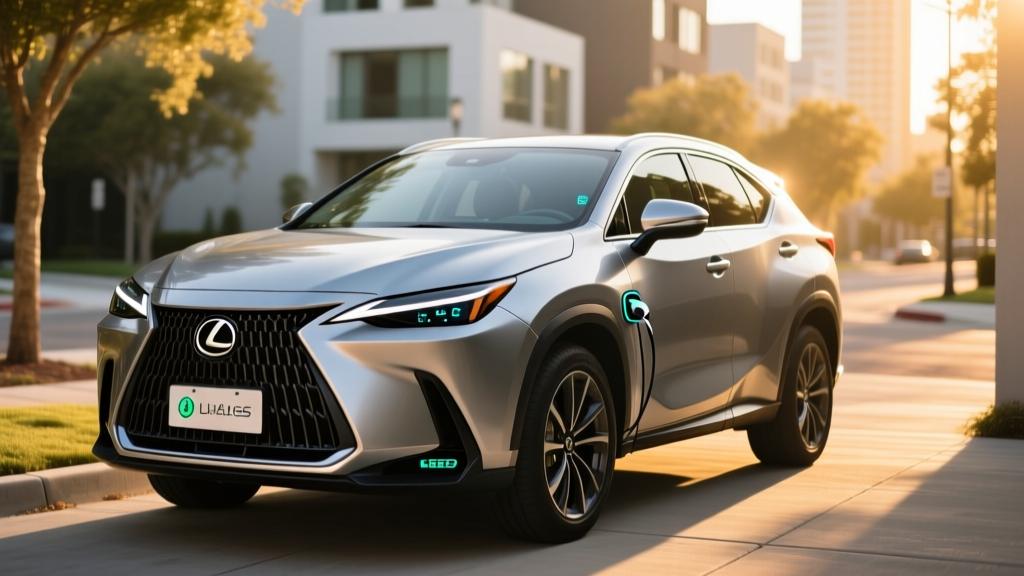
If you're researching the Lexus SUV NX hybrid lineup for the 2026 model year, you're looking at one of the most strategically split powertrain offerings in the luxury compact crossover segment. Lexus sells the NX in two distinct electrified flavors: the conventional NX 350h hybrid (HEV) and the plug-in NX 450h+ (PHEV). They share a chassis, a 2.5-liter four-cylinder engine, and Lexus's trademark build quality — but their drivetrains, fuel economy, pricing, and tax-credit eligibility diverge significantly.
This guide breaks down exactly what each version delivers in measurable terms — EPA MPG, electric-only range, battery capacity, charging times, horsepower, MSRP by trim, and real-world ownership considerations — so you can choose the right NX for your driving pattern.
HEV vs PHEV: What's the Difference in the NX Lineup?
Before comparing trims, it's critical to understand the mechanical gap between the two NX hybrid variants. Confusing them is one of the most common mistakes shoppers make.
| Attribute | NX 350h (HEV) | NX 450h+ (PHEV) |
|---|---|---|
| Powertrain Type | Conventional Hybrid — no plug | Plug-in Hybrid — requires charging for EV mode |
| Needs to Plug In? | No — self-charging via regen & engine | Yes — to access 37 mi EV range |
| Battery (Usable) | ~1.6 kWh (NiMH/NMC assist) | 18.1 kWh (Lithium-ion) |
| Electric-Only Driving | Brief low-speed assist only | Up to 37 miles at highway speeds |
| Combined HP | 240 hp | 304 hp |
| EPA Combined MPG / MPGe | 39 MPG combined | 84 MPGe (EV+gas) / 36 MPG (gas-only) |
| DC Fast Charge Capable | N/A | No — AC Level 2 only |
The NX 350h operates like a traditional Toyota/Lexus hybrid: the gasoline engine and electric motor(s) work together seamlessly, the small battery recharges through regenerative braking and the engine, and you never need to find a charger. The NX 450h+ adds a much larger battery and more powerful electric motors, enabling genuine electric-only commuting before the engine engages — but only if you plug it in regularly.
2026 Lexus NX 350h: EPA MPG, Powertrain & Real-World Economy
The NX 350h pairs a 2.5-liter Atkinson-cycle four-cylinder engine with front and rear electric motors through Lexus's e-CVT transaxle, delivering a combined 240 horsepower and standard all-wheel drive (AWD).
| Cycle | EPA Estimate | Real-World Expectation |
|---|---|---|
| City | 41 MPG | 42–46 MPG (hybrids excel in stop-and-go) |
| Highway | 37 MPG | 34–37 MPG (aerodynamic drag at 75+ mph reduces gains) |
| Combined | 39 MPG | 37–42 MPG depending on driving mix |
Source: fueleconomy.gov — 2026 Lexus NX 350h AWD
Like most Toyota/Lexus hybrids, the NX 350h tends to beat its EPA city estimate in real-world driving. Regenerative braking recaptures energy that conventional cars waste, and the engine shuts off frequently at low speeds. Owners doing predominantly urban and suburban driving commonly report 42–46 MPG. Highway-heavy commutes at sustained speeds above 70 mph will trend toward the lower end of the range, closer to 34–37 MPG. Cold weather (below 30°F) typically reduces hybrid efficiency by 5–10% due to increased engine-on time for cabin heating and reduced battery efficiency.
With a 14.5-gallon fuel tank, the NX 350h delivers a practical total range of approximately 520–580 miles per fill-up, depending on driving conditions.
2026 Lexus NX 450h+: Electric-Only Range, MPGe & Charging Specs
The NX 450h+ is the plug-in variant, and it's the one that demands more from the buyer — both in terms of charging habits and budget. Here's what you get in return.
| Specification | NX 450h+ (PHEV) |
|---|---|
| Combined Horsepower | 304 hp |
| 0–60 mph | 6.0 seconds |
| Battery Capacity (Gross) | 18.1 kWh (lithium-ion) |
| Usable Battery Capacity | ~14.5 kWh |
| EPA Electric-Only Range | 37 miles |
| EPA MPGe (EV + Gas Combined) | 84 MPGe |
| EPA MPG (Gas-Only After Depletion) | 36 MPG combined |
| Total Combined Range | ~530 miles (37 EV + ~493 gas) |
| Level 1 Charging (120V) | ~10 hours (0–100%) |
| Level 2 Charging (240V, 3.3 kW) | ~4.5 hours (0–100%) |
| DC Fast Charging | Not available |
| Charge Port | J1772 (Level 2 AC) |
Source: fueleconomy.gov — 2026 Lexus NX 450h+ AWD
The 37-mile EPA electric-only range covers most daily commutes. If your round-trip commute is under 35 miles and you charge at home nightly, you may use little to no gasoline for weeks at a time. Once the battery depletes, the NX 450h+ reverts to conventional hybrid operation at 36 MPG combined — slightly lower than the NX 350h due to the extra weight of the larger battery pack.
One notable limitation: the NX 450h+ does not support DC fast charging. The onboard charger maxes out at 3.3 kW, meaning even on a Level 2 home charger, a full charge takes roughly 4.5 hours. This is adequate for overnight charging but means you won't top up quickly on a road trip. For a PHEV with a 37-mile battery, however, most owners simply charge at home and refuel the gas tank on longer trips.
Pricing, Trims & Tax Credit Eligibility
The NX hybrid lineup spans a meaningful price range depending on powertrain and trim level.
| Model & Trim | 2026 MSRP (approx.) |
|---|---|
| NX 350h Premium | $44,950 |
| NX 350h Luxury | $50,500 |
| NX 450h+ Premium | $59,550 |
| NX 450h+ Luxury | $63,200 |
Prices include destination. Actual dealer pricing may vary.
The NX 450h+ PHEV may qualify for up to $3,750 under the IRS §30D Clean Vehicle Credit, depending on battery-component and critical-mineral sourcing requirements that change annually. The conventional NX 350h HEV does not qualify for the federal EV/PHEV tax credit.
Key eligibility requirements for the NX 450h+:
- MSRP must not exceed $80,000 for SUVs (NX 450h+ qualifies)
- Buyer AGI must not exceed $150,000 (single) / $300,000 (joint)
- Battery sourcing and critical-mineral thresholds apply — check current-year IRS guidance
- Credit can be transferred to the dealer as a point-of-sale rebate
Source: IRS.gov — Clean Vehicle Tax Credits
Always verify eligibility with a tax professional before purchase. Rules are subject to change.
Reliability, Battery Warranty & Replacement Cost
Lexus consistently ranks at or near the top of J.D. Power and Consumer Reports reliability surveys, and the NX hybrid powertrain benefits from decades of Toyota Hybrid System (THS) engineering. The e-CVT transaxle has no traditional transmission bands or clutches to wear out, and the hybrid battery operates within a narrow state-of-charge window that minimizes degradation.
| Component | Coverage |
| Hybrid Battery (NX 350h & 450h+) | 10 years / 150,000 miles |
| Hybrid System Components | 8 years / 100,000 miles |
| Powertrain (Engine, Transaxle) | 6 years / 70,000 miles |
| Basic Bumper-to-Bumper | 4 years / 50,000 miles |
Out-of-warranty battery replacement cost: Approximately $3,500–$5,500 for the NX 350h hybrid battery and $8,000–$12,000 for the NX 450h+ PHEV battery (parts + labor at a dealership). Independent hybrid specialists may offer refurbished units for 30–50% less.
In practice, Toyota/Lexus hybrid batteries routinely last 150,000–200,000+ miles before significant capacity loss. Many first-generation Prius packs exceeded 200,000 miles with minimal degradation. The NX's battery management system keeps the pack in a conservative charge window (roughly 40–80% SoC for the HEV), which is the single biggest factor in long-term lithium-ion and NiMH longevity.
For the NX 450h+, the larger PHEV battery sees deeper cycles (you'll drain it to near-zero during EV driving), but Lexus engineers for this with robust thermal management and buffer zones. Expect the PHEV battery to retain 85–90% of its original capacity at 100,000 miles under normal use.
Real-World Ownership: What It's Like to Live With
Both NX hybrid variants come standard with Lexus Safety System+ 3.0 (a Level 2 driver-assist suite including adaptive cruise, lane-centering, and pre-collision braking), a 14-inch touchscreen on upper trims, wireless Apple CarPlay/Android Auto, and a refined cabin with low NVH levels typical of the brand.
NX 350h daily driving: You'll visit gas stations roughly once every two weeks on a typical 15,000-mile/year driving schedule. The hybrid system is seamless — most drivers can't feel the engine engaging or disengaging. The e-CVT delivers smooth, linear acceleration without the rubber-band effect of older CVTs. At 240 hp, the NX 350h is adequate for merging and passing but not sporty (0–60 in approximately 7.2 seconds).
NX 450h+ daily driving: With 304 hp and instant electric torque, the PHEV is noticeably quicker (0–60 in 6.0 seconds). In EV mode, it drives like a battery-electric vehicle — silent, responsive, and smooth. The transition from electric to hybrid mode is well-isolated. The trade-off is roughly 200 lbs of additional weight from the larger battery, which you'll notice in cornering feel and slightly longer braking distances.
Charging the 450h+ at home: You'll want a Level 2 charger (240V) installed for practical daily use. A standard 120V outlet will charge the pack, but at roughly 10 hours for a full charge, it's impractical for anyone driving more than the EV range daily. Expect to pay $800–$2,000 for a Level 2 home charging setup including a quality EVSE ($350–$650) and electrician installation ($400–$1,400), assuming your electrical panel has capacity. A panel upgrade (to 200A) can add $1,500–$3,000 if needed.
NX Hybrid vs Full EV vs Gas: Which Powertrain Fits You?
Choose the NX 350h (HEV) if:
- You don't have access to home or workplace charging
- You want maximum fuel efficiency with zero behavior change
- Your budget is under $50,000
- You drive 12,000–20,000 miles/year and want to minimize fuel costs without plugging in
Choose the NX 450h+ (PHEV) if:
- You can charge at home every night (garage or driveway with 240V access)
- Your daily commute is under 35 miles round-trip
- You want electric driving for daily use but gas flexibility for road trips
- You value the 304 hp performance upgrade and qualify for the tax credit
Choose a full EV (e.g., Tesla Model Y, Lexus RZ 450e) if:
- You have reliable home charging and access to DC fast chargers for road trips
- You want zero gasoline, minimal maintenance, and maximum efficiency
- You're comfortable with 250–320 miles of range and trip planning for longer drives
Stick with a gas-only NX 250 if:
- Your budget is strictly under $40,000
- You drive very few miles per year (under 8,000) where fuel savings won't offset the hybrid premium
Pros & Cons at a Glance
✓ Pros
- NX 350h achieves 41 MPG city — among the best in luxury compact SUVs
- NX 450h+ offers 37 miles of genuine EV commuting range
- Standard AWD across all hybrid trims
- Industry-leading 10-year/150,000-mile hybrid battery warranty
- Lexus reliability reputation and strong resale value
- No range anxiety — gas backup always available
- Safety System+ 3.0 included standard
✗ Cons
- NX 450h+ starts near $60K — significant premium over the HEV
- No DC fast charging on the PHEV (3.3 kW AC max)
- Federal tax credit limited to ~$3,750 (not the full $7,500) due to sourcing rules
- 240 hp (HEV) feels modest for a luxury vehicle at highway speeds
- Cargo space slightly reduced in 450h+ due to larger battery
- Infotainment learning curve for first-time Lexus owners
Frequently Asked Questions
How many MPG does the Lexus NX hybrid get?
The NX 350h achieves an EPA-estimated 41 city / 37 highway / 39 combined MPG. In real-world driving, owners typically see 42–46 MPG in city-heavy use and 34–37 MPG on the highway. The NX 450h+ PHEV rates at 84 MPGe when combining electric and gas operation, and 36 MPG combined once the battery is depleted.
How far can the NX 450h+ drive on electric only?
The EPA rates the NX 450h+ at 37 miles of electric-only range. In real-world conditions, expect 32–37 miles depending on temperature, terrain, and speed. Cold weather (below freezing) can reduce EV range by 15–25%. At highway speeds above 70 mph, the engine may engage earlier to supplement the electric motors under heavy load.
Does the Lexus NX hybrid qualify for a tax credit?
The NX 450h+ PHEV may qualify for up to $3,750 under the federal §30D Clean Vehicle Credit, subject to buyer income limits ($150K single / $300K joint), the $80,000 SUV MSRP cap, and battery-sourcing requirements that change annually. The NX 350h conventional hybrid does not qualify for the federal credit. Some states offer additional PHEV rebates — check your state energy office. Always consult a tax professional for your specific situation.
Is the Lexus NX hybrid reliable? What does a battery replacement cost?
Lexus ranks consistently at the top of J.D. Power Vehicle Dependability Studies. The hybrid system is one of the most proven in the industry, with Toyota/Lexus hybrids routinely exceeding 200,000 miles. The hybrid battery is warranted for 10 years / 150,000 miles. Out-of-warranty replacement costs approximately $3,500–$5,500 for the NX 350h and $8,000–$12,000 for the NX 450h+, though refurbished options from independent shops can reduce this by 30–50%.
Do I need to plug in the NX 350h hybrid?
No. The NX 350h is a conventional self-charging hybrid. The battery recharges through regenerative braking and the gasoline engine. You simply drive and refuel like any other car. Only the NX 450h+ PHEV requires plugging in to access its electric-only range.
Can the NX 450h+ DC fast charge?
No. The NX 450h+ supports only AC charging via a J1772 connector at up to 3.3 kW. A full Level 2 charge takes approximately 4.5 hours. DC fast charging is not available on any current NX PHEV variant. For overnight home charging, this is perfectly adequate — but it means you cannot quickly top up on a road trip.
How does the NX hybrid compare to a full EV like the Lexus RZ?
The Lexus RZ 450e is a battery-electric SUV with an EPA range of approximately 220–270 miles (depending on trim/wheels), starting around $55,000. It qualifies for a larger potential federal tax credit and has lower per-mile fuel costs, but requires reliable home charging and route planning for road trips. The NX hybrid eliminates charging dependency entirely, at the cost of continued gasoline use. If you have home charging and mostly drive under 250 miles between stops, the RZ offers lower running costs. If charging access is uncertain or you frequently drive 300+ miles, the NX hybrid is the more practical choice.