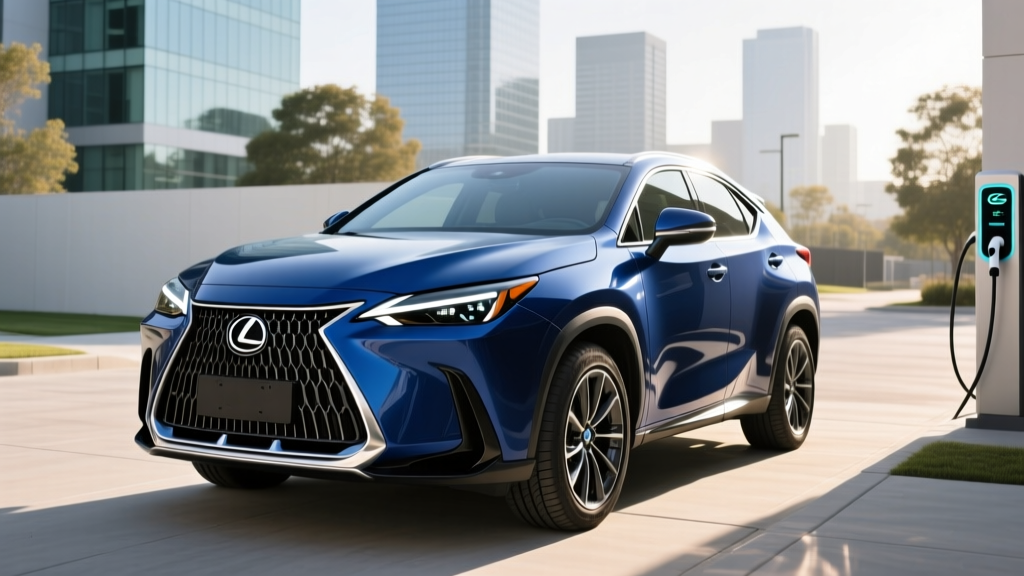
Why the Lexus NX Hybrid Dominates the CPO Market
If you're searching for a lexus nx hybrid certified pre owned vehicle, you're likely balancing fuel efficiency, luxury, and long-term reliability without the premium price of a brand-new model. The Lexus NX, redesigned for the 2022 model year, is available in two electrified flavors: the conventional hybrid NX 350h and the plug-in hybrid NX 450h+. Both are exceptionally strong candidates on the certified pre-owned (CPO) market, but they serve very different use cases. This guide breaks down exact EPA figures, real-world efficiency, battery longevity, and what to look for when inspecting a CPO listing.
HEV vs PHEV: Which Lexus NX Hybrid Is Right for You?
Before evaluating any CPO listing, understand the fundamental difference between these two powertrains.
| Feature | NX 350h (HEV) | NX 450h+ (PHEV) |
|---|---|---|
| Plug-in required? | No — self-charging via engine & regenerative braking | Yes — plug in to unlock electric-only range |
| Electric-only range | ~1 mile at low speed | EPA-estimated 37 miles |
| Combined system HP | 244 hp | 304 hp |
| Battery (traction) | 1.6 kWh NiMH (small buffer) | 18.1 kWh lithium-ion |
| DC fast charging? | N/A | No — Level 2 AC only |
| Level 2 charge time (0–100%) | N/A | ~3 hours at 6.6 kW (240V) |
| Federal tax credit (new) | None | Up to $7,500 (§30D, subject to sourcing & income caps) |
The NX 350h is a conventional hybrid (HEV). You never plug it in — the gasoline engine and regenerative braking keep a small battery charged. It prioritizes simplicity and excellent city MPG. The NX 450h+ is a plug-in hybrid (PHEV) with a substantially larger 18.1 kWh lithium-ion battery that enables roughly 37 miles of pure electric driving before the gas engine kicks in as a series-parallel hybrid.
EPA Fuel Economy and Real-World MPG
Fuel economy is the primary reason most buyers target a Lexus NX hybrid certified pre-owned model. Here's how the two variants stack up according to fueleconomy.gov (EPA):
| Model | City MPG | Highway MPG | Combined MPG | MPGe (PHEV EV mode) |
|---|---|---|---|---|
| NX 350h AWD (2022–2025) | 41 | 37 | 39 | N/A |
| NX 450h+ AWD (2022–2025) | 38 (hybrid mode) | 33 (hybrid mode) | 36 (hybrid mode) | 84 MPGe combined |
Real-world expectations: Conventional hybrids like the NX 350h frequently exceed their EPA city rating in stop-and-go traffic because regenerative braking recaptures energy that a gas car wastes as heat. Owners consistently report 42–45 MPG in urban driving. Highway efficiency is lower because the electric motor assists less at sustained speeds. Expect 35–37 MPG at 70 mph.
For the NX 450h+, real-world results depend entirely on your charging habits. If you plug in nightly and your commute is under 37 miles round-trip, you may use almost no gasoline for weeks. Once the battery depletes, the car operates as a conventional hybrid returning roughly 33–36 MPG combined — still efficient, but lower than the 350h because of the heavier battery pack.
Powertrain Specs and Performance
| Specification | NX 350h | NX 450h+ |
|---|---|---|
| Engine | 2.5L 4-cyl Atkinson-cycle | 2.5L 4-cyl Atkinson-cycle |
| Combined system output | 244 hp | 304 hp |
| 0–60 mph | 7.2 sec (mfr est.) | 6.0 sec (mfr est.) |
| Drivetrain | AWD (electronic rear motor) | AWD (electronic rear motor) |
| Transmission | eCVT | eCVT |
| Towing capacity | 2,000 lbs | 2,000 lbs |
Both models use Toyota/Lexus's series-parallel hybrid architecture with an electronically controlled continuously variable transmission (eCVT). The rear axle is driven by a separate electric motor — there's no mechanical driveshaft, which improves packaging and enables instant torque to the rear wheels when AWD traction is needed.
Battery Longevity, Warranty, and Replacement Costs
Battery degradation is the number one concern for any hybrid buyer evaluating a CPO vehicle. Here's what you need to know:
Lexus Hybrid Battery Warranty
- Coverage: 10 years or 150,000 miles (whichever comes first), transferable to subsequent owners.
- Capacity threshold: Lexus warrants the hybrid battery against defects and abnormal loss of capacity. There is no published minimum State of Health percentage — claims are evaluated case-by-case.
- For a 2022 CPO model: Factory battery warranty remains active until 2032 or 150,000 miles.
NX 350h (NiMH battery): The 1.6 kWh nickel-metal hydride pack is small and lightly stressed. Toyota/Lexus NiMH batteries have an exceptional longevity track record — many Prius and RX hybrid batteries from the 2000s and 2010s surpassed 200,000 miles without replacement. The NX 350h's battery rarely cycles deeply, which further extends life. Replacement cost, if ever needed out of warranty, typically ranges from $2,000–$3,500 for a remanufactured unit.
NX 450h+ (Lithium-ion battery): The 18.1 kWh lithium-ion pack undergoes deeper cycling since it powers 37 miles of electric driving. However, Lexus employs conservative buffer management (you never access 100% or 0% of the pack), which mitigates degradation. Real-world data on this specific pack is still accumulating given the 2022 launch, but similar Toyota/Lexus PHEV packs (RAV4 Prime) have shown minimal degradation in early reports. Out-of-warranty replacement is significantly more expensive — estimated at $8,000–$12,000 for the PHEV pack.
CPO inspection tip: Ask the dealer for a hybrid battery health report. Lexus technicians can pull a State of Health (SoH) reading via Techstream diagnostic software. For a 2022–2023 model with under 40,000 miles, expect SoH above 95%.
CPO Pricing and Tax Credit Considerations
As of early 2026, certified pre-owned Lexus NX hybrid pricing typically falls in these ranges:
- NX 350h (2022–2023 CPO): $36,000–$44,000 depending on trim (Base, Premium, Luxury, F SPORT Handling) and mileage
- NX 450h+ (2022–2023 CPO): $45,000–$55,000 depending on trim and mileage
Federal tax credits on CPO purchases: The IRS §30D credit applies only to new clean vehicles. However, the §25E Used Clean Vehicle Credit offers up to $4,000 (30% of sale price, capped at $4,000) for a qualifying pre-owned PHEV like the NX 450h+, provided:
- The vehicle is purchased from a licensed dealer (not private party)
- The sale price is $25,000 or less (this is a significant barrier — most CPO NX 450h+ models exceed this threshold)
- Buyer income does not exceed $75,000 single / $112,500 head of household / $150,000 joint
- The vehicle is at least 2 model years old
In practice, the $25,000 sale price cap effectively disqualifies most CPO NX 450h+ units from the used-EV credit. The NX 350h never qualified for any federal credit since it is a conventional hybrid, not a plug-in vehicle.
CPO warranty bonus: Lexus CPO vehicles include a 2-year/unlimited-mileage warranty beyond the original new-vehicle warranty, plus the remaining balance of the 10-year/150,000-mile hybrid battery warranty. This layered coverage is a major advantage over private-party purchases.
Who Should Choose the NX 350h, NX 450h+, or a Full EV?
Choose the NX 350h (HEV) if:
- You lack access to home or workplace charging
- You want maximum MPG simplicity — no plugs, no apps, no charging schedules
- Your budget is $36,000–$44,000 for a CPO model
- You drive primarily in the city where regenerative braking maximizes efficiency (42–45 MPG real-world)
- You want the lowest long-term maintenance risk with proven NiMH battery tech
Choose the NX 450h+ (PHEV) if:
- You have reliable Level 2 home charging (240V outlet or installed charger)
- Your daily round-trip commute is under 35 miles — you'll rarely burn gas on weekdays
- You want 304 hp and quicker acceleration (6.0 sec 0–60)
- You take longer road trips and need the security of a gas engine (total range ~550+ miles)
- You value the ability to pre-condition the cabin on grid power while plugged in
Choose a Full BEV instead if:
- You want zero tailpipe emissions and the lowest per-mile energy cost
- You have home charging and rarely drive more than 250 miles in a single day
- You want to qualify for the full $7,500 §30D new-vehicle credit (on eligible new models)
- You want to eliminate oil changes, spark plugs, and exhaust-system maintenance entirely
CPO Inspection Checklist for the Lexus NX Hybrid
Before signing paperwork on any Lexus NX hybrid certified pre-owned listing, verify these items:
- Hybrid battery SoH report — Request a Techstream printout from the Lexus service department.
- CPO documentation — Confirm the vehicle passed the Lexus 161-point CPO inspection and that the CPO warranty is active in the Lexus app.
- Service records — Hybrid systems are low-maintenance, but regular oil changes on the 2.5L engine still matter. Verify the maintenance schedule was followed.
- Tire condition — AWD hybrids can show uneven tire wear if rotations were skipped. Check for matching tire brands and tread depth across all four corners.
- Software updates — Early 2022 NX models had some infotainment and hybrid-control-module software updates. Confirm the latest ECU calibrations have been applied.
- Brake pad life — Regenerative braking reduces wear on the friction brakes, but pads should still be inspected. Many Lexus hybrids reach 60,000+ miles on original pads.
Frequently Asked Questions
How many MPG does the Lexus NX 350h hybrid get?
The EPA rates the 2022–2025 NX 350h AWD at 41 city / 37 highway / 39 combined MPG. In real-world city driving with frequent stops, many owners report 42–45 MPG. Highway driving at 75 mph typically returns 35–37 MPG.
How far can the Lexus NX 450h+ drive on electric only?
The EPA estimates 37 miles of electric-only range for the NX 450h+. Real-world range varies: expect 28–32 miles in cold weather and 25–28 miles at sustained highway speeds. For city commutes in moderate temperatures, 35–37 miles is achievable.
Is the Lexus NX hybrid reliable?
Lexus consistently ranks at or near the top of J.D. Power and Consumer Reports reliability surveys. The NX 350h uses Toyota's fourth-generation hybrid system, which has been proven across millions of vehicles. The 2.5L Atkinson-cycle engine is under-stressed and designed for longevity. The 10-year/150,000-mile hybrid battery warranty provides additional peace of mind.
What does a Lexus NX hybrid battery replacement cost?
For the NX 350h (NiMH), a remanufactured replacement battery costs approximately $2,000–$3,500. For the NX 450h+ (lithium-ion), replacement is estimated at $8,000–$12,000. However, both batteries are warranted for 10 years/150,000 miles, and historical data suggests many Toyota/Lexus hybrid batteries last well beyond 200,000 miles.
Does a CPO Lexus NX hybrid qualify for any tax credit?
The NX 350h (conventional hybrid) does not qualify for any federal tax credit. The NX 450h+ (PHEV) may qualify for the §25E Used Clean Vehicle Credit of up to $4,000, but only if the sale price is $25,000 or less — a threshold most CPO NX 450h+ models do not meet. Consult a tax professional and review current IRS §25E guidelines before relying on credit eligibility.
Can the NX 450h+ DC fast charge?
No. The NX 450h+ supports Level 2 AC charging only at up to 6.6 kW, which fully replenishes the 18.1 kWh battery in approximately 3 hours using a 240V source. There is no DC fast-charging capability. For daily use, this is sufficient — plug in overnight and wake up to a full battery every morning.
Is a Lexus CPO warranty worth it over a private-party purchase?
For a hybrid vehicle, yes. The CPO program extends the new-vehicle warranty by 2 years with unlimited mileage, and the 10-year/150,000-mile hybrid battery warranty transfers automatically. Given the potential $8,000+ cost of a PHEV battery replacement, buying CPO from a Lexus dealer is a rational risk-mitigation strategy, even if the upfront price is $2,000–$4,000 higher than a private-party equivalent.