The Lexus LX 700h Hybrid: Quick Verdict
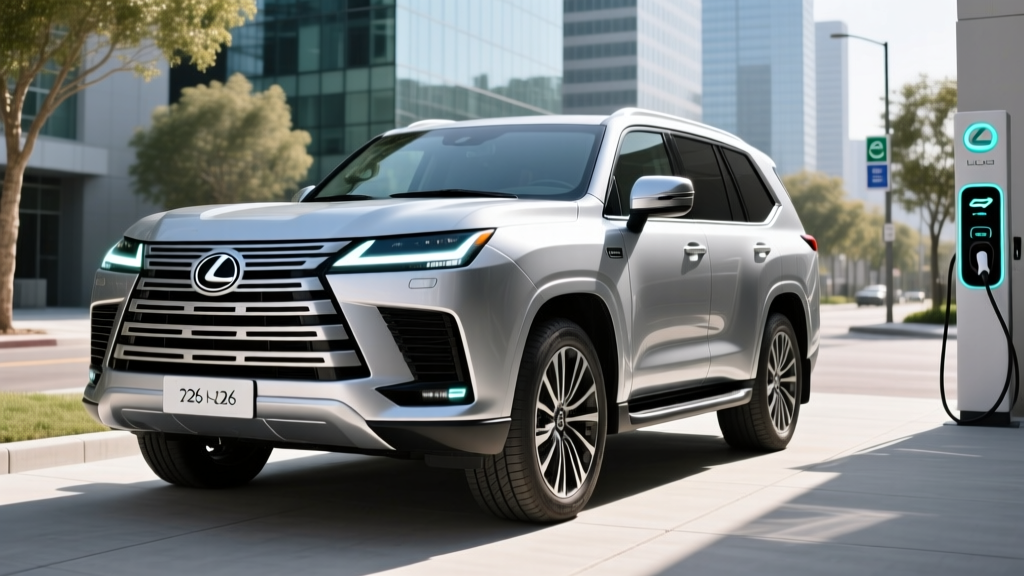
The 2026 Lexus LX 700h is a conventional hybrid (HEV) — not a plug-in. It pairs a twin-turbocharged 3.5-liter V6 with a hybrid electric system for a combined 457 horsepower and 649 lb-ft of torque, wrapped in a body-on-frame luxury SUV that seats up to seven. If you want flagship off-road capability, a 8,000-pound towing capacity, and a meaningful fuel-economy bump over the gas-only LX 600 without ever plugging in, the 700h is the most rational configuration of Lexus's largest SUV.
But rational doesn't mean cheap. Pricing starts around $117,000, and real-world MPG hovers in the high teens on the highway. This guide covers the exact numbers buyers need before signing a six-figure order sheet.
HEV vs PHEV: What the LX 700h Actually Is
A frequent point of confusion: the LX 700h is a conventional hybrid (HEV), not a plug-in hybrid (PHEV). Here's what that means in practice.
| Attribute | HEV (LX 700h) | PHEV (e.g., Toyota RAV4 Prime) |
|---|---|---|
| Plug-in charging? | No — charges via regenerative braking and the engine | Yes — plug into Level 1 or Level 2 |
| Electric-only range | None (motor assists engine at low speeds) | 25–42 miles typical |
| Battery size | ~1.5–2.0 kWh (small, nickel-metal hydride or lithium-ion) | 15–20 kWh typically |
| Federal tax credit (§30D) | Not eligible | Up to $7,500 if sourcing rules met |
| Best for | Drivers who want efficiency without charging infrastructure | Drivers with home charging who want short EV commutes |
The LX 700h's hybrid system recovers energy during braking and deceleration, stores it in a small onboard battery, and uses an electric motor to assist the V6 during acceleration and low-speed maneuvering. You never need to plug it in — and you can't drive on electric power alone for more than brief, low-speed bursts.
EPA Fuel Economy and Real-World MPG
The EPA rates the 2026 Lexus LX 700h at the following fuel-economy figures:
| Driving Cycle | EPA MPG |
|---|---|
| City | 19 MPG |
| Highway | 22 MPG |
| Combined | 20 MPG |
For context, the gas-only LX 600 returns 15 city / 19 highway / 17 combined. The hybrid nets roughly a 3 MPG combined improvement — meaningful for a vehicle this size, but still thirsty by any standard.
Real-World Expectations
Conventional hybrids often exceed their EPA city rating because regenerative braking recovers more energy in stop-and-go traffic. In mixed suburban driving with moderate stoplights, expect 20–22 MPG. On a flat, 70-mph highway cruise, you'll see 20–21 MPG. Push it to 80 mph or climb mountain grades, and figures dip to 17–18 MPG. Towing a 5,000-pound trailer? Plan for 12–14 MPG.
With a 21.2-gallon fuel tank, real-world range sits around 380–420 miles per fill-up in typical mixed driving.
Powertrain: Twin-Turbo V6 Meets Hybrid Assist
The LX 700h uses Lexus's i-FORCE MAX hybrid powertrain — the same architecture found in the Toyota Tundra and Sequoia, but tuned for Lexus refinement.
| Specification | 2026 Lexus LX 700h |
|---|---|
| Engine | 3.5L twin-turbocharged V6 |
| Hybrid system | i-FORCE MAX (motor integrated between engine and transmission) |
| Combined horsepower | 457 hp |
| Combined torque | 649 lb-ft |
| Transmission | 10-speed automatic |
| Drivetrain | Full-time 4WD with Torsen limited-slip center differential |
| 0–60 mph | ~6.0 seconds |
| Towing capacity | 8,000 lbs (max, properly equipped) |
| Curb weight | ~6,100 lbs |
The electric motor sits between the engine and the transmission, providing instant low-end torque fill while the turbos spool. The result is a smoother, more linear power delivery than the LX 600 — and a 0–60 time that drops from roughly 6.9 seconds to about 6.0. In practice, the hybrid system's biggest benefit isn't peak power; it's the effortless around-town responsiveness and reduced transmission hunting on inclines.
Pricing, Trims, and Tax Credit Eligibility
The 2026 LX 700h is offered across several trims, all built on the same hybrid powertrain:
| Trim | Starting MSRP (est.) |
|---|---|
| Luxury | $117,310 |
| Premium | $120,810 |
| F SPORT Handling | $124,410 |
| Ultra Luxury | $137,110 |
Federal Tax Credit: Not Eligible
Under current IRS §30D rules, the federal clean vehicle credit of up to $7,500 applies only to plug-in electric vehicles (BEVs and PHEVs) that meet battery capacity, critical-mineral sourcing, MSRP caps, and buyer income limits. The Lexus LX 700h is a conventional hybrid and does not qualify for the §30D federal tax credit.
Some states offer their own incentives for hybrid vehicles, but these are increasingly rare as programs shift toward zero-emission vehicles. Check your state's energy office or department of environmental quality for current programs — but don't count on a rebate.
Hybrid Battery Warranty, Reliability, and Replacement Cost
Lexus Hybrid Battery Warranty: 10 years / 150,000 miles (whichever comes first) in all 50 states, covering the hybrid battery pack and hybrid-system components against defects and excessive capacity loss.
Lexus (and parent company Toyota) has the deepest hybrid experience in the industry — the Prius launched in 1997, and the company has sold tens of millions of hybrids globally. The LX 700h's hybrid battery is relatively small (~1.5–2.0 kWh), which means less thermal stress per cell and a historically lower failure rate than early large-pack PHEVs.
How Long Will It Last?
Toyota/Lexus hybrid batteries in vehicles like the Highlander Hybrid, Land Cruiser, and Sequoia routinely last 150,000–200,000+ miles before significant degradation. The LX platform is engineered for 200,000+ mile service life, and the hybrid system is simpler and less stressed than a full EV battery pack. Most owners will never face a hybrid battery replacement.
What If It Does Need Replacement?
Out-of-warranty hybrid battery replacement for a Lexus/Toyota V6 hybrid typically runs $3,000–$5,000 including parts and labor at a dealership. Independent hybrid specialists can sometimes source refurbished packs for $2,000–$3,500. This is a fraction of what a full EV battery replacement costs ($10,000–$20,000+), and it's a repair most LX 700h owners will never face.
Overall Reliability
Lexus consistently ranks at or near the top of J.D. Power Vehicle Dependability Studies. The LX nameplate, sharing its platform with the Toyota Land Cruiser, is built for extreme durability. The addition of the i-FORCE MAX hybrid system introduces a proven architecture already stress-tested in the Tundra and Sequoia. We rate expected reliability as excellent.
Who Should Buy the LX 700h — and Who Shouldn't
Choose the LX 700h If:
- You need a full-size, body-on-frame SUV with genuine off-road hardware (locking center diff, crawl control, 8,000-lb tow rating)
- You want hybrid efficiency without installing a home charger or changing your fueling habits
- You prioritize Lexus reliability and a 10-year hybrid warranty
- You value a smoother, more responsive powertrain over the gas LX 600
- You plan to own the vehicle 10+ years and want proven long-term durability
Look Elsewhere If:
- You want electric-only driving or a plug-in experience — consider the BMW X5 xDrive50e (PHEV) or a full BEV like the Rivian R1S
- Fuel cost is a primary concern — 20 MPG combined in a $117K+ vehicle means $3,000–$4,000/year in gas at current prices
- You need three full-size adult rows — the LX third row is best suited for children
- You want the federal $7,500 tax credit — only BEVs and qualifying PHEVs are eligible
- You primarily drive in urban environments where a smaller, more efficient SUV would suffice
Hybrid vs PHEV vs Full EV: Which Fits You?
| Scenario | Best Powertrain |
|---|---|
| No home charging access, long highway commutes, towing needs | HEV (LX 700h fits here) |
| Home charging available, 20–40 mile daily commute, weekend road trips | PHEV (e.g., BMW X5 xDrive50e) |
| Home charging available, mostly under 300 miles/day, want lowest operating cost | Full BEV (e.g., Rivian R1S, Tesla Model X) |
Ownership Costs: What 5 Years Looks Like
| Cost Category | 5-Year Estimate |
|---|---|
| Purchase price (Luxury trim) | $117,310 |
| Fuel (15,000 mi/yr, 20 MPG, $3.80/gal) | $14,250 |
| Insurance (estimated average) | $14,000–$18,000 |
| Maintenance (hybrid reduces brake wear via regen) | $3,500–$5,000 |
| Federal tax credit | $0 (not eligible) |
| Estimated 5-year depreciation (~45%) | ~$52,800 |
Lexus vehicles hold value well, and the LX historically depreciates slower than European rivals. The hybrid system adds minimal maintenance cost — there's no hybrid-specific fluid change, and regenerative braking extends brake pad life significantly. Plan for standard Lexus luxury-SUV insurance premiums, which are higher than average.
Frequently Asked Questions
How many MPG does the Lexus LX 700h hybrid get?
The EPA rates the 2026 LX 700h at 19 city / 22 highway / 20 combined MPG. Real-world mixed driving typically yields 19–22 MPG depending on conditions. Towing drops this to roughly 12–14 MPG.
Does the Lexus LX 700h need to be plugged in?
No. The LX 700h is a conventional hybrid (HEV). Its small battery recharges through regenerative braking and the gasoline engine. There is no plug, no charging port, and no electric-only driving range to manage.
Does the LX 700h qualify for the federal $7,500 EV tax credit?
No. Under IRS §30D, only plug-in electric vehicles (BEVs and PHEVs) that meet battery sourcing, MSRP, and income requirements are eligible. Conventional hybrids like the LX 700h do not qualify for any federal purchase credit.
Is the LX 700h hybrid system reliable?
Yes. Lexus/Toyota has over 25 years of hybrid production experience. The i-FORCE MAX system is already proven in the Tundra and Sequoia. The hybrid battery is covered by a 10-year/150,000-mile warranty, and out-of-warranty replacement costs roughly $3,000–$5,000 — far less than a full EV battery.
How does the LX 700h compare to the gas LX 600?
The 700h delivers 457 hp and 649 lb-ft (vs. 409 hp / 479 lb-ft for the 600), improves fuel economy from 17 to 20 MPG combined, and provides smoother low-speed drivability. It costs roughly $5,000–$8,000 more depending on trim but is the recommended choice for most buyers.
What's the towing capacity of the LX 700h?
The LX 700h is rated to tow up to 8,000 pounds when properly equipped, matching the gas LX 600. The hybrid system's additional low-end torque makes it a capable tow vehicle, though expect fuel economy to drop to 12–14 MPG while towing heavy loads.