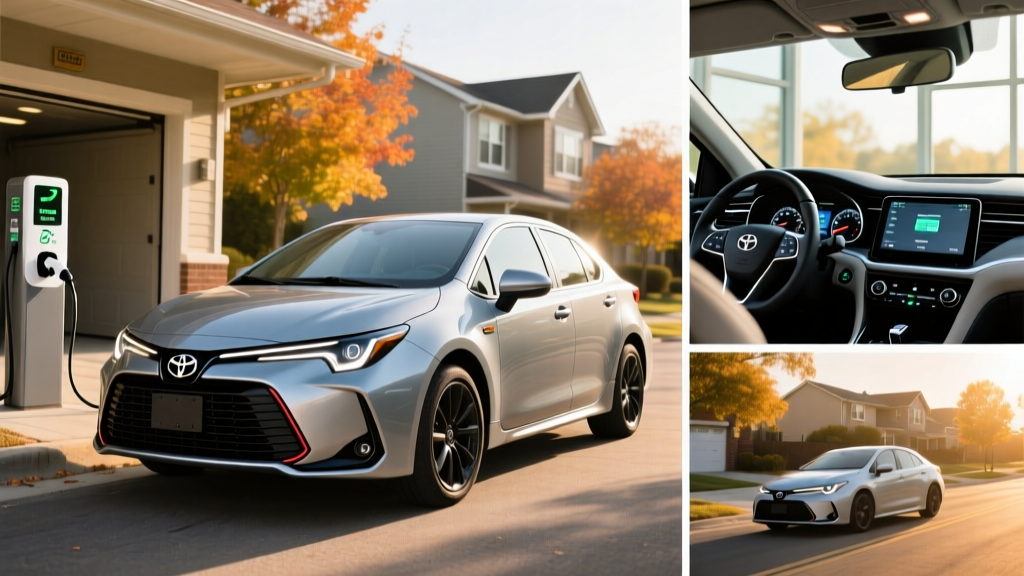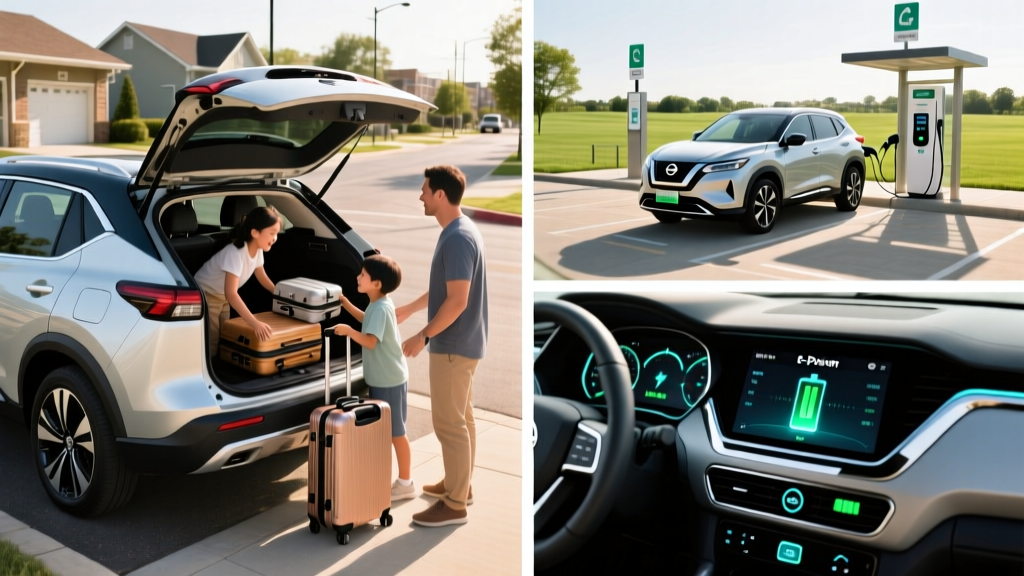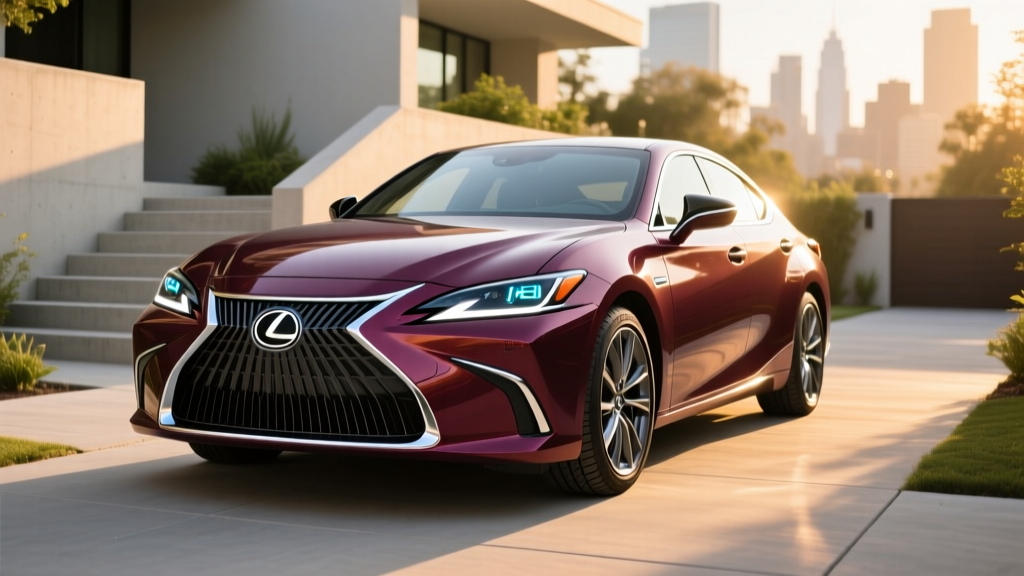
The Lexus IS lineup has long been the entry point into Lexus luxury sedans, and for buyers searching for a Lexus IS hybrid, the answer in 2026 requires some careful navigation. Unlike the larger ES and UX lines, the IS compact sport sedan does not currently offer a hybrid or plug-in hybrid variant in the United States. This guide breaks down exactly what's available, why Lexus has kept the IS strictly gasoline-powered, what hybrid alternatives exist within the Lexus stable, and whether a conventional hybrid (HEV), plug-in hybrid (PHEV), or full battery-electric vehicle (BEV) is the right move for your next luxury compact sedan purchase.
Does the 2026 Lexus IS Have a Hybrid Option?
As of the 2026 model year, the Lexus IS is sold exclusively with gasoline powertrains in the U.S. market. The current lineup includes the IS 300 (turbocharged 2.0L four-cylinder) and the IS 350 (3.5L V6), along with the high-performance IS 500 F SPORT equipped with a 5.0L V8. None of these carry a hybrid badge, and Lexus has not announced a hybrid IS variant for 2026 or the near future.
This stands in contrast to other Lexus sedans. The Lexus ES 300h, for example, pairs a 2.5L four-cylinder engine with an electric motor for an EPA-estimated 44 MPG combined. The compact UX 250h crossover delivers 39 MPG combined. The IS, positioned as a sportier, rear-drive-oriented sedan, has remained gasoline-only—a decision rooted in Lexus's packaging priorities for a performance-oriented chassis.
Lexus IS 2026 Gasoline Powertrain Specs
Since the IS is gasoline-only, here's what you're working with across the 2026 lineup, per fueleconomy.gov data:
| Spec | IS 300 (2.0T) | IS 350 (3.5L V6) | IS 500 F SPORT |
|---|---|---|---|
| Engine | 2.0L Turbo I-4 | 3.5L V6 | 5.0L V8 |
| Horsepower | 241 hp | 311 hp | 472 hp |
| EPA City MPG | 21 | 20 (RWD) | 17 |
| EPA Highway MPG | 31 | 28 (RWD) | 25 |
| EPA Combined MPG | 25 | 23 (RWD) | 20 |
| 0–60 mph | 6.9 sec | 5.7 sec | 4.4 sec |
| Starting MSRP | ~$41,235 | ~$44,660 | ~$60,000 |
Real-world MPG note: Gasoline-only sedans like the IS tend to underperform their EPA highway estimates in aggressive driving or cold weather, but may slightly exceed city ratings in gentle commuting. Expect 22–24 MPG combined in mixed real-world driving for the IS 300, and 20–22 for the IS 350 AWD.
Lexus Hybrid Alternatives: If You Want Electrification
If fuel efficiency and electrification are priorities but you want to stay in the Lexus ecosystem, here are the closest hybrid and PHEV alternatives to consider instead of the IS:
Lexus ES 300h (HEV)
- Type: Conventional Hybrid (no plug)
- Powertrain: 2.5L I-4 + electric motor, 215 hp combined
- EPA MPG: 44 city / 43 highway / 44 combined
- Starting MSRP: ~$44,590
- Trade-off: Larger, softer, FWD — not as sporty as the IS
Lexus NX 450h+ (PHEV)
- Type: Plug-in Hybrid (requires charging)
- Battery: 18.1 kWh lithium-ion
- Electric-only range: 37 miles (EPA)
- Combined MPGe: 84 MPGe (electric + gas)
- Combined HP: 304 hp
- Starting MSRP: ~$59,905
- Trade-off: Compact SUV, not a sedan; higher price
The ES 300h is the most logical sedan substitute if your priority is fuel economy in a Lexus luxury package. The NX 450h+ makes sense if you want electric-only commuting capability and don't mind a crossover body style. Neither replicates the IS's compact, rear-drive sport-sedan character.
HEV vs PHEV vs BEV: Which Fits Your Driving Pattern?
With no Lexus IS hybrid on the table, the broader question becomes whether a conventional hybrid, plug-in hybrid, or full battery-electric vehicle matches your daily routine. Here's a decision framework:
| Factor | HEV (e.g., ES 300h) | PHEV (e.g., NX 450h+) | BEV (e.g., Tesla Model 3) |
|---|---|---|---|
| Plugs in? | No | Yes (Level 1 or 2) | Yes (Level 2 + DC fast) |
| Electric-only range | ~1 mile (low speed) | 25–40 miles typical | 250–350 miles |
| Home charging needed? | No | Recommended | Essential |
| Best for | No home charging access; want MPG gains with zero behavior change | Short commute + home charger; want EV daily, gas for road trips | Home charging + mostly under 250 mi/day; lowest operating cost |
| Federal tax credit (§30D) | Not eligible | Up to $7,500 (if eligible) | Up to $7,500 (if eligible) |
| Fuel cost per mile | ~$0.09 (gas) | ~$0.04 (electric) / ~$0.12 (gas) | ~$0.04 (electric) |
- Choose an HEV if you rent, lack home charging access, or want better MPG without changing any habits.
- Choose a PHEV if your daily commute is under 35 miles, you can install a Level 2 charger at home, and you take road trips where charging infrastructure is sparse.
- Choose a BEV if you have reliable home charging, drive under 250 miles daily, and want the lowest per-mile cost with minimal maintenance.
Federal Tax Credits: What the Lexus IS (and Alternatives) Qualify For
Because the Lexus IS is gasoline-only, it does not qualify for the IRS §30D Clean Vehicle Credit. This credit applies only to new battery-electric vehicles and plug-in hybrids that meet specific battery-sourcing, critical-mineral, MSRP, and buyer-income requirements.
Here's how the credit picture looks across relevant Lexus models for 2026:
- Lexus IS (all trims): Gasoline only — no federal EV credit.
- Lexus ES 300h (HEV): Conventional hybrid — no federal EV credit (HEVs are not eligible under §30D).
- Lexus NX 450h+ (PHEV): May qualify for up to $3,750–$7,500 depending on battery component and critical-mineral sourcing compliance. The MSRP cap for SUVs is $80,000; buyer income caps apply ($150,000 single / $300,000 joint filers). Credit can be transferred to the dealer at point of sale. Verify current eligibility at IRS.gov's qualified vehicle list, as sourcing requirements tighten annually.
- Vehicle must be a BEV or PHEV (not a conventional HEV)
- Buyer AGI must not exceed $150K (single) or $300K (joint)
- MSRP cap: $55,000 for sedans; $80,000 for SUVs/trucks/vans
- Battery components must meet North American manufacturing thresholds
- Critical minerals must meet sourcing requirements from FTA countries
- Credit amount phases based on compliance — $3,750 if only one requirement met, $7,500 if both
Reliability and Battery Longevity: Lexus Hybrid Track Record
While the IS doesn't carry a hybrid system, Lexus's hybrid reliability record is relevant if you're considering the ES 300h or NX 450h+ as alternatives. Lexus (and parent company Toyota) has over 25 years of hybrid production experience, and their hybrid systems consistently rank among the most dependable in the industry.
Lexus Hybrid Battery Warranty & Lifespan
| Hybrid battery warranty: | 10 years / 150,000 miles (all 50 states) |
| Powertrain warranty: | 6 years / 70,000 miles |
| Typical hybrid battery lifespan: | 150,000–200,000+ miles with normal use |
| Out-of-warranty replacement cost: | $2,000–$4,500 (HEV); $8,000–$12,000 (PHEV) |
| Real-world failure rate: | Extremely low before 150K miles; gradual capacity loss rather than sudden failure |
Lexus hybrid batteries use nickel-metal hydride (HEV) or lithium-ion (PHEV) chemistry. The hybrid system's conservative state-of-charge buffering—never allowing the battery to fully charge or fully deplete—is a primary reason for the exceptional longevity.
For the gasoline-only IS, the conventional powertrain carries Lexus's standard 6-year/70,000-mile powertrain warranty. There is no hybrid battery to worry about, but you also forgo the fuel-economy benefits that come with electrification.
Real-World Ownership Costs: IS 300 vs ES 300h
To illustrate the cost difference between sticking with the gas-only IS and switching to a Lexus hybrid sedan, here's a 5-year ownership comparison assuming 15,000 miles/year and $3.50/gallon regular fuel:
| Cost Factor (5 yr / 75K mi) | IS 300 (25 MPG comb.) | ES 300h (44 MPG comb.) |
|---|---|---|
| Total fuel consumed | 3,000 gallons | 1,705 gallons |
| Total fuel cost | $10,500 | $5,968 |
| Estimated maintenance | $3,200 | $2,800 |
| Total fuel + maintenance | $13,700 | $8,768 |
| 5-year savings (ES 300h) | — | ~$4,932 |
The ES 300h saves roughly $5,000 in fuel and maintenance over five years. However, the IS starts at a lower MSRP and offers sportier driving dynamics that the comfort-tuned ES cannot match. The choice comes down to whether efficiency or engagement matters more to you.
Pros and Cons: Gasoline IS vs Lexus Hybrid Alternatives
✓ Reasons to Choose the IS (Gasoline)
- Rear-wheel-drive dynamics and sporty handling the ES can't replicate
- Lower starting price (~$41K vs ~$44.5K for ES 300h)
- No charging infrastructure needed or considered
- IS 500 V8 offers performance no Lexus hybrid sedan matches
- Proven Lexus reliability on conventional powertrains
- Compact size ideal for urban driving and tight parking
✗ Reasons to Look at Hybrid Alternatives
- IS gets 23–25 MPG combined vs 44 MPG for the ES 300h
- No federal tax credit eligibility on any IS trim
- Higher 5-year fuel costs (~$4,900 more over 5 years vs ES 300h)
- IS interior and infotainment feel dated compared to newer Lexus models
- No electrification path — if emissions matter, IS is the wrong choice
- AWD availability on IS 350 reduces MPG further (22 combined)
Frequently Asked Questions
How many MPG does the Lexus IS get?
The 2026 Lexus IS 300 achieves an EPA-estimated 21 city / 31 highway / 25 combined MPG. The IS 350 RWD rates at 20/28/23, and the IS 500 F SPORT at 17/25/20. In real-world mixed driving, expect the IS 300 to deliver 22–24 MPG and the IS 350 to deliver 20–22 MPG, depending on driving style and climate. These are conventional gasoline figures—no hybrid IS exists.
Will Lexus ever make a hybrid IS?
Lexus has not announced a hybrid IS for 2026 or beyond. The IS platform, originally designed for rear-drive performance, has not been adapted for Lexus's hybrid powertrain packaging. If Lexus introduces a next-generation IS, a hybrid variant is possible but not confirmed. Buyers seeking a Lexus hybrid sedan today should look at the ES 300h.
Is the Lexus IS reliable without a hybrid system?
Yes. The IS's conventional turbocharged four-cylinder and naturally aspirated V6 engines are well-proven designs. Lexus consistently ranks at or near the top of J.D. Power and Consumer Reports reliability studies. The IS carries a 6-year/70,000-mile powertrain warranty and a 4-year/50,000-mile basic warranty. Without a hybrid battery, there's one less complex system to maintain—though you trade fuel economy for that simplicity.
Does the Lexus IS qualify for any federal tax credit?
No. The federal §30D Clean Vehicle Credit applies only to plug-in vehicles (BEVs and PHEVs). The gasoline-only Lexus IS does not qualify. The Lexus NX 450h+ PHEV may qualify for $3,750–$7,500 depending on your income, the vehicle's battery sourcing compliance, and current IRS rules. Always verify eligibility at IRS.gov before purchasing.
What Lexus hybrid sedan gets the best MPG?
The EPA rates the Lexus ES 300h at 44 MPG combined (44 city / 43 highway), making it the most fuel-efficient Lexus sedan available. Real-world city driving often matches or slightly exceeds this figure thanks to the hybrid system's regenerative braking, which is most effective in stop-and-go traffic. Highway-heavy commutes may see 40–42 MPG.
Hybrid vs PHEV vs EV — which is right for me?
If you lack home charging and want zero behavior change, a conventional HEV like the ES 300h delivers strong MPG without plugging in. If you have a garage or driveway where you can install a Level 2 charger and your daily commute is under 35 miles, a PHEV like the NX 450h+ lets you drive on electricity most days while keeping a gas engine for longer trips. If you have reliable home charging and rarely exceed 250 miles in a day, a full BEV offers the lowest per-mile cost and minimal maintenance. The IS fits none of these categories—it's a gasoline sport sedan for drivers who prioritize handling over efficiency.