Quick Verdict: Two Lexus Hybrid NX Paths, One Smart Choice
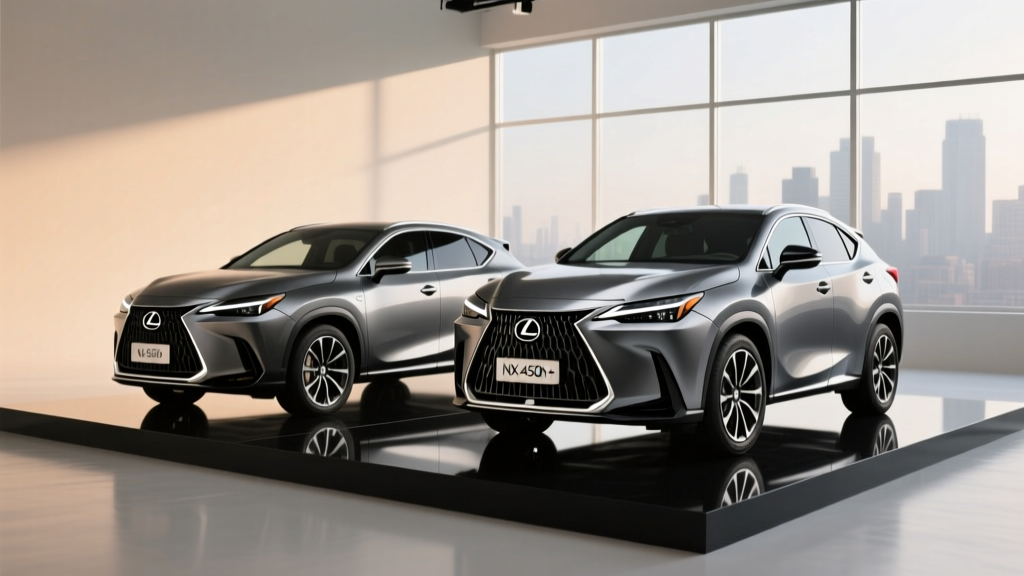
The 2026 Lexus NX lineup offers two distinct hybrid flavors, and picking the right one depends entirely on your driving habits and home-charging access. The NX 350h is a conventional hybrid (HEV) that never needs plugging in, delivering an EPA-estimated 39 MPG combined with zero lifestyle change. The NX 450h+ is a plug-in hybrid (PHEV) with up to 37 miles of electric-only range, ideal for commuters who can charge at home and want to drive most weekdays without burning a drop of gas.
Both share the same refined cabin, Lexus Safety System+ 3.0, and all-wheel-drive traction. But their powertrains, fuel economics, and tax-credit eligibility diverge sharply. This guide breaks down every number that matters.
HEV vs PHEV: How the Two Lexus Hybrid NX Models Differ
Conventional Hybrid (NX 350h — HEV): A small battery (approximately 1.6 kWh) is recharged entirely by the gasoline engine and regenerative braking. You never plug it in. It operates like a standard car — fill up at the pump and go — but the electric motor assists the engine to cut fuel consumption, especially in stop-and-go city driving.
Plug-in Hybrid (NX 450h+ — PHEV): A much larger 18.1 kWh lithium-ion battery can be charged from a wall outlet or Level 2 charger. It provides up to 37 miles of pure electric driving before the gasoline engine kicks in, effectively functioning as a regular hybrid afterward. Think of it as a short-range EV bolted onto a hybrid.
| Spec | NX 350h (HEV) | NX 450h+ (PHEV) |
|---|---|---|
| Powertrain | 2.5L 4-cyl + 2 electric motors (AWD) | 2.5L 4-cyl + 2 electric motors (AWD) |
| Combined Horsepower | 244 hp | 304 hp |
| 0–60 mph | 7.2 sec | 6.0 sec |
| Battery Capacity | ~1.6 kWh (NiMH) | 18.1 kWh (Li-ion) |
| Electric-Only Range | N/A (not plug-in) | 37 mi (EPA) |
| Total Combined Range | ~560 mi | ~550 mi (gas + electric) |
| EPA Combined MPG / MPGe | 39 MPG | 84 MPGe (elec+gas) / 36 MPG (gas-only) |
| Charging (Level 2, 240V) | N/A | ~4.5 hours (3.3 kW onboard) |
| DC Fast Charging | N/A | Not supported |
| Drivetrain | AWD (e-AWD rear motor) | AWD (e-AWD rear motor) |
| Base MSRP | $43,965 | $59,965 |
Fuel Economy: Real-World MPG vs EPA Sticker Numbers
According to fueleconomy.gov, the NX 350h earns an EPA rating of 41 city / 37 highway / 39 combined MPG. The NX 450h+ is rated at 84 MPGe when operating on its combined electric-and-gas cycle, and 36 MPG combined once the battery is depleted and it functions as a conventional hybrid.
| Metric | NX 350h (HEV) | NX 450h+ (PHEV, charge-sustaining) |
|---|---|---|
| City | 41 MPG | 38 MPG |
| Highway | 37 MPG | 34 MPG |
| Combined | 39 MPG | 36 MPG |
| MPGe (with charge) | N/A | 84 MPGe |
Real-World Expectations
Toyota-Lexus hybrid systems are famous for matching — or even exceeding — their EPA city numbers in real-world stop-and-go traffic, where regenerative braking and electric-motor assist do the heaviest work. Expect the NX 350h to deliver 40–43 MPG in urban driving and closer to 35–37 MPG on sustained highway trips at 70+ mph.
For the NX 450h+, the 37-mile electric range is best-case at moderate temperatures and speeds under 60 mph. In cold weather (below 35°F) or at highway speeds, expect that electric range to shrink to roughly 28–32 miles before the engine engages. Once the battery depletes, 34–36 MPG on gas alone is typical.
NX 450h+ Charging: What Plug-In Owners Need to Know
The NX 450h+ uses a standard J1772 connector for Level 1 (120V household outlet) and Level 2 (240V) charging. Its onboard charger is rated at 3.3 kW, which is modest by PHEV standards.
| Level | Voltage | Power (kW) | Full Charge Time | Miles Added per Hour |
|---|---|---|---|---|
| Level 1 | 120V | ~1.2 kW | ~12–14 hours | ~3–4 mi/hr |
| Level 2 | 240V | 3.3 kW | ~4.5 hours | ~8–9 mi/hr |
| DC Fast Charge | N/A | Not supported | N/A | N/A |
Key takeaway: There is no DC fast charging on the NX 450h+. This is common among PHEVs with smaller batteries — the 18.1 kWh pack simply doesn't warrant the cost and weight of DC hardware. For daily use, an overnight Level 2 charge at home is all you need to wake up to a full 37-mile electric buffer. A standard 120V outlet will also work if your daily commute is under 20 miles round-trip, though it takes roughly 12+ hours for a full charge.
Powertrain Deep Dive: Where 244 hp Meets 304 hp
Both models use Lexus's fourth-generation hybrid system built around a 2.5-liter inline-four Atkinson-cycle engine. The difference is in tuning and battery output:
- NX 350h: The gas engine produces 184 hp, supplemented by front and rear electric motors for a net system output of 244 hp. The e-AWD system uses a dedicated rear-axle motor that engages on demand for traction, not a mechanical driveshaft.
- NX 450h+: The larger, more powerful lithium-ion battery allows the electric motors to deliver more output, pushing the combined system to 304 hp. This makes the 450h+ the quickest NX variant outside the performance-tuned NX 450h+ F SPORT Handling, hitting 60 mph in approximately 6.0 seconds — nearly 1.2 seconds quicker than the 350h.
Both pair with an electronically controlled CVT (e-CVT) that provides smooth, stepless acceleration. Neither model offers a traditional geared transmission — a hallmark of Toyota-Lexus hybrid architecture.
Pricing, Trims, and Federal Tax Credit Eligibility
The 2026 Lexus NX 350h starts at $43,965 (including destination) in Premium trim and climbs to approximately $52,000 in F SPORT Handling or Luxury trims. The NX 450h+ starts at $59,965 and is offered in Premium+ and F SPORT Handling trims, topping out near $65,000 fully loaded.
Federal Tax Credit: §30D Rules for 2026
Under IRS §30D rules, the NX 450h+ may qualify for a partial or full federal clean vehicle credit of up to $7,500, but eligibility depends on several factors that change frequently:
- MSRP cap: SUVs must be at or below $80,000 MSRP — both NX hybrids qualify.
- Buyer income cap: Modified AGI must not exceed $150,000 (single), $225,000 (head of household), or $300,000 (joint).
- Battery sourcing: Critical minerals and battery components must meet escalating domestic/free-trade sourcing percentages. Check the latest fueleconomy.gov credit listings for the current NX 450h+ eligibility status, as these percentages tighten annually.
- Point-of-sale transfer: As of 2024+, buyers can transfer the credit to the dealer at purchase, reducing the out-of-pocket price directly — you don't have to wait until tax filing.
The NX 350h (conventional HEV) does NOT qualify for the §30D federal clean vehicle credit — it is not a plug-in vehicle. Some states and utilities offer separate rebates for conventional hybrids, but these vary widely by jurisdiction. Check your state energy office or utility provider for local programs.
Reliability and Battery Warranty: What Long-Term Owners Should Expect
Hybrid Battery Warranty (both models): Lexus covers the hybrid battery pack for 10 years or 150,000 miles, whichever comes first. This applies to both the NX 350h's NiMH pack and the NX 450h+'s lithium-ion pack. The broader powertrain warranty covers 6 years/70,000 miles, and basic coverage runs 4 years/50,000 miles.
Lexus — and parent company Toyota — have the longest track record in hybrid production of any automaker, dating back to the 2001 Prius. Real-world data from millions of Toyota-Lexus hybrids on the road shows that hybrid battery packs routinely last 150,000–200,000+ miles before significant capacity loss. Many first-generation Prius packs exceeded 200,000 miles with original batteries.
Battery Replacement Cost
If a hybrid battery does fail outside of warranty, replacement costs are:
- NX 350h (NiMH pack): Approximately $3,000–$4,500 including labor at a Lexus dealer. Third-party hybrid battery rebuilders can sometimes service these for $2,000–$3,000.
- NX 450h+ (18.1 kWh Li-ion pack): Approximately $8,000–$12,000 at dealer rates. The larger, more complex lithium-ion pack carries a higher replacement cost, though failures within the 10-year warranty window are rare.
For context, a full EV battery replacement can run $15,000–$25,000+, making hybrid battery ownership risk considerably lower over a 10–15 year horizon.
Who Should Buy a Lexus Hybrid NX — and Who Should Look Elsewhere?
Choose the NX 350h (HEV) if:
- You have no access to home or workplace charging
- You want maximum MPG with zero lifestyle changes
- Your budget is under $50,000 and you don't want to navigate tax-credit paperwork
- You drive a mix of city and highway and want 40+ MPG in urban conditions
Choose the NX 450h+ (PHEV) if:
- You can install a Level 2 charger at home (or have reliable workplace charging)
- Your daily commute is under 35 miles round-trip (you'll rarely use gas on weekdays)
- You want the performance bump to 304 hp and 6.0-second 0–60
- You qualify for the federal tax credit, which can close the price gap with the 350h
Consider a full EV (like the Lexus RZ 450e or Tesla Model Y) if:
- You have reliable home charging and your daily driving is under 250 miles
- You want to eliminate gasoline entirely and minimize maintenance (no oil changes, no engine)
- You're eligible for the full $7,500 federal credit and your state offers additional EV incentives
NX 350h Pros
- 39 MPG combined, often exceeds in city driving
- No plug-in required — zero infrastructure cost
- Lower starting price ($43,965)
- Proven long-term reliability with 10-yr battery warranty
- Quiet, refined Lexus cabin
NX 350h Cons
- No electric-only driving capability
- No federal tax credit eligibility
- 244 hp is adequate but not quick
- Modest cargo space vs rivals (22.7 cu ft rear seats up)
NX 450h+ Pros
- 37 miles electric-only covers most commutes gas-free
- 304 hp, quickest NX in the lineup
- Potential $7,500 federal tax credit (check sourcing rules)
- No range anxiety — gas engine for longer trips
- Standard AWD with electric rear axle
NX 450h+ Cons
- $16,000 premium over NX 350h base
- No DC fast charging
- 3.3 kW onboard charger is slow for public Level 2
- Electric range drops in cold weather (~28–32 mi)
- Higher battery replacement cost if out of warranty
Frequently Asked Questions
How many MPG does the Lexus Hybrid NX get?
The NX 350h (conventional hybrid) achieves an EPA-estimated 41 city / 37 highway / 39 combined MPG. The NX 450h+ (plug-in hybrid) gets 84 MPGe when operating with a charged battery and 36 MPG combined once the battery depletes and it runs on gas alone. In real-world city driving, the NX 350h often exceeds its EPA rating, reaching 40–43 MPG thanks to aggressive regenerative braking.
How far can the NX 450h+ go on electric only?
The EPA rates the NX 450h+ at 37 miles of electric-only range. In real-world conditions — moderate temperatures, speeds under 60 mph — that figure is achievable. In cold weather or at sustained highway speeds, expect 28–32 miles before the gasoline engine engages. For most commuters with a sub-35-mile round-trip, this covers daily driving without using gas.
Does the Lexus Hybrid NX qualify for a tax credit?
The NX 450h+ (PHEV) may qualify for up to $7,500 under the IRS §30D federal clean vehicle credit, subject to buyer income limits ($150K single / $300K joint), the $80K SUV MSRP cap, and battery critical-mineral sourcing requirements that tighten each year. The NX 350h (conventional hybrid) does not qualify for the federal credit because it is not a plug-in vehicle. Always verify current eligibility at fueleconomy.gov before purchasing.
Is the Lexus Hybrid NX reliable, and what does battery replacement cost?
Lexus hybrids carry an excellent reliability reputation backed by Toyota's two decades of hybrid production. The hybrid battery is warranted for 10 years/150,000 miles. Out-of-warranty replacement runs approximately $3,000–$4,500 for the NX 350h and $8,000–$12,000 for the NX 450h+. Real-world data shows most Toyota-Lexus hybrid batteries last 150,000–200,000+ miles with minimal degradation.
Do I need to plug in the NX 350h?
No. The NX 350h is a conventional hybrid — its small battery charges through regenerative braking and the gasoline engine. You simply fuel it at the gas station like any other car. Only the NX 450h+ requires (or benefits from) plugging in.
Hybrid vs PHEV vs EV — which is right for me?
A conventional hybrid (NX 350h) suits buyers who want better MPG with no behavioral change and no charging access. A PHEV (NX 450h+) is ideal if you can charge at home and have a short commute — you get EV-like daily driving with a gas engine for road trips. A full EV eliminates gas entirely, has lower fuel and maintenance costs, but requires reliable charging access and acceptance of range planning for longer trips.