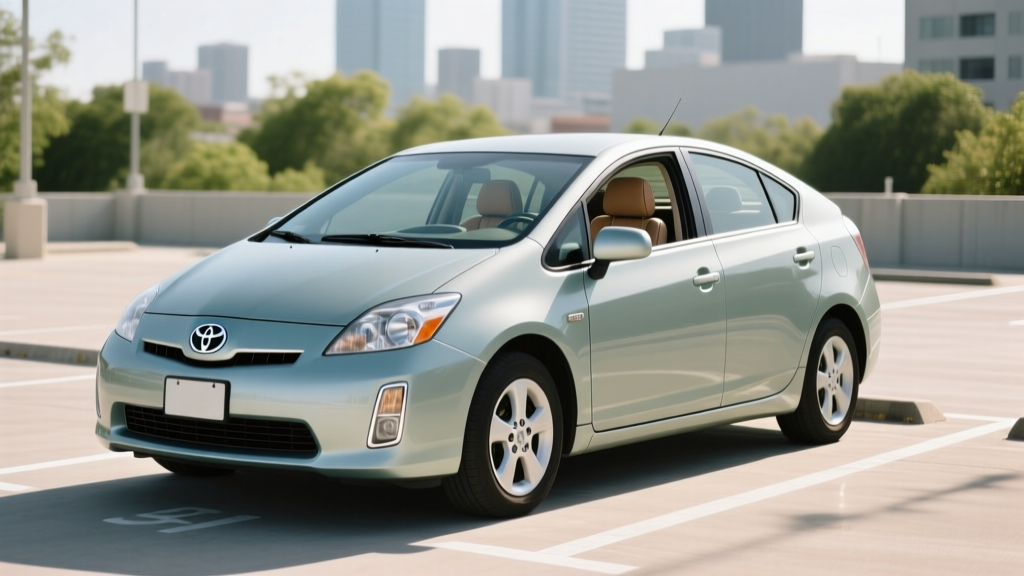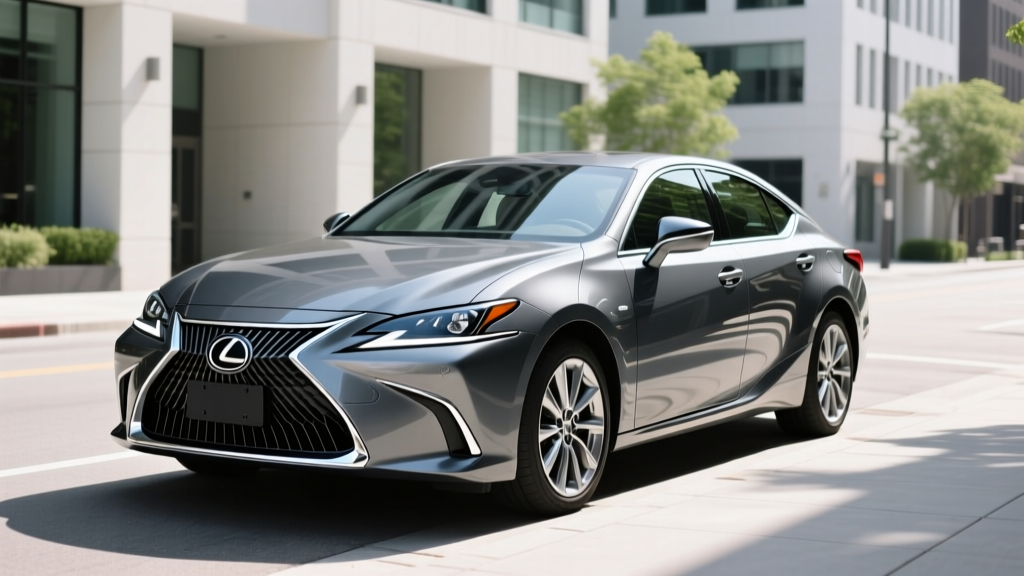
The Lexus HS 250h hybrid occupies a curious space in Toyota's electrified history. Sold in the U.S. for just two model years (2010–2012), it was Lexus's first dedicated hybrid — a standalone model built on the Toyota MC platform shared with the third-generation Prius, but wrapped in a premium sedan body with Lexus refinement. If you're researching the HS 250h hybrid today, you're likely evaluating it as a used purchase. This guide covers exactly what you need to know: real fuel economy, powertrain specs, battery longevity, and whether it still holds up against modern hybrids and EVs.
Quick Verdict: What the HS 250h Hybrid Is — and Isn't
The Lexus HS 250h is a conventional hybrid electric vehicle (HEV), not a plug-in hybrid (PHEV) and not a battery electric vehicle (BEV). You never plug it in. It charges its own 1.9 kWh nickel-metal hydride (NiMH) battery through regenerative braking and the gasoline engine. The result is seamless electric-assisted driving with no range anxiety and no charging infrastructure dependency.
- HEV (HS 250h): No plug. Small battery (~1.9 kWh). Electric motor assists the gas engine. 35 MPG combined.
- PHEV (e.g., Toyota Prius Prime): Plugs in. Larger battery (~13.6 kWh). 25–44 miles electric-only, then operates as a hybrid.
- BEV (e.g., Tesla Model 3): Plugs in. Large battery (60–82 kWh). 250–350+ miles electric-only. No gas engine.
EPA Fuel Economy and Real-World MPG
The HS 250h hybrid shares its 2.4-liter Atkinson-cycle four-cylinder engine and hybrid synergy drive system with the Toyota Camry Hybrid of the same era. Here's what the EPA rates it at, per fueleconomy.gov:
| Metric | Value |
|---|---|
| City MPG | 35 |
| Highway MPG | 34 |
| Combined MPG | 35 |
| Fuel Type | Regular Unleaded (87 octane) |
| Fuel Tank | 14.5 gallons |
| Total Range (est.) | ~507 miles |
Real-World MPG: What Owners Actually Report
Conventional hybrids like the HS 250h tend to perform close to or slightly above their EPA ratings in mixed city driving, where regenerative braking recaptures the most energy. Owner-reported data on Fuelly and similar platforms clusters around 33–37 MPG combined in real-world driving. Highway-only driving at 75+ MPH can dip to 30–32 MPG because the electric motor provides less benefit at sustained high speeds. In stop-and-go city traffic — the exact scenario hybrids are engineered for — expect 36–38 MPG.
Cold weather reduces fuel economy by roughly 5–10% as the engine runs more frequently to maintain cabin heat and battery temperature. This is far less dramatic than the 20–40% range loss BEVs experience in winter, but it's worth noting if you live in northern climates.
Powertrain and Performance Specs
The HS 250h hybrid pairs a 2.4L 2AZ-FXE Atkinson-cycle inline-four with Toyota's Hybrid Synergy Drive system. Here are the exact numbers:
| Specification | Value |
|---|---|
| Engine | 2.4L Atkinson-cycle I4 |
| Engine Power | 147 HP @ 6,000 RPM |
| Electric Motor | Permanent magnet AC synchronous |
| Motor Power | 40 HP (30 kW) |
| Net System Horsepower | 187 HP |
| Transmission | eCVT (planetary gearset) |
| Drivetrain | Front-wheel drive |
| 0–60 MPH | ~8.4 seconds |
| Hybrid Battery | 1.9 kWh NiMH (244.8V nominal) |
| EV Mode | Yes, ~1 mile at low speed |
The eCVT is not a belt-driven continuously variable transmission — it's a planetary gearset that seamlessly blends power from the engine and motor with no fixed gears. This design is extremely durable and has no clutch packs or bands to wear out, contributing to the HS 250h's strong reliability record.
Battery Longevity, Warranty, and Replacement Cost
How Long Does the HS 250h Hybrid Battery Last?
The NiMH battery pack in the HS 250h shares architecture with the Toyota Camry Hybrid and Prius of the same generation. Real-world longevity data from high-mileage Toyota hybrids shows these packs typically last 150,000–200,000 miles or 12–18 years before significant degradation forces replacement. Some units exceed 250,000 miles with gradual capacity loss rather than sudden failure.
NiMH chemistry degrades more gracefully than early lithium-ion packs — you'll notice reduced electric-assist frequency and slightly lower MPG rather than a catastrophic failure. The battery management system in the HS 250h keeps the pack between roughly 40–80% state of charge, which significantly extends cycle life.
Hybrid Battery Replacement Cost
If the hybrid battery does fail, here's what replacement looks like in 2026:
- New OEM battery (Lexus dealer): $3,000–$4,500 installed
- Refurbished/remanufactured battery: $1,500–$2,500 installed
- Individual cell/module replacement: $500–$1,200 (independent hybrid specialist)
Many independent hybrid specialists now offer module-level repair, replacing only the degraded cells rather than the entire pack. Given that the HS 250h itself trades for $5,000–$10,000 on the used market, a full OEM replacement rarely makes financial sense — a refurbished pack or module repair is the pragmatic choice.
Driving Modes and Hybrid System Operation
The HS 250h offers four selectable driving modes that alter throttle response, shift behavior, and climate system operation:
- EV Mode: Forces electric-only driving at low speeds (under ~25 MPH) for approximately one mile. Useful for creeping through a parking garage or residential street. The engine will restart if you exceed the speed threshold or demand more power.
- Eco Mode: Softens throttle response and reduces A/C compressor load to maximize fuel economy. This is the default for most efficiency-focused drivers.
- Normal Mode: Balanced throttle mapping and climate operation.
- Power Mode: Sharpens throttle response and holds higher RPMs for more responsive acceleration. Useful for highway merging but reduces MPG.
The hybrid system automatically shuts off the engine at stops, during gentle deceleration, and during low-speed coasting. The transition between electric and gas power is nearly imperceptible — a hallmark of Toyota's Hybrid Synergy Drive tuning.
HS 250h vs Modern Hybrids and EVs: Which Fits You?
If you're cross-shopping the HS 250h against current options, here's a practical decision framework:
| Factor | HS 250h (Used) | 2026 Toyota Prius | 2026 Prius Prime (PHEV) |
|---|---|---|---|
| Combined MPG | 35 | 57 | 52 (hybrid) / 127 MPGe |
| Electric-Only Range | ~1 mi | N/A | 44 mi |
| System HP | 187 | 196 | 220 |
| Typical Price (2026) | $5,000–$10,000 | $28,550–$36,000 | $33,550–$40,000 |
| Federal Tax Credit | None | None (HEV) | Up to $3,750* |
| Plug Required? | No | No | Optional (for EV range) |
*Prius Prime tax credit eligibility depends on IRS §30D battery sourcing and critical mineral requirements. The credit amount varies. Confirm current eligibility at irs.gov.
Choose the HS 250h If:
- Your budget is under $10,000 and you want a reliable, efficient luxury-branded sedan
- You have no access to home or workplace charging (apartment, street parking)
- You drive 10,000–15,000 miles/year and want low fuel costs without any plug-in dependency
- You value the Lexus cabin insulation and ride quality over cutting-edge tech
Choose a Modern Hybrid or PHEV If:
- You want 50+ MPG (the current Prius delivers 57 combined — a 63% improvement)
- You have home charging and want 40+ miles of electric-only commuting (Prius Prime)
- You want current safety tech: automatic emergency braking, lane-keeping, adaptive cruise (the HS 250h lacks these)
- You want a full factory warranty and the latest infotainment (Apple CarPlay, Android Auto)
Choose a Full EV If:
- You have reliable Level 2 home charging
- Your daily commute is under 60 miles round-trip
- You want the lowest per-mile fuel cost (~$0.04–$0.06/mile on home electricity vs ~$0.10–$0.12/mile in the HS 250h at 35 MPG and $3.50/gallon gas)
- You qualify for the full §30D federal tax credit (up to $7,500 on eligible new EVs, subject to income, MSRP, and battery sourcing rules)
Tax Credit Eligibility for the HS 250h
The Lexus HS 250h does not qualify for the federal §30D new clean vehicle tax credit — it was never eligible as a conventional hybrid under current rules, and the credit program for the HS 250h era (pre-2012 alternative motor vehicle credit) has long expired.
It also does not qualify for the used clean vehicle credit (§25E), which applies only to used BEVs and PHEVs (plug-in vehicles with at least 4 kWh of battery capacity). As a conventional HEV with a 1.9 kWh NiMH pack that cannot be plugged in, the HS 250h is excluded.
Some states offer their own hybrid incentives, but these are increasingly rare and typically target new PHEV or BEV purchases. Check your state's energy office or DMV for any remaining programs.
Reliability Record and Common Issues
The HS 250h benefits from one of the most proven hybrid drivetrains Toyota has ever built. The 2AZ-FXE engine and Hybrid Synergy Drive system underpin hundreds of thousands of Camry Hybrids and Priuses from the same era. Key reliability notes:
- Hybrid system: Excellent. The eCVT planetary gearset and electric motor have virtually no wear components. Inverter failures are rare but expensive (~$2,000–$3,000) if they occur.
- Brake actuator: The regenerative braking system uses an electro-hydraulic brake actuator that has a known failure rate on this generation. Replacement runs $1,200–$1,800. Listen for unusual buzzing or a firm brake pedal at startup.
- 12V auxiliary battery: Located in the trunk. Like any car, it needs replacement every 4–6 years. Use the correct AGM specification — a standard flooded battery won't fit or function properly.
- Water pump (electric): The engine uses an electric water pump that can fail around 100,000–130,000 miles (~$400–$600 replacement).
Overall, NHTSA records show no major safety recalls specific to the hybrid system. The HS 250h earned a Top Safety Pick designation from IIHS for its model years.
Frequently Asked Questions
How many MPG does the Lexus HS 250h hybrid get?
The EPA rates the HS 250h at 35 city / 34 highway / 35 combined MPG. Real-world owners report 33–37 MPG combined depending on driving style and climate. City-heavy driving favors the hybrid system and can push above the EPA estimate.
Do I need to plug in the HS 250h?
No. The HS 250h is a conventional hybrid (HEV), not a plug-in. The battery charges automatically through regenerative braking and the gasoline engine. There is no charging port and no electric-only range beyond about one mile at low speed in EV mode.
Is the Lexus HS 250h reliable?
Yes. The HS 250h uses Toyota's proven Hybrid Synergy Drive with the 2AZ-FXE engine — the same architecture found in the Camry Hybrid of the same era. With proper maintenance, these drivetrains routinely exceed 200,000 miles. The main risk items are the brake actuator and eventual hybrid battery degradation at high mileage.
What does it cost to replace the HS 250h hybrid battery?
A new OEM battery from a Lexus dealer runs $3,000–$4,500 installed. Refurbished packs are available for $1,500–$2,500, and individual module repairs cost $500–$1,200 at hybrid specialists. Given the vehicle's used value, refurbished or module-level repair is usually the sensible option.
Does the HS 250h qualify for any tax credit in 2026?
No. The HS 250h does not qualify for the federal §30D new vehicle credit or the §25E used clean vehicle credit. It is a conventional hybrid without plug-in capability, which excludes it from current federal EV incentive programs.
How does the HS 250h compare to a Prius?
The HS 250h shares the Prius platform but uses a larger 2.4L engine (vs the Prius's 1.8L), producing 187 HP combined vs 134 HP in the contemporary Prius. The trade-off is fuel economy: 35 MPG vs 50 MPG. The HS 250h offers more power, a quieter cabin, and Lexus materials; the Prius delivers far better efficiency. The 2026 Prius achieves 57 MPG combined with 196 HP — surpassing the HS 250h on both metrics.
Should I buy a used HS 250h or a newer hybrid?
If your budget is under $10,000 and you want a no-plug, reliable sedan with Lexus comfort, the HS 250h is a solid choice. If you can spend $25,000+, a new Toyota Prius or Hyundai Elantra Hybrid delivers 50+ MPG, a full warranty, modern ADAS, and current infotainment. The HS 250h makes the most sense as a value-oriented used buy, not as a technology leader.