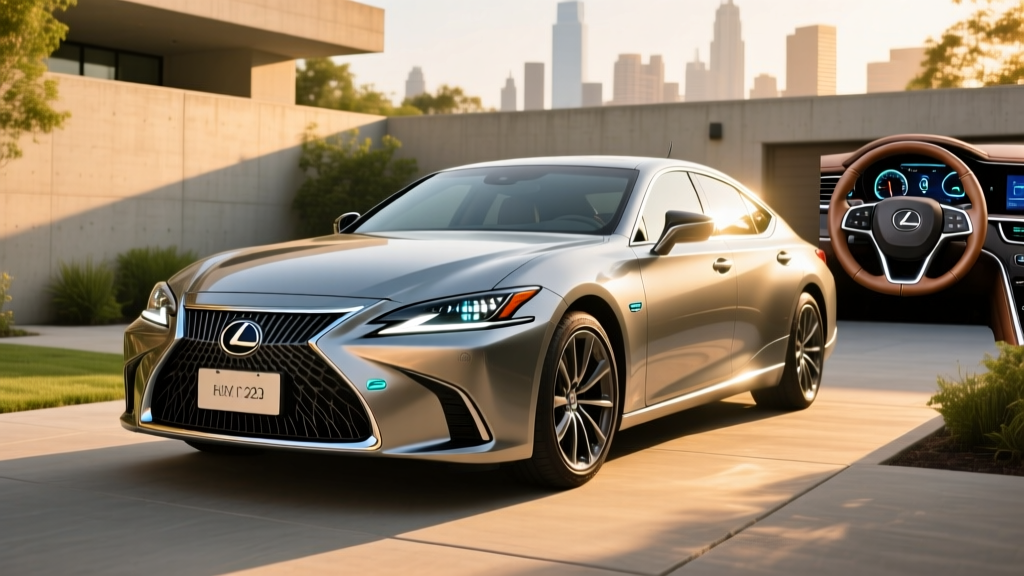
The Lexus GS hybrid line was discontinued after the 2020 model year, but it remains one of the most compelling used luxury hybrid sedans on the market in 2026. With a reputation for bulletproof Toyota engineering, strong real-world fuel economy, and a refined driving experience, the GS hybrid — primarily the GS 450h and the rare GS 300h — continues to attract buyers who want luxury-hybrid efficiency without the depreciation hit of a new vehicle. This guide covers everything a prospective used buyer needs to know: real MPG, powertrain specs, hybrid battery longevity, and whether it still makes sense over a newer EV or PHEV.
Lexus GS Hybrid: HEV vs. PHEV — What You're Actually Buying
Important distinction: Every Lexus GS hybrid sold in the United States is a conventional hybrid electric vehicle (HEV), not a plug-in hybrid (PHEV). This means:
- No plug, no outlet needed. The battery recharges through regenerative braking and the gasoline engine — you never plug it in.
- No electric-only range to speak of. The GS 450h can creep short distances (roughly 1 mile) on electric power at low speeds, but it is not designed for EV-mode commuting like a PHEV.
- No federal tax credit eligibility. The §30D Clean Vehicle Credit applies only to plug-in EVs and PHEVs with sufficient battery capacity. The GS hybrid's ~3.5 kWh battery does not qualify.
If you're looking for a Lexus luxury sedan you can plug in, you'd need to look at the Lexus NX 450h+ PHEV (SUV) or the newer Lexus TX 550h+ PHEV — neither of which carries the GS nameplate. Lexus never produced a GS plug-in hybrid for the U.S. market.
Fuel Economy: EPA MPG and Real-World Numbers
The GS 450h paired a 3.5-liter V6 with an electric motor and a nickel-metal hydride (NiMH) battery pack. Here's how the EPA-rated numbers break down across the model years most buyers will encounter on the used market:
| Model Years | City MPG | Highway MPG | Combined MPG | Fuel Tank | Est. Total Range |
|---|---|---|---|---|---|
| 2013–2015 | 29 | 34 | 31 | 17.4 gal | ~539 mi |
| 2016–2020 | 29 | 34 | 31 | 17.4 gal | ~539 mi |
Source: fueleconomy.gov — EPA estimates for the GS 450h with rear-wheel drive.
Real-World MPG: What Owners Actually Report
Conventional hybrids like the GS 450h often exceed their EPA city rating in stop-and-go driving because regenerative braking recovers energy that a gas car wastes as heat. In mixed suburban driving, owners on Fuelly and Lexus forums commonly report 30–34 MPG combined, with city-heavy commutes pushing toward 33–35 MPG.
Highway-only driving at 75+ MPH tends to drop to 28–30 MPG, since the electric motor contributes less at sustained high speeds. In cold weather (below 30°F), expect a 2–4 MPG reduction as the engine runs more frequently to heat the cabin and warm the battery.
Real-world range expectation: While the EPA suggests ~539 miles per tank, plan for 460–520 miles in typical mixed driving and 400–450 miles in winter or aggressive highway use. The low-fuel warning typically illuminates with 2–3 gallons remaining.
GS 300h (Diesel Hybrid — Limited Markets)
Lexus also sold a GS 300h in Europe and select markets, pairing a 2.5-liter four-cylinder Atkinson-cycle engine with the hybrid system for a rated ~50 MPG combined (on the WLTP cycle). This variant was never officially sold in the U.S., so any stateside example is a grey-market import. U.S. buyers should focus on the GS 450h.
Powertrain: V6 Muscle Meets Hybrid Efficiency
| Specification | Detail |
|---|---|
| Engine | 3.5L V6 Atkinson-cycle (2GR-FXE) |
| Engine Output | 292 hp @ 6,000 rpm / 260 lb-ft torque |
| Electric Motor | 147 kW (197 hp) permanent-magnet AC |
| Combined System Output | 338 hp |
| Transmission | CVT (planetary gearset, e-CVT) |
| Drivetrain | Rear-wheel drive (AWD available 2017+) |
| 0–60 mph | 5.7 seconds |
| Hybrid Battery | NiMH, ~3.5 kWh (not plug-in) |
| Curb Weight | ~4,190 lbs |
The GS 450h's powertrain is a close relative of the system found in the Lexus LS 600h and Toyota Crown hybrid. The V6 operates on the Atkinson cycle — sacrificing some low-end torque for greater thermal efficiency — while the electric motor fills in the torque gap off the line. The result is a 0–60 time of 5.7 seconds, which remains genuinely quick even by 2026 standards.
The e-CVT is not a belt-and-pulley CVT like those in some competitors. It uses a planetary gearset to blend engine and motor power, which is both smoother and more durable. This transmission design has proven essentially bulletproof in Toyota/Lexus applications.
Hybrid Battery: Lifespan, Warranty, and Replacement Cost
Original hybrid battery warranty: Lexus covered the GS 450h hybrid battery for 8 years / 100,000 miles in most states and 10 years / 150,000 miles in California and states that adopted California's CARB emissions standards (including NY, MA, NJ, CT, RI, ME, VT, WA, OR, MD, CO, and others).
Since the newest GS 450h is a 2020 model, the standard 8-year warranty has expired as of 2028, and CARB-state 10-year warranties expire by 2030 at the latest. Any used GS hybrid purchased in 2026 will likely be out of factory battery warranty unless covered by a certified pre-owned (CPO) extension.
How Long Does the GS 450h Hybrid Battery Actually Last?
The NiMH battery in the GS 450h is managed conservatively — Lexus never lets it charge above ~80% State of Charge or drop below ~40%, which dramatically reduces degradation. Based on fleet data and owner reports from Lexus and Toyota hybrids using similar NiMH packs:
- Typical lifespan: 150,000–200,000 miles or 12–15 years before significant capacity loss
- Failure mode: Gradual capacity reduction (worse MPG, more engine cycling) rather than sudden death
- Known issues: Individual cell imbalance in high-mileage packs; sometimes only one or two modules need replacement rather than the full pack
Battery Replacement Cost
| Option | Cost Range | Notes |
|---|---|---|
| New OEM from Lexus dealer | $3,500–$5,000 | Full pack, includes labor; varies by region |
| Remanufactured pack (e.g., Green Bean Battery) | $1,800–$2,800 | Rebuilt with tested modules; often includes 1–3 year warranty |
| Individual module replacement | $400–$900 | Viable if only 1–2 cells are weak; requires a shop with hybrid diagnostics |
For a used GS 450h that may be worth $20,000–$30,000, a $2,000–$3,000 remanufactured battery is a manageable expense — especially compared to EV battery replacements that can exceed $10,000. Budget accordingly when evaluating high-mileage examples.
Reliability: One of the Strongest Used Hybrids Available
The GS 450h benefits from Toyota's decades of hybrid powertrain refinement. The 2GR-FXE V6 and planetary e-CVT are shared architecture with the LS 600h, a flagship sedan that was over-engineered for durability. Key reliability notes:
- Powertrain: Excellent. The V6 and e-CVT have very few reported failures even past 200,000 miles.
- Brakes: Exceptional longevity. Regenerative braking handles most deceleration, so brake pads routinely last 80,000–120,000 miles.
- Inverter/cooling system: The hybrid inverter coolant pump is a known wear item around 120,000–150,000 miles (~$400–$700 replacement). Listen for unusual inverter whine or check for coolant leaks near the inverter.
- 12V auxiliary battery: Located in the trunk; replacement every 4–6 years is normal. A dead 12V battery can prevent the car from starting even though the hybrid battery is fully charged.
- Suspension: The GS 450h's adaptive variable suspension (AVS) dampers can leak after 100,000 miles. Replacement OEM dampers run $400–$600 each; aftermarket options are available at lower cost.
Lexus consistently ranks at or near the top of J.D. Power Vehicle Dependability Studies, and the GS platform is no exception. The hybrid system adds complexity, but it's a well-proven complexity.
Used Pricing in 2026 and Tax Credit Reality
Since the GS hybrid is only available used, pricing varies significantly by model year, mileage, condition, and trim level (Base, Luxury, F Sport):
| Model Year | Mileage Range | Typical Price Range |
|---|---|---|
| 2013–2015 | 90,000–140,000 mi | $16,000–$23,000 |
| 2016–2018 | 60,000–100,000 mi | $22,000–$32,000 |
| 2019–2020 | 30,000–65,000 mi | $30,000–$40,000 |
Tax Credit Eligibility: The Hard Truth
The Lexus GS 450h does not qualify for any federal EV tax credit. The IRS §30D Clean Vehicle Credit requires a vehicle to be a plug-in electric vehicle (BEV or PHEV) with a battery capacity of at least 7 kWh. The GS 450h's ~3.5 kWh NiMH pack and lack of a plug make it ineligible.
Additionally, the used clean vehicle credit (up to $4,000 under §25E) also requires a plug-in vehicle. There is no federal tax incentive for purchasing a used conventional hybrid.
Some states and local utilities offer rebates or reduced registration fees for hybrid vehicles, but these programs vary widely and many have sunset. Check your state's energy office or the Alternative Fuels Data Center for current local incentives.
GS 450h vs. EV vs. PHEV: Which Should You Choose?
Choose the used Lexus GS 450h if:
- You want luxury-sedan comfort and 338 hp with ~31 MPG and no charging hassle
- You lack access to home or workplace charging (apartment, street parking)
- You regularly take long road trips where DC fast-charging infrastructure is sparse
- You want proven Toyota/Lexus reliability with lower depreciation risk
- Your daily commute is under 50 miles but includes highway segments
Choose a PHEV (e.g., Lexus NX 450h+, BMW 330e) if:
- You have home Level 2 charging and want 20–40 miles of electric-only commuting
- You want partial federal tax credit eligibility (up to $3,750–$7,500 depending on model and sourcing)
- You want to drive mostly on electricity weekdays and gas on weekends
Choose a full EV (e.g., Tesla Model 3, BMW i4, Hyundai Ioniq 6) if:
- You have reliable home charging and want zero tailpipe emissions
- Your daily driving is under 250 miles and you can plan road-trip charging stops
- You want full §30D tax credit eligibility (up to $7,500, subject to income and sourcing rules per IRS.gov)
- You want to eliminate oil changes and reduce brake wear further
Pros
- 31 MPG combined (33–34 real-world city) from a 338-hp luxury sedan
- Exceptional powertrain reliability — Toyota/Lexus hybrid track record
- No charging infrastructure needed — fill up at any gas station
- Strong acceleration (5.7s 0–60) with seamless electric torque fill
- Brake pads last 80,000+ miles thanks to regen braking
- Quiet, well-insulated cabin with premium materials
- Lower used pricing than comparable new luxury hybrids
Cons
- Discontinued after 2020 — no new models available
- No electric-only commuting capability (not a PHEV)
- No federal or state tax credit eligibility
- Hybrid battery replacement ($2,000–$5,000) likely needed eventually on high-mileage examples
- AWD only available on 2017+ models; earlier years are RWD only
- Infotainment system (especially pre-2016) is dated with the infamous Lexus Remote Touch mouse
- Trunk space reduced by hybrid battery placement (~14.4 cu ft vs ~18 cu ft in non-hybrid GS)
Buying Tips: What to Check Before You Purchase
If you're evaluating a used GS 450h in 2026, these steps are essential:
- Hybrid battery health check: Have a Lexus dealer or qualified hybrid shop perform a hybrid battery diagnostic. This reads individual module voltages and internal resistance. A healthy pack shows modules within 0.2V of each other.
- Check the inverter coolant: Look for the small reservoir near the inverter (under the hood). The fluid should be pink/clear Toyota Super Long Life Coolant. Discoloration or low level suggests a leak or neglected maintenance.
- Verify maintenance records: The 2GR-FXE engine requires regular oil changes (every 10,000 miles with synthetic) and coolant changes at specified intervals. Neglected coolant can corrode the inverter cooling loop.
- Test the regenerative braking feel: The transition from regen to friction braking should be smooth. A noticeable "clunk" or grab at low speeds may indicate worn brake actuators — an expensive repair ($1,500–$2,500).
- Scan for stored diagnostic codes: Even if the check-engine light is off, stored codes in the hybrid system ECU can reveal developing issues. An OBD-II scanner with Toyota/Lexus hybrid capability (e.g., Techstream) is ideal.
Frequently Asked Questions
How many MPG does the Lexus GS 450h hybrid get?
The EPA rates the GS 450h at 29 city / 34 highway / 31 combined MPG. In real-world driving, owners commonly see 30–34 MPG combined, with city-heavy routes yielding the best numbers thanks to regenerative braking.
Is the Lexus GS hybrid a plug-in?
No. The Lexus GS 450h is a conventional hybrid (HEV). It has no plug, no charging port, and no meaningful electric-only range. You fuel it exclusively at a gas station. The hybrid battery charges through regenerative braking and the gasoline engine.
How far can the GS 450h go on electric only?
Less than 1 mile at low speeds (under 25 mph) in ideal conditions. This is not a vehicle designed for electric-only commuting. If EV-mode driving matters to you, look at a PHEV like the Lexus NX 450h+ (37 miles electric) or a full BEV.
Is the Lexus GS 450h reliable?
Yes. The GS 450h uses Toyota's proven hybrid architecture, which has demonstrated excellent longevity across millions of vehicles. The V6 engine, planetary e-CVT, and NiMH battery are all well-understood components. The main wear items to watch are the inverter coolant pump, AVS dampers, and eventual hybrid battery degradation at high mileage.
What does a Lexus GS 450h hybrid battery replacement cost?
A new OEM battery from a Lexus dealer runs approximately $3,500–$5,000 installed. Remanufactured packs from reputable suppliers cost $1,800–$2,800. Individual module replacement (if only a few cells are weak) can be as low as $400–$900.
Does the Lexus GS hybrid qualify for any tax credit?
No. The federal §30D and §25E tax credits require a plug-in vehicle (BEV or PHEV) with at least 7 kWh of battery capacity. The GS 450h is a conventional hybrid with a ~3.5 kWh pack and no plug, making it ineligible for federal EV incentives. State and local hybrid incentives vary but are increasingly rare.
Should I buy a used GS 450h or a new PHEV?
It depends on your budget and charging situation. A used GS 450h ($20,000–$35,000) gives you proven luxury-hybrid performance with no charging dependency. A new PHEV ($50,000–$65,000+) gives you electric-only commuting, a full warranty, and potential tax credits — but at a significantly higher purchase price. If you lack home charging, the GS 450h is the more practical choice.
What years of the GS 450h are best to buy used?
The 2017–2020 models (second facelift) are generally preferred for their updated infotainment (standard 12.3-inch screen), available AWD, revised styling, and additional safety features (Lexus Safety System+ became standard in 2017). The 2013–2015 models offer better value but come with older tech and higher mileage. Avoid any example without service records.