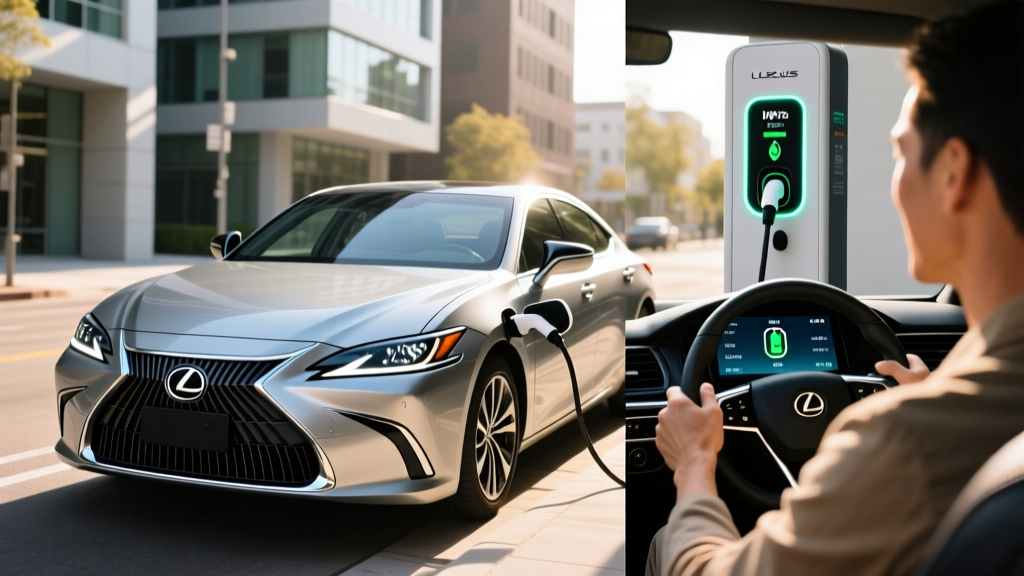
Quick Verdict: The Lexus ES 300h Delivers on Its MPG Promise
The 2026 Lexus ES 300h remains one of the most fuel-efficient midsize luxury sedans on the market. With an EPA-estimated 44 MPG combined, it undercuts rivals like the BMW 5 Series and Mercedes E-Class on running costs while delivering Lexus-grade refinement. This is a conventional hybrid (HEV), not a plug-in — you never need to plug it in. The gasoline engine and regenerative braking handle all charging internally.
For buyers researching Lexus ES hybrid MPG, the headline number is compelling, but the real story is how consistently this sedan achieves it. Unlike turbocharged gas sedans whose real-world economy collapses in stop-and-go traffic, the ES 300h actually improves in city driving. We'll break down the exact figures, the powertrain behind them, battery longevity data, and how this hybrid stacks up against plug-in hybrids and full battery-electric vehicles.
Lexus ES 300h Fuel Economy: EPA Ratings vs. Real-World MPG
The 2026 Lexus ES 300h carries EPA ratings that have held steady since the current generation's refresh. Here's the full breakdown per fueleconomy.gov:
| Metric | Value |
|---|---|
| City MPG | 43 |
| Highway MPG | 44 |
| Combined MPG | 44 |
| Fuel Tank Capacity | 13.2 gallons |
| Total Driving Range | ~581 miles |
| Annual Fuel Cost (EPA est.) | ~$1,350 |
The near-identical city and highway numbers are unusual. Most gas-only sedans lose 8–12 MPG in city driving. The ES 300h's hybrid system recovers braking energy and uses the electric motor for low-speed propulsion, effectively eliminating the city-driving fuel penalty. This is why hybrid owners in urban environments see the biggest advantage over conventional gas cars.
How the ES 300h Powertrain Works
The ES 300h uses Toyota's fifth-generation hybrid synergy drive, pairing a 2.5-liter inline-four Atkinson-cycle engine with a permanent-magnet electric motor through an electronically controlled CVT (eCVT).
| Component | Specification |
|---|---|
| Engine | 2.5L 4-cyl Atkinson cycle |
| Engine Power | 181 hp / 163 lb-ft torque |
| Electric Motor | 134 hp / 199 lb-ft |
| Net Combined Output | 215 hp |
| Transmission | eCVT (planetary gearset) |
| Drivetrain | Front-wheel drive |
| Hybrid Battery | ~1.6 kWh nickel-metal hydride (NiMH) |
| 0–60 mph | ~7.9 seconds |
That ~1.6 kWh battery is small by EV standards — it's not designed for plug-in range. It acts as a buffer, storing energy from regenerative braking and the engine to deploy electric torque during acceleration and enable brief electric-only driving at low speeds (typically under 25 mph for short distances). The eCVT isn't a belt-driven CVT; it's a planetary gearset that seamlessly blends engine and motor output with no rubber-band feel.
HEV vs. PHEV vs. Full EV: Which Powertrain Fits You?
The Lexus ES is available only as a conventional hybrid (HEV). There is no ES plug-in hybrid variant, and Lexus has not announced one. Here's how the three electrified options compare for a luxury sedan buyer:
| Factor | HEV (ES 300h) | PHEV (e.g., BMW 550e xDrive) | Full EV (e.g., BMW i5) |
|---|---|---|---|
| Plug-in Required? | No | Yes (for EV range) | Yes (always) |
| Electric-Only Range | None (low-speed assist only) | ~30–40 miles | 250–300+ miles |
| Combined MPG / MPGe | 44 MPG | ~64 MPGe (electric), ~28 MPG (gas) | ~85–100 MPGe |
| Home Charging Needed? | No | Recommended (Level 2) | Essential (Level 2) |
| Upfront Price Premium | Lowest | Moderate | Highest |
| Federal Tax Credit (§30D) | Not eligible | Up to $7,500 (if eligible) | Up to $7,500 (if eligible) |
| Maintenance Complexity | Low (proven system) | Moderate (two full systems) | Low (few moving parts) |
| Best For | No home charging, long trips | Short commute + long trips | Home charging + mostly <250 mi trips |
Consider a PHEV instead if: You have a garage with a 240V outlet and your daily commute is under 35 miles round-trip — you could drive months without using gasoline.
Go full EV if: You have Level 2 home charging, your daily driving is under 250 miles, and you want to eliminate oil changes and gasoline costs entirely.
2026 Lexus ES 300h Pricing and Tax Credit Eligibility
The ES 300h slots into the middle of the ES lineup with a modest premium over the gas-only ES 350 — a premium that pays back quickly at the pump.
| Trim | MSRP |
|---|---|
| ES 350 (gas, V6) | ~$43,190 |
| ES 300h (hybrid) | ~$44,590 |
| ES 300h Luxury | ~$48,900 |
| ES 300h Ultra Luxury | ~$53,500 |
Federal tax credit: The conventional ES 300h hybrid does not qualify for the IRS §30D Clean Vehicle Credit. That credit applies only to plug-in electric vehicles (PHEVs and BEVs) meeting battery-sourcing, MSRP cap, and buyer income requirements per IRS guidelines. The hybrid premium over the ES 350 (~$1,400) is typically recovered within 12–18 months through fuel savings at 15,000 miles/year.
Some states offer their own hybrid incentives or HOV lane access, though these increasingly favor plug-in vehicles. Check your state's energy office for current programs.
Battery Longevity, Warranty, and Replacement Cost
Hybrid battery anxiety is the single most common concern we hear from first-time hybrid buyers. The ES 300h uses a nickel-metal hydride (NiMH) pack — a chemistry with an exceptionally long track record in Toyota/Lexus hybrids dating back to the 1997 Prius.
Real-world degradation data: The ~1.6 kWh NiMH battery in the ES 300h operates within a narrow state-of-charge window (roughly 40–80%). The hybrid system never fully charges or fully depletes it, which dramatically extends cycle life. Fleet data from Toyota Camry Hybrids (which share this powertrain architecture) shows minimal capacity loss at 150,000+ miles. Failures before 100,000 miles are rare.
Replacement cost if out of warranty: A new OEM hybrid battery for the ES 300h runs approximately $2,500–$3,800 installed at a Lexus dealer. Third-party refurbished batteries are available for $1,200–$2,000 installed. Individual module replacement (only the degraded cells) can bring costs as low as $500–$800 at a hybrid-specialist shop. Given the 10-year/150,000-mile warranty and NiMH chemistry's proven lifespan, most original owners will never face this cost.
Reliability, Safety, and Ownership Costs
The ES 300h benefits from one of the most reliable powertrains in the automotive industry. The 2.5L Atkinson-cycle engine is under-stressed, the eCVT has no belts or clutches to wear, and regenerative braking extends brake pad life significantly — many hybrid owners report original brake pads at 80,000+ miles.
The NHTSA and IIHS have historically rated the ES platform highly. Lexus Safety System+ 3.0 comes standard, including pre-collision with pedestrian detection, dynamic radar cruise control, lane tracing assist, and road sign assist. These are SAE Level 1–2 driver-assistance features — they do not replace an attentive driver.
Five-year estimated cost of ownership vs. the gas ES 350:
| Category | ES 300h (Hybrid) | ES 350 (Gas V6) |
|---|---|---|
| Fuel (75,000 miles) | ~$6,750 (44 MPG) | ~$10,350 (26 MPG) |
| Maintenance | ~$2,800 | ~$3,400 |
| Insurance (avg.) | ~$8,500 | ~$8,200 |
| Total Running Costs | ~$18,050 | ~$21,950 |
| 5-Year Savings (Hybrid) | ~$3,900 | |
The hybrid saves roughly $3,900 in running costs over five years, more than covering its ~$1,400 purchase premium. Extend ownership to 8–10 years and the savings compound further, especially as gasoline prices fluctuate.
Pros, Cons, and the Bottom Line
Pros
- 44 MPG combined — real-world city driving often exceeds EPA
- No plug-in charging needed; zero lifestyle adjustment
- 10-year / 150,000-mile hybrid battery warranty
- 581-mile total range between fill-ups
- Smooth, quiet eCVT with no gear-hunting
- Lexus reliability and resale value track record
- Extended brake pad life from regenerative braking
Cons
- No electric-only driving range (this is an HEV, not a PHEV)
- Not eligible for the federal §30D tax credit
- 7.9-second 0–60 time is adequate, not quick
- FWD only — no AWD option unlike some competitors
- Infotainment still uses a touchpad-style interface in some trims
- Hybrid premium takes ~14 months to recover via fuel savings
Frequently Asked Questions
How many MPG does the Lexus ES hybrid get?
The 2026 Lexus ES 300h achieves an EPA-estimated 43 MPG city, 44 MPG highway, and 44 MPG combined. In real-world city and suburban driving, owners frequently report 45–48 MPG thanks to the hybrid system's efficiency at lower speeds. Highway cruising above 75 mph typically returns 39–42 MPG.
Does the Lexus ES hybrid need to be plugged in?
No. The ES 300h is a conventional hybrid (HEV), not a plug-in hybrid. Its small battery charges automatically through regenerative braking and the gasoline engine. You fuel it exactly like any other car — just less often, thanks to its 581-mile total range.
Is there a Lexus ES plug-in hybrid (PHEV)?
As of the 2026 model year, Lexus does not offer a plug-in hybrid version of the ES sedan. If you want Lexus PHEV technology, the NX 450h+ and RX 500h plug-in hybrids are available, though neither matches the ES 300h's sedan comfort. Competitors like the BMW 550e offer PHEV powertrains in this segment.
How long will the ES 300h hybrid battery last?
Lexus warranties the hybrid battery for 10 years or 150,000 miles. The NiMH chemistry and the system's conservative charge window (never fully charging or depleting the pack) mean real-world lifespans routinely exceed 150,000 miles without significant degradation. Many first-generation Toyota Camry Hybrids are still running on original batteries past 200,000 miles.
What does it cost to replace the hybrid battery?
If replacement is needed outside warranty, a new OEM battery costs approximately $2,500–$3,800 installed at a Lexus dealer. Refurbished third-party batteries run $1,200–$2,000 installed. Individual cell module replacement at a hybrid specialist can cost as little as $500–$800. Given the 10-year warranty and proven NiMH durability, most owners never incur this expense.
Does the Lexus ES 300h qualify for a tax credit?
No. The federal §30D Clean Vehicle Credit applies only to plug-in electric vehicles (BEVs and PHEVs). Conventional hybrids like the ES 300h are not eligible. Some states may offer minor hybrid incentives or HOV access — check your state's energy office. The hybrid's fuel savings (~$720/year vs. the gas ES 350) offset the purchase premium within roughly 14 months.
Should I buy the ES 300h hybrid or the gas ES 350?
If you plan to keep the car 3+ years and drive 12,000+ miles annually, the ES 300h is the clear winner. The ~$1,400 hybrid premium pays for itself in fuel savings, you get smoother stop-and-go driving behavior, longer brake life, and 581-mile range. The only reason to choose the ES 350 is if you prioritize its V6 acceleration (279 hp, 0–60 in ~6.6 sec) and plan low annual mileage.