What Makes the LaFerrari a Hybrid — And What It Isn't
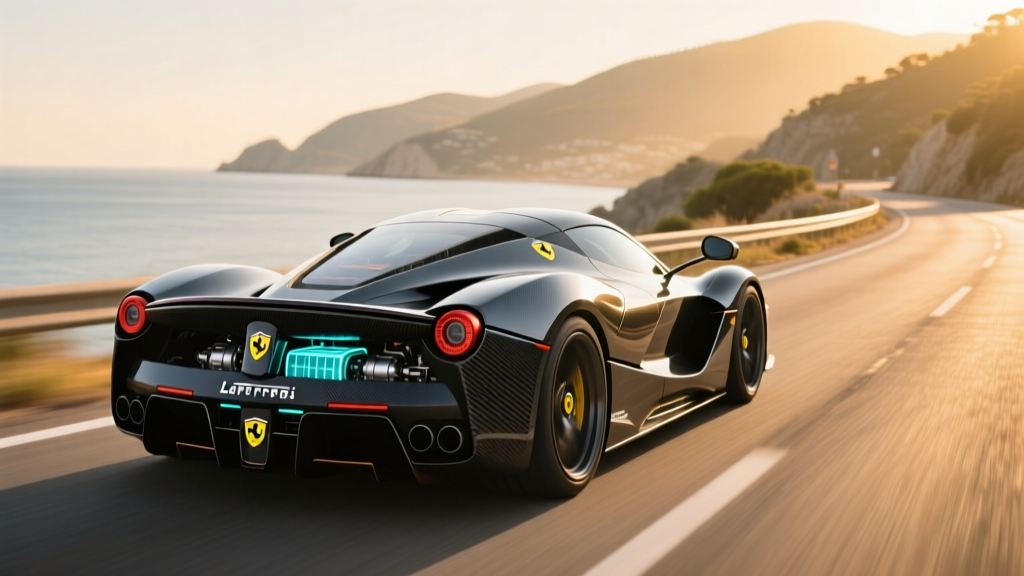
When enthusiasts search for the LaFerrari hybrid, they're usually looking for one of two things: a fuel-efficient Ferrari they can daily-drive, or a deep dive into the electrified powertrain of Ferrari's most iconic modern hypercar. The LaFerrari (produced 2013–2016, limited to 499 coupes and 210 Aperta roadsters) falls firmly in the second category. It is a performance hybrid — using electric assist not to save fuel at the pump, but to fill torque gaps and push total output to a staggering 950 horsepower.
This is not a Toyota Prius competitor. The LaFerrari's HY-KERS system — derived from Ferrari's Formula 1 kinetic energy recovery technology — pairs a 6.3-liter naturally aspirated V12 with a 120 kW (161 HP) electric motor. The result is instantaneous torque delivery and a combined system output that redefined what a hybrid hypercar could be.
Before we break down the specs, it's essential to clarify the hybrid taxonomy, because the LaFerrari does not fit neatly into the categories most buyers encounter.
HEV vs. PHEV vs. Performance Hybrid: Where LaFerrari Fits
Hybrid Taxonomy — Quick Reference
- Conventional Hybrid (HEV): Small battery (1–2 kWh), recharges via regenerative braking and engine. Cannot plug in. Example: Toyota Prius.
- Plug-in Hybrid (PHEV): Larger battery (10–25 kWh), can plug in to charge, offers 20–50 miles of electric-only range. Example: Toyota RAV4 Prime.
- Performance Hybrid (LaFerrari category): Small battery, no plug-in capability, electric motor used for torque fill and power augmentation — not electric-only driving. The LaFerrari's 2.3 kWh battery recharges exclusively through regen braking and the V12 engine.
Key takeaway: The LaFerrari is technically closer to a conventional HEV in architecture, but its purpose is entirely different. It cannot drive on electric power alone for any meaningful distance, and it does not plug in.
LaFerrari Powertrain: V12 + HY-KERS by the Numbers
| Specification | LaFerrari (Coupe) |
|---|---|
| Internal Combustion Engine | 6.3L naturally aspirated V12 |
| Engine Power | 789 HP @ 9,000 RPM |
| Engine Torque | 516 lb-ft @ 6,750 RPM |
| Electric Motor (HY-KERS) | 120 kW (161 HP) |
| Combined System Output | 950 HP / 664 lb-ft |
| Battery Capacity | 2.3 kWh (lithium-ion) |
| Plug-in Charging | No — regen + engine only |
| Electric-Only Range | Not applicable (no EV-only mode) |
| 0–60 mph | ~2.4 seconds |
| Top Speed | 217+ mph (350+ km/h) |
| Transmission | 7-speed dual-clutch (DCT) |
| Drivetrain | Rear-wheel drive |
| Curb Weight | ~2,767 lbs (1,255 kg) |
| Original MSRP (2013) | ~$1,420,000 (sold out by invitation) |
| Current Market Value (2026) | $3,000,000–$4,500,000+ (auction) |
| Production Run | 499 coupes (2013–2016), 210 Aperta roadsters |
The HY-KERS motor is mounted directly to the rear of the 7-speed DCT, and a second smaller electric motor drives ancillary systems. Ferrari's engineering goal was clear: the electric motor provides peak torque at low RPM where the V12 is still building power, eliminating turbo lag (there are no turbos) and creating a seamless, linear power delivery from idle to the V12's screaming 9,250 RPM redline.
Fuel Economy: How Many MPG Does the LaFerrari Get?
| Driving Condition | MPG |
|---|---|
| EPA City | ~12 MPG |
| EPA Highway | ~18 MPG |
| EPA Combined | ~14 MPG |
| Real-World (Mixed Driving) | 10–16 MPG depending on driving style |
Let's be direct: the LaFerrari's hybrid system was not designed to deliver Prius-like fuel economy. The HY-KERS system does provide marginal efficiency gains — Ferrari claimed roughly a 10% reduction in CO₂ emissions versus a non-hybrid V12 of equivalent output — but the real benefit is performance. The V12 still displaces 6.3 liters and revs to 9,250 RPM. If you're driving it as intended (enthusiastically), expect single-digit MPG. During gentle cruising, the hybrid system's regenerative braking and engine stop-start can push economy toward the high teens.
For comparison, a non-hybrid Ferrari V12 of similar displacement from the same era (the Ferrari F12berlinetta, 6.3L V12, 730 HP) returns roughly 11 city / 16 highway / 13 combined — making the LaFerrari's hybrid system genuinely more efficient per horsepower produced.
Does the LaFerrari Qualify for Any Federal or State Tax Credit?
No. The LaFerrari does not qualify for the federal §30D clean vehicle tax credit, and the reasons are instructive for anyone researching hybrid incentives:
- Not a plug-in: The §30D credit under current IRS rules requires a vehicle with a battery capacity of at least 7 kWh that can be recharged from an external source. The LaFerrari's 2.3 kWh battery charges only via regen and the engine — it cannot plug in.
- MSRP cap: Even if it could plug in, the §30D credit caps eligibility at $55,000 for sedans and $80,000 for SUVs/pickups/vans. The LaFerrari's original MSRP of ~$1.4 million (and current auction values of $3M+) would disqualify it regardless.
- Production status: The LaFerrari is out of production. The §30D credit applies to new vehicles purchased from a dealer.
- No state incentives: State-level hybrid/PHEV/EV rebates similarly require plug-in capability and typically apply to new purchases.
For buyers researching hybrid tax credits, the vehicles that qualify are plug-in hybrids like the Toyota RAV4 Prime (partial credit depending on battery sourcing), Jeep Wrangler 4xe, and Chrysler Pacifica Hybrid — all of which meet the battery capacity, plug-in, MSRP, and income requirements outlined by the IRS. Always verify current eligibility on irs.gov before purchasing, as battery-sourcing and critical-mineral requirements change annually.
Battery Longevity, Reliability, and Replacement Cost
LaFerrari Hybrid Battery: What Owners Need to Know
- Battery type: Lithium-ion, 2.3 kWh, manufactured by Samsung SDI
- Original warranty: Ferrari's standard 3-year/unlimited-mileage vehicle warranty (the hybrid system was covered under this)
- Ferrari Power Warranty (extended): Ferrari offers a manufacturer-backed extended warranty program for vehicles up to 15 years old, which can cover hybrid system components — availability and terms vary by market and vehicle history
- Estimated battery replacement cost: $20,000–$35,000+ for the HY-KERS battery pack (dealer-only service, pricing varies by market and parts availability)
- Real-world degradation: Limited public data exists due to the car's low production numbers and collector-garage storage patterns. Owners report the HY-KERS system maintaining function well over low-mileage ownership, but any 10+ year-old lithium-ion pack will experience capacity loss
Reliability is a nuanced topic for a 499-unit hypercar. The LaFerrari's V12 engine and 7-speed DCT are proven Ferrari components, and the HY-KERS system was extensively validated through F1-derived testing. However, this is a hand-built, low-volume exotic — maintenance costs are commensurate with its class. Annual service runs $5,000–$10,000+ at a Ferrari dealer, and any hybrid system fault requires specialized diagnostic equipment available only through Ferrari's network.
For context, mainstream hybrid batteries (Toyota, Honda, Hyundai) typically carry 8–10 year / 100,000–150,000 mile warranties and cost $2,000–$8,000 to replace. The LaFerrari exists in an entirely different economic tier.
LaFerrari vs. Full EV vs. Gas Supercar: Who Is This For?
Reasons to Want the LaFerrari Hybrid
- Peak V12 hypercar — one of the last great naturally aspirated Ferrari flagships
- HY-KERS torque fill creates genuinely unique driving dynamics no pure ICE car replicates
- Blue-chip collector asset with strong appreciation trajectory
- F1-derived technology in a road-legal package
- 950 HP with a 2.4-second 0–60 time
Reasons This Is Not a Practical Hybrid
- No electric-only range — cannot drive emission-free for any distance
- No plug-in charging — cannot benefit from cheap home electricity
- No tax credit eligibility whatsoever
- $3M+ acquisition cost, $5K–$10K+ annual maintenance
- Out of production — available only through auction or private sale
- Not a daily driver by any definition
Decision Framework
- Choose the LaFerrari if: You are a Ferrari collector seeking a blue-chip hypercar with historical significance as Ferrari's first hybrid flagship, and budget is not a primary constraint.
- Choose a full EV (Tesla Model S Plaid, Lucid Air, Porsche Taycan) if: You want extreme performance (sub-3-second 0–60) with daily usability, home charging, near-zero maintenance, and access to HOV lanes and tax incentives.
- Choose a PHEV (BMW XM, Porsche Cayenne E-Hybrid) if: You want supercar-adjacent performance with 30–40 miles of electric-only commuting range, plug-in capability, and potential tax credit eligibility.
- Choose a conventional hybrid (Toyota Prius, Honda Accord Hybrid) if: Your goal is maximum fuel efficiency (50+ MPG combined), low cost of ownership, and no lifestyle compromises.
The LaFerrari's Legacy: From HY-KERS to Ferrari's Electrified Future
The LaFerrari's hybrid system was a proof of concept that reshaped Ferrari's engineering philosophy. It demonstrated that electrification could enhance — not dilute — the Ferrari driving experience. The lessons from HY-KERS directly informed subsequent Ferrari models:
- Ferrari SF90 Stradale (2019–present): A true PHEV with a 7.9 kWh battery, 16 miles of electric-only range, plug-in charging capability, and 986 combined HP from a twin-turbo V8 + three electric motors. Ferrari's first plug-in hybrid production car.
- Ferrari 296 GTB (2022–present): PHEV with a 7.45 kWh battery, 15.5 miles of electric-only range, and 819 combined HP from a twin-turbo V6 + single electric motor.
- Ferrari Purosangue: Ferrari's first four-door (launched with a V12; hybrid variant anticipated).
The SF90 and 296 GTB are the spiritual successors to the LaFerrari's hybrid vision — but with genuine plug-in capability, electric-only driving, and (for the 296 GTB) a starting MSRP around $320,000 that, while still exotic, represents a more accessible entry into Ferrari's electrified lineup. Neither qualifies for the federal §30D credit due to MSRP caps, but both demonstrate that Ferrari's hybrid technology has matured far beyond the LaFerrari's torque-fill-only approach.
Frequently Asked Questions
How many MPG does the LaFerrari hybrid get?
The LaFerrari returns approximately 12 city / 18 highway / 14 combined MPG per EPA estimates. Real-world economy ranges from 10–16 MPG depending on driving style. The hybrid system provides modest efficiency gains over a non-hybrid V12 of equivalent power, but fuel economy was never the design objective.
Can the LaFerrari drive on electric power only?
No. The LaFerrari has no electric-only driving mode. Its 2.3 kWh battery and 120 kW motor exist solely to supplement the V12 engine with torque fill and instantaneous power delivery. The electric motor cannot propel the car independently for any meaningful distance.
Is the LaFerrari a plug-in hybrid (PHEV)?
No. The LaFerrari is a performance hybrid (closer to a conventional HEV in architecture). It cannot be plugged in to charge. Its battery recharges exclusively through regenerative braking and the V12 engine. Ferrari's first true PHEV was the SF90 Stradale, introduced in 2019.
How much does it cost to replace the LaFerrari's hybrid battery?
Estimated replacement cost is $20,000–$35,000+ through a Ferrari dealer, though exact pricing depends on parts availability and market. Given the car's collector status and low mileage, most examples have not required battery replacement. Ferrari's extended Power Warranty program may cover hybrid components on qualifying vehicles.
Does the LaFerrari qualify for any hybrid or EV tax credit?
No. The LaFerrari does not qualify for the federal §30D clean vehicle credit or any state-level hybrid/EV incentive. It cannot plug in, its battery is below the 7 kWh minimum threshold, and its MSRP far exceeds the credit's vehicle price caps. See IRS §30D guidelines for vehicles that do qualify.
Is the LaFerrari reliable?
For a hand-built, limited-production hypercar, the LaFerrari is considered mechanically sound. The V12 and DCT are proven Ferrari components, and the HY-KERS system was F1-validated. However, "reliability" at this level means access to Ferrari's specialized dealer network, $5,000–$10,000+ annual maintenance, and the understanding that any repair involves exotic-car labor rates and parts lead times.
What is the LaFerrari worth in 2026?
LaFerrari coupes currently trade in the $3,000,000–$4,500,000+ range at auction, with low-mileage, well-documented examples commanding premiums. The rarer Aperta roadster variant has exceeded $5,000,000+ at major auctions. Values have appreciated significantly from the original ~$1,420,000 MSRP.
Hybrid vs. PHEV vs. EV — which should I actually buy?
If you're asking this question, the LaFerrari is not the answer — it's a collector hypercar, not a transportation decision. For real-world buyers: a conventional hybrid (HEV) like the Toyota Prius maximizes MPG without plug-in hassle; a plug-in hybrid (PHEV) like the RAV4 Prime gives 40+ miles of EV range for commuting plus gas flexibility for road trips; and a full EV like the Hyundai Ioniq 5 or Tesla Model Y offers the lowest operating cost, zero tailpipe emissions, and access to incentives — if you have reliable charging access. See our guide to electrified powertrains on fueleconomy.gov for detailed comparisons.